REVIEW · CAMBRIDGE
Illustrious Schools: Group Tour of MIT And Harvard
Book on Viator →Operated by Boston Hidden Gems · Bookable on Viator
Two campuses, one story-filled walk. You’ll get MIT’s inventor energy and Harvard’s centuries-old traditions side by side, with a guide who knows the inside-the-story details. I like the mix of history and campus humor (yes, pranks included), and I also love the clean structure: you end in Harvard Square with an easy plan for photos and lunch. One drawback to weigh: MIT interior access depends on weekdays, while Harvard doesn’t allow public tours inside buildings.
This tour is priced at $50 per person for about 3 hours 30 minutes, and it feels fair because several key stops come with free admission tickets, plus the subway ride from MIT to Harvard is included. Groups are capped at 30 travelers, which helps keep the pace manageable and the guide’s attention less scattered. In recent runs, guides like Jenny, Alex, Alexandria, Maria, John, and Riley have led groups, and the style you’ll experience is engaging, with lots of quick facts and question moments.
Logistics are simple, but timing matters. You meet at Ripple Cafe (314 Main St, Cambridge), and the tour starts exactly on time—if you’re late, you’ll have to follow the stop order yourself (the guide won’t be able to direct you by phone). Also, driving and parking near the start point are tough, so I strongly suggest taking the MBTA or using a taxi/Uber.
In This Review
- Key things to know before you go
- Why this MIT and Harvard tour feels more than a photo stop
- Price and value: what $50 buys you in Cambridge
- Getting there without stress: Ripple Cafe to Harvard Square
- MIT Media Lab: where innovation gets specific
- The Green Building and the Tetris prank you’ll never forget
- MIT Dome and the protest car story
- Harvard Bridge: Smoot markers and the best skyline photo moment
- MIT Banana Lounge: the fun story stop that humanizes the campus
- Stata Center: quirky architecture with a design-nerd reputation
- Kendall/MIT to Harvard: the Red Line jump that keeps the tour efficient
- Entering Harvard Yard through Johnston/Johnson Gate
- John Harvard Statue and the Three Lies explanation
- Dormitories at 2 Kirkland St: campus life through who lived where
- Memorial Hall and Harvard Memorial Church: old building, clear purpose
- Widener Library and Wadsworth House: tragedy and Revolutionary-era connection
- Lowell House and Housing Day traditions
- Harvard Square finish: where the tour hands you off to your next plan
- Should you book this MIT and Harvard group tour?
- FAQ
- FAQ
- What is the duration of the MIT and Harvard group tour?
- How much does the tour cost?
- Where do I meet, and where does the tour end?
- Is the tour in English?
- Is a subway ride included?
- Are there any admission tickets included?
- Does the tour go inside buildings?
- How many people are on the tour?
- Are mobile tickets used?
- Are service animals allowed?
- What is the cancellation policy?
Key things to know before you go
- Free-ticket stops at MIT: Several stops include admission tickets at no cost during the tour.
- A real comparison between schools: You’ll see how MIT’s openness and humor contrasts with Harvard’s more rules-driven campus feel.
- The Red Line transit is part of the experience: The tour includes the subway ride from MIT area to Harvard, with guidance on how to use it.
- Photo-friendly moments: The Boston skyline photo from Harvard Bridge is a standout planned stop.
- Student-lore details: Expect stories like the “Tetris” prank and the Banana Lounge legend, not just big-name buildings.
Why this MIT and Harvard tour feels more than a photo stop
If you’ve only visited MIT and Harvard on your own, you’ll likely notice the buildings but miss the “why that matters” layer. This tour is built around stories—political protests, student pranks, architectural oddities, and the way each school tries to define itself.
What makes it work is that it’s not only about looking up. You’ll walk through places tied to campus life and traditions, and you’ll get quick context that helps the architecture make sense. MIT tends to feel like a workshop for ideas; Harvard tends to feel like institutions with rituals. The guide’s job is to connect those vibes to specific spots you’ll actually see.
Another plus: the tour is designed to include off-limits areas (at least portions that are usually not for general public wandering), plus “regular” landmark areas. That gives you the feeling of getting closer than a typical hop-on, hop-off visit.
You can also read our reviews of more tours and experiences in Cambridge.


Price and value: what $50 buys you in Cambridge
At $50 per person for about 3.5 hours, you’re paying for a guided route plus what the operator includes. The math works out better than it sounds on paper:
- Several MIT stops list admission ticket access included at no additional cost.
- The subway ticket from Kendall/MIT (Red Line) to the Harvard area is included, so you’re not doing extra planning mid-tour.
- You also get a guide who handles timing across many stops without turning it into a race.
There is one timing detail that affects the value: weekends and major holidays change what you can go inside at MIT. The MIT campus buildings are closed on weekends and major holidays, and on those days you don’t get the same interior access; the tour price is $5 less on days when MIT interiors aren’t included. Harvard, on the other hand, doesn’t allow public tours inside any buildings, so for Harvard you’ll consistently be doing exterior architecture and stories from outside.
So the value equation is strongest if you can match a weekday tour for more MIT interior time.
Getting there without stress: Ripple Cafe to Harvard Square
Meeting point: Ripple Cafe, 314 Main St, Cambridge. The tour ends at Harvard Square, Two Brattle St, right by the Red Line stop with the same name—handy if you’re continuing your day on foot.
Parking is the hard part here. The closest garage near the start point is the Green Garage at Kendall, and it costs $38 for 3+ hours. Metered street parking exists but is limited. If you have to drive, plan extra buffer time to find a spot, but the simplest move is public transit.
Public transit tip: take the MBTA Red Line to Kendall/MIT. The start is right next to the main entrance to the station. The operator also notes that you should arrive at least 30 minutes early if you’re trying to park.
Timing tip that matters: the tour starts exactly on time. If you’re late, you can catch up by following the stop list in order—but the guide won’t be able to take phone calls to direct you once the tour begins. That means your best safety plan is arriving early, not improvising on the fly.
Also, plan for a moderate fitness level. It’s a walking tour plus a subway ride, and the pace assumes you can keep up comfortably.
MIT Media Lab: where innovation gets specific
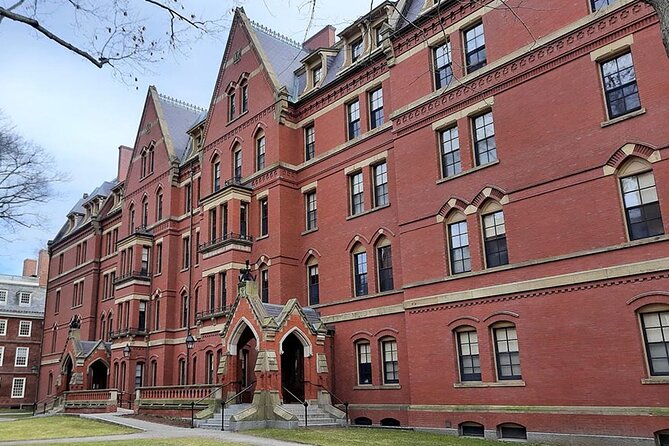
Stop 1 is the MIT Media Lab. This is a free-ticket stop on the itinerary, and it sets the tone. You’re seeing a place associated with cross-discipline creations, where tech meets art, design, and practical problem-solving. Even if you’re not a tech expert, it’s easy to connect the buildings to the school’s reputation for turning ideas into tools people can use.
If you care about “future energy,” this is the stop that makes that concept feel real instead of vague.
Practical note: interior access can vary on weekends and major holidays based on campus hours, since the MIT buildings are closed then.
The Green Building and the Tetris prank you’ll never forget
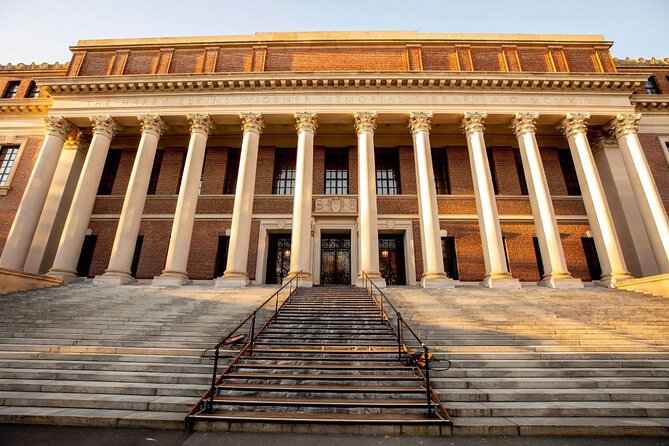
Stop 2: the Green Building, designed by I.M. Pei. That name tells you this isn’t a random dorm-like structure. The tour uses it to explain a famous student prank—the “Tetris” story—so the architecture gets paired with campus lore.
This is one of those moments that makes the tour memorable later. It’s hard to walk past a landmark and not remember the story once you attach a weird, human detail to it.




MIT Dome and the protest car story
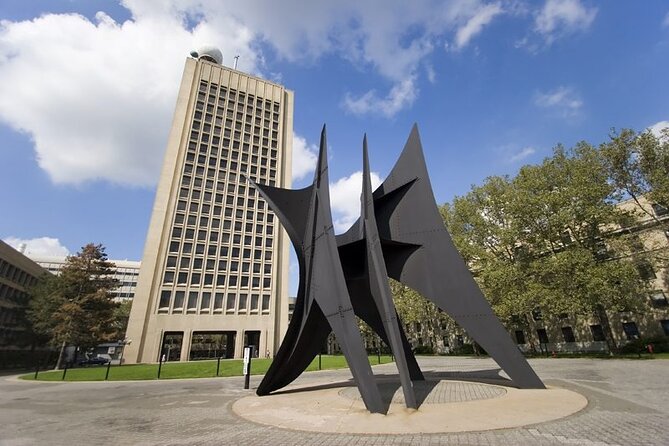
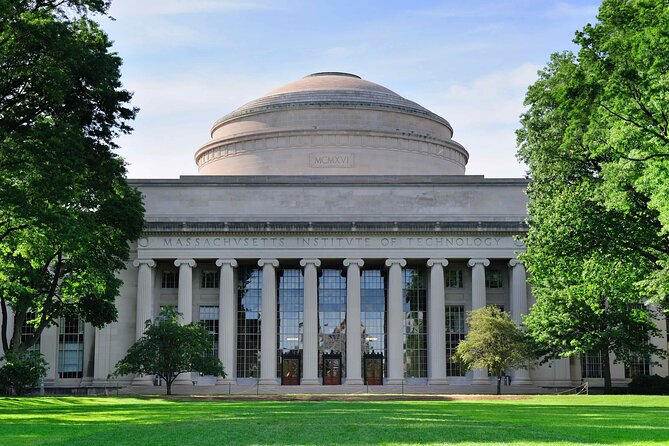
Stop 3: MIT, focused on the iconic MIT Dome. You’ll learn about a police car placed on top of the dome as a protest related to parking tickets. It’s such a vivid example of student voice and institutional boundaries: people challenge the rules, but they do it in a way that’s visible enough to become legend.
This stop also helps you read MIT’s campus layout. The dome isn’t just a photo target. It’s part of the school’s “center of gravity,” and the story gives it personality.
Harvard Bridge: Smoot markers and the best skyline photo moment
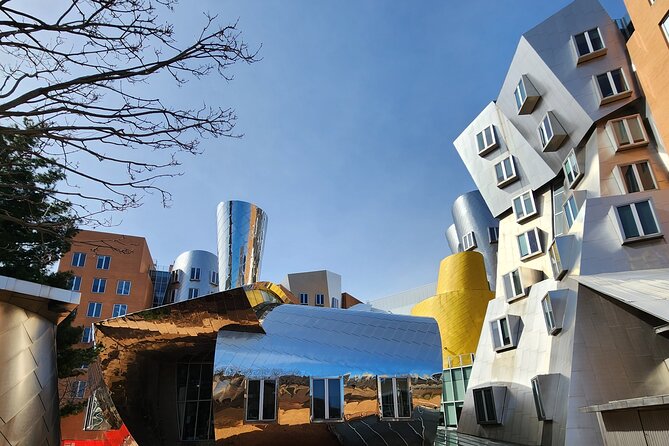
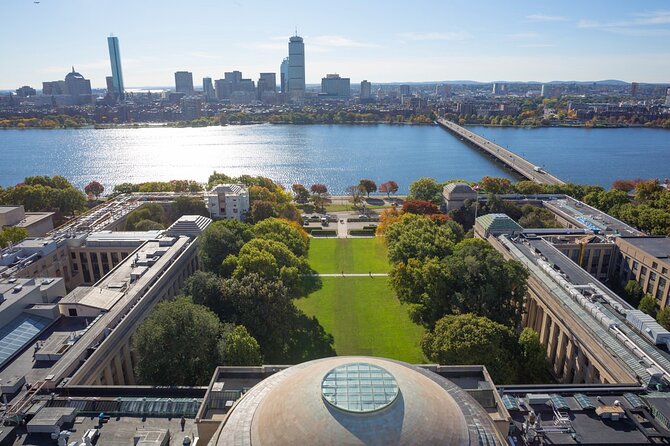
Stop 4: Harvard Bridge. The plan here is both architectural and photo-focused. You’ll see the Smoot markers (a quirky bit of measurement lore tied to the bridge) and you’ll take a picture of the Boston skyline.
This is one of the best spots to reset. MIT is more campus-culture heavy; this is where you get a city view and a clearer sense of Cambridge’s location across the river.
MIT Banana Lounge: the fun story stop that humanizes the campus
Stop 5: MIT Banana Lounge. You’ll hear the hilarious story behind it. That might sound like a throwaway, but it’s not. MIT can feel like steel and formulas from the outside. These student-area stories remind you there’s everyday life on campus too.
If you like tours that feel like you’re hearing the school’s inner jokes, this stop delivers.
Stata Center: quirky architecture with a design-nerd reputation
Stop 6: Stata Center. You’ll see its quirky look and hear why it’s called both an architectural marvel and a design nightmare. That contrast is the point. It’s a building that sparks opinions, and the tour gives you the context to understand why people argue about it.
This stop also works as a “now what are we doing at MIT” checkpoint. After the humor (Banana Lounge) and dome protest lore, Stata brings you back to the physical reality of MIT’s design experiments.
Kendall/MIT to Harvard: the Red Line jump that keeps the tour efficient
Stop 7 is the transit segment. You’ll take the Red Line two stops to the Harvard University Area, and the subway ride is included. Your guide will direct you on how to use the subway.
Why I like this part: it prevents the most common mistake with university tours—wasting time with navigation. You’ll arrive in the Harvard zone already oriented, instead of scrambling with maps while your group is waiting.
Duration listed is about 20 minutes, which includes walking time to/from the station.
Entering Harvard Yard through Johnston/Johnson Gate
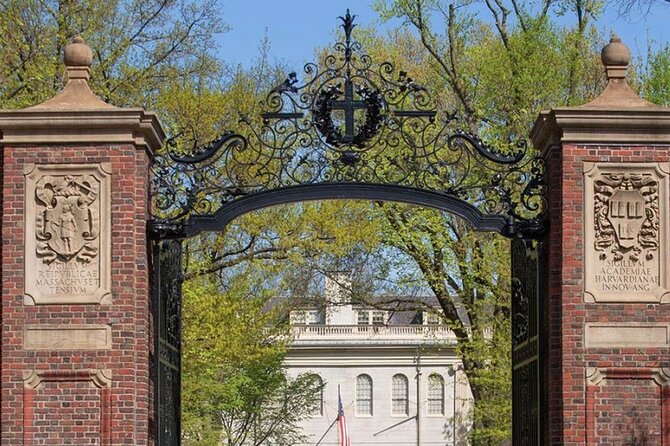
Stop 8: Massachusetts Ave @ Johnston Gate, entering Harvard Yard through the main entrance. This is where the feel changes. MIT’s campus portion has more “open-to-exploration” energy; Harvard’s Yard has a more ceremonial layout.
Even without entering buildings, you’ll get the sense of boundaries and traditions. The tour’s stories help that space make sense instead of feeling like you’re just walking through a pretty campus.
John Harvard Statue and the Three Lies explanation
Stop 9: the John Harvard Statue. You’ll learn why it’s called the Statue of the Three Lies. This is the kind of detail that makes Harvard feel less like a museum and more like a living institution full of myths, corrections, and human storytelling.
If you like trivia with an actual meaning behind it, don’t skip this stop. It’s built for your brain to remember.
Dormitories at 2 Kirkland St: campus life through who lived where
Stop 10: 2 Kirkland St, centered on dormitories around Harvard Yard and who lived there while studying. This is an effective stop because it shifts away from big institutional narratives and toward everyday student arrangements.
Even if dorm life isn’t your priority, it helps you picture the Yard as a place students occupy—not just a scenic campus you pass through.
Memorial Hall and Harvard Memorial Church: old building, clear purpose
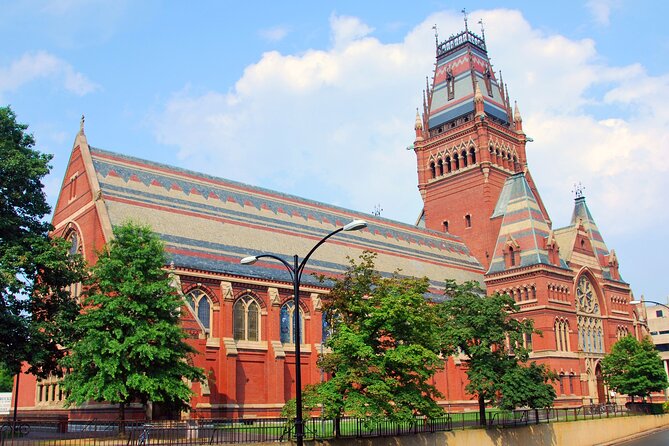
Stop 11: Memorial Hall, described as a multifunctional building inside an old church. Stop 12: Harvard Memorial Church, standing in the middle of Harvard Yard.
Together, they show you how older architecture gets repurposed and how the school uses space to keep meaning alive. You’re not only seeing buildings; you’re learning what they’re for and why people care.
Widener Library and Wadsworth House: tragedy and Revolutionary-era connection
Stop 13: The Harry Elkins Widener Memorial Library. You’ll see Harvard’s main library and hear the tragic story behind it. This is the emotional weight portion of the tour: a reminder that institutions aren’t only about academic output—they’re tied to real lives.
Stop 14: Wadsworth House, where George Washington stayed during the American Revolution. This connects Harvard’s campus to the national story in a way that’s easy to visualize. You stand in a space linked to a specific historical moment, not just an abstract timeline.
Lowell House and Housing Day traditions
Stop 15: Lowell House. You’ll see Upper Classmen housing and learn about the tradition of Housing Day. This helps you understand how traditions keep shaping the student experience, even when campus life modernizes around them.
If you’re curious about how Harvard keeps continuity, this stop gives you a direct example.
Harvard Square finish: where the tour hands you off to your next plan
Stop 16: Harvard Square. The tour ends here, and your guide can suggest places for souvenir shopping and/or lunch.
I like this ending because it’s not a dead end. You’re in a real neighborhood with options, and you won’t feel trapped waiting for the tour to end before you can keep exploring.
Also, it’s a good time to compare what you felt earlier on the walk: MIT’s tech-and-hack energy vs Harvard’s tradition-heavy rhythm.
Should you book this MIT and Harvard group tour?
Book it if you want:
- A fast, story-forward orientation to both campuses in one trip
- The MIT humor and prank lore plus Harvard tradition explanations
- A guided route that includes subway transit and keeps you from getting lost
Skip or pick a different option if:
- You specifically want lots of interior time at MIT and your dates fall on a weekend or major holiday (MIT interiors won’t be included then)
- You expect Harvard buildings to be entered during the tour (public access inside isn’t allowed)
For most visitors in Cambridge, this tour hits a sweet spot: 3.5 hours, a manageable group size, and plenty of memorable facts that make the architecture feel personal.
FAQ
FAQ
What is the duration of the MIT and Harvard group tour?
The tour lasts about 3 hours 30 minutes (approximately).
How much does the tour cost?
It costs $50.00 per person.
Where do I meet, and where does the tour end?
You start at Ripple Cafe, 314 Main St, Cambridge, and you end at Harvard Square, Two Brattle St, right by the Red Line subway stop.
Is the tour in English?
Yes, the tour is offered in English.
Is a subway ride included?
Yes. The tour includes the Red Line subway ride from MIT (Kendall/MIT) to the Harvard University Area.
Are there any admission tickets included?
For several MIT stops, admission ticket access is listed as free during the tour. Harvard buildings aren’t entered on public tours.
Does the tour go inside buildings?
On weekdays, the tour goes inside some MIT buildings. On weekends and major holidays, MIT campus buildings are closed, and Harvard does not allow any public tours inside buildings.
How many people are on the tour?
The maximum group size is 30 travelers.
Are mobile tickets used?
Yes, the tour uses a mobile ticket.
Are service animals allowed?
Yes, service animals are allowed.
What is the cancellation policy?
You can cancel for a full refund up to 24 hours in advance of the experience start time.