REVIEW · CAMBRIDGE
Curious Cambridge – The History Tour that’s FUN!!!
Book on Viator →Operated by Terrible Tours · Bookable on Viator
Cambridge can feel big and stuffy, but this walk keeps it playful, with entertaining stories and photo-led moments that make the city’s past easy to remember. I really like the way you pass major colleges like Trinity College without time-sucking detours, and you also pick up real context for over 1,000 years of Cambridge life. One thing to consider: you see the colleges from the outside and won’t go inside, so if you want chapels and library rooms open to the public, plan a separate stop.
You’ll spend about 1 hour 30 minutes on foot, with a small group capped at 25, and you get a mobile ticket so you can stay light and quick. The route starts at Jesus Green Lock House and finishes by the Corpus Clock area opposite King’s College, which is a great way to end with a clear landmark in view.
In This Review
- Key things you’ll notice on Curious Cambridge
- Price and time: what $27.74 buys you in Cambridge
- Meeting point to end point: start at Jesus Green, finish at the Corpus Clock
- A 90-minute story walk built for real attention spans
- Stop 1: Cambridge as the setup for everything else
- Magdalene College: the ancient roadway and the old port vibe
- St John’s College: the Round Church and the seeds of the University
- Trinity College: Newton, wealth, and prank history
- Trinity Hall: from pisspot lane to today’s reality
- Gonville and Caius: Nightclimbers and a strange founder instruction
- Cambridge Market Square: bell chimes, old market roots, and town-versus-gown friction
- St Bene’t’s Church: oldest building, the secret of life lab, and the Corpus Clock nearby
- Castle Hill: Romans, Vikings, Normans, and the last bridge before the sea
- Guides are the engine: why Peter, Ben, Simon, Chuck, and Chris work
- What you won’t do (and who that suits)
- Should you book Curious Cambridge? My straight answer
- FAQ
- How long is the Curious Cambridge History Tour
- What does the tour cost
- Will I enter the colleges during the tour
- Where does the tour start and end
- Is the tour available in English
- How big are the groups
- Is free cancellation available
Key things you’ll notice on Curious Cambridge
- Fun storytelling focus: history is told like scenes, not a lecture
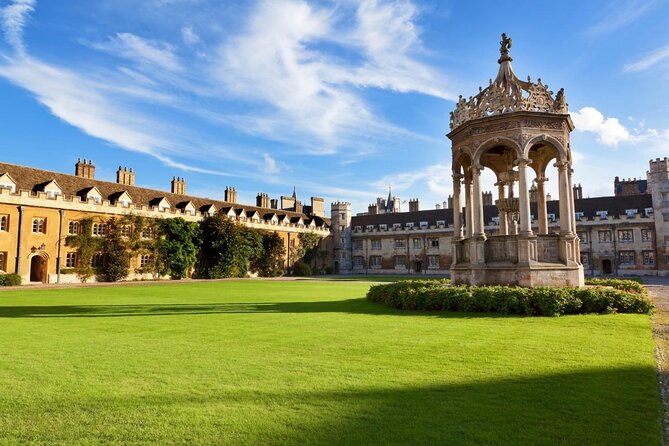
- Major college walk-bys: Trinity, St John’s, Magdalene, and more from the sidewalk
- Spot the timeline in plain sight: Romans to Vikings to Normans, then University growth
- Big Cambridge moments in short stops: Market Square bell chimes and Corpus Clock area
- Family-friendly pacing: guides can match energy across ages, from kids to teens
Price and time: what $27.74 buys you in Cambridge
At about $27.74 per person for roughly 90 minutes, this is the kind of tour that makes sense when you want a smart first pass through Cambridge without spending the day in ticket lines. The value comes from how efficiently it hits high-interest landmarks: you walk a compact route and learn the threads that connect them.
Also, the tour is set up for movement. Each stop is short (around 10 minutes at most college and landmark points), so you don’t lose the group’s attention. And because you’re not entering the colleges, you avoid extra delays and you keep your costs predictable.
If your budget is tight and you still want the Cambridge University vibe, this is a practical way to get it. If you’re the type who wants to sit in a chapel, tour a library, or see specific rooms up close, you’ll need to pair this with other timed-entry experiences later.
You can also read our reviews of more historical tours in Cambridge
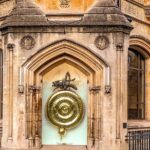
Meeting point to end point: start at Jesus Green, finish at the Corpus Clock
The tour begins at Jesus Green Lock House (Cambridge CB4 3AX). This is a solid start point because you’re already near the river/green area rather than starting inside the thickest core streets.
You end at the Corpus Clock area at 58 Trumpington St, right opposite King’s College. That ending matters: you’re walking out with a recognizable focal point in sight, so it’s easier to plan what comes next. Want a pub stop nearby? Want to wander toward King’s College gates and keep going on your own? The route hands you a clean “where next” moment.
The tour also works well if you’re using public transportation, since the start and finish are in central, walkable zones. And yes, service animals are allowed.
A 90-minute story walk built for real attention spans
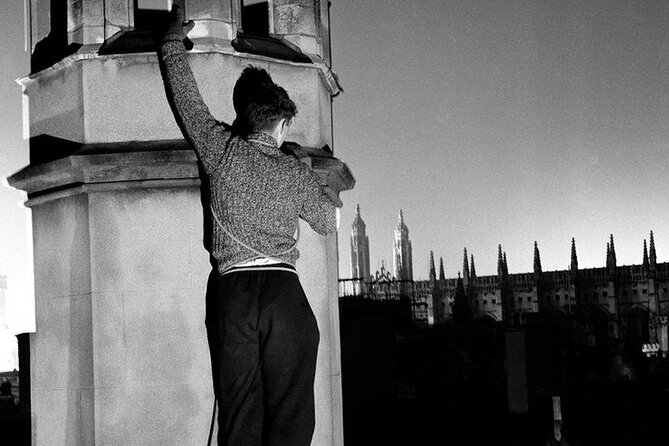
The whole point is that you’re not doing a slow, silent museum tour. It’s a guided walk where the story does the heavy lifting.
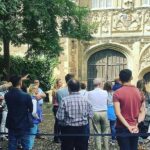
A big advantage is the group size limit of 25 people. That keeps the guide able to manage questions and energy. In the feedback I’m using to shape this review, the guides are repeatedly praised for keeping things relatable and readable, with humor and “fun facts” that don’t feel bolted on.
You should expect a gentle, meandering feel rather than a rushed checklist. If you like history but you also like breaks to look, wonder, and ask questions, this format fits.
Stop 1: Cambridge as the setup for everything else
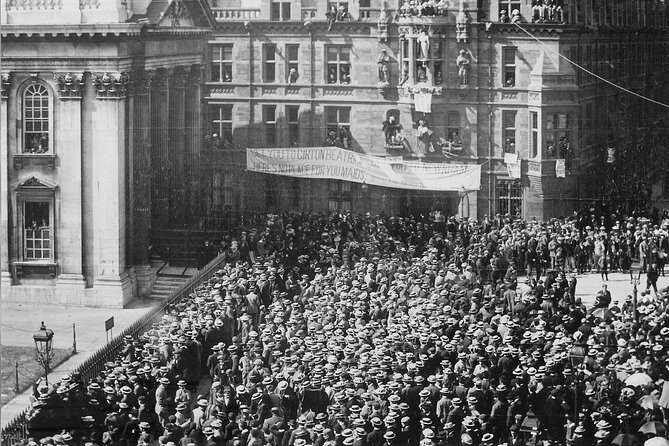
The walk starts with Cambridge itself, and that’s not filler. Getting a quick grounding early helps everything that follows make sense, because later stops will refer to how people lived, studied, fought, traded, and built across centuries.
Think of this as getting your bearings fast: what Cambridge was like long before the University became the headline. When the tour then points you toward colleges, you understand why these institutions cluster where they do and what earlier layers were already there.
Magdalene College: the ancient roadway and the old port vibe
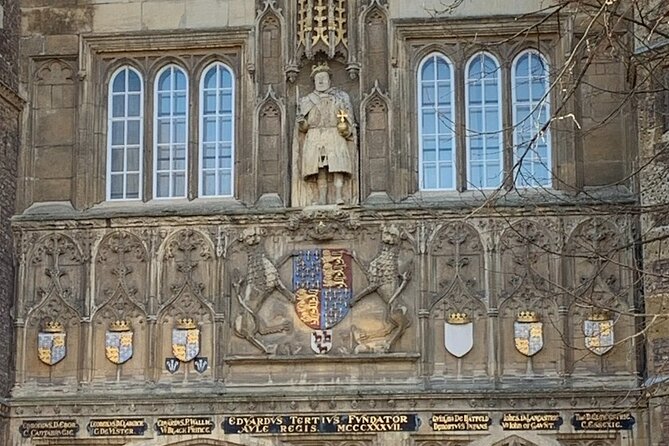
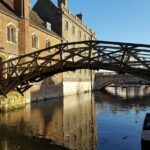
Next up is Magdalene College, focused around Magdalene Street and Bridge. This stop highlights an earlier Cambridge function that most people miss when they only think about academics: the city’s connection to trade and movement.
The guide’s emphasis here is on the roadway and the bridge as a living clue to how the city operated. You’re walking through a spot that used to be central to what was once the port area of Cambridge, so you get a shift in perspective. Cambridge isn’t only a university campus. It’s also a town that grew because people could move goods and ideas through it.
One practical tip: this is a good stop to look up while you listen. The story is about infrastructure, so the details around the street and crossing help you picture the earlier world.



St John’s College: the Round Church and the seeds of the University
At St John’s College, the focus turns to the Round Church and the early University foundations. This is where you start linking architecture with institution-building.
The Round Church is the kind of landmark that feels symbolic even before you know the background. The tour uses it to explain the seeds of what became the University of Cambridge, so you understand why certain buildings mattered beyond beauty. You’re also learning how the University developed as an idea, not just a name.
Because you’re not going inside, don’t worry if you can’t access rooms. The value here is the explanation you carry forward, especially when you later see other college features and can identify what stage of Cambridge’s growth you’re looking at.
Trinity College: Newton, wealth, and prank history

At Trinity College, the tour hits two things you’re likely to remember later: Isaac Newton’s connection and the idea of Cambridge prank culture.
The tour frames Trinity as the richest college in either Oxford or Cambridge and uses that fact to set up why certain stories stick around. The prank angle adds human texture. It also helps you understand something important: university towns don’t just run on scholarship. They run on community, tradition, and a little chaos.
If you’re a fan of story-based learning, this stop tends to land well. In the feedback I’m drawing on, guides were praised for making these anecdotes relatable and easy to picture, not just name-dropping.
Trinity Hall: from pisspot lane to today’s reality
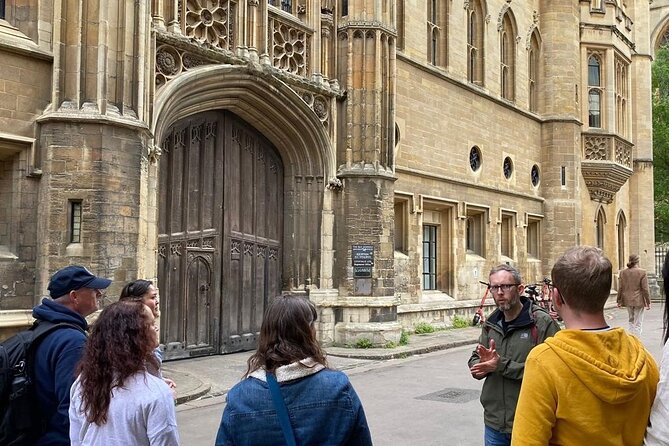
Trinity Hall is another quick but memorable stop, tied to Trinity Lane and the lane’s historical name, pisspot lane. The humor here is clearly part of the tour’s tone. And you don’t need to worry about anything unpleasant in practice—this is a historical nickname used to tell a bigger truth about how the town’s streets earned their reputations.
This is a good checkpoint if you’re wondering whether the tour will feel too “academic.” It doesn’t. It uses street-level history to show how Cambridge grew into its current identity, including the social and everyday side of college life.
It’s also a reminder that the University didn’t rise in a vacuum. People lived around it, and streets carried the baggage of real life.
Gonville and Caius: Nightclimbers and a strange founder instruction
Gonville and Caius brings two standout themes: the famous Nightclimbers and a strange instruction from the founder.
This is where the tour gets fun in a way that still teaches. Nightclimbers are basically the kind of story that makes you lean in, because it sounds like pure campus legend. But the guide’s job is to connect legend to institutional behavior, rules, and culture.
The founder instruction adds another layer: it points out that colleges weren’t only about learning. They were also about governance and how a place wanted its students to behave.
If you’re traveling with kids or teens, this stop often works because it mixes curiosity with clear explanation. One guide style that gets mentioned a lot is enthusiastic storytelling with attention to different ages in the same group.
Cambridge Market Square: bell chimes, old market roots, and town-versus-gown friction
Market Square is next, and it’s an ideal place for a history tour because it’s already a public stage. Here, you’ll hear about famous bell chimes, one of England’s oldest markets, and even some epic town vs gown Cambridge punch-ups.
This is a key stop for understanding how Cambridge functions as two things at once: a university town and a real local community. The “town vs gown” stories show the tension that can happen when transient student populations meet longtime residents.
The bell chimes detail matters too. It’s easy to walk past a landmark and assume it’s decoration. The tour makes it feel like a functional signal in daily life, which is exactly the kind of detail that makes city history stick.
St Bene’t’s Church: oldest building, the secret of life lab, and the Corpus Clock nearby
St Bene’t’s Church (on Benet Street) is where the tour turns more dramatic. You’ll see the oldest building in Cambridge and hear about a laboratory tied to someone really discovering the secret of life.
Yes, there’s also a story about how the announcement was made over a pint, and it ends up in the same stop as mention of the Corpus Clock. That combination is the tour’s strength: it links faith-era architecture, scientific progress, and everyday human behavior into one easy walking narrative.
Practical mindset: even if you don’t enter the church, you’ll leave with a clearer mental map of why this area matters. The oldest building gives you the timeframe. The science story gives you a reason to care beyond scenery. The Corpus Clock mention is a perfect bridge to your ending zone.
This is also a good place to look for clues about the area’s changing function over time. Churches, labs, pubs, and public clocks don’t belong to the same era—but Cambridge keeps them close.
Castle Hill: Romans, Vikings, Normans, and the last bridge before the sea
The final major landmark stop is Castle Hill, described as the place Cambridge started. This is a high-impact point for anyone who likes the long sweep of history.
The tour connects the hill to Romans, Vikings, and Normans, and it adds a vivid geographic idea: these groups conquered the last bridge before the sea. That kind of detail is what makes the story feel physical. It’s not just dates. It’s a strategic location.
If you’ve ever felt like Cambridge history gets flattened into “University, then more University,” this stop fixes that. It pulls you back to earlier layers of settlement and control, and it explains why the city’s core mattered long before scholars took over the spotlight.
Guides are the engine: why Peter, Ben, Simon, Chuck, and Chris work
A walking tour lives or dies by the guide’s delivery. In the feedback I’m using, the guides get praised again and again for being entertaining without being sloppy, and for being able to match the group’s interests.
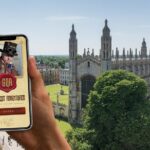
Here are the names that show up often: Peter, Ben, Simon, Chuck, and Chris. People specifically highlight that the guide makes the tour relatable to your background and questions, and that there’s sometimes photo support for landmarks so you can connect what you’re hearing to what you’re seeing.
You’ll also notice a pattern: the best experiences describe a balance of fun facts plus a calm pace. One family-focused comment mentions how a guide handled different ages in the same group, which is exactly what you want on a town-walk tour.
So if you’re deciding whether to book, you’re not just buying route access. You’re buying the guide’s storytelling style. This tour clearly aims for that.
What you won’t do (and who that suits)
This tour focuses on college walk-bys. You’ll pass top colleges such as Trinity and Magdalene, but you won’t go inside them. That’s part of the value equation: you’re paying for context and atmosphere, not for multiple separate admissions.
Who this suits best:
- First-time visitors who want the Cambridge feel fast
- People who like stories and clear explanations more than ticketed interiors
- Families and mixed-age groups who need an upbeat pace
Who should plan differently:
- Anyone who wants to tour college chapels, libraries, or museum collections as part of the same 90-minute stop
- People who can’t handle a walking format and need longer seated segments
Should you book Curious Cambridge? My straight answer
Yes, if you want a fun, story-driven way to learn Cambridge’s timeline and understand how the University grew out of an older town. The price-to-time ratio is strong for what you get: you walk past major college names, learn why the places matter, and finish at a landmark area (Corpus Clock) that helps you keep exploring.
Book it especially if you’re traveling with a range of ages or if your brain likes anecdotes. This tour is built to make history feel human—Newton, pranks, street nicknames, bell chimes, and that secret-of-life lab story all in one route.
If your top goal is indoor access and museum-style visiting, pair this with a separate ticketed experience. Otherwise, you’ll feel a bit shortchanged by the outside-only approach.
FAQ
How long is the Curious Cambridge History Tour
It’s about 1 hour 30 minutes.
What does the tour cost
The price is listed as $27.74 per person.
Will I enter the colleges during the tour
No. You will see colleges, but you will not enter them.
Where does the tour start and end
It starts at Jesus Green Lock House (Cambridge CB4 3AX) and ends at the Corpus Clock area on Trumpington St (58 Trumpington St, Cambridge CB2 1RH).
Is the tour available in English
Yes, it’s offered in English.
How big are the groups
The tour has a maximum of 25 travelers.
Is free cancellation available
Yes. You can cancel up to 24 hours in advance for a full refund.