REVIEW · CAMBRIDGE
Public Innovation Trail Tour in Cambridge
Book on Viator →Operated by Boston History Company · Bookable on Viator
A future-minded stroll in Cambridge can be surprisingly fun. This Public Innovation Trail Tour strings together the people and ideas behind today’s tech and medicine, from software and AI labs to biotech powerhouses. I like that it’s guided story time (not just sign-reading) and that you get to connect inventions to the real places where work happens now.
One thing to plan for: you won’t tour inside operating labs or get full building access. You’ll see a lot from outside and from public-facing areas, and on some days lobby displays can be limited—so set expectations for what you can actually enter.
In This Review
- Key highlights before you go
- Why Kendall Square’s innovation trail is worth 90 minutes
- Stop-by-stop: from Entrepreneur Walk of Fame to the candy factory
- 1) Entrepreneur Walk of Fame
- 2) CIC Cambridge @ 245 Main
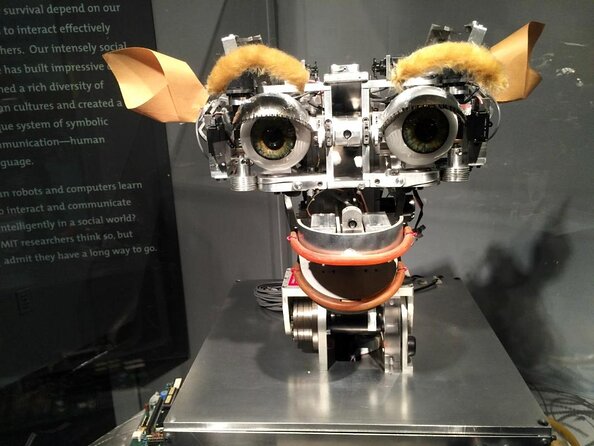
- 3) MIT Museum (reopened in 2022)
- 4) 355 Main St (Google office context)
- 5) Stata Center (CS, AI, robotics, and student hacks)
- 6) Broad Institute of MIT and Harvard
- 7) Whitehead Institute and the Human Genome Project connection
- 8) 225 Binney St (Biogen’s biotech roots)
- 9) 145 Broadway (Akamai and the internet closer to you)
- 10) Draper Labs (the moon, plus Margaret Hamilton)
- 11) Moderna (modified RNA basics)
- 12) LabCentral (how one building housed many innovators)
- 13) 810 Main St (the last operating candy factory in Cambridge)
- What you can expect at stops (and what you won’t do)
- How the guide turns buildings into a single story
- Practical tips to make this tour feel easy
- Who this walk suits best
- Value check: $20 gets you a guided map of modern innovation
- Should you book the Public Innovation Trail Tour?
- FAQ
- How long is the Public Innovation Trail Tour?
- How much does it cost?
- Where does the tour start and end?
- Will the tour include entry into buildings and labs?
- Is the tour physically demanding?
- What happens if the weather is bad or I cancel?
- Are service animals allowed?
Key highlights before you go
- A 90-minute walk through Kendall Square’s best-known research and startup clusters
- Fun, interactive guiding, with standout energy from guides like Jul and Julia
- A story chain across fields: robotics, software engineering, genomics, internet infrastructure, and biotech
- No private transport and no inside-lab access, so you’ll focus on what you can see publicly
- A stop list with heavyweight names: MIT, Broad Institute, Google, Akamai, Draper, Biogen, Moderna, and more
- Good weather matters since it’s an outdoor walking experience
Why Kendall Square’s innovation trail is worth 90 minutes
This tour is short enough to fit into a busy day, but it moves with purpose: about 1 hour 30 minutes of walking and explanation, with a maximum group size of 25. That matters because you’re not just herded along. You can actually hear the guide, ask quick questions, and keep the story straight as you hop between major institutions and corporate offices.
The price—$20 per person—is also fair for what you get. Most stops are free to look at publicly, and the “value” here is the guidance: the guide turns each location into a mini case study in invention. You’re paying for a well-connected route and someone who can explain why one breakthrough led to the next.
Also, it uses a mobile ticket, and there’s no need for private transportation. If you like to explore on foot, this works well with the area’s public transit access. Just remember it’s designed for people with moderate physical fitness, so comfortable walking shoes are not optional.
You can also read our reviews of more tours and experiences in Cambridge.


Stop-by-stop: from Entrepreneur Walk of Fame to the candy factory
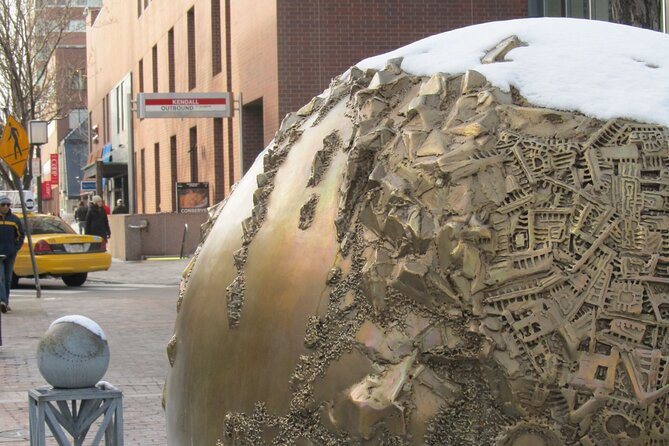
Here’s what the route is really like: each stop is a conversation starter. You’ll move through Kendall Square and Cambridge business corridors while the guide ties inventions, companies, and researchers to bigger themes—science becoming products, and research becoming history.
1) Entrepreneur Walk of Fame
You start at 50 Broadway (2:00 pm) at the Entrepreneur Walk of Fame. It’s a quick “orientation” stop, but it sets the tone: this area isn’t just about labs; it’s about founders, risk-takers, and ideas that made it into the real world.
If you like context, this is a good opening. It helps you place what you’ll hear later—software, robotics, biotech—into a broader story of entrepreneurship and innovation.
2) CIC Cambridge @ 245 Main
Next you’ll check out CIC Cambridge at 245 Main, formerly the Cambridge Incubator. This is where you get a startup ecosystem angle: the route isn’t only about research institutions, it’s also about how new companies get shaped early on.
The CIC’s connection to MIT Business School graduate Tim Rowe gives you a human thread to follow: innovation doesn’t just happen in a lab; it often starts with people building networks and support systems for early ideas.
3) MIT Museum (reopened in 2022)
At MIT Museum, you’ll see why MIT treats public tech storytelling as part of the job. The museum reopened in October 2022 and focuses on the Institute’s place in pushing technology forward.
You likely won’t spend long inside during the walk (the tour is timed), but even the quick stop helps you remember: the story of innovation is not only in the experiments—it’s also in how institutions teach the public to understand science.




4) 355 Main St (Google office context)
Then comes 355 Main St, described as a Cambridge office of Google. This is where you learn about how the city relates to major tech giants—and how creativity can come out of big offices, too, not only from university labs.
Even if you’re just standing near the building, the guide’s framing helps you see the difference between “big company technology” and “publicly visible inventions.” It’s a useful perspective in Cambridge, where research culture and corporate R&D sit close together.
5) Stata Center (CS, AI, robotics, and student hacks)
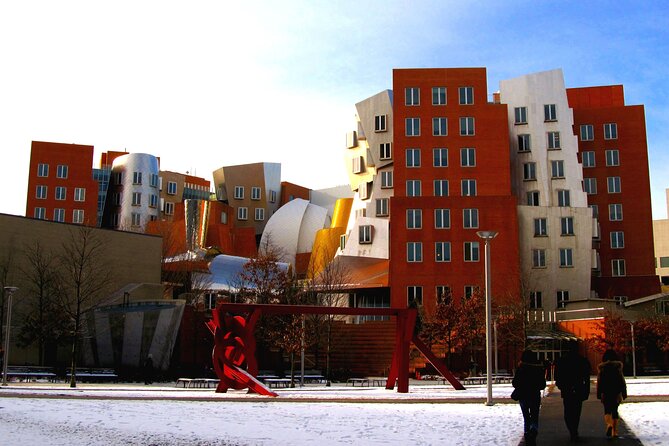
At MIT’s Stata Center, the tour leans into the future-facing side of computing: labs focused on computer science, artificial intelligence, and robotics. You’ll also hear the connection to iRobot Corp. and the Roomba robotic vacuum cleaner, which shows how research can turn into everyday products.
There’s also a smaller, ground-floor exhibit about student “hacks,” meaning pranks and student inventions through the years. That stop adds personality to the tour. It reminds you that innovation often includes humor, experimentation, and a willingness to try things that don’t look serious at first.
6) Broad Institute of MIT and Harvard
At the Broad Institute, you shift from software and robotics into the science behind treating disease. The Broad’s mission is to understand the roots of illness and narrow the gap between new biological insights and patient impact.
This stop is valuable if you want your innovation trail to feel balanced. Cambridge’s tech story isn’t only apps and robots; it’s also the hard work of figuring out how biology causes disease and how research becomes therapy.
7) Whitehead Institute and the Human Genome Project connection
You’ll then hear about the Human Genome Project at the Whitehead Institute. Whitehead was created in 1982 by philanthropist Jack Whitehead and MIT professor David Baltimore, a Nobel Prize winner.
A key theme from this stop: the vision included assembling a top-level “supergroup” of researchers, supplying funding and sophisticated lab equipment, and limiting “virtually any impediment” to discovery—while reducing bureaucracy. In plain terms, this is a lesson in why science sometimes moves faster when administrative friction is cut down.
8) 225 Binney St (Biogen’s biotech roots)
At 225 Binney St, you’ll learn about Biogen, described as a biotech trailblazer. The tour connects its founding to two Nobel Prize winners and traces its innovation history.
If you’re tracking the arc across disciplines, this is where the biotech story starts to feel personal: big breakthroughs don’t come out of nowhere. They come from institutions willing to invest in people, trials, and long timelines.
9) 145 Broadway (Akamai and the internet closer to you)
Next is 145 Broadway and Akamai, home to an “Internet Accelerator” idea. The concept was to set up servers around the world to cache content closer to where people access it, so web pages load faster.
The guide’s examples matter here: early demonstrations in 1999 included delivering a movie trailer for Star Wars: The Phantom Menace and ESPN’s March Madness coverage. That’s a neat reminder that infrastructure innovation can be just as important as the content itself.
10) Draper Labs (the moon, plus Margaret Hamilton)
You’ll walk down Broadway, take a left at Technology Square, and reach Draper Labs at 555. In the lobby, you’ll see a giant moon display. It’s the kind of visual that makes the story stick.
Draper’s major achievement highlighted here is guidance computers that helped Apollo spacecraft successfully travel to the moon and land there. And then the tour makes the software connection with Margaret Hamilton, who helped define software engineering and later founded other companies. This stop is a reminder that the “future” often starts with code doing its job under pressure.
11) Moderna (modified RNA basics)
At Moderna, you’ll learn the company was founded in 2010 to explore modified RNA molecules—where the name reflects mod-RNA—for treating diseases and vaccines.
Even without going deep into science formulas, this stop gives you a clear origin story: the innovation wasn’t just a new product; it was a new platform idea for how medicine can work at the molecular level.
12) LabCentral (how one building housed many innovators)
At LabCentral (at 5 minutes on the route), the story zooms out. The building has previously housed Davenport Car Works, Walworth Manufacturing Company, and Polaroid, before becoming LabCentral.
That’s a cool way to understand Cambridge: buildings evolve with the tech economy. The route uses this stop to show how the same physical space can support totally different eras of invention.
13) 810 Main St (the last operating candy factory in Cambridge)
The final technical-sweet stop is 810 Main St—the last operating candy factory in Cambridge, owned by Tootsie Brands. You’ll hear it’s not set up for tours because candy-making processes and equipment are secretive.
Still, you get a fun scale of production: the factory makes about 26 million pieces of candy a day. The tour also ties in local candy lore—Cambridge candy hearts, lemon drops, and even that the Fig Newton cookie was invented in Cambridge in 1891, despite being named for Newton nearby.
This stop doesn’t feel like a throwaway. It gives you a real-world reminder that innovation isn’t only in hospitals and satellites. Food manufacturing, branding, and process engineering all matter in the history of everyday technology.
What you can expect at stops (and what you won’t do)
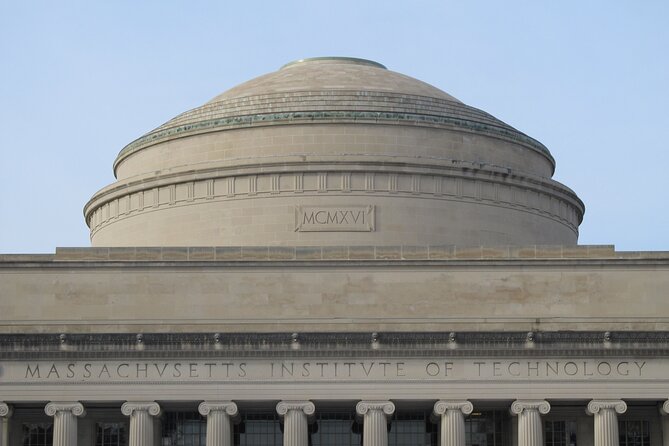
The tour is built for public viewing, not inside-lab access. The route notes that most of the spaces are active labs, so you generally won’t enter buildings as part of the experience.
That’s why it’s important to show up with the right mindset. Think of this tour as a guided walk that explains what you’re seeing from the outside, plus quick looks into places that are publicly accessible. If lobbies or exhibits are closed on a given day, you’ll still get the core story—it’s just that the visual payoff can vary.
How the guide turns buildings into a single story
This is where the tour’s strongest value shows up. You’re not only moving between places; you’re building a mental map of innovation.
Guides like Jul and Julia are highlighted for being enthusiastic and easy to listen to, with stories that connect inventions across categories. The guide’s style also helps you notice a repeating pattern in Cambridge: breakthroughs often come from unusual combinations—hardware plus software, research plus entrepreneurship, science plus infrastructure.
And the “walk” format helps. When everything is in one route, you start seeing how far-reaching choices become. One day you’re talking about robotics and AI labs. The next you’re hearing about internet server networks that move data closer to people. Then you’re back to RNA and genomics.
Practical tips to make this tour feel easy
A few choices can make a big difference on a walk like this.
- Wear comfortable shoes and plan for sidewalk time. The experience lasts about 1.5 hours, and it’s meant to be walked.
- Bring a light layer. Weather is a real factor because the tour requires good weather.
- If you’re visiting museums or labs later, use the tour as your warm-up. The route points you toward places like MIT Museum, even if you’re not spending lots of time inside during the walk.
- Keep your phone charged for the mobile ticket and quick photo checks, but don’t treat this like a scavenger hunt. The guide story is the main course.
Also, if you rely on public transit, this tour is near public transportation, which makes it easier to plug into a Cambridge day without adding extra hassle.
Who this walk suits best
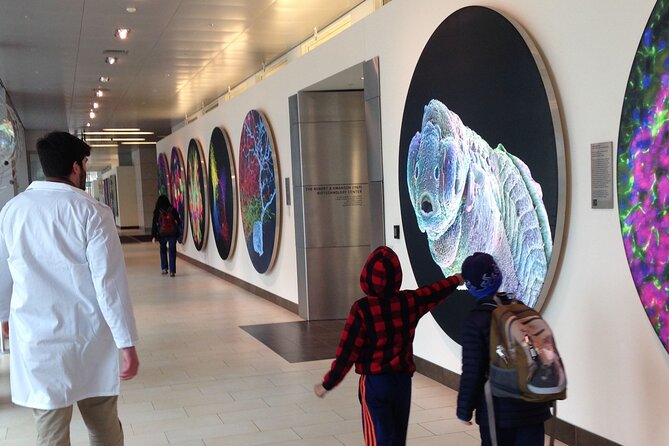
This is a great match if you like:
- Science and tech, but you want it explained in plain language
- A practical route where one guide ties together many disciplines
- Seeing the real geography of innovation, not just reading about it later
It may be less ideal if you specifically want:
- Long museum time or lots of indoor exhibits
- An “inside lab” experience (that isn’t part of the plan)
- A totally relaxed stroll with minimal stops (this moves with narrative pacing)
If you’ve got moderate mobility needs, it should still work with planning, since the route is designed around a typical walking tour format.
Value check: $20 gets you a guided map of modern innovation
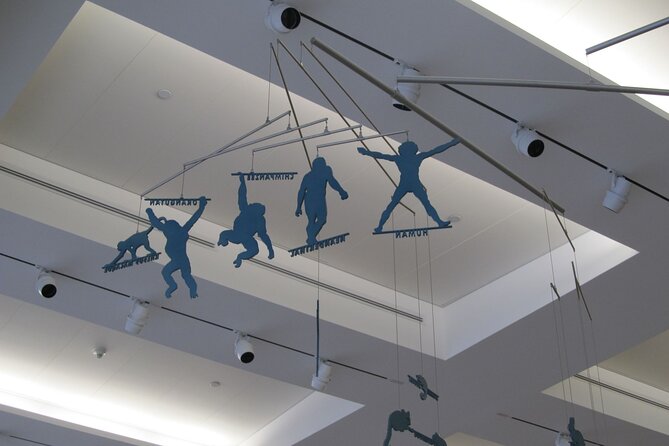
For $20, the tour feels like a smart way to get oriented in Kendall Square’s tech and biotech ecosystem. The stops include major names across categories—MIT, Broad, Google, Akamai, Draper, Biogen, Moderna, and more—plus supporting institutions like CIC Cambridge and LabCentral.
The “value” isn’t that every stop is a paid attraction. Instead, you’re buying a guide who can connect each place to why it matters. You also gain a lot of follow-up options. After a tour like this, you’ll usually want to return to certain public-facing areas for more time—especially places that feel connected to topics you already care about.
Should you book the Public Innovation Trail Tour?

Book it if you want an efficient, story-driven walk that makes Cambridge’s innovation feel understandable and human. The guide-led storytelling is the core strength, and the route covers the kinds of institutions that shape tech, biotech, software, and even internet infrastructure.
Skip or adjust expectations if you’re hoping for a deep “inside the labs” tour or a long museum visit. This is public-facing, weather-dependent, and designed around visible sites and explanations.
If you’re in Cambridge for a short stay, or you want a single activity that gives you a fast, connected overview of Kendall Square, this $20, 90-minute walk is a solid bet.
FAQ
How long is the Public Innovation Trail Tour?
It runs for about 1 hour 30 minutes.
How much does it cost?
The tour costs $20.00 per person.
Where does the tour start and end?
It starts at 50 Broadway, Cambridge, MA 02142 and ends at MIT Media Lab on Amherst St, Cambridge, MA 02139.
Will the tour include entry into buildings and labs?
No. Access inside buildings is not included, and many spaces are active labs, so you generally do not enter.
Is the tour physically demanding?
The tour is listed for travelers with a moderate physical fitness level.
What happens if the weather is bad or I cancel?
The tour requires good weather. If it’s canceled due to poor weather, you’ll be offered a different date or a full refund. You can cancel for free up to 24 hours before the experience’s start time for a full refund.
Are service animals allowed?
Yes, service animals are allowed.