REVIEW · CAMBRIDGE
Cambridge University Walking Tour
Book on Viator →Operated by Christian Heritage Cambridge · Bookable on Viator
Cambridge has a way of making you feel lost fast. This walking tour fixes that by walking you through the university core with a guide who gives context as you go. I like the small group size (max 15), which leaves room for questions, and I also like the start at the Round Church Visitor Centre, where entry to an exhibition and a 20-minute film is included. One watch-out: the tour’s story leans into the religious and theological roots that shaped Cambridge, so if you’re mainly chasing science and famous alumni, it might feel more focused than you expect.
It runs about 1 hour 30 minutes to 2 hours, starting at 2:15 pm at the Round Church. The route also isn’t a rigid checklist; it can vary to fit the day, so you’ll get a guided flow through central sights rather than a rushed sprint.
In This Review
- Key takeaways before you lace up
- The Round Church Visitor Centre: where your Cambridge story starts
- The pace and the route logic: how you’ll avoid the “Cambridge maze” problem
- Magdalene Bridge and the River Cam: Cambridge’s “origin view” in 10 minutes
- Colleges and courtyards: what you’ll see, and what you can’t bank on
- Great St Mary’s Church and the University core: ceremony with real locations
- The Senate House: graduation happens here, so the stories land differently
- Trinity College gatehouse and King’s Parade: Newton and chapel views without the crowds
- St Edward’s, St Bene’t’s, and the oldest tower idea
- The Eagle pub and Old Cavendish Laboratory: mixing famous landmarks with the practical science story
- Christ’s College, Emmanuel College, and Sidney Sussex: how the story keeps moving
- Price and value: what $20.80 buys in Cambridge
- Who should book this Cambridge University walking tour
- Quick practical tips before you go
- Should you book this Cambridge University walking tour?
- FAQ
- How long is the Cambridge University walking tour?
- What does the tour cost?
- Where does the tour start?
- What time does the tour begin?
- Is the tour in English?
- Is a mobile ticket used?
- Are college entrances guaranteed?
- Do you get into the Round Church visitor area?
- Are service animals allowed?
- Can I bring a dog into the colleges?
- Who can join, and is it suitable for kids?
Key takeaways before you lace up
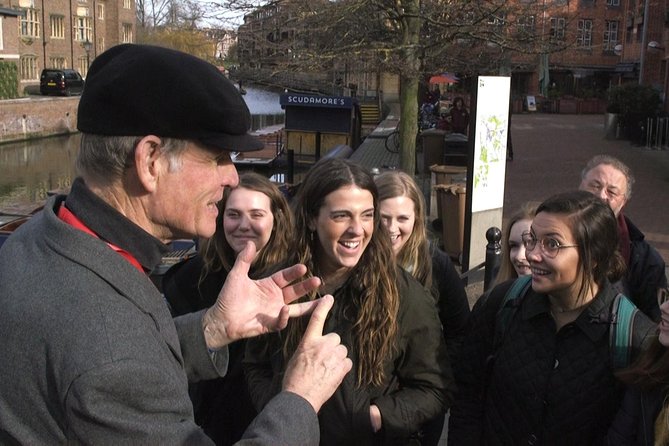
- Round Church first: you’ll get the exhibition and a 20-minute film included at the start.
- College structure made clear: you’ll see how Cambridge’s college system shapes the town.
- River Cam orientation: Magdalene Bridge gives you a quick “town origins” viewpoint.
- Classic exteriors, possible entrances: you might enter around two colleges, but it’s never guaranteed.
- Guides you’ll actually want to talk to: guests repeatedly mention guides like Dave, Martin, John, Jon, Ian, and Bobby for clarity and storytelling.
The Round Church Visitor Centre: where your Cambridge story starts
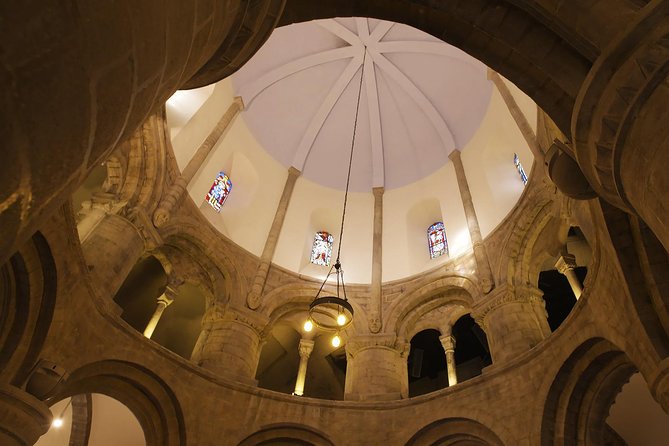
The meeting point is The Round Church Vestry on Bridge Street, and the tour begins at the Round Church Visitor Centre. This is a smart move, because the building itself sets the theme: the Round Church dates back to the 12th century and predates the earliest colleges by about 150 years. In plain terms, Cambridge didn’t begin as a university campus. It grew around older places, and the tour wants you to understand that timeline.
What makes this stop especially useful is that your ticket includes access to an exhibition and a 20-minute film. That matters because it gives you a shared baseline before you start threading through streets and college walls. If you’ve ever wandered around Cambridge squinting at gates and wondering what you’re looking at, this setup helps you get your bearings fast.
Expect a guided introduction, then you continue outside. It’s a strong opening even if you’re short on time in Cambridge.
You can also read our reviews of more walking tours in Cambridge
The pace and the route logic: how you’ll avoid the “Cambridge maze” problem
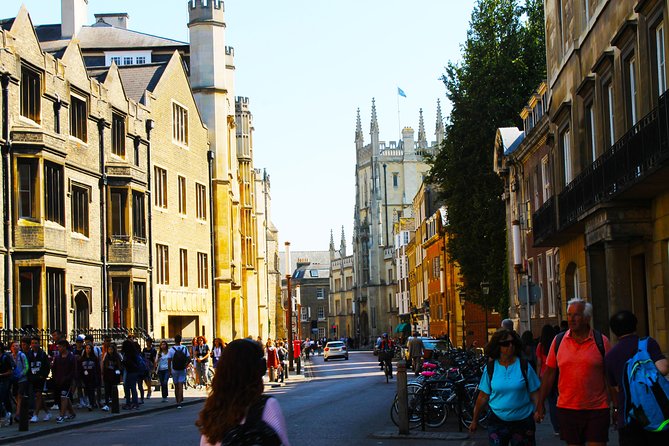
This is a guided walking tour at a moderate to fast pace. That’s not a deal-breaker, but it does affect who will enjoy it. If you need slow and steady movement, you’ll want a private option with a slower tempo.
The upside is efficiency. The tour keeps you moving while still making stops for context—so you’re not just walking from postcard to postcard. It also helps that the group is capped at 15 travelers, so it’s easier to ask questions without shouting across a crowd.
One detail to keep in mind: the itinerary is an example, and the route can vary based on what the guide thinks will work best that day. That’s why you may see slightly different combinations of colleges and church stops. You’re paying for interpretation more than a fixed checklist.
A final practical note: one guest wrote about the tour continuing even in pouring rain. Cambridge weather can be a mood swing, so you’ll do better if you come prepared for wet conditions.
Magdalene Bridge and the River Cam: Cambridge’s “origin view” in 10 minutes
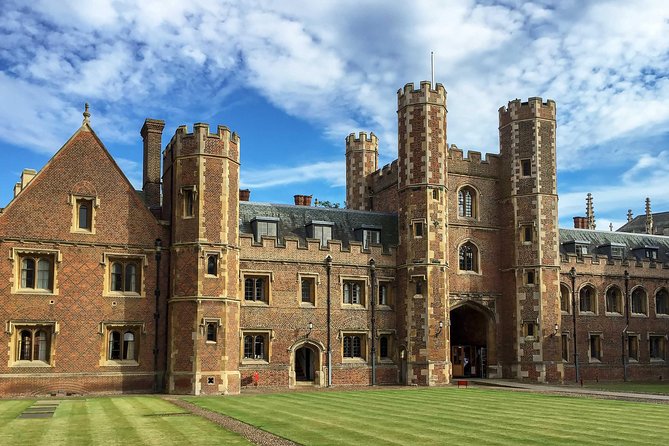
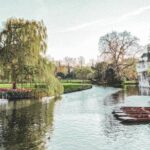
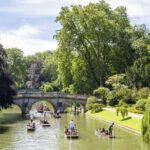
From the start area, the walk heads down toward the River Cam and stops at Magdalene Bridge. This is one of those small stops that punches above its weight. Bridges are where the town’s geography and daily rhythms show up quickly.
The guide uses this viewpoint to connect Cambridge’s layout to its origins—how the river helps shape what the town became and how people moved through it. It’s also a nice mental reset after the Round Church film, because you shift from indoor storytelling to a visual anchor.
Admission here is listed as free, so you’re not losing time juggling ticket lines. The stop is brief, about 10 minutes, which keeps you from getting stuck waiting for the whole group to take photos.
Colleges and courtyards: what you’ll see, and what you can’t bank on
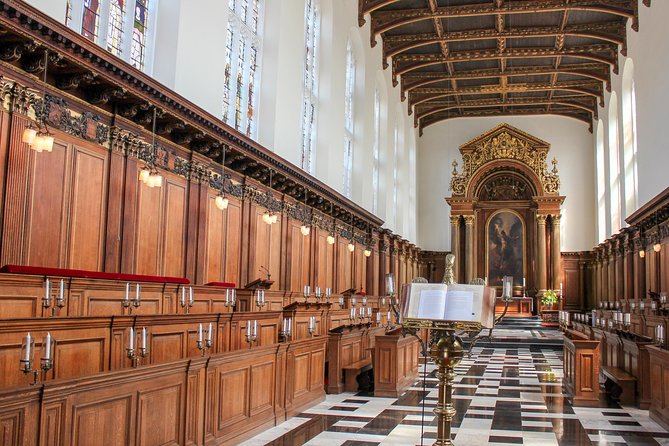
Cambridge’s colleges can look like they all blur together at first glance—stone gates, courtyards, chapels, signboards that seem to point to more signboards. This tour helps you separate them by explaining Cambridge’s distinctive structure: colleges are central to how university life is organized.
The tour usually enters around two colleges, but entrance is not guaranteed. It depends on college rules and day-to-day restrictions. During university exam term—late April through the end of June—visitors can’t enter colleges, so you’ll rely more on exterior views and street-level interpretation.
Here’s how the college stops typically work on this tour:
- Magdalene College: courts and chapels outside or inside depending on access.
- St John’s College: sometimes included, and if it’s open, the admission fee is included in the tour price when the tour enters St John’s.
- Trinity College: usually viewed from outside, with a focus on the gatehouse and the story of Isaac Newton’s apple tree.
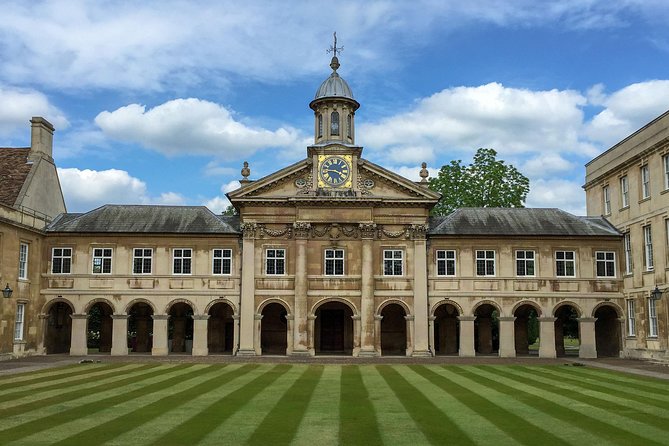
- Christ’s College, Emmanuel College, Sidney Sussex College: these may appear on the route in addition to other stops.
You’ll also notice the tour is respectful about access rules. The information includes a clear note that dogs must remain outside any colleges visited due to restrictions.
If you’re dreaming of a full checklist of major college interiors, manage expectations. You’re buying a guided “how Cambridge works” tour, not a guaranteed inside-the-gates passport.
Great St Mary’s Church and the University core: ceremony with real locations
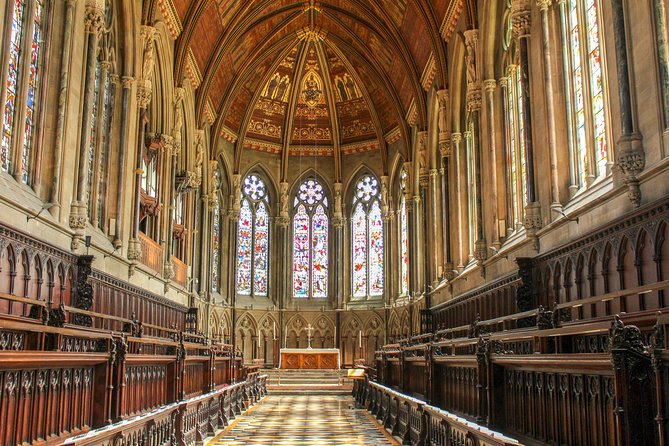
Next comes Great St Mary’s Church (Church of England), with the tour spending time near the central university buildings. This stop is practical: from here, you can see how Cambridge’s religious and academic institutions are spatially linked.
The stop is described as being surrounded by the University church, the Senate House area, and Cambridge University Press bookshop, plus the nearby presence of Gonville and Caius College. Even when you’re standing still, your guide is pointing out what you’d miss if you were walking on your own.
This is also where the tour’s theme becomes clearer. Several reviews mention an emphasis on Christianity and the ideas that shaped Cambridge’s founding. If that’s your thing—history, belief systems, how institutions think—it will feel coherent. If you came for a purely science-focused Cambridge highlight reel, this section might shift your expectations.
Stop duration is short (around 5 minutes), so it’s less about lingering and more about giving you context at a key hub.


The Senate House: graduation happens here, so the stories land differently
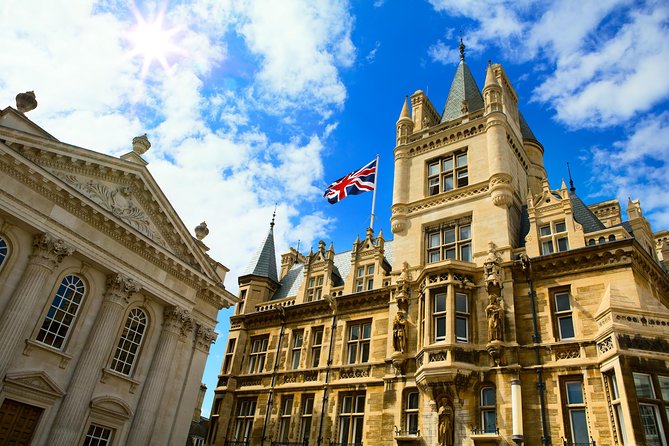
Opposite Great St Mary’s is the Senate House. The guide points out that this is where students graduate, which changes how you interpret what you’re seeing. It’s not just a “cool building.” It’s the administrative heart where ceremonies become official.
Another reason this stop works: it reinforces the tour’s theme that Cambridge is made of systems. The colleges handle much of daily life, but institutions like the Senate House handle the “big university” processes. That helps you understand why Cambridge doesn’t feel like a single campus the way some universities do.
This stop is about 5 minutes and marked as free. You’ll likely get a quick, targeted explanation rather than an extended lecture. That keeps the tour moving at a pace that still feels organized.
Trinity College gatehouse and King’s Parade: Newton and chapel views without the crowds
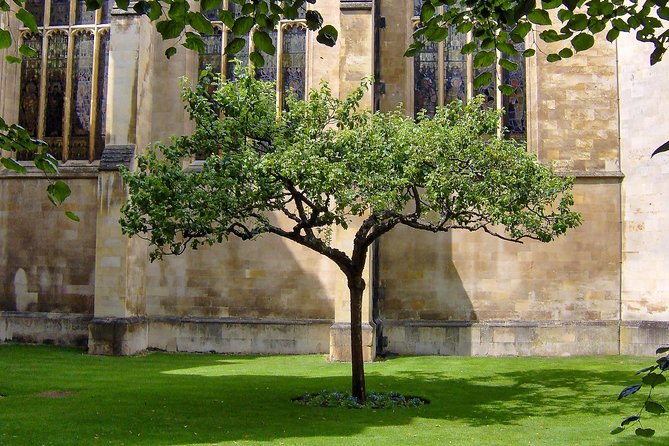
From the University core, the tour reaches Trinity College, usually via an outside look at the gatehouse and Isaac Newton’s apple tree. This kind of story works well on a walking tour because you’re seeing the setting that the legend is tied to.
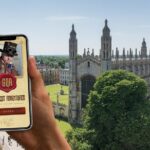
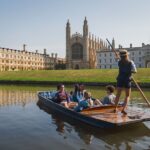
Then you get views from King’s Parade, where the tour looks at the exterior of King’s College, including the magnificent chapel. You’re not going inside here—this tour is built for exterior interpretation plus a couple of possible college entrances—yet you still get the visual payoff.
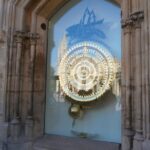
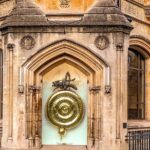
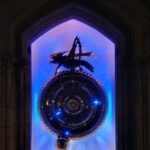
One more stop sits on the same parade: the Corpus Clock. It’s described as one of the newer additions, and the guide explains why it matters. Even if you don’t care about clocks as objects, it’s a good example of Cambridge blending old and new without turning either into a museum-only theme.
These points are short (around 5 minutes each), but they cluster the “big-name” Cambridge visuals in a way that helps your memory. You leave knowing what you saw and why it matters.
St Edward’s, St Bene’t’s, and the oldest tower idea
The tour continues with St Edward’s Church (Church of England). Here, the guide includes an intriguing claim: it is said the first Protestant sermon was preached in England at this church. Whether you’re religious or not, it’s the kind of historical detail that makes Cambridge feel less like a set of buildings and more like a city shaped by arguments, reforms, and public change.
Next is St Bene’t’s Church, where you’ll admire the tower. This is described as the oldest building in Cambridge, dating from around c. 1020. That single date range is a reminder that while Cambridge University is famous, the city’s timeline stretches far beyond it.
These stops are brief, about 5 minutes each. But they help break up the university-and-college rhythm with a deeper time scale. It’s part of why the tour feels different from generic “college photo run” walks.
The Eagle pub and Old Cavendish Laboratory: mixing famous landmarks with the practical science story
After St Bene’t’s, the tour looks at The Eagle pub across the way. It’s a small street-level detail, but it adds texture. Cambridge isn’t only gates and chapels. It’s also where people eat, meet, and live around the institutions.
Then you get to Old Cavendish Laboratory, associated with significant scientific work and discoveries. This stop gives balance to the tour’s stronger religious/theological thread. You’ll see that Cambridge isn’t just about ideas in sermons and theology. It’s also about experiments, institutions, and the long arc of research.
One review raised a concern about theology taking over too much compared with famous scientific work. This Cavendish stop is the built-in counterweight. Still, if science is your top priority, I’d go into the tour with open eyes and expect context more than a science museum tour.
Christ’s College, Emmanuel College, and Sidney Sussex: how the story keeps moving
As you near the end, you’ll encounter additional possible college stops such as Christ’s College, Emmanuel College, and Sidney Sussex. Like the earlier college calls, entrance is not guaranteed, and access depends on day rules.
The tour frames these colleges not just as pretty architecture, but as parts of a system that shapes how knowledge is housed and transmitted. Courtyards and chapels show off the visual side, while the guide’s explanation ties it back to founders, structures, and long-standing traditions.
These college stops are typically around 10 minutes, which is enough to understand what you’re looking at without dragging the whole group into a queue.
If you’re the type who loves spotting differences between college styles (stone shades, chapel forms, gate shapes), this part is where it starts to click. You stop seeing “random colleges” and start seeing patterns.
Price and value: what $20.80 buys in Cambridge
At $20.80 per person, this tour is priced for value if you want a guided, time-efficient orientation. You’re not paying for just someone walking beside you. You’re paying for:
- a focused route through the university center,
- a Round Church Visitor Centre start with included exhibition and 20-minute film, and
- a guide who answers questions in a small group setting.
That included film/exhibition is a big piece of the value equation. It would cost you extra separately if you arrive without a guide. Plus, you’re getting interpretation across multiple famous spots, including churches, major university buildings, and college exteriors.
Also, the walking time is short enough to fit into a travel schedule. About 2 hours in Cambridge can be the difference between “I saw things” and “I understand what I saw.”
Who should book this Cambridge University walking tour
This tour is a great match if you want:
- a clear introduction to how Cambridge University is organized around colleges,
- guided context at churches and university buildings (not just photos),
- a small-group vibe where your questions get answered.
It may feel less ideal if you:
- want a fast, purely science-first highlight reel,
- need slow mobility-friendly pacing (it’s not recommended for limited mobility),
- expect guaranteed entry into major colleges every time (it’s not guaranteed, and exam term closures apply).
Families can do well too. One review described it as family friendly, with parents and young kids asking lots of questions and staying comfortable with the group pace.
Quick practical tips before you go
- Wear shoes you can walk in. The pace is described as moderate to fast.
- Bring a rain layer. One guest noted the tour ran even in pouring rain.
- If you’re traveling with a dog, plan on keeping it outside college areas.
- If you’re sensitive to a theology-forward emphasis, go in expecting that Cambridge’s story includes belief systems and historical religion shaping institutions.
- For the best chance of college entries, pick a date outside exam term (late April through end of June is when college entry is restricted).
Should you book this Cambridge University walking tour?
Yes, if you want a guided way to understand Cambridge’s structure—colleges, university institutions, and the older religious world that helped set the tone. The Round Church start with the included exhibition and film is a strong reason to choose this over a generic walk, and the small group keeps it interactive.
I’d especially recommend it if you’re the kind of traveler who enjoys asking why things are the way they are, not just where to take pictures. If you’re mainly after science, you’ll still see the Old Cavendish Laboratory, but you should know the narrative may spend more time on theology and founding ideas than you expect.
If your goal is clarity—what Cambridge is and how it works—this tour is a solid bet.
FAQ
How long is the Cambridge University walking tour?
It runs about 1 hour 30 minutes to 2 hours.
What does the tour cost?
The price is listed as $20.80 per person.
Where does the tour start?
It starts at The Round Church Vestry, 9a Bridge St, Cambridge CB2 1UB, UK.
What time does the tour begin?
The start time listed is 2:15 pm.
Is the tour in English?
Yes, it’s offered in English.
Is a mobile ticket used?
Yes, the tour uses a mobile ticket.
Are college entrances guaranteed?
No. You may enter approximately two colleges, but entrance depends on restrictions and access on the day, and it isn’t guaranteed.
Do you get into the Round Church visitor area?
Yes. Guided walk tickets include admission to the Round Church exhibition and a 20-minute film.
Are service animals allowed?
Yes, service animals are allowed.
Can I bring a dog into the colleges?
Dogs must remain outside any colleges visited due to college restrictions.
Who can join, and is it suitable for kids?
Children under 16 must be accompanied by a responsible adult. The tour is not recommended for those with limited mobility.