REVIEW · BIKE TOURS
Boston City View Bicycle Tour: History and Landmarks
Book on Viator →Operated by Urban AdvenTours · Bookable on Viator
Pedal through Boston’s biggest hits fast. This Boston City View Bicycle Tour strings together neighborhoods, parks, and landmark facades in one guided loop, with history you can actually place on the map. You’ll roll past the North End and its Italian feel, sweep through Back Bay and the South End’s brownstone streets, and cross paths with the Freedom Trail more than once without cramming in a full walk.
I love the start-of-tour setup: you get a bike-and-helmet safety fit before you move, and the guides run the ride like a real system, not a casual shuffle. I also like the way the route mixes classic postcard Boston with “you might miss this on foot” streets, helped by guides such as Gary and Bob, and others like Jon, Costa, Charles, and Austin from different days.
One consideration: you really do have to be comfortable riding on city streets. Even when the pace is controlled, you share space with cars, pedestrians, and other cyclists, and you’ll still pedal on standard bikes (e-bikes are an upgrade, but they have height/age rules).
In This Review
- Key things I’d watch for before you book
- A 2.5-hour “get oriented” tour that still feels like a real ride
- Safety and comfort at Urban AdvenTours (where the tour really begins)
- North End to the waterfront: garlic streets, Italian Boston, and Old Ironsides views
- TD Garden and the “sports + concerts” spine
- Beacon Hill and Louisburg Square: photographed blocks and literary name-drops
- Over the Charles: Hatch Shell, the Esplanade, and Fourth of July energy
- Fenway Park outside: a sports icon stop that works even for non-fans
- The Emerald Necklace Fens: WWII Victory Gardens and two major museums nearby
- Museum of Fine Arts and the Gardner Museum: art stops without forcing a full ticket day
- Christian Science Plaza and the fountain moment
- South End brownstones and cast iron: where the city looks like a postcard
- Copley Square: the Back Bay hub that ties together landmarks fast
- Boston Common and Downtown Crossing: oldest park energy and shopping district history
- Freedom Trail crossings: you get the meaning without the full walk
- Price and bikes: what $78 buys you in real-world terms
- Group size, pace, and what you should wear
- Who this Boston City View bike tour suits best
- Should you book this tour?
- FAQ
- How long is the Boston City View Bicycle Tour?
- Where does the tour start and what time does it run?
- What is the price?
- Are helmets provided?
- Can I choose an e-bike instead of a regular bike?
- What kind of fitness level do I need?
- What neighborhoods and landmarks are included?
- Will you ride the entire Freedom Trail?
- Is the tour refundable if I cancel?
Key things I’d watch for before you book
- Helmet + bike fitting before you roll so the ride starts with safety, not guesswork
- A multi-guide team that helps keep the group together at intersections
- Freedom Trail crossings that give context without forcing the whole route on bikes
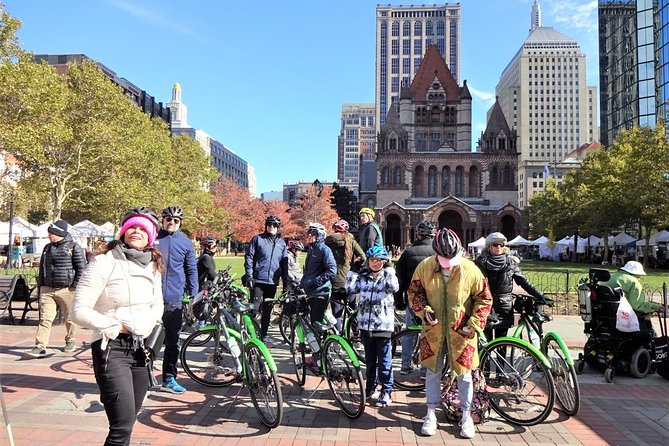
- Big sights with short stops: Fenway, Boston Common, Copley Square, Trinity Church, and more
- Neighborhood contrast by design from the North End’s Italian streets to Beacon Hill’s photographed blocks
- E-bike upgrade option for hills, if you meet the stated height/age requirement
A 2.5-hour “get oriented” tour that still feels like a real ride
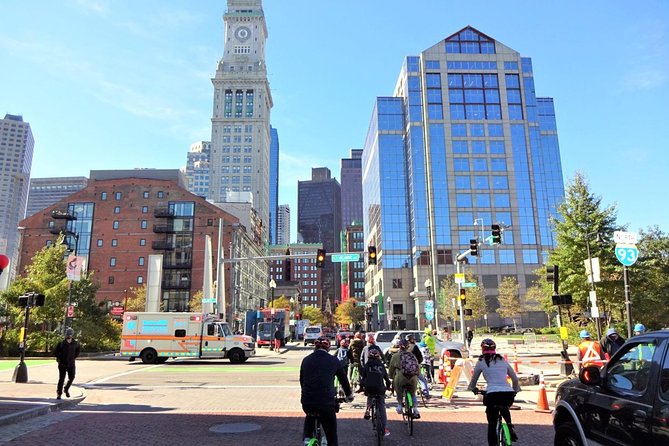
If you’re in Boston for just a day or two, this kind of tour earns its keep. Walking can show you a neighborhood’s texture, but it’s slow for connecting places like the North End, Back Bay, Fenway, and Downtown. Biking compresses that learning curve. You can look left and right, take in architecture and street life, and still cover a lot of ground in a single morning.
The timing also matters. Starting at 10:00am gives you decent daylight for photos and landmark viewing, and it avoids the late-day chaos that can make city walking feel crowded fast. The tour runs about 2.5 to 3 hours, and it’s built for “see, learn, then go explore more on your own.”
You can also read our reviews of more city tours in Boston



Safety and comfort at Urban AdvenTours (where the tour really begins)
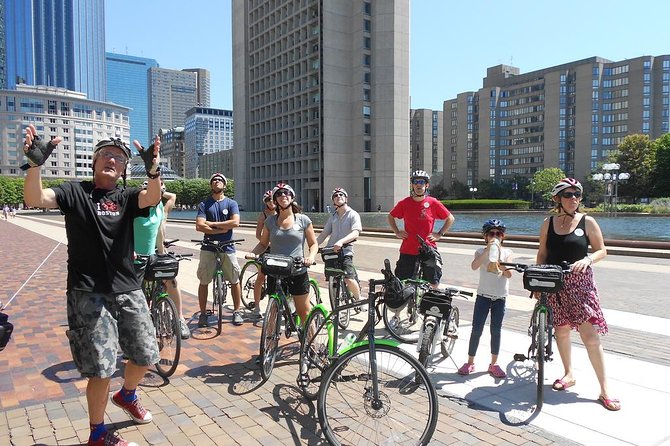
Your first real step is safety and setup. You meet at Urban AdvenTours, 103 Atlantic Ave, and you’re asked to arrive about 30 minutes early for a waiver and bike fitting. That fitting isn’t just paperwork. They match you to the bike so you’re not wrestling with an awkward seat or reach while the tour is starting.
You also get a helmet. In Boston, helmets matter because you’re not riding in a closed park. You’re cycling in real traffic patterns with real crossings. The ride is designed for city biking, so you’ll want your gear and bike comfort to be dialed in right away.
A detail that I think helps a lot: the guides explain what to expect and share safety rules of the road before you go. That “start briefing” reduces the mental load later when you’re focusing on turns, lane changes, and group spacing.
North End to the waterfront: garlic streets, Italian Boston, and Old Ironsides views
The ride starts in the North End, Boston’s long-running Italian neighborhood. You don’t just pass by it—you move through it at a speed that lets you notice the street feel. The tour route is likely to put you in that classic North End atmosphere where the smell of garlic and the idea of cannoli are never far away.
From there, the tour continues toward the waterfront. One standout moment is seeing Old Ironsides from across the water. You don’t need museum tickets or long detours for this. It’s a “glance and anchor it in your mind” kind of stop, especially if you’re trying to understand how Boston’s history links land and sea.
You’ll also get a bit of city design talk on the way—guides share fun facts about a newer bridge and its inspiration. This is the kind of background that’s easy to miss on a standard sightseeing day, and it adds context when you later spot similar design choices around town.
TD Garden and the “sports + concerts” spine
As you ride, you pass TD Garden, which anchors a big slice of Boston’s modern identity. Whether you care about the Bruins or the Celtics, this is a good landmark because it’s unmistakable and it sits right in the flow of the city.
There’s also a practical benefit to including a stop like this: it gives you a mental routing point. Once you’ve seen TD Garden by bike, you can later orient yourself to where major venues sit relative to Downtown, the river, and the parks you’ll hit next.
Beacon Hill and Louisburg Square: photographed blocks and literary name-drops
Next comes Beacon Hill, one of Boston’s most recognizable neighborhoods. The tour route cycles through streets that feel built for photos—brick, stoops, classic proportions, and that “Boston postcard” look people travel for. Even if you’re not a hardcore architecture nerd, biking helps you notice why Beacon Hill looks the way it does. You move enough to see patterns, not just single buildings.
Then you hit Louisburg Square, known as a literary square. The tour highlights past residents like Louisa May Alcott and Robert Frost. That’s a useful detail because it turns a pretty little square into a story you can place. Instead of “pretty greenspace,” you get a sense of who lived around it and why that matters.
You can also read our reviews of more historical tours in Boston





Over the Charles: Hatch Shell, the Esplanade, and Fourth of July energy
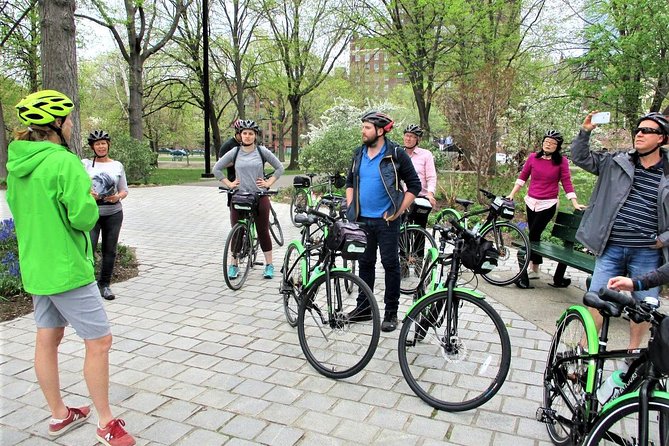
One of the best “feel Boston” stretches is along the Charles River Esplanade. You ride by the Hatch Shell, the outdoor stage associated with the Boston Pops. Even if you’re not attending a show, you can still picture the shell’s role in city gatherings because it’s so clearly designed for crowds and music.
On hot summer days, this area also has a playful side. The tour later mentions people running through fountains at the Christian Science Plaza, and you’ll get that same sense of “Boston uses its public spaces” when you’re by the river.
Also, keep your eyes open for the park rhythm. Cycling along the water doesn’t just offer scenery. It helps you connect the parks, bridges, and downtown zones so the city starts making sense as a system.
Fenway Park outside: a sports icon stop that works even for non-fans
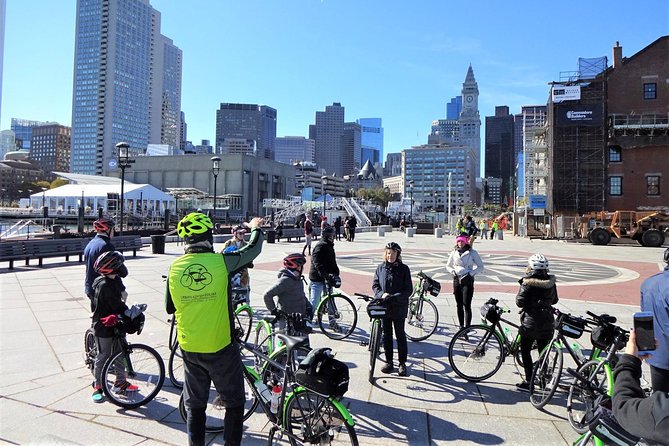
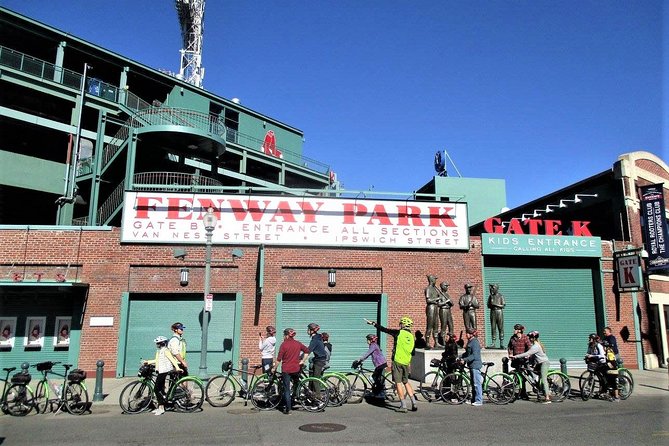
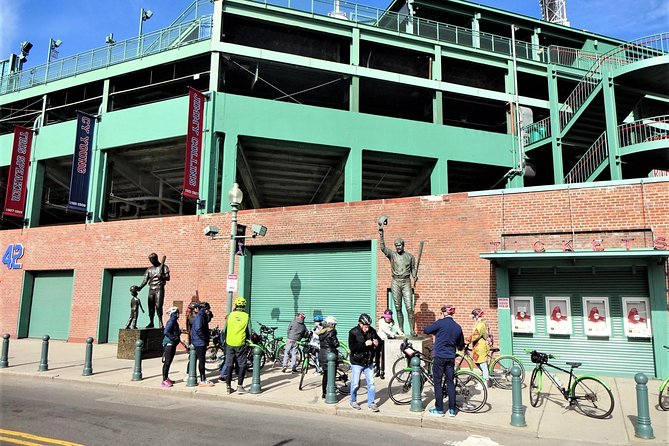
The tour stops outside Fenway Park, home to the Boston Red Sox. This is one of those “you don’t need to go inside to get the point” landmarks. It’s famous enough that seeing it from the street instantly tells you you’re in real Boston, not a generic city tour.
Fenway also acts like a gateway to the Emerald Necklace park system. The tour rides through the Back Bay Fens, designed by landscape architect Frederick Law Olmsted. You’re not just looking at a park. You’re seeing a planned green corridor concept that shaped how Boston connects neighborhoods with nature.
The Emerald Necklace Fens: WWII Victory Gardens and two major museums nearby
The Back Bay Fens area has layers. The tour mentions Victory Gardens dating back to WWII, which adds a “people used this space for survival and community” angle. That’s more meaningful than it sounds. It reframes the greenery as something Boston built and maintained for real life, not just beauty.
The route also passes two art-and-culture anchors near the Fens: the Isabella Stewart Gardner Museum and the Museum of Fine Arts (MFA). The tour includes a stop at the MFA area for an outdoor art installation view, with banners that can help you understand what’s on exhibit. Even if you don’t plan museum time that day, seeing these institutions in context helps you decide later what’s worth ticket-buying.
Museum of Fine Arts and the Gardner Museum: art stops without forcing a full ticket day
At the MFA, you’ll stop to see one of the museum’s unique outdoor installations. This kind of stop is smart on a bike tour. You get art context without losing the entire ride to lines, timed entry, and indoor time.
The tour also passes by the Isabella Stewart Gardner Museum, with encouragement to plan a visit during your time in Boston. That makes sense because the museum is a major standalone experience. On a bike tour, you learn where it is and why it matters, but you’re not locked into an all-day museum schedule.
If you’re trying to balance “see a lot” with “don’t burn out,” this structure works well.
Christian Science Plaza and the fountain moment
Next up: Christian Science Plaza, where you can admire the Christian Science building and reflecting pool. There’s also a practical, human detail: on hot summer days, guests have been known to run through the fountains. Even if you don’t, it’s a reminder that these big civic spaces are active public rooms, not just backdrop.
Guides share information about a stunning feature inside that they encourage you to check out. In other words, you’re not just looking at a landmark. You’re getting a reason to care about what’s behind the façade when you have time later.
South End brownstones and cast iron: where the city looks like a postcard
The tour rides through the South End, famous for its brownstone townhouses and cast iron details. This section benefits from biking more than walking, because the density of detail can be tiring on foot. By bike, you can keep moving while still noticing repeating textures—stoops, ironwork, and the way the streets feel lived-in.
This is also one of the best places to pause mentally. If you like Boston aesthetics, the South End is where you’ll start linking the neighborhood look to the stories you heard at earlier stops.
Copley Square: the Back Bay hub that ties together landmarks fast
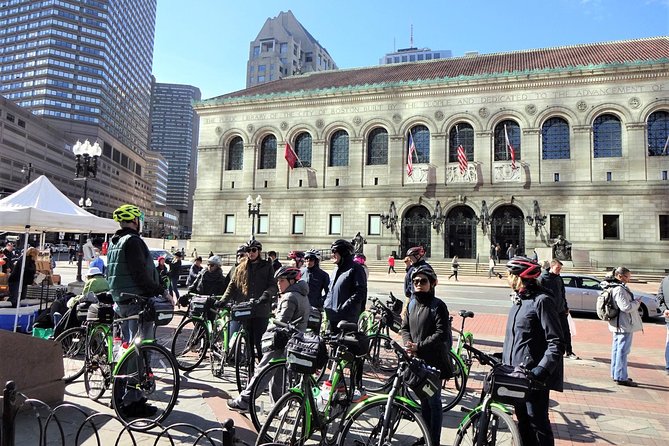
You’ll reach Copley Square, described as the heart of Back Bay. This square is a natural bike-tour anchor because several major landmarks sit around it:
- John Hancock building
- Trinity Church
- Boston Public Library
It also marks the finish line for the Boston Marathon, which gives the whole plaza a sports-and-tradition feel even when you’re just cruising through.
The tour includes quick viewing stops at Trinity Church, the Boston Public Library, and the John Hancock Tower. These aren’t deep museum visits; they’re “connect the architecture to the city story” stops. If your goal is orientation and inspiration, they work well.
Boston Common and Downtown Crossing: oldest park energy and shopping district history
From Copley, you roll into Boston Common, America’s oldest park. This is a great transition point. You get landmark context, then you shift into a space that Boston uses as a public living room. Even a short viewing stop helps you understand why the Common keeps showing up in Boston storytelling.
Then comes Downtown Crossing, the original shopping district. The tour passes the Old South Meeting House, which is a strong reminder that Boston’s city center isn’t only about retail. It’s also about the places where ideas and history took shape.
Freedom Trail crossings: you get the meaning without the full walk
People often ask if you ride the full Freedom Trail. You don’t do the entire route on bike, but you do cross over the Freedom Trail multiple times. That’s the key value here: you get the “this is where the trail goes” understanding while keeping the day bike-friendly.
Why that matters: if you later decide to walk parts of the Freedom Trail, you’ll know where you are and why each stop matters. The ride gives you a mental map, not just a list of sites.
Price and bikes: what $78 buys you in real-world terms
The tour is $78 per person for about 2 hours 30 minutes. For a guided, landmark-to-landmark bicycle route, I’d call that good value—especially because you’re seeing multiple neighborhoods (including North End and Back Bay) plus major sights like Fenway Park, Boston Common, and Copley Square.
Your cost also covers the core experience pieces: the guided tour time and the practical safety setup (helmet provided and bike fitted). Most stops are outside viewpoints, so you’re not stacking paid admissions into your schedule.
You also have a bike choice at checkout:
- City Bike or E-bike upgrade
- E-bikes may not be available every day
- E-bikes require you to be 16+ and at least 5 feet tall
- The ride is recommended for ages 12+, but you must be comfortable riding in the street
One small but important practical note: standard bikes are pedal-driven. There’s no throttle to do the work for you, so if you’re coming in with low stamina, an e-bike can make the difference between enjoying the ride and rushing through the scenery.
Group size, pace, and what you should wear
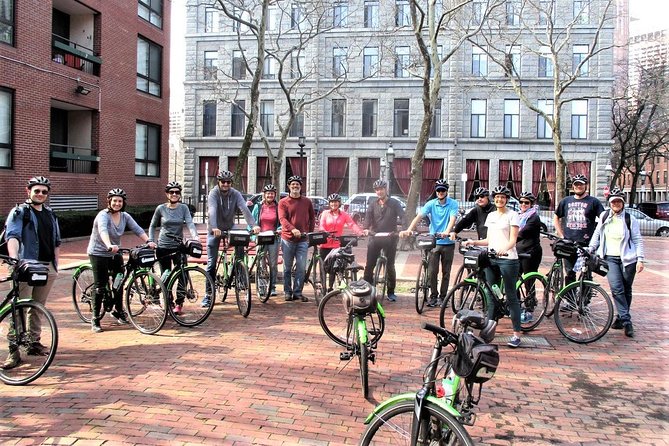
This tour runs with a maximum of 32 travelers, and the ride uses multiple guides to help supervise the group. That’s a comfort factor. It tends to mean you’re not alone out there, and it’s easier to stay together at busy intersections.
The ride also isn’t meant to be a workout death march. You’ll still move at a steady pace for a few hours, and hills can show up early in the tour. Based on typical cycling day reports, expect something in the rough range of about 8 to 11 miles, depending on pace and conditions.
Dress for weather. The tour operates in all weather, so bring layers and be ready to adjust. And yes, wear sneakers.
Who this Boston City View bike tour suits best
This is a strong choice if you want:
- A fast, guided orientation to Boston’s layout
- A way to see multiple neighborhoods without getting worn out
- Landmark context paired with street-level neighborhood atmosphere
It’s also a good fit for first-time visitors who want to understand where the Freedom Trail and major parks fit into the city. If you’re traveling with friends or family who agree on a “see it all, then decide what to revisit,” this format matches that style.
If you hate sharing space on busy streets, or you’re not comfortable with street riding, skip it and pick a slower walking tour instead.
Should you book this tour?
Book it if you want Boston in one hit: North End to Back Bay, Fenway to Boston Common, and Freedom Trail crossings that help you understand the city’s big story. The combination of safe bike setup, multiple-guide supervision, and quick stops at high-impact landmarks is what makes this worth your time.
Don’t book it if you’re hoping for a fully car-free ride or a relaxed, stop-every-5-minutes experience. You’re cycling through real city streets, and comfort riding matters. If you’re on the edge, choose the e-bike upgrade (as long as you meet the height/age requirement) so you can enjoy the views instead of managing your legs.
If you want one practical Boston day that makes the rest of your trip easier, this is a smart way to start.
FAQ
How long is the Boston City View Bicycle Tour?
The tour lasts about 2 hours 30 minutes.
Where does the tour start and what time does it run?
You meet at Urban AdvenTours, 103 Atlantic Ave, Boston, MA 02110. The listed start time is 10:00am, and you should arrive about 30 minutes early.
What is the price?
It costs $78.00 per person.
Are helmets provided?
Yes. Helmets are provided.
Can I choose an e-bike instead of a regular bike?
Yes, you can select a pedal-assist e-bike upgrade at checkout. E-bikes may not be available every day. To ride an e-bike, you must be 16 years or older and at least 5 feet tall.
What kind of fitness level do I need?
The tour is recommended for travelers with moderate physical fitness, and you should feel comfortable riding in street traffic. It’s recommended for 12 years and older.
What neighborhoods and landmarks are included?
The route includes about 6 Boston neighborhoods, including the North End (Little Italy) and Back Bay, and you’ll see major sights such as Fenway Park, Boston Common, Copley Square, and places including TD Garden, Louisburg Square, Christian Science Plaza, and the Rose Kennedy Greenway.
Will you ride the entire Freedom Trail?
Not the entire Freedom Trail. The tour crosses over the Freedom Trail multiple times, but it isn’t possible to follow the full trail route by bike.
Is the tour refundable if I cancel?
No. The experience is non-refundable and cannot be changed for any reason. If it’s canceled due to poor weather, you’ll be offered a different date or a full refund, and if the minimum traveler number isn’t met, you’ll be offered a different date/experience or a full refund.