REVIEW · FREEDOM TRAIL TOURS
Boston: Tour of The Freedom Trail with Historic North End
Book on GetYourGuide →Operated by Histrionic Academy · Bookable on GetYourGuide
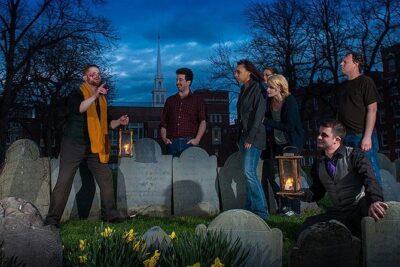
Freedom Trail feels personal in the North End. This 105-minute walking tour uses a colonial-costumed historical guide and live narration to take you past the usual headline stops, then push farther into Boston’s North End. I love that you’re standing on the places where the stories happened, especially at the Granary Burying Ground and the Boston Massacre site. One thing to plan for: it’s a walk with plenty of listening from a stand-in-place position, so bring comfortable shoes and expect about two hours outdoors.
The guide experience is the secret sauce here. I’m drawn to the way named guides like Catherine, Ben, and Elena (Mother Goose) get praised for keeping energy up, making the details click, and staying in character even when the weather isn’t cooperating. If you want the Freedom Trail without doing the map math yourself, this tour does that legwork for you.
Here’s the real value: it covers the standard stretch from Boston Common toward Faneuil Hall, then continues into the North End to continue the revolution story around Paul Revere’s House—without trying to turn it into a museum day.
In This Review
- Key points to know before you go
- Boston Common Visitor Center: where the Freedom Trail starts
- Price and timing: what $26 buys in about two hours
- Walking the colonial core: Boston Common to Faneuil Hall
- Boston Common (Stop 2)
- Massachusetts State House (Stop 3)
- Park Street Church (Stop 4)
- Granary Burying Ground (Stop 5)
- King’s Chapel Burying Ground (Stop 6)
- Boston Latin School and the Benjamin Franklin statue (Stop 7)
- Old Corner Book Store (Stop 8)
- Old South Meeting House (Stop 9)
- Old State House (Stop 10)
- Boston Massacre site (Stop 11)
- Faneuil Hall (Stop 12)
- The North End shift: from famous headlines to Paul Revere’s story
- Paul Revere House (Stop 13)
- Paul Revere Mall (Stop 14) and the finish (end point)
- What makes the stops work (and where you’ll feel the limits)
- Guide quality: the character factor and why it matters
- Tips to enjoy this tour more: shoes, sightlines, and a simple plan
- Wear comfortable shoes, but also think about standing time
- Bring weather-appropriate layers
- Start with a quick goal
- If you’re sensitive to crowding, pick a listening lane
- Who should book this Freedom Trail plus North End walk?
- Should you book this Freedom Trail tour with the Historic North End extension?
- FAQ
- Where does the tour start?
- How long is the Freedom Trail tour with the North End extension?
- Does the tour include entry into museums or attractions?
- What parts of the area does the tour cover, and does it include Charlestown?
- Is the tour wheelchair accessible?
- What should I bring for the tour?
- Are there any restrictions during the tour?
- Can I get a refund if I cancel?
Key points to know before you go
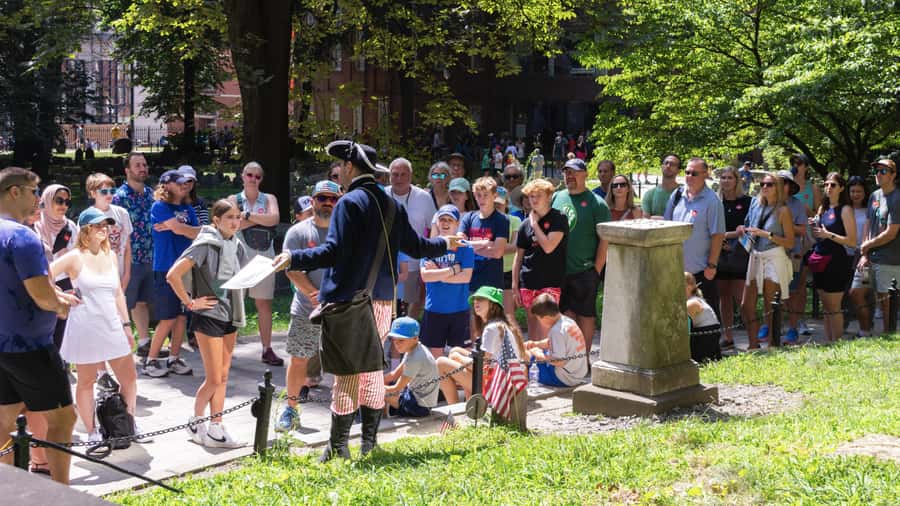
- Colonial-costumed, live narration at actual historic sites, not just roadside facts
- Freedom Trail core plus the North End, including Paul Revere’s House area
- Gravestone stops that matter, like Granary Burying Ground and King’s Chapel Burying Ground
- Short distance, lots of story time across roughly 1.3 miles plus the North End extension
- Great value at $26, since the price is mainly for guide interpretation (not museum tickets)
- Strong guide reputation, with many outings highlighting engaging, fun storytelling
Boston Common Visitor Center: where the Freedom Trail starts
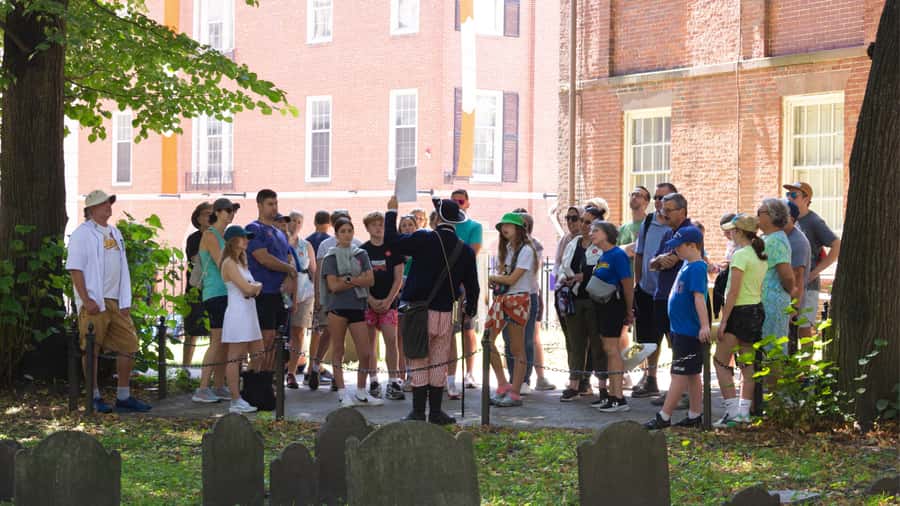
Your tour kicks off at 139 Tremont St, the Boston Common Visitor Center. You’ll want to arrive about 15 minutes early because the group leaves on time. This matters more than usual, since once you’re moving you’ll cover ground quickly, and the narration only works if everyone starts together.
The Boston Common itself is an ideal launch point. It’s Boston’s first public park, and it sets a real-world scene for the rest of the day. From there, the tour shifts from modern city noise to colonial-era stakes—politics, protest, and power—without you needing a history degree.
Also, you’ll be walking in a central area where it’s easy to judge your route visually. If you’re the kind of person who likes to know where you’re going, you’ll probably feel calmer once you see the layout.
You can also read our reviews of more historical tours in Boston


Price and timing: what $26 buys in about two hours
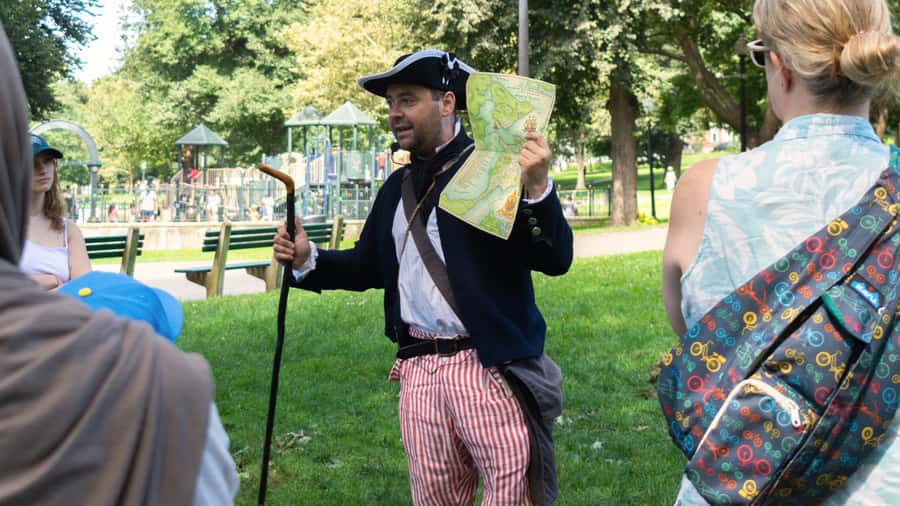
The price is $26 per person, and the listed duration is 105 minutes (plan for up to about 2 hours). For Boston, that’s a pretty straightforward deal if your priority is guided storytelling rather than museum admission.
Why the value works: you’re paying for historical interpretation from a costumed guide who narrates live. The tour doesn’t require you to buy separate tickets for any museums or attraction interiors, which can quickly add up in a place like Boston. You still get plenty of “wow moments,” but they’re mostly outdoors or in areas you can view without ticketed entry.
The pacing is also worth noting. Some guides spend more time talking at each stop, which can feel perfect if you love details, and less perfect if you’re hoping to rush to every landmark. Either way, this is not a quick-hit drive-by tour. You’ll stand, walk, stop, and listen.
Walking the colonial core: Boston Common to Faneuil Hall
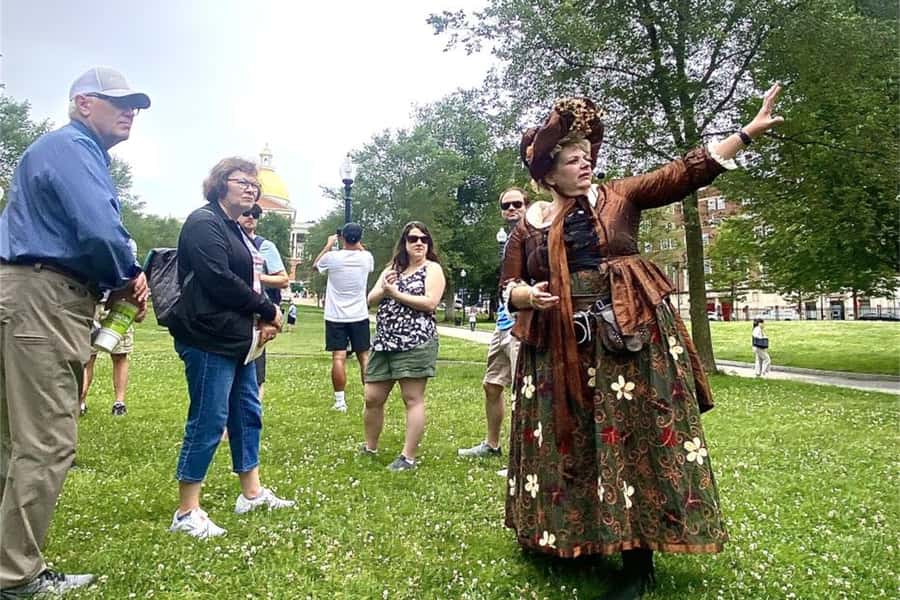
The tour first moves through the classic Freedom Trail zone, starting near the Massachusetts State House and working through a tight cluster of famous Revolutionary-era landmarks.
Boston Common (Stop 2)
You’ll get a photo stop plus a guided introduction. This is where the guide frames what you’re about to see—why these sites line up the way they do, and what changed as the colonies moved toward revolution.
Tip for your photos: focus on capturing the context around the landmark, not just the landmark itself. Boston’s streets and sidewalks help you understand the era even when the buildings don’t look “period-perfect.”
Massachusetts State House (Stop 3)
You’ll have a photo stop and narration as you pass. Even if you’ve seen it from outside before, the guide’s explanation can help you connect the present-day seat of power with the pushback people were organizing in the 1700s.






Park Street Church (Stop 4)
This stop includes a visit and guided tour. The tour highlights it as a key early public institution—one more reminder that independence wasn’t only fought in speeches and battles. It was built through education, civic life, and institutions.
Granary Burying Ground (Stop 5)
This is one of the emotional anchors of the tour. You’ll visit and hear guided interpretation in an area where American founding-era figures are buried. If you’ve ever wondered why gravestones feel like history that hits harder than books, this is why. The guide’s job here is to connect names to moments, and moments to meaning.
King’s Chapel Burying Ground (Stop 6)
Another guided cemetery stop. The value here is how it adds depth and variety to the story. You’re not just hearing about rebellion; you’re seeing how community life, faith, and status all overlapped in the era.
Boston Latin School and the Benjamin Franklin statue (Stop 7)
You’ll have a photo stop with visits and narration. If you’re trying to understand why Boston produced so many thinkers and organizers, the education angle matters. This is a good moment to remember that politics and protest were powered by people with training and networks.
Old Corner Book Store (Stop 8)
This includes a photo stop, guided tour elements, and narration as you pass. Bookshops sound small compared to forts and churches, but this is part of what made public ideas spread. If you like the culture side of revolution, you’ll appreciate this stop.
Old South Meeting House (Stop 9)
Another famous meeting place. You’ll have photo stop time plus guided interpretation. This is where the tour shifts from individuals to the machinery of public protest—how people gathered, heard arguments, and decided to act.
Old State House (Stop 10)
You’ll stop here for a visit and guided narration. This is one of those locations where the story is easier to grasp because the building’s role as a civic stage is clear. Expect the guide to connect legal authority and resistance.
Boston Massacre site (Stop 11)
This is an important stop: photo time plus visit and narration. It’s often easier to understand the event once you’re in the physical setting. The guide will help you picture how tension turned into tragedy, and why that mattered to the larger push toward independence.
Faneuil Hall (Stop 12)
You’ll have a photo stop and guided tour elements here. Faneuil Hall is one of Boston’s most visited attractions for a reason, but you’re not coming here just to look. You’re coming with context—how it functioned as a place where public debate fed collective action.
The North End shift: from famous headlines to Paul Revere’s story
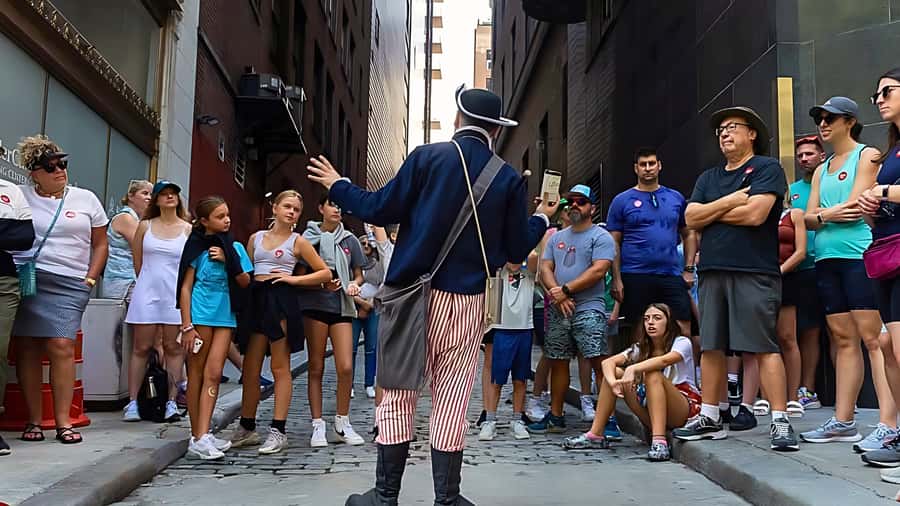
After Faneuil Hall, the tour continues into Boston’s Historic North End neighborhood, where the revolution story keeps running. This is where the walk starts to feel less like a checklist and more like a real neighborhood walk through the layers of the city.
The “why this works” part: the North End gives you a sense of place beyond the headline landmarks. It helps you understand that revolution wasn’t just something that happened in government buildings. It lived in streets, houses, and everyday community rhythms.
Paul Revere House (Stop 13)
You’ll get photo stop time plus a visit and guided narration. The guide frames Revere as more than a name on a poster. Even without museum-style entry inside, the stop helps you connect his story to the geography of Boston.
One practical point: views and outdoor context here matter more than interior access. Since admission inside attractions isn’t included, treat this stop as a chance to learn and orient, not a guarantee of gallery time.
Paul Revere Mall (Stop 14) and the finish (end point)
The tour finishes at Paul Revere Mall. You’ll get photo stop and guided interpretation as you head toward the end, so the guide can land the story with a clean wrap-up.
If you plan to keep exploring afterward, this is a nice place to transition into independent wandering. Just remember: the tour ends here, so if you need restrooms or want to buy snacks, build that into your post-tour plans.
What makes the stops work (and where you’ll feel the limits)
This tour succeeds because it’s built around live narration tied to location. Instead of reciting dates while you’re moving past buildings, the guide pauses you at the right moments so the story sticks.
You also get a lot of variety in the “types” of history:
- Civic and political life at meeting and government sites
- Community and education at institutions like early public schooling
- Revolutionary emotion at burial ground stops and the Massacre site
- Cultural spread hinted at by places like the book store stop
Where you may feel friction: time spent listening. Some people love that; others may find it a bit of a standing challenge. Since the tour is wheelchair accessible, the route is designed to be doable, but it’s still a guided walking experience with frequent stops where you’ll need to be able to stand or shuffle into position to hear.
Weather can also change how comfortable this feels. One outing I noted from the guide reputation: the tour continued in rain, with the guide keeping character and energy up. That’s good news—just means you should dress for real walking.
Guide quality: the character factor and why it matters
The guide is the main draw, and you can tell from the pattern of praise. Catherine, Ben, Elena (Mother Goose), Captain Pickles, Steve, and Jeremiah (among others) are repeatedly singled out for two things: storytelling that stays entertaining and facts delivered in a way that feels easy to follow.
A couple of specific strengths that show up in how people talk about the experience:
- Guides keep the tone light when appropriate, which helps you stay interested even if you’ve read bits of Freedom Trail history before.
- People mention the tour being well paced, meaning you’re not stuck at one stop forever, but you also don’t feel rushed.
- Some guides go beyond voice narration, with music noted by one guide’s fife playing. Even if you don’t get that exact detail, it signals that the costumed-guide concept can add texture.
If you’re the type who gets lost on self-guided tours, this is a big deal. You’ll leave with names connected to actions and streets connected to events.
Tips to enjoy this tour more: shoes, sightlines, and a simple plan
A few practical moves can make a big difference here.
Wear comfortable shoes, but also think about standing time
You’ll walk a short distance overall, with a mix of standing and listening. Comfortable shoes are your baseline. If you know you struggle to stand, it helps to choose a spot near where the guide talks and be ready to shift positions quickly at stops.
Bring weather-appropriate layers
The tour is outdoors for the bulk of the route. Boston weather can flip quickly, so dress in layers and keep something for rain if you see it in the forecast.
Start with a quick goal
Ask yourself what you want most from the tour:
- The emotion of the Massacre and burial-ground stops
- The civic story of meetings and government buildings
- The neighborhood continuation into the North End
That goal will help you listen better when the guide moves from one era-thread to another.
If you’re sensitive to crowding, pick a listening lane
Groups can be sizable. In at least one outing, the group was around 50 people, and the guide made sure everyone could hear. Still, when you arrive, aim for a spot where you can see the guide’s face and body language—not behind taller people.
Who should book this Freedom Trail plus North End walk?
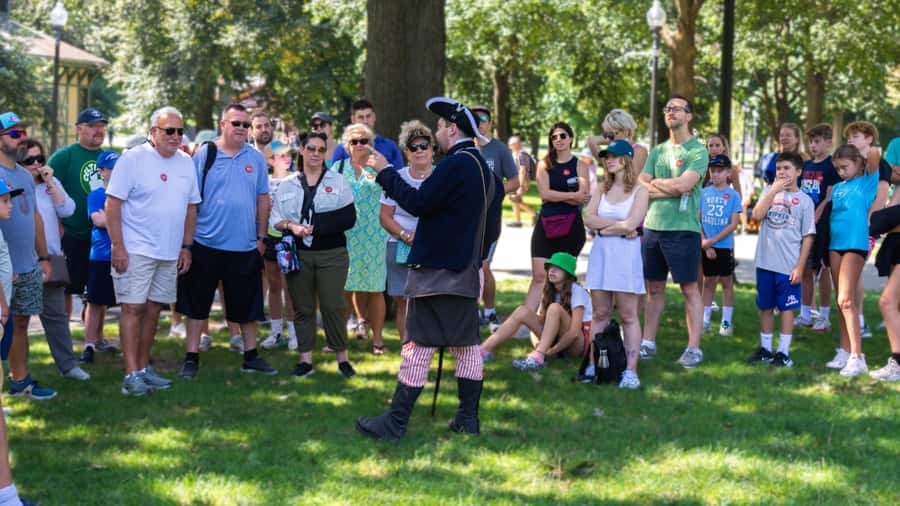
This tour is a strong fit if you:
- Want a guided version of the Freedom Trail without spending time planning the route
- Love story-driven history tied to place
- Want extra depth beyond the headline stops by continuing into the North End
- Prefer a short, timed walking experience rather than a full-day museum-and-transport plan
It’s also a good choice for couples and families who want structure. Kids often handle it fine when the guide uses humor and engagement, and at least one outing was described as keeping younger listeners interested.
One mismatch: if your priority is Charlestown or if you specifically want to cover that area, this tour doesn’t go there. It focuses on the Freedom Trail standard section plus a lesser-traveled extension through the North End.
Should you book this Freedom Trail tour with the Historic North End extension?
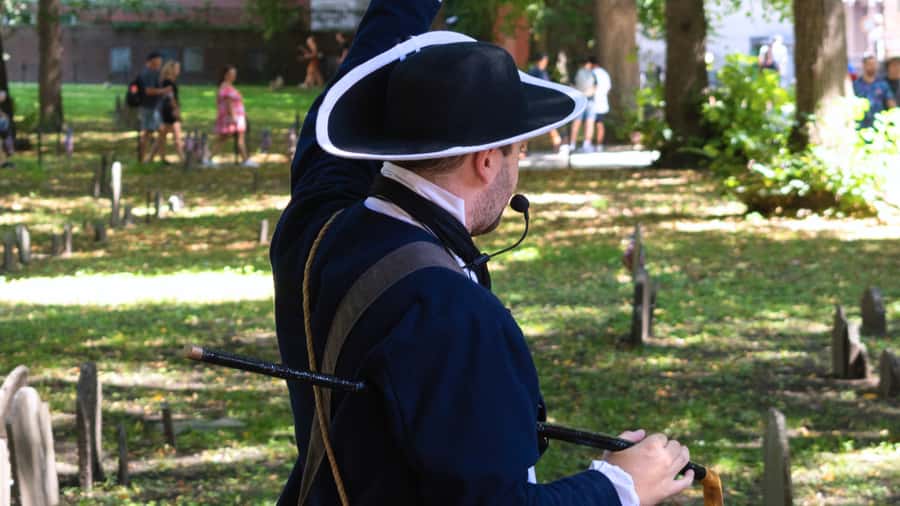
Yes, I think you should book it if you want the Freedom Trail to feel understandable and alive. For $26 and about two hours, you’re getting live narration from a costumed guide plus access to the classic civic trail and a meaningful continuation into the North End around Paul Revere’s story. That combination is the value.
I’d skip it only if you hate standing to listen, or if you specifically want Charlestown included. Otherwise, this is one of the easiest ways to turn a famous route into a coherent story you’ll actually remember when you’re back in your hotel.
FAQ
Where does the tour start?
The tour starts at 139 Tremont St, Boston, MA 02108, at the Boston Common Visitor Center.
How long is the Freedom Trail tour with the North End extension?
The tour duration is listed as 105 minutes, and you should plan for up to about 2 hours.
Does the tour include entry into museums or attractions?
No. Admission inside any museums and/or attractions is not included.
What parts of the area does the tour cover, and does it include Charlestown?
It covers the standard section of the Freedom Trail plus a venture into Boston’s Historic North End neighborhood. It does not cover Charlestown.
Is the tour wheelchair accessible?
Yes, the tour is wheelchair accessible.
What should I bring for the tour?
Bring comfortable shoes and weather-appropriate clothing.
Are there any restrictions during the tour?
Intoxication and alcohol and drugs are not allowed.
Can I get a refund if I cancel?
You can cancel up to 24 hours in advance for a full refund.