REVIEW · HOP-ON HOP-OFF & TROLLEY TOURS
Boston Hop-On Hop-Off Trolley Tour with 13 Stops
Book on Viator →Operated by Historic Tours Of America · Bookable on Viator
Boston’s neighborhoods are easier when you can hop. This hop-on hop-off trolley covers the city’s top sights with live narration and lets you get on and off whenever something catches your eye. I also like the practical design: the trolleys are protected from weather with roll-up plastic windows and heating in winter, so your sightseeing doesn’t turn into a full-time shiver. One drawback to keep in mind is that on some cold days (and during busy traffic), trolley frequency and wait times can be uneven, and you may need a bit more patience than you’d expect.
If you’re doing Boston for the first time, this tour helps you get your bearings fast. You’ll see the Aquarium/Faneuil Hall waterfront zone, the North End, Beacon Hill, and the museums around Fort Point, without having to string together multiple rides. I’ll be honest: the system involves two loops and a transfer point, and that detail is where some people get confused—so go in with a plan and you’ll have a much smoother day.
In This Review
- Key takeaways before you ride
- Starting at 200 Atlantic Ave: the two-loop system that saves time
- The ride experience: weather-ready trolleys and live narration that keeps moving
- 13 stops around Boston: what to see and where hopping off makes sense
- Stop 1: 200 Atlantic Ave (Aquarium, Harbor area, Faneuil Hall)
- Stop 2: 561 Commercial St (Boston North End and Old North Church)
- Stop 3: USS Constitution Museum
- Stop 4: 162 Causeway St (North Station / TD Garden area)
- Stop 5: 28 State St (Downtown Crossing / Historic District / Old State House)
- Stop 6: Cheers (Original Cheers Bar), Boston Common, Boston Gardens
- Stop 7: 2 1/2 Park Plaza (Welcome Center area, Theater District, Public Garden; transfer point)
- Stop 8: Beacon Hill (near Park Street) and the start of the Freedom Trail area
- Stop 9: Boston Tea Party Ships & Museum (plus Children’s Museum and Fort Point Channel)
- Stop 10: Prudential Center / Hynes Convention Center / Observation Deck area
- Stop 11: Christian Science Plaza and Symphony Hall
- Stop 12: Copley Place / Boston Marriott Copley Place Hotel
- Stop 13: Trinity Church area (across from 545 Boylston; near Phillips Brooks statue)
- 1- or 2-day pass: how I’d actually plan your hops
- Price and value: is $52.45 a good deal?
- Common hiccups: transfers, trolley frequency, and “where is the next one?”
- Best for who: families, first-timers, and people with time pressure
- Should you book this Boston hop-on hop-off trolley tour?
- FAQ
- How long is one full rotation?
- Does the trolley tour have live narration?
- Are the trolleys enclosed and heated?
- How many stops are on the route?
- Can I hop on and hop off at stops I choose?
- What areas does the tour cover?
- Does the tour run on Thanksgiving or Christmas Day?
- Is there food allowed on board?
- Can service animals ride on the trolley?
Key takeaways before you ride
- 13 stops on two loops means you can build a route that matches your energy level.
- Live guide narration includes sound effects, and you’ll hear stories tied to what you’re passing.
- Weather-ready trolleys: plastic windows roll up/down, with heating in winter.
- Best use is day-of flexibility: hop off for photos, then jump back on for the next cluster of sights.
- Smart tip from real rides: bring your phone patience. Pull up tickets early so you’re not stuck at the stop.
Starting at 200 Atlantic Ave: the two-loop system that saves time
Your tour starts at 200 Atlantic Avenue, right near the Marriott Long Wharf. This location is convenient because it puts you close to the waterfront sights people usually want first: the Harbor area, the Aquarium area, and Faneuil Hall.
Here’s the part that makes or breaks your day: the route runs as two geographic loops, and you may need to switch at a planned transfer point near Boston Public Garden / the Theater District area. On a cold or rainy day, that transfer can feel like a speed bump, especially if you assume you’ll stay on one trolley for the whole set of stops.
You can also read our reviews of more tours and experiences in Boston.

The ride experience: weather-ready trolleys and live narration that keeps moving
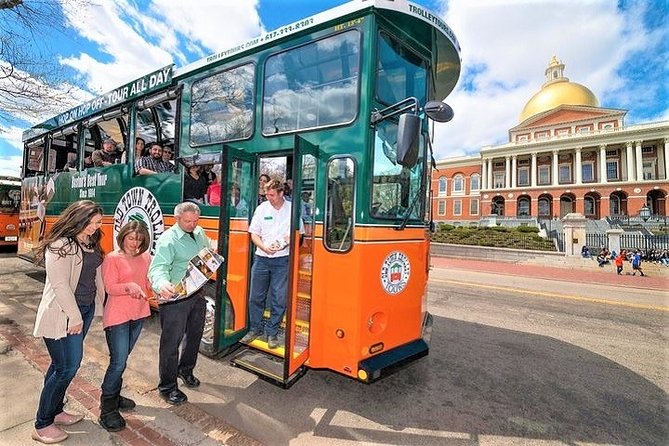
The trolleys are designed for all seasons. They’re not fully sealed like a modern bus, but they do have plastic windows that can roll up or down based on the day, and they’re heated during winter. That matters in Boston, because one hour of exposure can turn into a miserable afternoon.
The tour is fully narrated by a professional guide, with sound effects and city-focused commentary as you roll from stop to stop. I especially like how guides tend to connect the big scenes—politics, ports, neighborhoods—with what you can actually see out the window. Some conductors have a playful style too; if you get a guide with humor, it can make the narration feel like you’re riding with a knowledgeable local who’s enjoying the stories.
13 stops around Boston: what to see and where hopping off makes sense
You’ll cover the major “first Boston” zones along the route, and you can hop off for as long as you want—then re-board when the next trolley comes through.
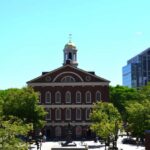
Stop 1: 200 Atlantic Ave (Aquarium, Harbor area, Faneuil Hall)
This is your launchpad for the waterfront. If you want classic Boston views plus easy museum/attraction access, hop off here and use it as your warm-up zone before you head into neighborhoods.
If you plan to pair your trolley ride with nearby attractions, this is one of the best places to start because it clusters options without requiring transfers.
Stop 2: 561 Commercial St (Boston North End and Old North Church)
This stop drops you near the North End, including the area connected with the Old North Church and the neighborhood often nicknamed Little Italy. This is a great hop-off if you want narrow streets, strong neighborhood identity, and the feeling of Boston beyond the waterfront.
If you only have one quick look at the North End, do it here—this stop is built for it.




Stop 3: USS Constitution Museum
If you want one very “Boston-specific” museum stop, this is the one. The USS Constitution area gives you that anchor point for the city’s maritime identity, and it’s easy to plan around because it’s a clear destination.
Hop off if you want a longer visit; stay on if you’d rather keep momentum and save the museum for later.
Stop 4: 162 Causeway St (North Station / TD Garden area)
This is your link between the waterfront and the downtown grid. North Station and the TD Garden zone are useful for orientation, especially if you’re trying to understand how Boston’s transit lines connect across neighborhoods.
This stop is less about one single “must-see,” more about positioning.
Stop 5: 28 State St (Downtown Crossing / Historic District / Old State House)
This is where downtown history and shopping-area convenience intersect. The Old State House area gives you a strong tie to Boston’s early political story, and Downtown Crossing is a natural place to pause for a meal or a restroom break.
If you’re using the trolley as a planning tool, this is a smart stop to hop off for 20–40 minutes and then decide what to prioritize next.
New Orleans Trips covers the New Orleans side of this. Ogden Museum of Southern Art publishes the current hours and closures.
Stop 6: Cheers (Original Cheers Bar), Boston Common, Boston Gardens
This stop is both playful and practical. You can check out the Original Cheers Bar area, then pair it with the green open space around Boston Common and Boston Gardens.
Even if you’re not chasing TV landmarks, the Common is a top “reset” point—good for photos, stretching your legs, and regrouping before the next loop.
Stop 7: 2 1/2 Park Plaza (Welcome Center area, Theater District, Public Garden; transfer point)
This is a key stop for two reasons: it sits near major entertainment corridors and it’s also the transfer point between loops. It can feel confusing if you didn’t expect to switch, so treat this stop as a moment to slow down and double-check you’re on the correct loop color for the rest of your day.
If you’re doing the full set of stops, this is where you’ll likely make your biggest decision about your remaining time.
Stop 8: Beacon Hill (near Park Street) and the start of the Freedom Trail area
Beacon Hill is one of the most photogenic sections of Boston, and this stop gets you into that vibe quickly. It also connects with the beginning of the Freedom Trail area, which is useful for orientation even if you don’t plan to do a full walking tour.
Hop off if you want a neighborhood stroll and want to see how Boston’s historic streetscape looks up close.
Stop 9: Boston Tea Party Ships & Museum (plus Children’s Museum and Fort Point Channel)
This stop is a standout because it’s not just scenic—it’s ticket-and-timeline friendly. You’ll be near the Boston Tea Party Ships & Museum, plus the Boston Children’s Museum and the Fort Point Channel area.
There’s also an included discount to the Tea Party museum, so if that museum is on your list, this is the stop where your money can stretch further.
Stop 10: Prudential Center / Hynes Convention Center / Observation Deck area
This is the “up and out” zone. The Prudential Center area and the nearby Observation Deck are great for people who want a panoramic view that’s easy to access after you’ve already seen the older neighborhoods.
If you want skyline photos, this stop is a strong choice for hopping off near the later part of your ride when the light looks better.
Stop 11: Christian Science Plaza and Symphony Hall
This stop helps you connect Boston’s historic core with its cultural venues and modern civic architecture. It’s a practical stop if you’re curious about Boston’s big institutions and want to see the city’s different faces in one route.
Hop off briefly if you want photos, or stay on if you’re focused on the older districts first.
Stop 12: Copley Place / Boston Marriott Copley Place Hotel
This is another “choose your own pace” stop. It’s convenient for breaks—shopping, rest stops, and regrouping in a central area where your next decision feels easy.
This stop also pairs well with anything else you’ve planned nearby, because you’re now in a strong hub zone.
Stop 13: Trinity Church area (across from 545 Boylston; near Phillips Brooks statue)
You end up near one of the classic Boston church-and-stone landmarks. The Trinity Church area and the nearby Phillips Brooks statue zone make a memorable final visual moment.
If you’re finishing your day and want a photo that feels distinctly Boston, this is a good last hop.
1- or 2-day pass: how I’d actually plan your hops
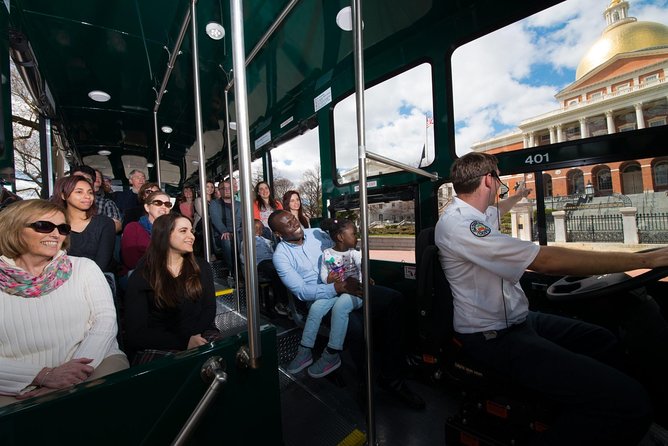
The tour offers 1- or 2-day passes, and the real advantage is simple: you decide how much time you want at each cluster. If you only have one day, you can treat the trolley as your moving “map” and then hop off at the spots that pull you in.
If you’re doing the 2-day version, spread neighborhoods out. Day one can be about orientation—waterfront, North End, Beacon Hill. Day two can be about deeper time—Tea Party museum, USS Constitution, and any repeats where you want better photos or slower walking.
One practical rhythm that works: hop off early at your top “anchor” stops, then use the trolley to reposition. Waiting until late can be more stressful, because some areas get busy and you don’t want your day turning into a crowd-management exercise.
Price and value: is $52.45 a good deal?
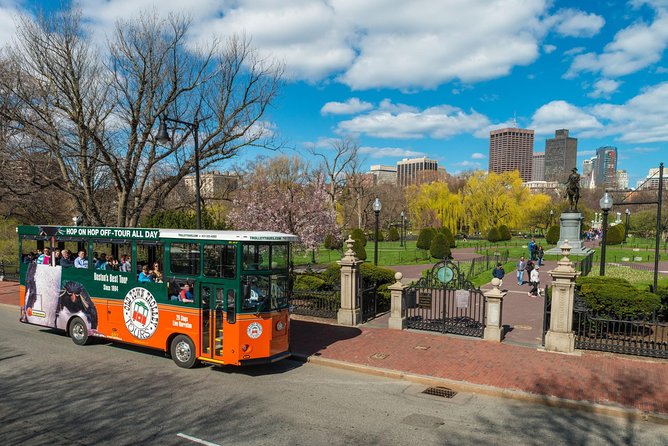
At $52.45 per person, you’re paying for speed, comfort, and guided context. This isn’t just transportation. It’s a guided route that helps you understand Boston while you move between neighborhoods you might otherwise feel intimidated to navigate.
Where the value improves:
- If you use the freedom to hop off multiple times and not just sit through one loop.
- If you plan to visit the Boston Tea Party Ships & Museum, because there’s an included discount.
- If weather is involved. Heated trolleys and roll-up windows can be worth a lot when conditions are harsh.
Where it can disappoint:
- If you do very little hopping and mainly treat it like a single bus ride.
- If you’re unlucky with trolley spacing and you spend more time waiting than moving.
Common hiccups: transfers, trolley frequency, and “where is the next one?”
This tour can be smooth. It can also be a little chaotic depending on day and season. A few patterns show up in real-world use:
Transfers can be confusing if you expected a single continuous ride. Since there’s a planned switch near the Public Garden/Theater District area, it helps to glance at the loop info before you settle in.
Trolley tracking is limited, so you don’t always get a clear sense of exactly when the next trolley is arriving. That means you should avoid the mindset of I’ll just stand here and wait for the perfect minute. Build in buffer time, especially in winter.
Frequency can vary, and some days can mean long waits. If you’re working with limited time, keep a backup plan like a rideshare to cut through uncertainty.
Also, while many conductors are funny and warm, not every guide hits the same tone. You can’t control personality, but narration style is often what makes the ride feel worthwhile.
Best for who: families, first-timers, and people with time pressure
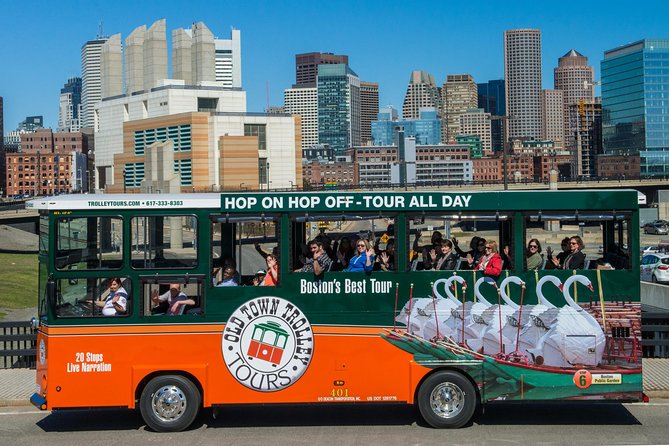
This is ideal when:
- You’re new to Boston and want a fast overview that connects neighborhoods.
- You’re traveling with family and want simple access to multiple sightseeing clusters.
- You want a comfortable option that works across changing weather.
- You like a guided framework but still want to choose what you do next.
It’s less ideal if:
- You hate waiting and can’t tolerate occasional uncertainty in pickup timing.
- You need a very rigid schedule down to the minute.
- You’re only interested in one or two places and won’t use hop-on flexibility.
Should you book this Boston hop-on hop-off trolley tour?
I’d book it if you want a practical way to map Boston and choose your own pace once you’re in the neighborhoods. It’s one of the easiest ways to connect waterfront, historic districts, and museum areas without overthinking transit.
Skip it or go in with extra planning if you’re traveling in peak cold or you’re the type who hates delays. Then, use the trolley as a planning backbone—not as your only method of getting around. If you do that, you’ll get the best of what this tour is built to do: show you the city fast, then let you decide what deserves your extra time.
FAQ
How long is one full rotation?
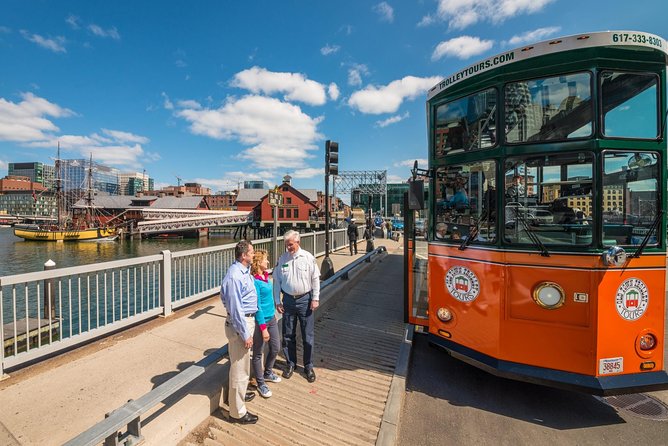
The Old Town Trolley loop is approximately 1 hour and 50 minutes if you ride all the way around without getting off.
Does the trolley tour have live narration?
Yes. The tour is narrated by expert guides, and it includes sound effects.
Are the trolleys enclosed and heated?
They’re open-air vehicles with plastic windows that can roll up or down. During wintertime, the trolleys are heated.
How many stops are on the route?
There are 13 stops on the Boston hop-on hop-off route.
Can I hop on and hop off at stops I choose?
Yes. You can board at any of the stops, hop off to explore, and re-board later.
What areas does the tour cover?
The route is split into two loops that cover Boston’s major sights, including areas like the waterfront/Faneuil Hall, the North End, Beacon Hill, and central districts around Back Bay and Copley.
Does the tour run on Thanksgiving or Christmas Day?
No. It does not operate on Thanksgiving Day or Christmas Day (12/25).
Is there food allowed on board?
Food and drinks are welcome, but alcoholic beverages are not allowed.
Can service animals ride on the trolley?
Yes. Service animals are allowed on board. Pets and emotional support animals are not allowed.