REVIEW · BEACON HILL TOURS
Boston: Underground Railroad History Tour of Beacon Hill
Book on Viator →Operated by Hub Town Tours · Bookable on Viator
Beacon Hill tells a different kind of story. This Boston Underground Railroad history tour is a focused walking loop that connects the Civil War era to real sites tied to Black Boston, abolitionists, and escape routes.
What I like most is the small-group feel (up to 16 guests), which means your guide can actually answer questions while you move block to block. I also love how the tour threads together big, painful history with specific places you can stand in—told by guides like Dana, Meghan, Will, and Lin. One drawback to plan for: expect 2.5+ hours of walking on hills and uneven surfaces, so it is not ideal if you struggle with standing for long stretches.
In This Review
- Key takeaways before you go
- Why Beacon Hill Makes Underground Railroad History Make Sense
- Value and Time: What $35 Gets You in 2.5 Hours
- Starting at Soldiers and Sailors Monument: Where the Loop Begins
- Acorn Street and Beacon Hill’s Elite-to-Abolition Timeline
- Phillips School: When Segregation Started to Crack
- John J. Smith House and Charles Street Meeting House
- 66 Phillips St: The Underground Railroad Takes Up Real Space
- Otis House and the 1806 Church by Asher Benjamin
- African Meeting House: Admission Included and Worth the Time
- Pinckney Street and the 54th Regiment Memorial Wrap-Up
- What to Expect on Your Feet: Packing and Pace Tips That Actually Help
- Should You Book This Underground Railroad and Beacon Hill Tour?
- FAQ
- How long is the Boston Underground Railroad History Tour of Beacon Hill?
- Where does the tour start and where does it end?
- Is the tour mostly walking?
- How much does it cost?
- What’s included with the tour price?
- Is there museum admission included?
- What’s the group size?
Key takeaways before you go
- Small-group pacing helps you keep up and ask questions along the way
- Black Heritage Trail focus ties Underground Railroad stories to local Black leaders
- African Meeting House (1806) is the main interior stop, with admission included
- Beacon Hill’s steep streets mean comfy shoes are not optional
- Abolition + Civil War connections are explained through landmarks, not just dates
- Your guide matters: names like Dana, Meghan, Will, and Lin come up often in feedback
Why Beacon Hill Makes Underground Railroad History Make Sense

Boston gets a lot of attention for famous names and big institutions, but Beacon Hill shows the human scale of the story. This tour moves you through a neighborhood where laws, schools, churches, and private homes all played roles in how people fought slavery and organized escape.
The format is simple: you walk, you stop, you listen, and you look. That matters because “Underground Railroad history” can sound fuzzy if you only hear it in abstract terms. Here, the story gets anchored to real corners and real buildings—like the places where debates over racial integration happened in public, and where abolitionists sheltered people at personal risk.
Also, the tour is not only about escape routes. It also explains how abolitionism connected to the Civil War, including how Boston activism shaped the country’s direction. When the guide links a landmark to what was happening politically and socially, you start seeing why the neighborhood’s layout and institutions mattered.
You can also read our reviews of more historical tours in Boston


Value and Time: What $35 Gets You in 2.5 Hours
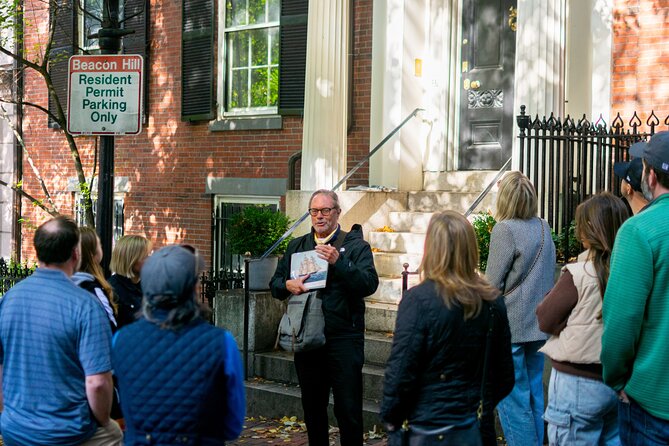
At $35 per person, you’re paying for a guided walk across ten Black Heritage Trail stops plus a chunk of narrative that helps the sites click together. Most of the stops are outdoor or quick-view, and that’s intentional. You’re not paying for museum ticket time—you’re paying for interpretation: how to read the neighborhood.
The duration is about 2 hours 30 minutes in most schedules, but with frequent stops and a steady pace it can stretch a bit for some groups. Plan around that. You’ll be on your feet for a meaningful stretch, and Beacon Hill terrain adds extra effort even if you keep a relaxed pace.
The small group size (up to 16) is part of why the price feels fair. It keeps the tour from turning into a crowded lecture. In practice, that’s when questions get answered and details get clarified.
Starting at Soldiers and Sailors Monument: Where the Loop Begins
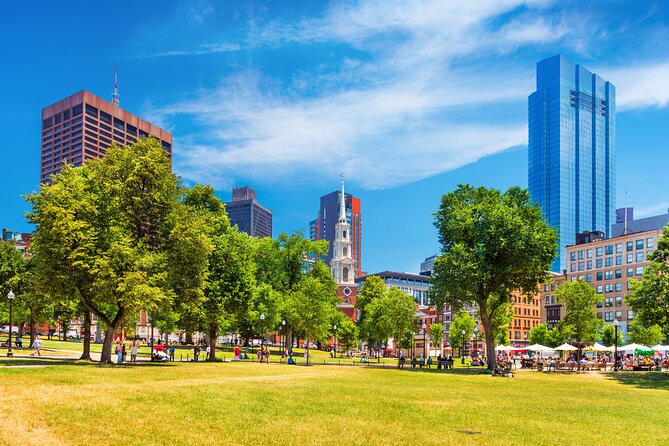
You meet at Soldiers and Sailors Monument in the center of Boston Common, near the Boston Common Visitors Center at 139 Tremont Street (02108). Look for the white granite column topped by a female figure holding a flag, with bronze statues surrounding the base.
This start location is smart. You’re already in Boston’s “center,” so it’s easy to orient yourself before the tour starts climbing and winding into Beacon Hill. You also get an immediate tie-in to the Civil War era by beginning at a monument connected to national conflict and public memory.
At this first stop, you’ll also get context for a longer view of Boston—how public land and community spaces changed over time. One of the early notes you’ll hear is about the oldest public land in the Americas and Boston’s communal grazing pasture dating to 1634. That sets up why Beacon Hill isn’t just old architecture. It’s been a working community space for a long time.
Acorn Street and Beacon Hill’s Elite-to-Abolition Timeline
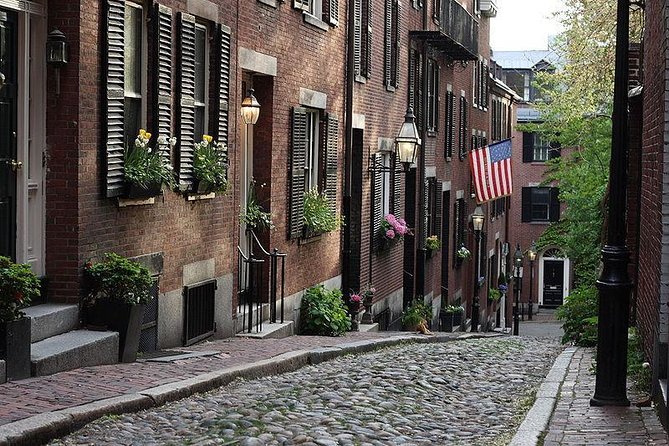
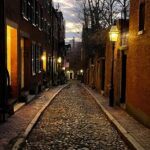
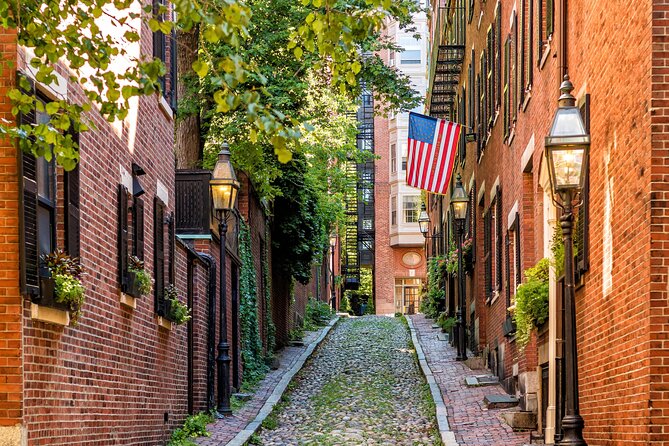
After Soldiers and Sailors, you’ll move into the iconic Beacon Hill streets, including Acorn Street, with narrow cobblestone lanes that make you slow down just to walk safely. It’s an easy-to-love street once you’re there, but the tour uses it as a contrast point.
Beacon Hill is famous for 19th-century wealth—often tied to the world of the so-called Boston Brahmins. One of the stops frames certain neighborhood squares as part of that elite social circle, so you start to see the tension: the same city that produced privilege also produced organized resistance to slavery.
This part of the tour works best when you pay attention to how the guide connects class, power, and civic decisions. You’re not only admiring buildings; you’re learning how social standing influenced who had access to education, legal protection, and political voice.
Phillips School: When Segregation Started to Crack
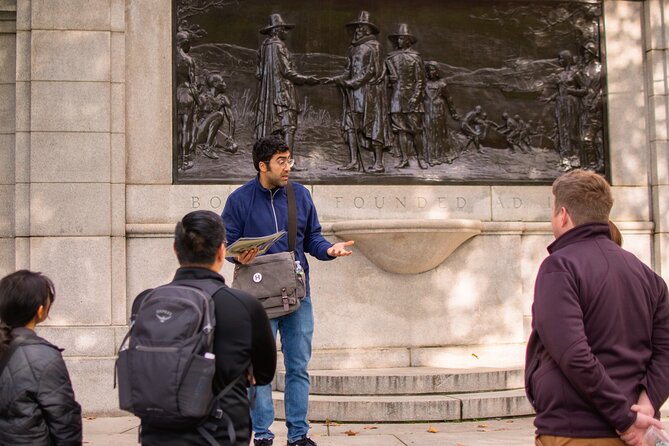
One of the most important stops is Phillips School, built in 1824 as a whites-only school. By 1855, it became among the first Boston schools to integrate.
Hearing that timeline next to the actual neighborhood space helps you grasp something easy to miss: integration didn’t arrive through goodwill from nowhere. It came through pressure, organizing, and the pushback against unjust systems.
This is also where the tour’s tone becomes practical. You’re given enough historical context to understand why school access mattered so much. Education shaped literacy, job options, political organizing, and the ability to navigate the legal system—especially for families seeking freedom and safety.




John J. Smith House and Charles Street Meeting House
Next up is the John J Smith House, tied to a leading abolitionist and state legislator who was also a former barber. That combination is worth noticing. It signals how abolitionism wasn’t only the job of famous elites—it included people with community ties and direct knowledge of daily life.
Then you’ll visit Charles Street Meeting House, built in 1807, and you’ll hear about its role in contentious debates over racial integration. This is one of the tour’s “pressure points” because meeting houses were public-facing civic spaces. When debates happen in a church or meeting hall, it changes the stakes. It’s no longer private belief. It becomes social conflict with consequences.
If you want a shortcut for what to look for here, it’s this: focus on the words your guide uses to connect public debate to action. The story is not only about what people believed. It’s about what they demanded from the world around them.
66 Phillips St: The Underground Railroad Takes Up Real Space
At 66 Phillips St, the tour moves from debates and education into direct action. This site is described as an Underground Railroad safe house, owned by the Haydens, described as staunch abolitionists who were formerly enslaved.
This stop is short in time, but it carries weight. Even when you’re just standing outside, you’re being asked to imagine fear, secrecy, and the constant need to move carefully. The guide usually keeps it grounded, so you don’t drown in tragedy for the sake of tragedy—you understand why these safe houses mattered in a system designed to help people reach freedom.
One practical tip: take a moment before you move on. Let the stop land, because later on the tour will connect abolitionist activism to larger national events, including the Civil War. If you miss this “local action” moment, the later political connections can feel less personal.
Otis House and the 1806 Church by Asher Benjamin
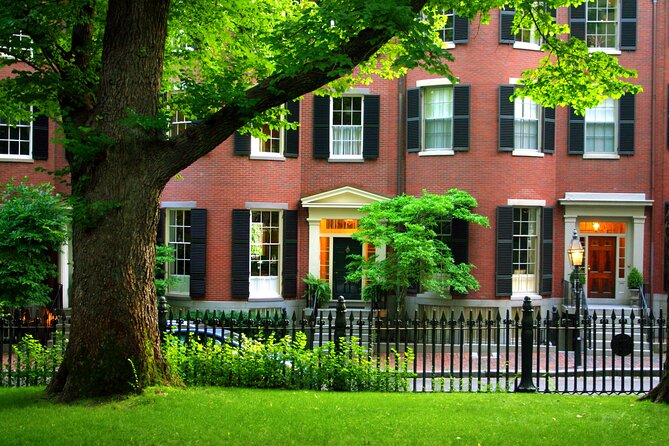
The tour continues with Otis House, a residence from 1796 for Harrison Gray Otis, a Boston mayor and nephew of revolutionary James Otis, Jr. That’s a strong reminder that Boston’s leadership lineage was deeply intertwined with the country’s founding stories.
Near there, you’ll also hear about an 1806 church designed by Asher Benjamin. Architectural details matter on this tour, because the city’s built environment is part of the narrative—who worshipped, who taught, who gathered, and who got excluded.
You’ll also hear about a U.S. Senator who was beaten unconscious in the Capitol in 1856 over slavery. That is heavy material, but it’s included for a reason: it shows how slavery-related politics created real physical danger, not just speeches on paper.
As the tour keeps moving, it also names African-American abolitionists, including historian William Cooper Nell, and it points out that segregation shaped schooling too—for example, a school founded in 1835 for Boston’s African-American children. This isn’t the “easy victory” version of history. It’s the work-in-progress story of people pushing, organizing, and surviving.
African Meeting House: Admission Included and Worth the Time
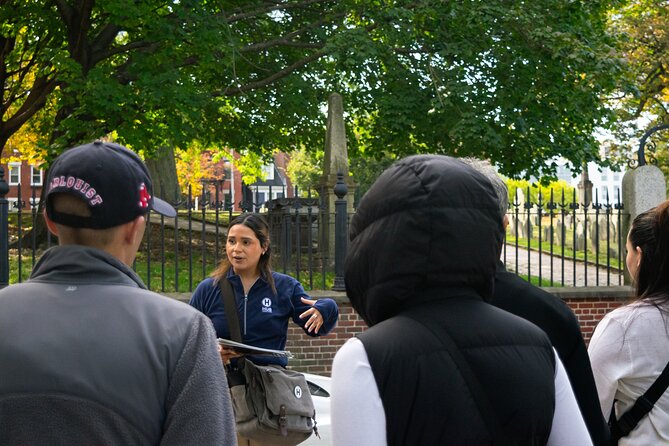
The best interior stop is African Meeting House, a cultural center of Boston’s African-American community and the oldest extant black church building in the U.S. (built 1806). Admission is included, and this stop lasts about 25 minutes.
This is where the tour tends to feel most different from a standard walking tour. Instead of only hearing about structures, you see how a place functioned. A church like this wasn’t only a worship site; it was a community hub where identity, support networks, and organizing could take shape.
Look for how your guide connects the building to community continuity. Even if you’re not a churchgoer, this stop explains why “place” matters. When people gather and advocate from the same walls over time, history stays present.
Pinckney Street and the 54th Regiment Memorial Wrap-Up
The final stretch brings you toward the tour’s emotional and historical capstone.
At 5 Pinckney St, you’ll visit the oldest extant house in Beacon Hill (1787), described as home to an African-American Revolutionary War veteran. That’s a helpful reminder that Black history in Boston is not limited to one era. The story stretches across wars, laws, and civic life.
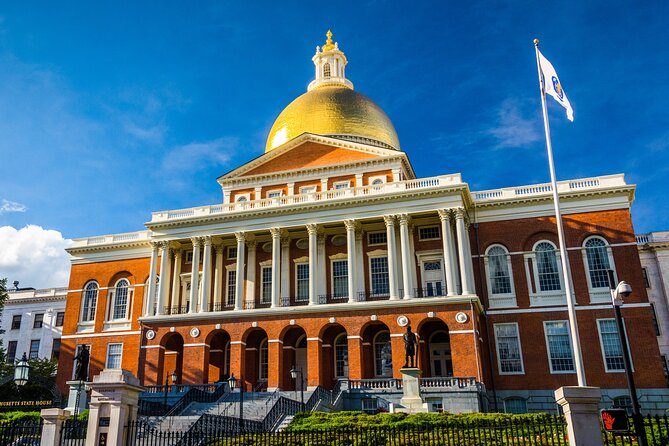
Then you’ll pass the Massachusetts State Capitol, known in the tour context as the Hub of the Solar System (built 1798). It’s another reminder that Boston was shaping politics while slavery was still legal in many places.
The loop ends by the Robert Gould Shaw and the 54th Regiment Memorial opposite 24 Beacon Street, across from the Massachusetts State House. It’s a strong closing image because it connects abolition activism to the Civil War’s changing military and political reality.
If you like finishing a tour in a place that looks forward, this ending works. It’s not only “remember what happened.” It’s also “see the link between activism and measurable outcomes.”
What to Expect on Your Feet: Packing and Pace Tips That Actually Help
This tour is best if you can handle steady walking on Beacon Hill hills and uneven surfaces. The route isn’t described as flat, and the time estimate assumes you’ll move at a measured pace with stops.
Here’s how to make it easier on yourself:
- Wear comfy shoes with solid grip. Beacon Hill cobbles can be unforgiving.
- Bring water, especially if you’re visiting on a warm day.
- Plan to stand for periods and take your time when the guide pauses for questions.
What’s nice is that your guide keeps the pace controlled. In feedback, guides are praised for being clear, organized, and able to adjust for the group. Guides named in feedback include Dana, Meghan, Will, Lin, Joe, Drew, and Dave—and the consistent theme is storytelling that stays connected to the buildings in front of you.
If you’re traveling with family, this is the kind of tour that can work for older kids—one family feedback mentioned 13- and 10-year-olds hanging in there, while another noted young kids may find it tiring. If your group includes younger children, pick your moment and bring patience.
Should You Book This Underground Railroad and Beacon Hill Tour?
Book this tour if you want Boston history that is grounded in real locations and connects abolitionist action to the Civil War. At $35, it’s excellent value for the amount of guided interpretation you get across multiple stops, plus the African Meeting House interior time.
Skip it or consider a different option if you know you can’t manage 2.5 hours of walking and standing on hills and uneven ground. Also, if you dislike learning about slavery, racial violence, and political conflict, this one may feel uncomfortable—even though the storytelling is designed to be clear and meaningful.
If you do book, do one thing right: set yourself up to ask questions. This tour is built for that. When the guide explains how a specific house, school, or meeting hall ties into the Underground Railroad and Boston’s Civil War-era activism, you leave with a map you can remember long after the walking stops.
FAQ
How long is the Boston Underground Railroad History Tour of Beacon Hill?
The tour runs about 2 hours 30 minutes (approx.).
Where does the tour start and where does it end?
It starts at Soldiers and Sailors Monument, 139 Tremont St, Boston, MA 02109, and ends at the Robert Gould Shaw and the 54th Regiment Memorial, 26 Beacon St, Boston, MA 02108.
Is the tour mostly walking?
Yes. It is a walking tour with a moderate physical fitness level suggested, and it is not recommended for travelers who have difficulty standing for extended periods.
How much does it cost?
The price is $35.00 per person.
What’s included with the tour price?
The tour includes all 10 Black Heritage Trail landmarks, a small-group experience (maximum of 16 guests), and admission for the African Meeting House.
Is there museum admission included?
Museum admission is not included. The tour specifically notes the African Meeting House admission as included.
What’s the group size?
The tour has a maximum of 16 travelers.