REVIEW · CAMBRIDGE
Cambridge Self Guided Walking Tour
Book on Viator →Operated by Pandemic Tours · Bookable on Viator
Cambridge on foot can feel like a puzzle. This self-guided walking tour strings together the city’s colleges, museums, and river scenery in a route you follow at your own tempo, with Helen’s audio guide (not a robotic voice) plus GPS directions.
I especially like two things: the stop-by-stop pacing (the app prompts you when to read or look) and the way the itinerary mixes postcard views with science you can actually enjoy on a walk. You’ll pass everything from punting history to an on-foot route through major university collections.
One consideration: a handful of big-name sights charge admission separately, including King’s College Chapel, St Mary the Great, the Round Church, and parts like the Cambridge University Library. If you want those interiors, budget extra, and be ready to spend a little more time at the paid stops.
In This Review
- Key Highlights You’ll Care About
- Entering Cambridge the Easy Way (No Tour Group, Just a Route)
- Start Point: Cambridge Bus Station to Get Your Bearings Fast
- Christ’s Pieces: Where the Tour Sets the Tone
- Parker’s Piece: A Public Park With a Donor’s Backstory
- University Museum Moments: Deep Time, Famous Specimens, Real Context
- Archaeology, Anthropology, and the Whipple Museum: Science as a Story
- The Pitt Building and the Fitzwilliam Museum: Neoclassical With a Prime-Minister Name
- Scudamore’s Mill Lane Punting Station: The River Cam’s Side of the Story
- Mathematical Bridge and Queen’s College: A Bridge That’s Also a Science-Like Fun Fact
- Corpus Christi College and Bene’t Street: Medieval Cambridge, Less Obvious Stops
- The Big Ticket Choices: King’s College Chapel and St Mary the Great
- Market Square: Cambridge in Everyday Mode
- The Round Church, Senate House, and the University Library: History in a Neoclassical Costume
- Garret Hostel Bridge and the Floodplain Detail That Makes the River Feel Scientific
- Price and Value: $12.22 for a Route You Can Reuse
- Small Friction Points to Expect (So You’re Not Surprised)
- Should You Book This Cambridge Self-Guided Walking Tour?
- FAQ
- How long is the Cambridge Self-Guided Walking Tour?
- How much does the tour cost?
- What language is the tour available in?
- Is there an in-person guide?
- What does the app include for navigation?
- Is there an audio guide, and who provides it?
- Are museum and church admissions included?
- Where does the tour start and end?
- How long can I access the tour after booking?
- Is the experience refundable?
- Is the tour suitable for most people and are service animals allowed?
Key Highlights You’ll Care About
- Human-feeling audio from Helen, plus videos and photos to make each stop easier to picture
- GPS route + map so you’re not hunting streets while the light is good
- Museum stops with serious wow: 4.5 billion-year deep time, plus famous specimens like a fin whale and a dodo skeleton
- River Cam photo moments built into the walk: Mathematical Bridge and Garret Hostel Bridge
- Classic college architecture with context, from William Pitt’s name to John Harvard’s connection through Emmanuel College
- 3 weeks of access after you download, so you can repeat it or start again if your schedule slips
Entering Cambridge the Easy Way (No Tour Group, Just a Route)
This is a self-guided experience, sold for $12.22 per person, designed for a 2 to 3 hour walk. You’re not buying a bus tour. You’re buying a smart way to move through Cambridge: a mapped GPS route, timed stops, and an audio guide you can use as you go.
The “why this works” part is control. You can pause longer for a viewpoint, speed up through the parts you already know, and decide on the fly whether an interior stop is worth paying for. Because it’s app-based, you’re not stuck waiting on a group.
You also get 3 weeks unlimited access. That’s useful if you’re the type who wants a second pass through the colleges when you’re less rushed, or you’d like to save the tour for the day you actually have good weather.
You can also read our reviews of more walking tours in Cambridge

Start Point: Cambridge Bus Station to Get Your Bearings Fast
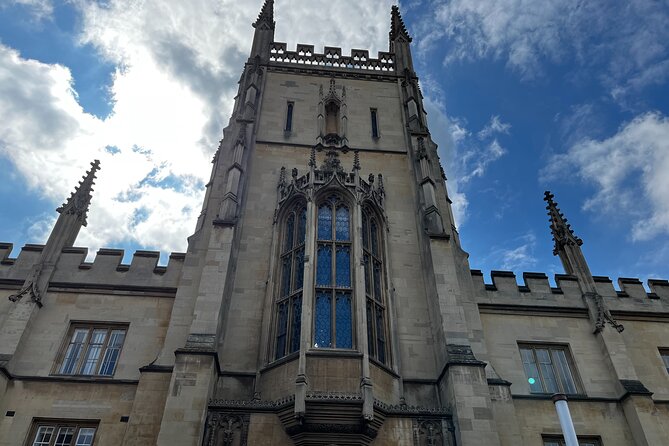
You begin at Cambridge Bus Station on Drummer St (CB1 1NE). This is a practical launchpad because it puts you near public transport and gets you moving quickly into central Cambridge.
The tour’s ending point is equally clear: Cambridge University Library on West Rd (CB3 9DR). Finishing there makes sense because you can keep wandering on foot afterward, rather than being dropped in a random spot.
If you like a plan but hate micromanaging, this setup is ideal. You’ll walk a city loop that feels logical rather than scattered.
Christ’s Pieces: Where the Tour Sets the Tone
Your first stop is Christ’s Pieces, near a park area. This is a good warm-up: you get background on Cambridge and its surroundings before you start hitting the big college gates and landmarks.
Then you roll toward the academic side of the city, and one name comes up early: Emmanuel College. The college has a strong reputation for academic excellence, and the tour points out an especially tangible connection—John Harvard was baptised at the Emmanuel College chapel and later became a benefactor of Harvard University in the USA.
That’s a smart way to start. You’re not just looking at stone. You’re learning what the institutions meant, and why their names travel so far beyond England.
Parker’s Piece: A Public Park With a Donor’s Backstory
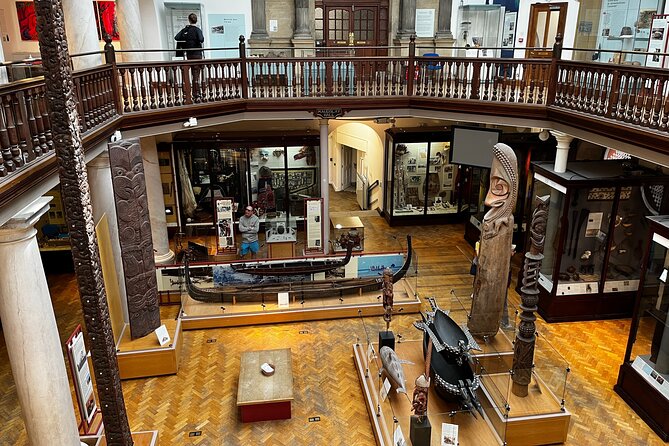
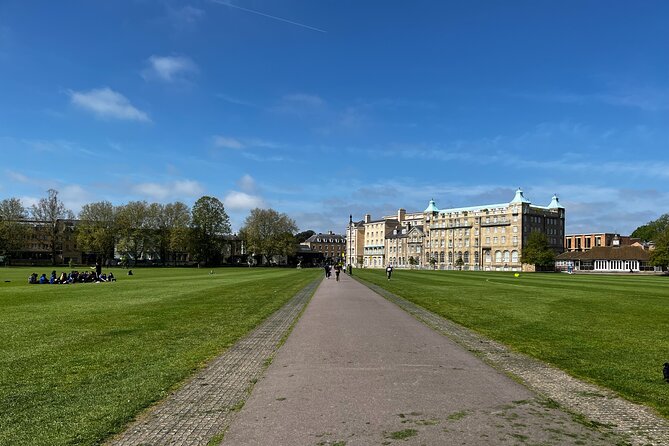
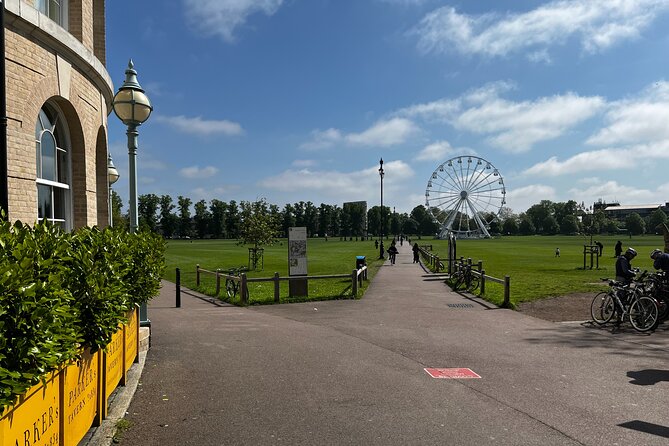
Next up is Parker’s Piece, a large public park in the heart of Cambridge. It’s easy to treat parks as scenery, but the tour ties it to a real piece of local history: Parker’s Piece is named after Edward Parker, who donated land to the city in 1613.
This stop helps break up the college-heavy vibe. Parks give your legs a breather and give your eyes a wider view. And because this walk is designed around short, clear stops, it’s a chance to reset before the route turns more “museum and university collections.”
University Museum Moments: Deep Time, Famous Specimens, Real Context
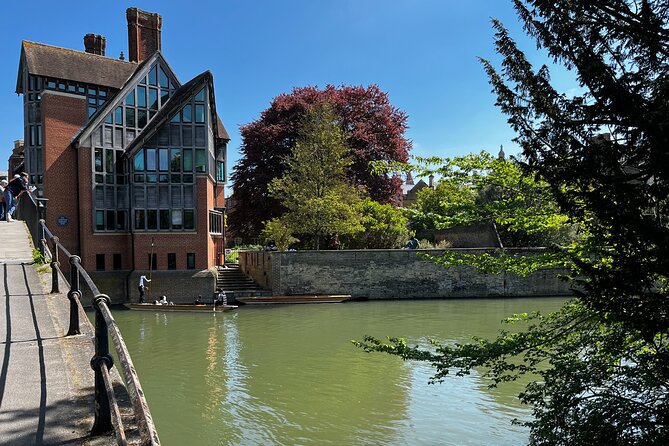
One of the most rewarding parts of this tour is how it leans into university collections instead of only doing churches and bridges.
The route takes you through the University’s oldest museum, a place framed here as a 4.5 billion-year journey. You’re guided through the story of planet-building blocks, then into fossils that trace evolution of life across oceans, land, and air.
The tour also directs you to the University Museum of Zoology and its newer galleries focused on animal diversity. Expect themes like extinction, survival, evolution, and exploration—not just a list of animals.
And yes, the highlights are concrete:
- Cambridge’s largest resident, a 21m fin whale
- The giant ground sloth
- One of the UK’s most complete dodo skeletons
- Captain Cook’s conch
I like this section because it makes “museum time” feel like part of a walk, not a separate trip. If you’re the kind of person who finds museums intimidating, this itinerary helps because it tells you what to look for while you’re physically nearby.
You can also read our reviews of more guided tours in Cambridge


Archaeology, Anthropology, and the Whipple Museum: Science as a Story
After the big nature and zoology focus, the route shifts into archaeology and anthropology. The Museum of Archaeology and Anthropology is presented through scale: more than 800,000 objects, plus over 100,000 field photographs and negatives, and over 30,000 fonds of historical documentary archives.
That can sound like a lot of numbers, but the point is practical: this museum isn’t a one-room stop. It’s a research powerhouse. Even if you don’t absorb every detail, you’ll understand why Cambridge became so influential in how people study human life and the past.
Then the walk brings you to the Whipple Museum, which the tour frames as an outlet for the history of science—scientific instruments, apparatus, models, and a mix of pictures, prints, photographs, and books.
If you’ve ever wondered why Cambridge is famous beyond just its colleges, this section gives you an answer you can see in objects.
The Pitt Building and the Fitzwilliam Museum: Neoclassical With a Prime-Minister Name
The tour then shifts to architecture and civic identity.
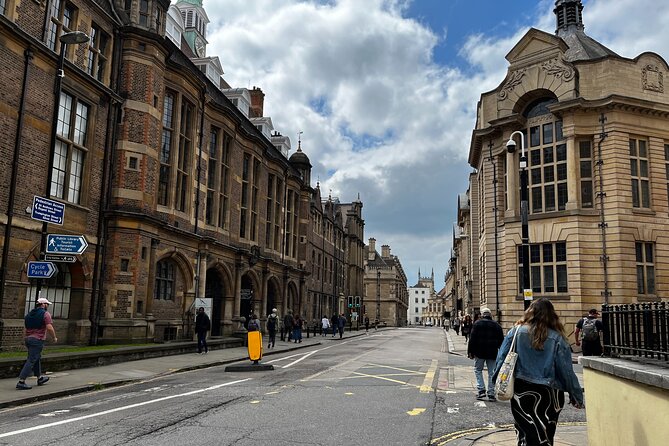
You stop at The Pitt Building, built in 1833, named after William Pitt the Younger, who served as Prime Minister of Great Britain in the late 18th and early 19th centuries. It’s one of those moments where you realize a city walk is also a naming history.
Next is the Fitzwilliam Museum, completed in 1848. The exterior gets described as neoclassical, with an imposing facade, grand columns like ancient Greek and Roman temples, a majestic dome, and lions on either side of the entrance.
Even if you don’t plan to go in right away, these details help you look more carefully. Cambridge can be visually similar block to block; the guide helps you spot what’s deliberately designed.
Scudamore’s Mill Lane Punting Station: The River Cam’s Side of the Story
Cambridge without punting would feel incomplete, and the tour naturally works it in.
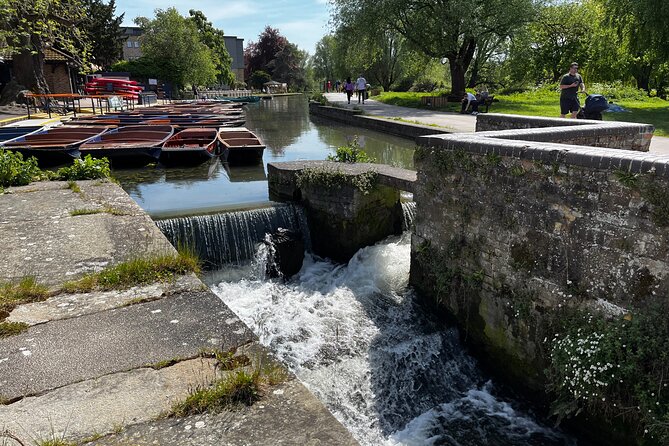
At Scudamore’s Punting Company station, you learn the company was founded in 1910 by Jack Scudamore, a boat builder who visited Henley upon Thames’ royal regatta and saw punting’s appeal among the upper and middle classes.
This is a good reminder that punting isn’t just a modern activity. It’s part of social history—who did it, where it became fashionable, and how it shaped Cambridge’s image.
It’s also a nice “pause” stop. You get river air, photo opportunities, and a break from interiors.
Mathematical Bridge and Queen’s College: A Bridge That’s Also a Science-Like Fun Fact
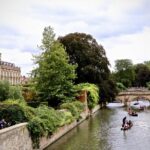
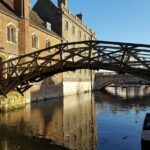
The walk includes the Mathematical Bridge, a famous wooden footbridge across the River Cam connecting two parts of Queen’s College.
Why this matters on a walking tour? Because it’s short, iconic, and easy to appreciate without needing a ticket. You get a built-in moment to stop, frame a photo, and just watch the river scene.
A bridge like this works especially well in a self-guided route because it gives you a simple payoff between larger sights.
Corpus Christi College and Bene’t Street: Medieval Cambridge, Less Obvious Stops
You’ll pass Corpus Christi College, founded in 1352 by the Guild of Corpus Christi and the Guild of the Blessed Virgin Mary. College gates often blur together, but a founding date like 1352 helps you place what you’re seeing in real time.
Then the tour heads to Bene’t Street, described as an older street not commonly on the tourist trail. It’s named after St Bene’t’s Church. I like stops like this because they slow the whole walk down. It’s where Cambridge feels more like a working city than a museum set.
The Big Ticket Choices: King’s College Chapel and St Mary the Great
The itinerary includes some of the most iconic church interiors in Cambridge, but with an important note: admission tickets are not included for these.
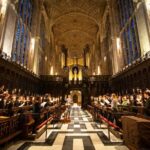
At King’s College Chapel, you’re told it’s one of the most iconic landmarks. The tour also gives a useful geography detail: the site was originally the floodplain of the River Cam, then medieval buildings took over the space.
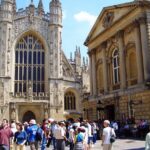
Next is Great St Mary’s Church (St Mary the Great), dated back to the 12th century, though the current building largely dates from the late 15th and early 16th centuries.
These are worth treating as optional but serious. If you love architecture and sacred spaces, pay for entry and take your time. If not, you can still enjoy the exterior and keep walking without feeling like you missed the point.
Market Square: Cambridge in Everyday Mode
Then the tour shifts to city life with Cambridge Market Square, next to the historic Guildhall.
This is home to one of the oldest and largest open-air markets in the country. Even if you don’t do shopping, the value here is atmosphere. This stop reminds you Cambridge isn’t only institutions and towers; it’s also commerce, errands, and local routine.
The guided format makes it easy to spend about the planned amount of time—or stretch a bit if something catches your eye.
The Round Church, Senate House, and the University Library: History in a Neoclassical Costume
The route keeps moving through landmark architecture.
Trinity College is referenced with a standout identity note: founded in 1546 by King Henry VIII, and it’s the largest college in Cambridge by land area and student population.
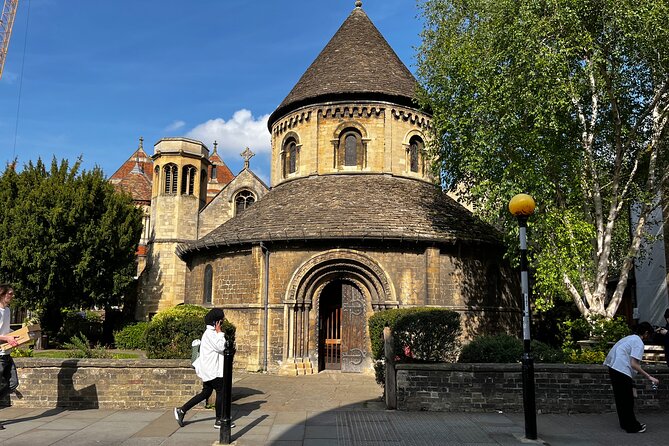
You then reach the Round Church, officially the Church of the Holy Sepulchre, founded in 1130 by crusaders returning from the Holy Land. Like the other church stops, entry is not included here.
After that, the Senate House appears as neoclassical architecture, designed by James Gibbs and completed in 1730. This is the kind of building that makes the city feel formally academic—where government, scholarship, and civic power overlap.
Finally, you end at Cambridge University Library, described as relatively new (early 20th century) but with lovely interior architectural features. Entry for this stop is also noted as not included.
Garret Hostel Bridge and the Floodplain Detail That Makes the River Feel Scientific
One of the cleverest “fact stops” on the walk is at Garret Hostel Bridge.
The tour pauses the action to put hard numbers to place: the floodplain surface is about 4m above sea level, the riverbed about 2m, and the coastline is almost 50 miles away at King’s Lynn.
It sounds nerdy, and that’s the point—in a city full of heritage, it’s refreshing to get grounded in measurements. And it helps you understand why Cambridge’s river landscape feels so engineered and intentional over time.
This is also a good moment to look for angles and sightlines. Bridges give you framed views without requiring a long detour.
Price and Value: $12.22 for a Route You Can Reuse
At $12.22 per person, the value depends on how you travel.
If you plan to do only a few exterior views and pass on paid interiors, you’re basically paying for navigation, context, and pacing. In that case, it’s a low-cost way to avoid wandering without a plan.
If you like museums, it’s even better. Cambridge’s university museums and historic sites can eat time and money fast. This tour helps you choose what to focus on by giving you specific highlights to hunt for—like the 21m fin whale or the dodo skeleton—so you’re not just standing in a room hoping it clicks.
Also, because you keep access for 3 weeks, you can replay the route on another day when you’re in a different mood or when you want a second look at the parts you rushed.
Small Friction Points to Expect (So You’re Not Surprised)
This is a walking tour, so expect the usual practical stuff: you’ll want comfortable shoes. The duration is listed as about 2 to 3 hours, but your actual time will grow if you go inside the paid stops.
Also, admission is only included for some sights (several are marked free), while others are explicitly not included. If your must-do list includes all the interiors, budget extra entry fees.
Finally, because it’s app-led, you’ll need your phone charged. Bring a power bank if you tend to run low on battery. It’s not listed as a requirement, but it keeps your walk stress-free.
Should You Book This Cambridge Self-Guided Walking Tour?
Book it if you want a practical route through Cambridge that mixes iconic sights with science and museum highlights, and you like the idea of moving at your own pace. The GPS map, the stop pings, and Helen’s audio make it easy to follow without feeling trapped.
Skip or reconsider if you know you’ll want to spend long hours inside many paid interiors, because the tour time is built for walking plus short stops—not for an all-day ticket marathon. Also, if you hate relying on a phone while you walk, you may find the format less relaxing.
If you’re on the fence, I’d use this rule: if Cambridge sounds better with structure than with wandering, this tour fits. If you already know the city well, you may not need the app.
FAQ
How long is the Cambridge Self-Guided Walking Tour?
The duration is listed as approximately 2 to 3 hours.
How much does the tour cost?
The price is $12.22 per person.
What language is the tour available in?
The tour is offered in English.
Is there an in-person guide?
No. It’s a self-guided tour with no in-person guide.
What does the app include for navigation?
The experience includes a map, directions, GPS route, and stops, so you can follow along on foot.
Is there an audio guide, and who provides it?
Yes. The tour includes an audio guide, and it’s guided by Helen. The audio is described as not computer-generated.
Are museum and church admissions included?
Some stops are free, but several entries are marked as not included, including King’s College Chapel, Great St Mary’s Church, The Round Church, and Cambridge University Library.
Where does the tour start and end?
It starts at Cambridge Bus Station, Drummer St, Cambridge CB1 1NE and ends at Cambridge University Library, West Rd, Cambridge CB3 9DR.
How long can I access the tour after booking?
You get 3 weeks unlimited access to the self-guided tour on the app.
Is the experience refundable?
The experience is non-refundable and cannot be changed for any reason.
Is the tour suitable for most people and are service animals allowed?
It states most travelers can participate, and service animals are allowed.