REVIEW · GHOST & HAUNTED TOURS
Underground Boston Ghost Tours: Gravestones & Gunpowder
Book on Viator →Operated by Boston Ghosts By Us Ghost Adventures · Bookable on Viator
Boston at night has teeth. This 1-hour walk strings together gravestones and gunpowder-era lore with stops tied to real Revolutionary sites and haunting claims. You’ll get a short route with enough spooky details to make the sidewalks feel different.
I especially like the small-group vibe (up to 35 people) and the way guides weave history with documented hauntings, often keeping the pace clear and easy to follow. On this kind of tour, names like Timbo, Rachel, and Noel show up in feedback for a reason: crisp storytelling and answers that don’t leave you guessing.
One thing to consider: the “scary” level isn’t the same for everyone. Some people want chills and found it mild, and a few said certain guides sounded less lively or needed better audio, so if you’re after full-on horror, plan your expectations.
In This Review
- Key Highlights You’ll Actually Care About
- A 1-Hour After-Dark Boston Walk That Feels Like a Shortcut
- Price and Value: What $32 Buys You in Real Terms
- Start at 139 Tremont St at 8:00 pm: The Logistics That Keep the Night Smooth
- First Stop: Omni Parker House and the Story of Harvey Parker
- Revolutionary Cemetery Stop: Famous Names, Strange Sightings
- Boston Common After Dark: Hangings, Duels, and the Weight of Place
- The Early-1800s Church Stop: Worship Traditions and Spectral Sounds
- Massachusetts State House: Revolutionary War Legends and Cold Spots
- The Historic Library Stop: Portrait of George Washington and Haunted Stacks
- John Adams Courthouse: Trial Echoes and the Sound of Old Justice
- King’s Chapel: 1630 Burial Ground and the Tale of the Black Minister
- Guides, Scary Level, and Why Your Experience May Vary
- Practical Tips for a Comfortable, Fun Night Walk
- Should You Book This Underground Boston Ghost Tour?
- FAQ
- How long is the Underground Boston Ghost Tours: Gravestones & Gunpowder tour?
- What does it cost and what time does it start?
- Where do we meet for the tour?
- Is the tour offered in English and do I get a ticket on my phone?
- What group size should I expect?
- Is food included?
- Can I get a full refund if I cancel?
Key Highlights You’ll Actually Care About

- Omni Parker House start: the founder Harvey Parker is part of the haunting talk you’ll hear right away
- Boston Common at night: hangings and duels are used to set the spooky mood
- Revolutionary burial ground stop: tombstones of famous figures, plus reported strange sightings
- State House and cold spots: Revolutionary War connections + ghost-footstep style stories
- Library stacks and Washington’s portrait: a rumored haunted link via a former librarian
- King’s Chapel burial ground since 1630: the Black Minister is a standout tale at dusk
A 1-Hour After-Dark Boston Walk That Feels Like a Shortcut
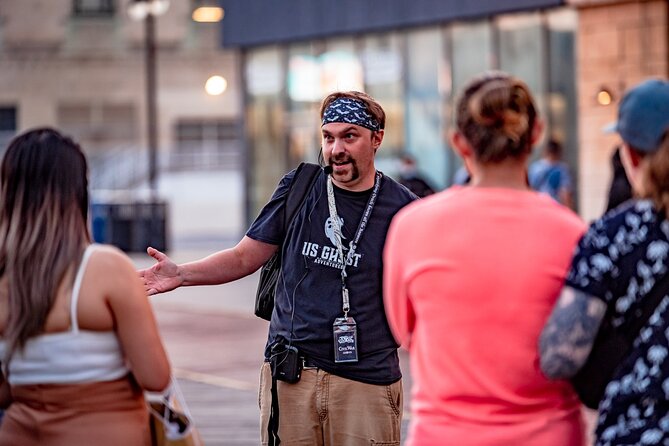
This tour is built for nights when you want Boston’s spooky side without spending your whole evening. The route keeps moving through major downtown landmarks tied to Revolutionary-era violence, old churches, and long-buried residents. Even if you’re not a diehard ghost-tour fan, the structure makes it easy to connect the stories to places you can actually point at later.
The group size matters here. With a cap of 35 people, it’s less like being herded and more like you’re walking with a narrator who can keep track of the room. You also start at a downtown meeting point (139 Tremont St), so you’re not wasting time figuring out where “off the beaten path” is at night.
The real value is the blend: the tour leans into documented accounts and intensely researched true stories while still giving you the goosebump details you came for.
You can also read our reviews of more tours and experiences in Boston.


Price and Value: What $32 Buys You in Real Terms
At $32 per person for about 1 hour, you’re buying a focused, curated-by-location experience—not a long evening of multiple neighborhoods. That’s a plus if your calendar is tight or you’re trying to avoid shelling out for transportation.
Here’s the practical way to think about value: if you want lots of stops and a deeper, longer ramble, you may feel shortchanged by a tight schedule. A few people did complain about pacing or feeling the walk was too short or too concentrated. On the flip side, if you want a compact intro to haunted Boston, this time window is ideal. It’s enough for multiple legendary stops, but not so long that you’ll be exhausted halfway through the night.
Also, watch the version you book. Some feedback mentioned confusion with pricing and expectations when an extended option was involved. If you see add-ons, double-check what they actually change (extra stops vs. just a longer time slot).
Start at 139 Tremont St at 8:00 pm: The Logistics That Keep the Night Smooth
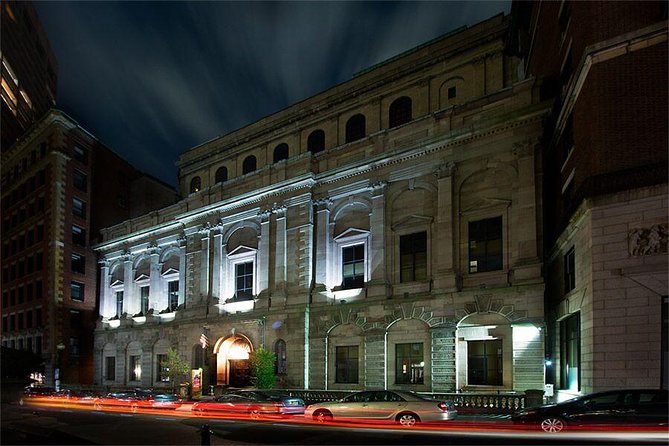
The tour begins at 8:00 pm at 139 Tremont St, Boston, MA 02111, and ends back at the meeting point. That return-to-start detail is more useful than it sounds—no scavenger hunt for the “end location,” and it’s easier to plan dinner right afterward (or dessert, if you’re the type).
Because it’s near public transportation, you can usually build a simple plan: transit to the area, meet up, then walk the stops as a group. Service animals are allowed, which is a big reassurance for anyone traveling with them.
One small reality check: it’s a walking tour and the fitness note is “moderate.” You don’t need to be an ultrarunner, but you should be comfortable with night walking on city streets and standing for stories at each stop.
First Stop: Omni Parker House and the Story of Harvey Parker
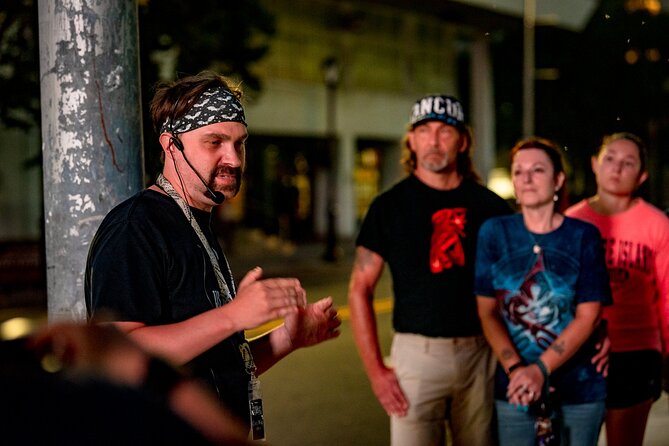
You kick off at one of Boston’s oldest hotels: the Omni Parker House. This is where the mood starts working on you. The haunting tales here aren’t random. They’re tied to the hotel’s founder, Harvey Parker, who is said to linger in the building and make sure guests are taken care of—even after death.
What I like about starting here: it gives you a “why this place matters” foundation before you move into cemeteries and darker public spaces. You get an anchor story early, so the later stops feel connected instead of just being a list of spooky addresses.
Potential drawback: if you’re expecting immediate screaming, this start is more about atmosphere and legend than jump-scare energy. For many people, that’s perfect. For others who want nonstop spookiness, it can feel like the tour takes a moment to ramp up.
Revolutionary Cemetery Stop: Famous Names, Strange Sightings
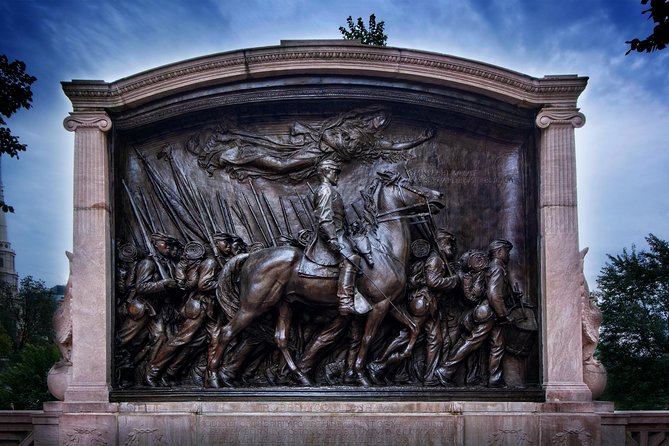
Next comes a historic cemetery with the final resting place of many figures from the American Revolution. You’ll hear how the tombstones and the setting shape the ghost stories. Some reports linked to the cemetery include odd orbs, shadowy figures, and that unnerving sensation of being watched.
This is one of the stops where the “history + hauntings” format actually works. The Revolutionary figures turn the cemetery from scenery into context. You’re not just hearing about ghosts; you’re learning why this ground mattered.
What to consider: cemeteries can be emotionally heavy even when you’re in a joking mood. If you’d rather keep things light, treat this stop as a reflective moment rather than a “scary only” segment.




Boston Common After Dark: Hangings, Duels, and the Weight of Place
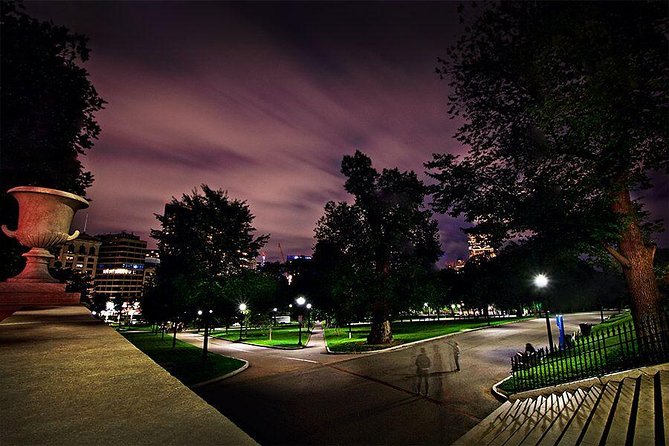
After the cemetery, you move to Boston Common, which is described as America’s oldest public park. Here, the stories lean into darker moments like public hangings and duels. The night ghost talk includes misty figures and disembodied voices—exactly the kind of details that make a city park feel eerie once the daylight is gone.
Boston Common is huge, and that scale changes how you experience it. On a tour like this, it’s not about seeing every inch. It’s about using specific points in the park to interpret the past. That’s why the guided framing matters. Without it, you’d just be walking through a famous park. With it, you start noticing how the ground carries stories.
One practical tip: traffic noise can be real there. If you struggle to hear street-level audio, pick a spot closer to the guide and don’t be afraid to ask for repeats. Some feedback included requests for better sound, and the good news is that voice amplification is part of how the operator is addressing that.
The Early-1800s Church Stop: Worship Traditions and Spectral Sounds
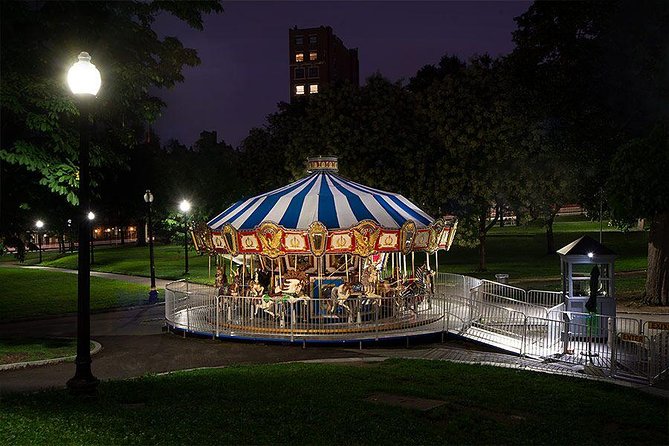
This stop is a historic church that’s been a site of worship since the early 1800s. It’s also tied to stories of mysterious sounds and shadowy figures, with some people believing spirits of former parishioners remain nearby.
This is a smart pivot in the tour. After revolution-era death and public punishment, you shift into faith and community. It adds variety, and it helps explain why people would attach haunting claims to places of repeated human presence.
What you might notice: the stories can feel more “supernatural mystery” than “historical crime.” If you prefer factual detail over ghost folklore, this stop will still give you enough context, but it won’t feel as grounded in violence as the Common or courthouse talk.
Massachusetts State House: Revolutionary War Legends and Cold Spots
Overlooking Boston Common, the Massachusetts State House has a haunted reputation tied to Revolutionary War history. The tour stories mention spirits of soldiers and politicians, along with ghostly footsteps and unexplained cold spots reported by people working late into the night.
I like this stop because it’s where the tour becomes a lesson in power. When you connect politics, soldiers, and old government buildings, the haunting talk feels less like fantasy and more like a way people process traumatic history.
Drawback to keep in mind: if you’re the type who wants consistent jumpy scares, cold spots and footsteps are easy to shrug off. That doesn’t mean the stories are weak; it means the experience is more atmospheric and interpretive than cinematic.
The Historic Library Stop: Portrait of George Washington and Haunted Stacks
Next is a historic library that’s tied to rare books and rumor-level hauntings among the stacks. People report ghostly figures and a strong sense of being watched—especially near a portrait of George Washington. The story says the portrait is rumored to be haunted by a former librarian.
This stop is fun because it turns “intellectual quiet” into something spooky. It’s also a nice break from outdoors. If the night air is biting, the shift to indoor space—when available on your walk—can feel like a breather.
What I’d watch for: some buildings can have noise and lighting differences, and you’ll rely on your guide to make the atmosphere do the work. If you’re sensitive to hearing issues, stand close when the guide is explaining the Washington portrait story.
John Adams Courthouse: Trial Echoes and the Sound of Old Justice
The tour then heads to the John Adams Courthouse, a building steeped in legal history. Here, the haunting claims are about spirits of those who faced justice in its walls—plus echoes of past trials and ghostly apparitions in the courtrooms.
This is one of those stops where the story depends on the tension of the setting. Courthouses are already dramatic places. Layer in court drama from the past, and the haunting angle gets easier to believe.
Possible drawback: the tour’s “ghost content” can vary from guide to guide. Some people felt the ghost side got less focus later in the tour. If you’re hoping this courthouse stop is your main scare moment, arrive ready to listen carefully when the guide sets it up.
King’s Chapel: 1630 Burial Ground and the Tale of the Black Minister
The final stop in the lineup is King’s Chapel, one of Boston’s oldest churches. Its burial ground dates back to 1630, and it carries stories of restless spirits. A standout tale is the occasional sighting of a mysterious Black Minister wandering among the gravestones at dusk.
If you want a strong closing vibe, this is a good one. It has age on its side, a specific legend, and a visual element that fits the timing of an evening tour.
What to consider: dusk storytelling can blur into the everyday. If it’s cloudy or the light is flat, you may not get the same “dusk feeling” other people talk about. Still, the guide’s narrative can do most of the heavy lifting here.
Guides, Scary Level, and Why Your Experience May Vary
Here’s the honest part: ghost tours live and die on the guide. The tour operator emphasizes professional, courteous guides and intensively researched stories. And you can see that strengths vary in the feedback.
When it works well, the tour feels like it has momentum and clarity. Some guides named in feedback—Timbo, Rachel, Amber, Noel, Noelle, Lily, and Vlad—were praised for being engaging, interactive, and easy to hear. When guides get technical dates right and answer questions without losing the plot, the whole walk clicks.
When it doesn’t work, you can feel it quickly. A few complaints pointed to guides sounding scripted or uncertain with dates, forgetting names, or needing better audio. Others felt the tour wasn’t scary enough for their taste or that the vibe turned more like a general spooky history walk than a true ghost hunt.
My take for you: if you’re the type who gets a lot of enjoyment from history framing and atmosphere, you’ll probably like it even if the guide is toned down. If you want maximum theatrical energy, consider booking when you can be flexible and arrive with patience.
Practical Tips for a Comfortable, Fun Night Walk
Boston nights can get cold fast, especially around winter or late fall. Dress for comfort first. You’ll be on your feet, and you don’t want your hands freezing while you try to take in details.
Second: plan your hearing. City noise is real—traffic, crowds, and street sounds can drown out soft voices. If you’re near the back, move forward when possible. If you think you’ll struggle to hear in noise, bring a phone earbud setup for your comfort, but keep it light so you’re still listening.
Third: use your mobile ticket. The tour provides a mobile ticket, so keep your phone charged. This is one of those small steps that prevents an avoidable pre-tour headache.
Fourth: set your expectation for the “spooky.” Some people found it mildly creepy, others found it genuinely fun. Treat it as a guided mix of Boston’s dark past and haunting legends, not a horror movie script.
Fifth: ask questions if you have them. Even in a short hour, a good guide can steer the stories toward what you care about—Revolutionary history, religious sites, or courthouse-era justice.
Should You Book This Underground Boston Ghost Tour?
I’d book this if you want a tight, after-dark introduction to haunted Boston with major downtown landmarks, and you like your scares tied to real places like the Common, courthouses, and old burial grounds. At $32 for about an hour, it’s a good value if you want variety without committing to a half-night.
Skip it if you need extreme horror, you hate walking, or you’re easily disappointed by an atmosphere-first tour. Also, if sound quality matters to you, aim for the front of the group so you can catch every story beat.
Bottom line: this is a fun evening option for people who want the city’s shadow side—without spending your whole night on the move.
FAQ
How long is the Underground Boston Ghost Tours: Gravestones & Gunpowder tour?
The tour runs for about 1 hour.
What does it cost and what time does it start?
It costs $32.00 per person and starts at 8:00 pm.
Where do we meet for the tour?
You meet at 139 Tremont St, Boston, MA 02111, USA. The tour ends back at the meeting point.
Is the tour offered in English and do I get a ticket on my phone?
Yes, the tour is offered in English, and you receive a mobile ticket.
What group size should I expect?
The tour has a maximum of 35 travelers.
Is food included?
No. Food and drink are not included.
Can I get a full refund if I cancel?
Yes. You can cancel up to 24 hours in advance for a full refund. If you cancel within 24 hours of the start time, you won’t receive a refund.