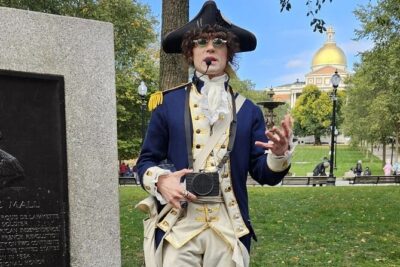
REVIEW · FREEDOM TRAIL TOURS
Boston Freedom Trail Scavenger Hunt Adventure
Book on Viator →Operated by Urban Adventure Quest · Bookable on Viator
Boston turns into a game board. This smartphone-guided scavenger hunt turns the Freedom Trail into clues, challenges, and quick history lessons you can actually remember. I love that you set your own pace with a tour you can start when you want, and I also love how the puzzles make big landmarks feel less like a checklist. One possible drawback: the experience depends on your phone and data, and a few people ran into site or device hiccups.
I like that it starts right in the action at 139 Tremont St and loops you back to the same spot. You get a mix of major sights plus quieter stops like Granary Burying Ground, so you’re not stuck only doing the loudest photo ops. The route also naturally nudges you toward places where you can pause for food without derailing the whole game.
Plan on about 3 hours of walking with a moderate fitness level, and it runs in all weather. You’ll want a smartphone with cellular data (your device, not provided), and that part matters more than most people think.
In This Review
- Key things to know before you play
- Boston Common to the Freedom Trail: how the phone-guided format works
- North End kickoff: meeting halls, cemeteries, and Italian break energy
- Boston Common: getting your bearings fast
- Freedom Trail landmarks: Paul Revere House and Granary Burying Ground
- Quincy Market: your mid-route reset and snack insurance
- The Watson Adventures Scavenger Hunts node: variety inside the same quest
- Price and group value for a $49 Boston puzzle run
- Smartphone setup tips so the quest doesn’t stall
- Who should book this Boston Freedom Trail scavenger hunt?
- Should you book? My quick decision guide
- FAQ
- Where does the scavenger hunt start and end?
- How long is the Boston Freedom Trail scavenger hunt?
- What does it cost?
- How many people can book at once?
- What language is the hunt offered in?
- Do I need a smartphone to do this?
- What places are included in the route?
- Does it run in bad weather?
- Is there a cancellation option if my plans change?
- Is the tour suitable for people with moderate walking ability?
Key things to know before you play
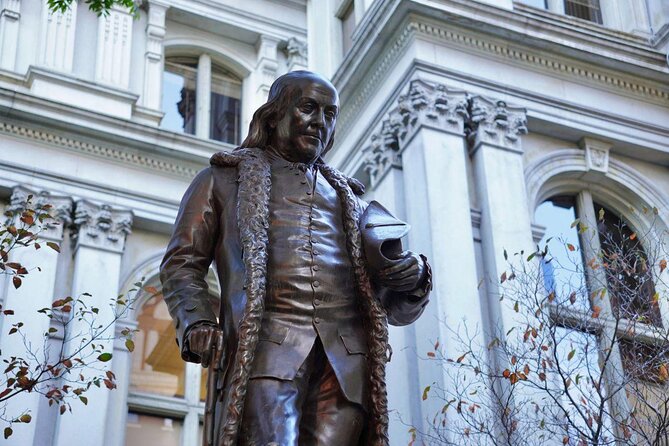
- Smartphone-guided, self-paced format: start when you want and move at your speed
- Freedom Trail focus with North End flavor: big landmarks plus the Italian North End vibe
- Puzzles that feel like a mini Amazing Race: tasks are written to be engaging, not trivia-only
- Built for small teams (2–5): this works best as a shared “we’ll figure it out” experience
- Expect real-world phone needs: you’ll rely on data, and simple tech prep helps
Boston Common to the Freedom Trail: how the phone-guided format works

This hunt is built to feel like a city version of Amazing Race. You use your smartphone as the guide, follow prompts, solve clue-based tasks, and keep moving through Boston’s historic core. Instead of matching a fixed tour time, you can generally control the tempo—useful when you’re traveling with different energy levels.
The experience is designed around walking sections connected to the Freedom Trail and nearby historic areas. The start point is clearly set at 139 Tremont St, Boston, MA 02111, and the activity ends back at the meeting point. That loop matters because you’re not guessing your way home after your last clue.
Your group plays as a team of 2–5 people, so it doesn’t turn into a crowd-management problem. If you want the comfort of group sightseeing but still want some hands-on fun, the format hits that sweet spot.
One practical note: you’ll need a smartphone with a cellular data plan, and the tour doesn’t provide a device. If your phone is picky about apps or you’re relying on weak signal, your experience may slow down. I’d treat this like a small tech project: prep first, play second.
You can also read our reviews of more tours and experiences in Boston.



North End kickoff: meeting halls, cemeteries, and Italian break energy

The adventure starts with a North End stop, and that’s a smart choice. The North End tends to be one of those areas where the history feels human-scale—lots of old-world streets, and then modern life right next door. Here, the hunt leans into the “three senses” side of travel: sights, sounds, and smells as part of the atmosphere.
You’ll also see the kind of old cemetery and historic meeting hall context that makes the Freedom Trail feel more lived-in. Instead of just reading about the past, you’re prompted to notice details and answer clue questions tied to what you’re seeing.
I also like that the experience openly supports a food pause. You can plan lunch along the Freedom Trail or grab an Italian pastry in the North End while you’re in the middle of your route. That’s a real value for people new to Boston: you’re not stuck choosing between sightseeing and eating.
Possible drawback at this stage: if you haven’t gotten comfortable with the phone interface yet, you’ll feel it most right when the hunt begins. If your setup is smooth, the North End becomes a fun early win. If not, it can feel like you’re troubleshooting in the very place you wanted to enjoy.
Boston Common: getting your bearings fast
Boston Common is the launch pad, and it does an important job. It gives you an easy “orientation moment” before you start threading through historic sites. When you begin in a central landmark, you spend less mental energy figuring out where you are and more energy actually playing.
In a scavenger hunt format, Boston Common also serves as a mood setter. It’s open, walkable, and easy to regroup. Your team can take a breath, check your phone, and get rolling with a clear sense of direction.
Since the tour is about completing challenges, you’ll likely find yourselves slowing down at points you might otherwise skip. That’s where the format shines: it’s not just where to go, it’s why to look.
If you’re going on a busy day, Boston Common can feel active around the edges. Not a problem for the hunt, but it’s a reminder to keep your team together and don’t let one person drift off ahead while everyone else is still reading clues.
Freedom Trail landmarks: Paul Revere House and Granary Burying Ground
A big part of the value here is how the hunt uses the Freedom Trail as a backbone. You don’t just walk from one famous spot to another. You move between stops and complete clue tasks that encourage you to pay attention to details tied to the history.
Two stops that stand out from the route are the Paul Revere House and Granary Burying Ground. The Paul Revere House is the kind of place people recognize instantly, but it can still feel like a single photo moment if you’re not sure what you’re looking for. In this hunt, the clue structure pushes you to slow down and connect the landmark to the story you’re building as you go.
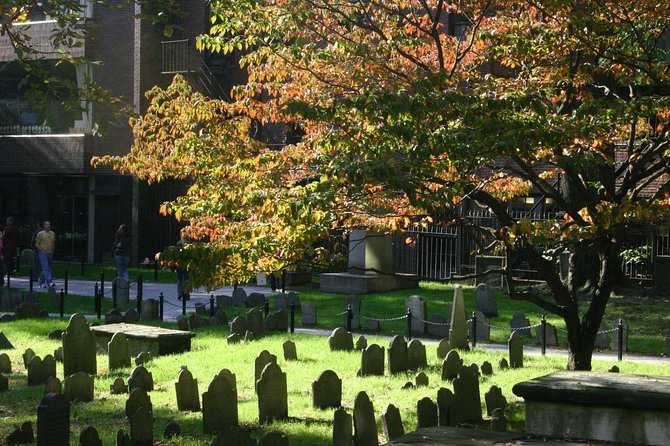
Granary Burying Ground works differently. Cemeteries often make people hurry because they don’t know where to focus. The hunt format helps because you’re arriving with a purpose: there’s something to notice, solve, or confirm. Even if you’re not a history superfan, that “guided looking” effect turns the stop into an experience rather than a quick pass-through.
The Freedom Trail section of the route also includes a general flow of historic context, so you’ll gradually build a map in your head. That’s what helps newcomers most. Afterward, you usually feel like Boston has a storyline, not just scattered sights.
Quincy Market: your mid-route reset and snack insurance

Quincy Market is an excellent place to hit during a three-hour adventure. It gives you an obvious “pause point” to regroup, snack, and reset your team energy. If your hunt pace runs faster than expected, this stop also gives you space to slow down without stressing the schedule.
Even if you don’t stop for a full meal, the area is handy for finding something quick. The bigger point is that it breaks up the heavier historic walking with a more relaxed, everyday Boston moment.
If your group is the type that likes to talk while you travel, Quincy Market also provides an environment where you can do that without losing the thread of the hunt. You can read clues, compare notes, and then head back out when you’re ready.
One practical caution: crowds can make moving as a team trickier. Keep your eyes on your phone tasks, but don’t rely on everyone following the same invisible pace. Agree on a regroup spot for each clue step.




The Watson Adventures Scavenger Hunts node: variety inside the same quest

One stop on the route is listed as Watson Adventures Scavenger Hunts – Boston. That name matters because it signals you may be stepping into a slightly different challenge zone or platform area during the same overall experience. In other words, you’re not doing the exact same style of prompt every time you move.
That variety can be a plus. If you’ve played a few scavenger hunts, you know how quickly tasks can blur together. A branded stop like this can add texture—new prompts, new objectives, or a change in how the challenge is delivered.
Since specific challenge mechanics aren’t detailed in the tour info, I’ll keep expectations realistic: treat this as another checkpoint where you follow the phone instructions and complete what it asks. If you’re someone who likes puzzle variety, you’ll probably appreciate the shift.
Price and group value for a $49 Boston puzzle run
The pricing is positioned as value for a group, not a solo event. The tour summary lists $49.00 per group (up to 5), and there’s also a note that you should book together so your team is included in the same adventure. In practice, that means the math often becomes much friendlier when you’re splitting the cost across a small group.
For a three-hour experience that combines sightseeing plus active puzzles, I think the price makes sense if you’ll actually play the game the whole time. If you just want to walk past landmarks without interacting, you might feel like you could get the same sights more cheaply on your own. But if you want structure and momentum, this format can justify the ticket.
Booking value also improves because you’re not locked into a strict tour schedule. The smartphone guidance is built for flexible start and your own pace of play. That’s a practical win for people planning around lunch, museum time, or kids who need an earlier break.
One thing to watch: the tour notes mention per-individual pricing language alongside a group voucher concept. Before you finalize checkout, double-check that your team of 2–5 is properly grouped under one voucher. It’s an easy fix, and it helps avoid disappointment right before play.
Smartphone setup tips so the quest doesn’t stall
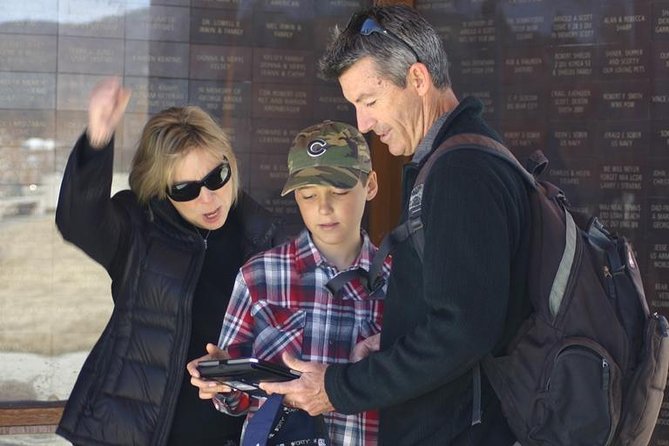
The hunt lives or dies on your phone. You’ll need cellular data, and the tour won’t provide a device. That’s the big requirement, but it’s not the only one you should plan for.
A few practical lessons you can borrow:
- Set up your account before you arrive. Getting stuck at the start is the worst time to figure out login issues.
- Expect the site to be a little clunky. Some users found navigation to leaderboards or team entry points didn’t behave smoothly.
- If iPhone is involved, test early. There’s a case where the hunt didn’t work on an iPhone and an Android phone worked instead.
- Bring a pen and paper just in case. In one situation, having paper helped keep the team moving.
You don’t need to become a mobile IT expert. You just want a smooth first 10 minutes. If your phone is updating, saving power aggressively, or switching connections, it can cause lag right when you’re trying to scan the next step.
Also, keep a battery mindset. Three hours plus frequent phone checks can drain your phone faster than you expect, especially in cold or under heavy screen brightness.
If you want less stress, arrive a few minutes early, confirm signal, and then start. Treat the hunt like a self-directed activity where your setup is part of the experience.
Who should book this Boston Freedom Trail scavenger hunt?
This one fits best if you’re into active sightseeing. If you love puzzles, enjoy comparing answers, or you’ve ever watched Amazing Race and thought, I could do that in my own city, you’ll likely have a great time.
It’s also a solid pick for newcomers. The route includes major anchors like Paul Revere House and the Freedom Trail, plus North End context and a stop near Granary Burying Ground. The clue format helps you learn without feeling like you’re taking notes the whole time.
Because it’s designed for groups of 2–5, it’s ideal for:
- couples who want a shared activity
- friends celebrating a birthday with light competition
- small family groups with a moderate walking pace
The tour is in English, and it runs in all weather conditions. So if rain is likely, plan for layers and a real rain layer, not just a thin umbrella that fights you.
The physical requirement is described as moderate. That usually means you’ll be walking more than a short stop-and-go city tour. If that’s your limit, pick shoes carefully and pace yourselves.
Should you book? My quick decision guide
Book it if you want a flexible, game-style way to see Boston’s historic core and you don’t mind using your smartphone as the guide. The format is especially good when you want your learning to feel like play, not lecture. I’d also book it if your group enjoys challenges that are tough enough to feel satisfying but not so hard you’ll rage-quit.
Skip or think twice if you’re worried about tech dependence. If you’ll arrive with low phone signal, no cellular plan, or a strong preference for offline navigation, this may frustrate you. And if you’re counting on a super-easy parking plan, assume Boston parking can be tricky and plan to come by public transit or on foot.
If your goal is to get your bearings, learn the Freedom Trail story, and have a structured afternoon, this hunt is a fun way to do it. Just give your phone a little prep time first, and you’ll spend your energy on the city—not the login screen.
FAQ
Where does the scavenger hunt start and end?
It starts at 139 Tremont St, Boston, MA 02111, USA, and it ends back at the same meeting point.
How long is the Boston Freedom Trail scavenger hunt?
The duration is about 3 hours.
What does it cost?
The price is $49.00 per group (up to 5). The tour also notes that a team must book together to be included in the same adventure.
How many people can book at once?
You need a minimum of 2 people per booking, and the maximum is 5 people per booking.
What language is the hunt offered in?
The experience is offered in English.
Do I need a smartphone to do this?
Yes. You must have a smart phone with a cellular data service plan, and the smart phone is not provided with the tour.
What places are included in the route?
The listed stops are North End, Freedom Trail, Boston Common, Watson Adventures Scavenger Hunts – Boston, The Paul Revere House, Quincy Market, and Granary Burying Ground.
Does it run in bad weather?
Yes, it operates in all weather conditions, and you should dress appropriately.
Is there a cancellation option if my plans change?
Yes. There is free cancellation, and you can cancel up to 24 hours in advance for a full refund.
Is the tour suitable for people with moderate walking ability?
The tour notes a moderate physical fitness level is recommended, and it’s also described as near public transportation.
If you want, tell me your dates and group size, and I’ll help you decide if this is the right fit for your style in Boston.