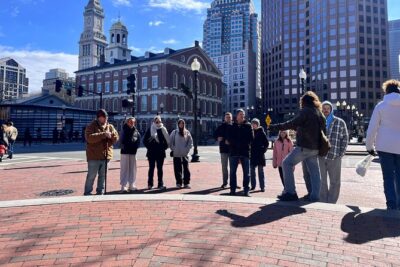
Boston hides stories under your feet. This small-group walk trades the usual highlights for untold angles—things you don’t notice unless someone points them out, and everything runs on a mobile ticket format. You’ll also get a life-long local guide who tells the kind of history that feels connected to daily life, not just dates.
What I like most is the storytelling structure: the route moves fast, but it never feels like trivia. I also love that the tour leans into real characters and real consequences, from Paul Revere’s ride to the Molasses Flood fallout, with stop-by-stop context that makes the places matter.
One thing to consider: a few major stops have admission tickets not included, so you may want to factor in potential entry costs if you plan to go inside those sites.
In This Review
- Key highlights you’ll actually remember
- Why this 2.5-hour “other Boston” tour works
- Starting at 75 Boylston St: quick orientation before the stories stack up
- Central Burying Ground: history you can read like a map
- Boston Common: a subway underfoot, plus a King legacy on the same ground
- Massachusetts State House: when power and organized crime shake hands
- Old City Hall and Charles Ponzi: the word everyone knows, explained where it began
- Boston City Hall: why locals hate it and architects love it
- Faneuil Hall Marketplace and 1826: a marketplace that keeps changing jobs
- Rose Fitzgerald Kennedy Greenway: the Big Dig explained as a repair job
- Boston Harborwalk: why 1/6 of the land is artificial
- North End interlude: Italian neighborhood energy, with food on your radar
- Paul Revere Statue: the true story behind the famous ride
- Great Molasses Flood Plaque: the disaster that changed Boston’s mood
- Price and value: what you get for the time
- Practical logistics that matter (without the boring stuff)
- Who should book this tour
- Should you book Boston Untold History Walking Tour?
- FAQ
- How long is the Boston Untold History Walking Tour?
- What language is the tour offered in?
- What’s the group size?
- Where does the tour start and end?
- Is food and drink included?
- Are admissions included for all stops?
- Is the tour near public transportation?
- Is the tour suitable for people with moderate physical fitness?
- What about service animals?
- What happens if the weather is poor?
Key highlights you’ll actually remember
- A route built for “other Boston” rather than the usual Freedom Trail-style circuit
- Underground Boston Common subway history (yes, it’s under your feet)
- Crime, politics, and famous names tied to the spaces where they played out
- Big Dig + the city stitching itself back together explained on the ground
- Harbor expansion and the artificial-land angle that changes how you see Boston
Why this 2.5-hour “other Boston” tour works
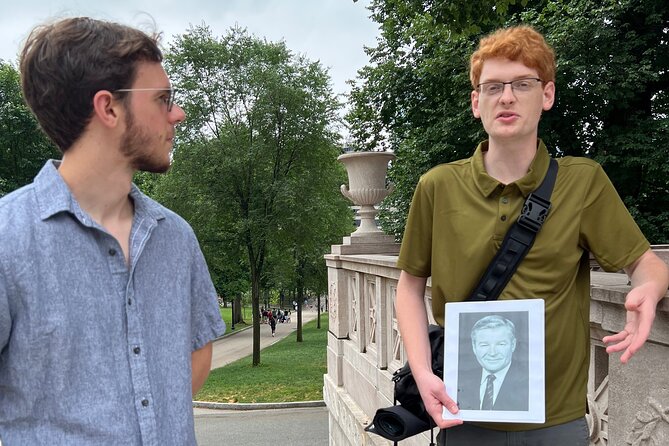
This is a tight, efficient walk—about 2 hours 30 minutes—designed to fit into a busy day without leaving you sprinting across the map. The big idea is simple: Boston is layered. If you only hit the “top sights,” you miss how the city’s big choices shaped neighborhoods, culture, and even what shows up in unexpected places.
You’ll get a focused, small-group experience with a maximum of 15 travelers, which means you’re not lost in a crowd while your guide is trying to explain the details. It’s also offered in English, and you’ll be near public transportation, so it’s fairly easy to plug into a day that already includes other plans.
And since food and drink aren’t included, you’ll have the freedom to pause where you want afterward—especially handy if you plan to end near the North End or the waterfront.
You can also read our reviews of more walking tours in Boston


Starting at 75 Boylston St: quick orientation before the stories stack up
You meet at 75 Boylston St, Boston, MA 02116. That starting point is useful because it gets you oriented before you start moving through the older civic core and waterfront edges. Boston’s downtown can feel like a maze, and a guided start helps you get bearings fast.
From there, the tour sets a theme that stays consistent: people built Boston, people exploited Boston, and later people re-built Boston—sometimes literally over older systems.
Central Burying Ground: history you can read like a map
Your first stop is the Central Burying Ground. It’s described as a graveyard with burial records from the earliest parts of Boston’s history, and that matters more than it sounds. Cemeteries are time capsules. You don’t just see where people lived—you see who the community chose to remember, and what “early Boston” looked like on the ground.
This stop is free for tickets, so it’s a no-stress introduction. I like that the tour starts here because it teaches you how to look at Boston as a place that keeps its memory—sometimes with very few visible clues.
Boston Common: a subway underfoot, plus a King legacy on the same ground
Next you head to Boston Common, and the tour immediately goes unusual. The key point is that America’s 1st subway is buried under Boston Common. That one detail changes how you walk the lawn and paths—because you’re no longer imagining the Common as only parks and politics. You’re standing on a starting point for modern urban transit, and your guide connects it to how that shaped Boston’s culture.
Then there’s another layered stop right there: the tour includes the MLK statue on Boston Common. The story centers on Dr. King spending many years in Boston and earning his PhD here. Even if you’ve heard parts of this story before, having it physically tied to Boston Common makes it feel less like a textbook fact and more like a piece of the city’s identity.
Massachusetts State House: when power and organized crime shake hands
The walk continues to the Massachusetts State House, where you hear a story focused on Billy Bulger, described here as a State Senate President, and his complicated relationship with his brother, the infamous mobster Whitey Bulger.
This is a stop where context really matters. You’re not just learning names; you’re seeing how Boston’s politics and its darker undercurrents can intersect. The tour notes that admission tickets are not included at this stop, so if you want to go inside, it’s worth being ready for possible extra cost.
You can also read our reviews of more historical tours in Boston






Old City Hall and Charles Ponzi: the word everyone knows, explained where it began
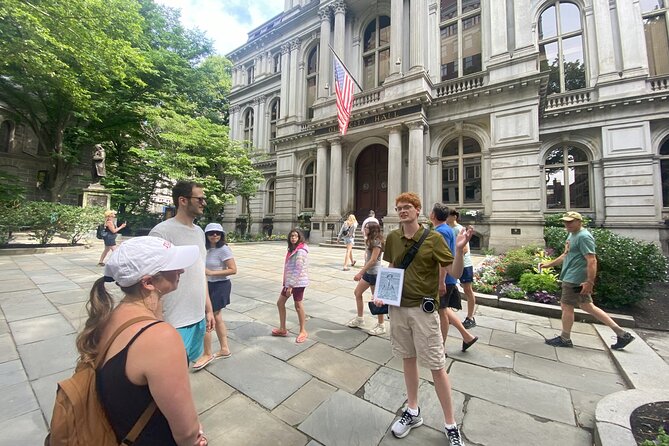
Just next door you’ll be at Old City Hall, with the tour pointing to an office connected to Charles Ponzi, who launched the scheme so famous they named the concept after him: the Ponzi scheme idea.
The value here is that it grounds a term you’ve heard in a real place. The lesson isn’t just about fraud. It’s about how easily big promises can travel through a city—especially when you’re talking about money, influence, and trust in institutions.
As with the State House, admission tickets are not included, so manage expectations if you were hoping every stop is 100% walk-up and free.
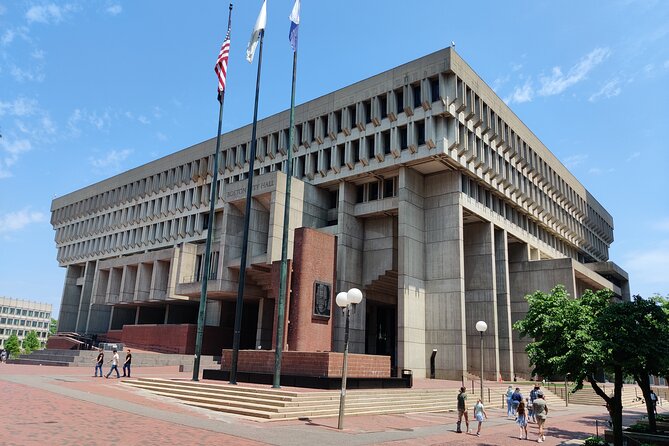
Boston City Hall: why locals hate it and architects love it
Then comes Boston City Hall, and this stop is more opinion-driven in its theme: your guide explains why it’s hated by citizens and beloved by architects.
I love this kind of stop because it brings the city’s “public design debate” into the open. Buildings don’t just house services. They influence how people feel the city is working. If you’re the type who likes to think about design, civic space, and what people think those choices say, you’ll enjoy this part.
Again, admission tickets are not included, but the point is what you learn about the building and how Boston reads it.
Faneuil Hall Marketplace and 1826: a marketplace that keeps changing jobs
At Faneuil Hall Marketplace, the tour gives you the story of the place and how it changed over time. The tour also highlights that the marketplace was built in 1826 and now functions as a food hall and commercial center.
This is one of the more practical stops on the walk because it helps you separate the “historic façade” from what the building is doing today. Even if you don’t spend a long time browsing, you’ll leave with a better sense of why people keep gathering here.
Tickets are not included for this stop, so if you plan to go inside specific spaces, check what’s available once you arrive.
Rose Fitzgerald Kennedy Greenway: the Big Dig explained as a repair job
The tour moves to the Rose Fitzgerald Kennedy Greenway, where you learn how an old elevated highway ripped apart the city, and how Boston stitched it back together with the Big Dig.
This stop is important because it turns what can feel like distant engineering news into a walkable story. You don’t need technical detail to get it. You just need to understand that when a city changes its roads and structures, it changes neighborhoods too—often for decades.
It’s free for tickets here, so it’s a good break point if the day is already packed.
Boston Harborwalk: why 1/6 of the land is artificial
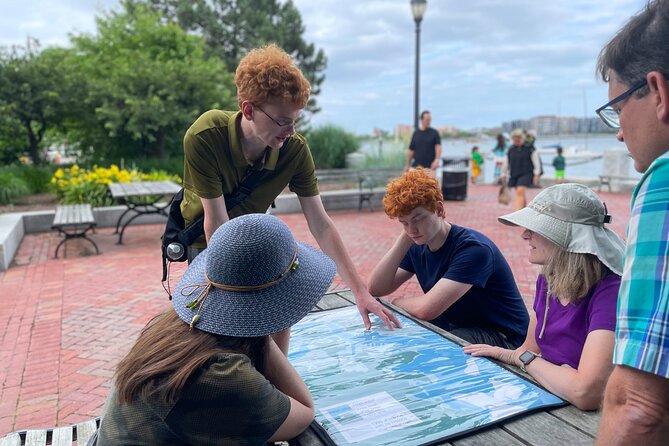
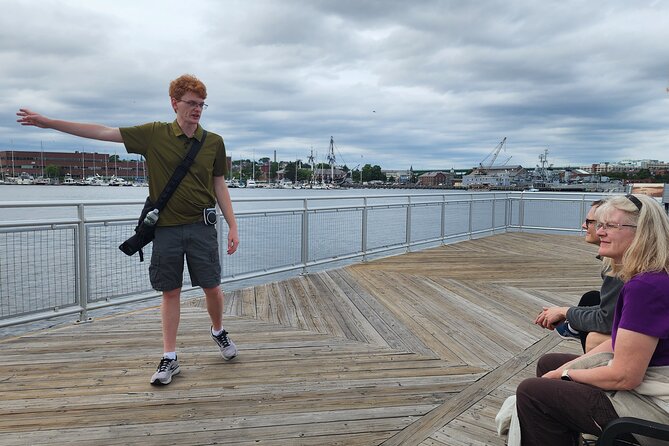
Next, you’ll stroll through the Boston Harborwalk, where the tour covers how Boston expanded its land area and why 1/6 of Boston’s land is artificial.
That’s a mind-shift. If you’ve ever looked at the harbor and assumed the shoreline always looked that way, this explains why that assumption doesn’t hold. It also helps you connect the waterfront to the city’s history of growth and construction rather than treating the harbor as scenery only.
This stop is free as well, making it an efficient, low-cost way to learn a big-picture idea.
North End interlude: Italian neighborhood energy, with food on your radar
The tour includes the North End, described as a historic Italian neighborhood and noted for having some of the best food in Boston.
Since food isn’t included on the tour, this is where you can treat the stop as planning. Even if you’re not grabbing a full meal right then, you’ll have better instincts about where to focus after your walk—especially since the North End is often best when you know what you’re looking for.
Paul Revere Statue: the true story behind the famous ride
At the Paul Revere statue, you’ll hear the true story of his ride and why his name became so famous. This matters because the popular version can feel like a single moment in time. Your guide’s job is to connect that moment to Boston as a place where stories gain power, and where repeated retelling can shape public memory.
This stop is free for tickets, so it’s another easy win in the lineup.
Great Molasses Flood Plaque: the disaster that changed Boston’s mood
The last featured story is at the Great Molasses Flood Plaque, where you’ll hear the full account of how the molasses flood happened and the fallout it caused for Boston.
Disaster history can be either grim or fascinating. The key here is that the tour focuses on outcomes—what happened after—and you leave understanding how an accident became a turning point in the city’s story.
This stop is also free for tickets, and it fits the tour’s pattern: start with early Boston memory, end with a dramatic event that still echoes in public storytelling.
Price and value: what you get for the time
The tour includes a guided walk, a small group capped at 15, and a guide who uses life-long local knowledge. There’s also a mobile ticket approach and English narration, which keeps things simple.
What changes the value equation is admissions. Some stops list admission ticket free, while other key sites list tickets as not included. That doesn’t make the tour worse—it just means you’re not paying for guaranteed indoor access everywhere. For best value, treat the tour as a story-focused walk with possible optional entrances, not as a tour where every location is automatically ticketed.
Also, since food and drink aren’t included, I think this can be a smarter spend if you’re picky about where you eat. It gives you flexibility to choose food based on your tastes instead of being guided into one included option.
Practical logistics that matter (without the boring stuff)
You finish at 521 Commercial St, Boston, MA 02109, which is a handy location if you want to keep exploring the waterfront area afterward. The route is described as requiring moderate physical fitness, so it’s not a crawl, but it isn’t framed as extreme.
The tour operates as long as you have good weather, and you’ll receive confirmation at the time of booking. It’s also a good sign that it’s near public transportation and that service animals are allowed.
Who should book this tour
I’d recommend this if you want Boston stories that go past the usual photo stops. It’s especially good for you if you like history with names, motives, and consequences—things like Billy Bulger and Whitey Bulger, Charles Ponzi, and the Molasses Flood aftermath.
You’ll also enjoy it if you’re the kind of traveler who hates long, slow museum pacing and prefers a walk-and-learn format where each stop teaches you how the city works.
If you only want clean, major-monument highlights with guaranteed indoor access, this might feel a bit too “story-first.” But if you want Boston’s less obvious chapters, it’s an easy yes.
Should you book Boston Untold History Walking Tour?
Yes, if your goal is to see Boston as more than a postcard. The route connects underground transit, political power, waterfront expansion, and major disasters in a way that feels practical and memorable—especially in a 2.5-hour window.
If you’re trying to avoid any possible extra costs from stops marked with admission not included, double-check what you plan to enter during the tour. Otherwise, this is a strong choice for anyone craving deep-cut Boston storytelling with a local guide pace.
FAQ
How long is the Boston Untold History Walking Tour?
It’s approximately 2 hours 30 minutes.
What language is the tour offered in?
The tour is offered in English.
What’s the group size?
The tour has a maximum of 15 travelers and is described as a small group.
Where does the tour start and end?
It starts at 75 Boylston St, Boston, MA 02116 and ends at 521 Commercial St, Boston, MA 02109.
Is food and drink included?
No. Food and drink are not included, though the tour can offer great recommendations after the tour.
Are admissions included for all stops?
No. Some stops are listed as free, while others have admission tickets not included.
Is the tour near public transportation?
Yes, it’s near public transportation.
Is the tour suitable for people with moderate physical fitness?
Yes. Travelers should have a moderate physical fitness level.
What about service animals?
Service animals are allowed.
What happens if the weather is poor?
The tour requires good weather. If it’s canceled due to poor weather, you’ll be offered a different date or a full refund.