REVIEW · FREEDOM TRAIL TOURS
Boston’s Revolutionary Path The Freedom Trail Tour
Book on Viator →Operated by The Daily Trips · Bookable on Viator
A short walk, big stories. This Boston Freedom Trail tour knits together landmark sites, from the new The Embrace sculpture to Faneuil Hall, with a local guide who helps the facts click into place fast.
I love the small-group feel and the way the guide adds behind-the-scenes context that makes you see Boston differently.
You’ll also enjoy the mix of places that many people skip when they self-walk, especially the historic cemeteries near the Common and the Revolution-era stops downtown. Seeing names like Paul Revere and John Hancock doesn’t feel like memorizing, it feels like following threads through real streets.
The main drawback: the timing is tight. You’ll spend about 5–15 minutes at each stop, so if you want long museum time or slow browsing, you may feel a bit rushed.
In This Review
- Key things to know before you go
- Starting at The Embrace: justice, love, and a bronze hug
- Beacon Hill’s old streets and Boston Common’s calm reset
- Massachusetts State House and Park Street Church: how power shows itself
- Two burial grounds: the quiet side of the Revolution
- Old State House to Faneuil Hall: from governance to protest
- Quincy Market finale: eat, shop, and decompress
- How good is the value for $45 and 2 hours?
- Timing and pacing: the tour moves, but you can still enjoy it
- Who this Freedom Trail tour suits best
- Should you book this Freedom Trail tour?
- FAQ
- How long is the Boston Freedom Trail Tour?
- What does the tour cost?
- How many people are in the group?
- What language is the tour offered in?
- Where does the tour start and end?
- Is a mobile ticket used?
- Is admission included for the stops?
- Are service animals allowed?
- Is the meeting point near public transportation?
- What is the cancellation policy?
Key things to know before you go
- Small group (max 10): easier questions and less standing around.
- Start at The Embrace: a modern monument that connects justice stories to Boston’s older streets.
- Major Freedom Trail anchors: Boston Common, State House, Old State House, Faneuil Hall.
- Cemeteries included: King’s Chapel Burying Ground and Granary Burying Ground add a thoughtful pace.
- Quincy Market finish: food, shopping, and street energy right after the history.
- Mobile ticket + English: straightforward for planning and meetup.
Starting at The Embrace: justice, love, and a bronze hug
The tour kicks off at The Embrace at 139 Tremont St, on the edge of Boston Common. This bronze sculpture is new (unveiled in 2023) and honors Dr. Martin Luther King Jr. and Coretta Scott King. The piece is inspired by a famous photo of them hugging after Dr. King won the Nobel Peace Prize in 1964.
It’s a smart first stop because it frames the whole day around ideas, not just dates. Before you hit the 1700s, you’re reminded that movements for justice take different forms over time. You’ll get to look closely at the intertwined arms and the feeling of partnership behind the symbolism.
This initial 5 minutes also keeps things practical. You’re starting with something easy to spot and photogenic, then stepping into a walk where the guide ties each location to the bigger story.
You can also read our reviews of more tours and experiences in Boston.


Beacon Hill’s old streets and Boston Common’s calm reset
Next is Beacon Hill, one of Boston’s prettiest neighborhoods, known for cobblestone streets, gas lamps, and Federal-style brick homes. Expect more than architecture. This stop is a chance to slow your eyes down and start reading the city like a map: curves, sightlines, and the way neighborhoods shaped daily life.
If you’re new to Boston, Beacon Hill is also where you start noticing the difference between “walkable” and “interesting to walk.” Acorn Street and the surrounding streets feel like the part of town you came for, even when you’re only there briefly (about 15 minutes).
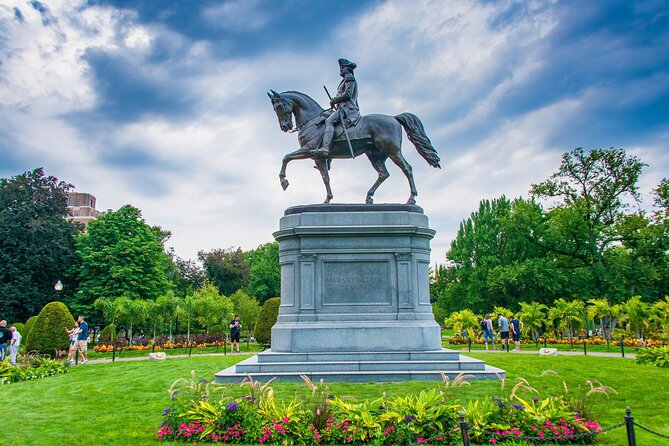
Then you return to green space at Boston Common, the oldest public park in the U.S. The time here (around 15 minutes) works as a mental reset. You’ll get walking paths, ponds, and the kind of open area where you can stop without feeling like you’re holding up anyone’s schedule.
Boston Common matters for this tour because it’s not just scenery. It sits at the heart of the city’s public life, which makes it a natural bridge between the earlier sites you’ll see next and the Revolutionary-era landmarks tied to government and protest.
Massachusetts State House and Park Street Church: how power shows itself
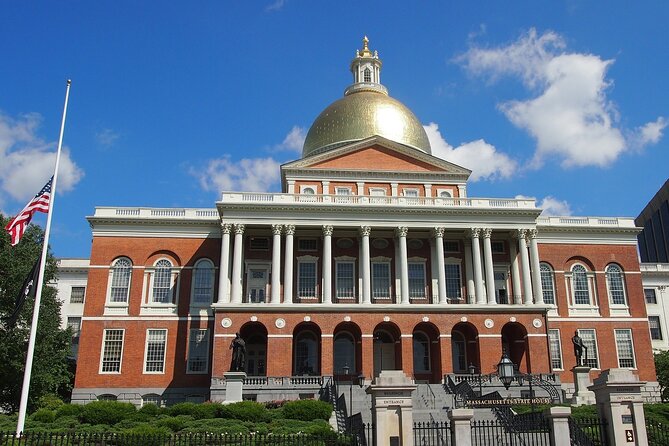
From the Common, you head to the Massachusetts State House on Beacon Hill. This is the place where you can’t miss the golden dome. It’s also where you shift from the personal stories of civic spaces to the formal world of government.
In about 15 minutes, you’ll get a sense of why the State House is more than a big building. It’s a symbol of how politics in Massachusetts shaped policy and public life, and it gives you a visual anchor before the downtown Revolution stops.
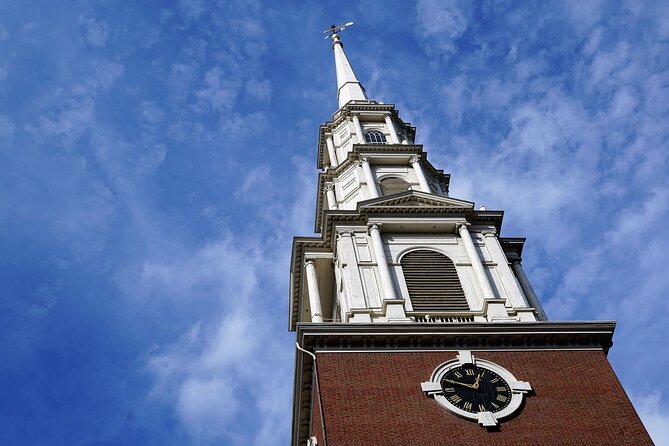
A short follow-up is Park Street Church, a significant landmark in historic Downtown with its tall white steeple (built in 1809). This is about 5 minutes, so treat it like a quick architectural check-in: look up, note the classical lines, and notice how the church fits into the city’s broader social story.
If you care about how communities formed, this stop helps. It reminds you that religious institutions were part of the same public conversation as politics and civic protest.
Two burial grounds: the quiet side of the Revolution
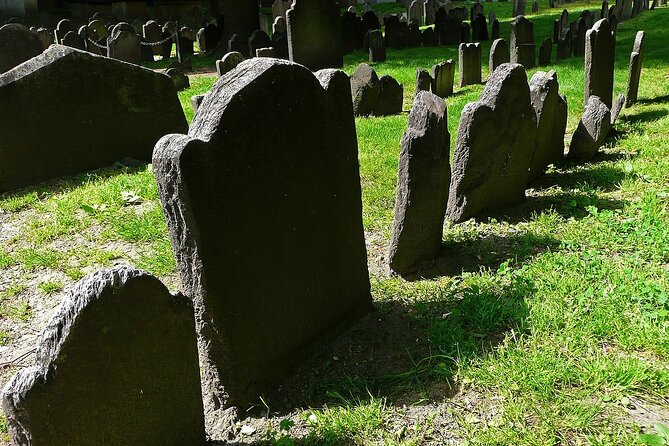
One of the most meaningful parts of the walk is the cemetery time. You visit King’s Chapel Burying Ground first, about 15 minutes. It’s Boston’s oldest cemetery, dating back to 1630, next to King’s Chapel.
This stop can feel peaceful in a very practical way. You’re not rushing through another landmark photo-op. You’re in a setting that slows you down, and the guide can help you connect early settlers and major names to the streets around you. You’ll hear that it’s the final resting place of early Boston figures, including John Winthrop.
Next comes Granary Burying Ground, also around 15 minutes. This cemetery dates back to 1660 and is near the Boston Common. Here you’ll find notable Revolution-era figures like Paul Revere, Samuel Adams, and John Hancock.
For me, this is where guided context really pays off. A cemetery without explanation can turn into “old stones.” With a guide, you get the names, connections, and the why-behind-the-where. It helps you understand the Revolutionary period as lived history, not just a textbook chapter.
Practical note: cemeteries can be chilly or windy depending on the season. Wear something you can tolerate for 15 minutes of quiet walking and looking.
Old State House to Faneuil Hall: from governance to protest
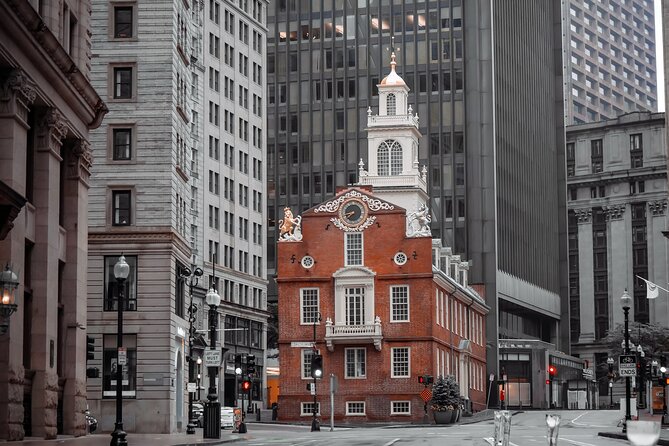
After the burial grounds, you hit the downtown centerpiece: the Old State House. This building, built in 1713, played a pivotal role during the American Revolution. It’s associated with major moments like the reading of the Declaration of Independence.
You’ll be there briefly (about 5 minutes), but it’s an important “zoom out” stop. The guide can connect what you’ve already seen—the civic spaces and the people—to the place where key political events unfolded in public view.
Then comes Faneuil Hall, often called the Cradle of Liberty. It’s built in 1742, and it’s tied to early protests against British rule. This is where the tour starts to feel like momentum again, because you’re moving from political history into a living public space.
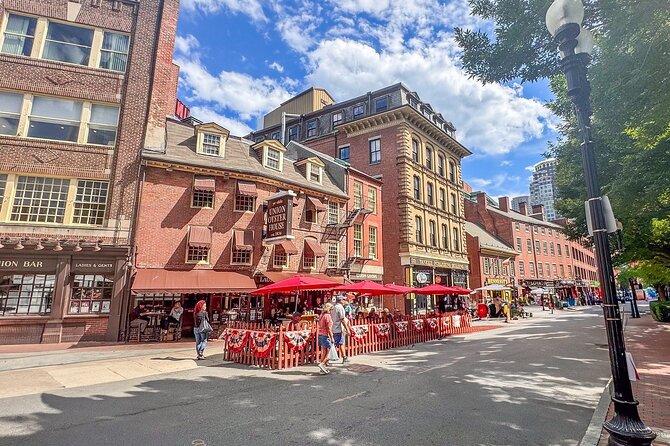
You can also expect a real-world change of pace: Faneuil Hall is both a historic building and a market area. Even with just the time you have on the tour, you’ll get that sense of a city that keeps talking. The hall and surrounding area are great for picking up a snack or just standing near the movement to feel the energy of the place.




Quincy Market finale: eat, shop, and decompress
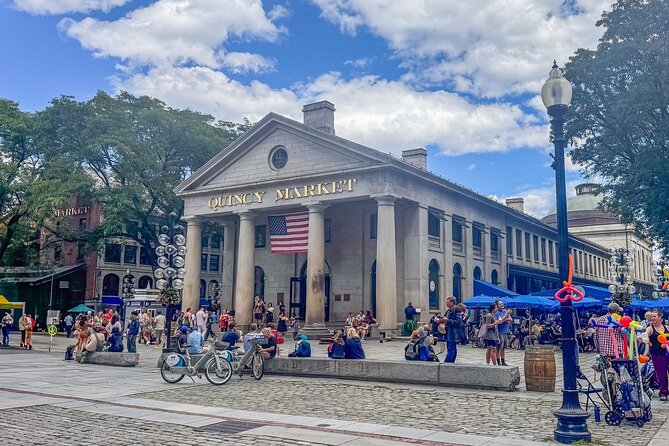
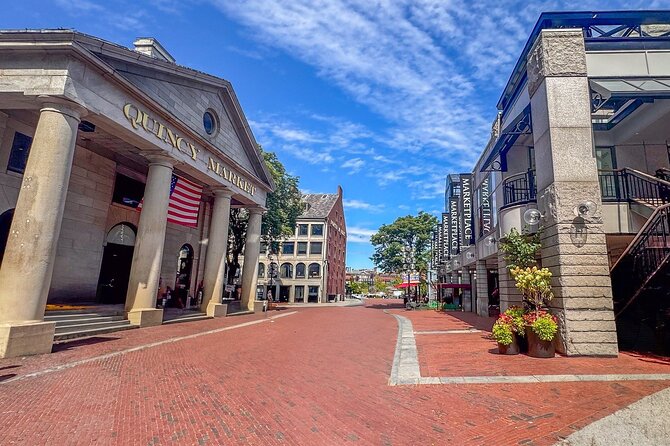
The tour ends at Faneuil Hall Marketplace, with the experience centered on Quincy Market right after. Quincy Market is a lively hub for food, shopping, and entertainment in the historic building.
This is the best kind of ending for a history-heavy walk: it’s a chance to decompress and get something practical without changing plans. Street performers add to the atmosphere, and you can browse food vendors for snacks or a meal while you decide what you want to do next in Boston.
You’ll likely appreciate this section even more if you’ve been outside in the sun for most of the walk. The market gives you options: sit with your drink, keep walking for a second round of photos, or just take your time before you head back to your hotel.
How good is the value for $45 and 2 hours?
At $45 per person for about 2 hours, the main value is not the admission sites—it’s the guided translation. Many stops are marked as free to enter on your tour schedule, so you’re paying mostly for the local knowledge and the structure.
And the structure is the secret sauce. You’re covering major anchors you’d otherwise need to plan carefully: Boston Common, the State House area, Old State House, and the Faneuil Hall/Quincy Market zone. You also get the less obvious additions like the King’s Chapel Burying Ground and Granary Burying Ground combo, which deepen the story without adding extra ticket costs.
The small group (max 10) matters because it keeps the experience from feeling like a herd. You can usually hear the guide better, and quick questions are less awkward.
One more thing: the average booking window is 58 days in advance, which is a hint that this tour tends to work well for first-timers and busy summer schedules. If your trip dates are fixed, booking earlier helps you lock in a time.
Timing and pacing: the tour moves, but you can still enjoy it
This walk is built around short stops: The Embrace (5 minutes), then blocks of 15 minutes at places like Beacon Hill, Boston Common, and the cemeteries. Most downtown landmarks you’ll see take about 5 minutes each.
That pacing is good for a first pass. It keeps the day from turning into a “stand and read everything” marathon. The trade-off is depth. You’ll get enough to understand what matters, but you may not have time to linger at a single place the way you might if you were exploring solo.
If you want to get the most out of it, do this: pick one or two stops that matter most to you. For me, it’s usually Granary Burying Ground and Old State House. Then let the others be context-building rather than full museum experiences.
Who this Freedom Trail tour suits best
This tour works especially well if:
- you’re visiting Boston for the first time and want a guided way to connect Revolutionary-era dots
- you like history but don’t want to spend your whole day reading plaques
- you want a small-group walk rather than a large crowd experience
- you’re happy to mix “quiet stops” (cemeteries and park) with “busy city stops” (Faneuil Hall and Quincy Market)
It may feel less ideal if you:
- want long indoor time in exhibits
- hate walking between close-by stops
- plan to arrive late or constantly pause for extended shopping breaks before the end
Should you book this Freedom Trail tour?
Yes, if you want a smart, guided hit of Boston’s most important civic and Revolutionary sites in about two hours. The starting point at The Embrace is a standout choice, because it reminds you that the push for justice is ongoing, not stuck in the past. The cemeteries are another real value add, turning names into a story you can feel while you walk.
Skip it only if you’re the type who wants slow, independent exploration with lots of time at one museum or one building. In that case, you could self-walk parts of the Freedom Trail and spend your savings on longer stops.
If you’re on the fence, treat the tour as your foundation. You’ll leave with enough context to explore deeper on your own afterward, and you won’t waste your first day in Boston trying to figure out what to prioritize.
FAQ
How long is the Boston Freedom Trail Tour?
It lasts about 2 hours.
What does the tour cost?
The price is $45.00 per person.
How many people are in the group?
The tour has a maximum of 10 travelers.
What language is the tour offered in?
It’s offered in English.
Where does the tour start and end?
It starts at The Embrace, 139 Tremont St, Boston, MA 02108, and ends at Faneuil Hall Marketplace, Boston, MA 02109 near Quincy Market.
Is a mobile ticket used?
Yes, you’ll get a mobile ticket.
Is admission included for the stops?
The stops listed on the schedule show free admission.
Are service animals allowed?
Yes, service animals are allowed.
Is the meeting point near public transportation?
Yes, it’s near public transportation.
What is the cancellation policy?
You can cancel for a full refund up to 24 hours before the experience start time, with free cancellation available up to that point.