REVIEW · NEW ENGLAND DAY TRIPS
Boston Record Breakers: Self-Guided Scavenger Hunt
Book on Viator →Operated by Questo · Bookable on Viator
Boston’s sidewalks turn into a game board. This self-guided scavenger hunt strings together famous stops like the Boston Public Library and Union Oyster House, and it runs in the offline Questo app with self-paced clues.
I like that you’re free to set your own rhythm—start when you want, pause when you need a break, and keep going later. I also like the built-in history angle, since each stop pushes you to look around instead of just walking past.
One possible drawback: a couple of locations can feel a little indirect, so you may need extra patience when you’re hunting for the exact answer near Park Street and Union Oyster House.
In This Review
- Key highlights at a glance
- What this Boston scavenger hunt actually feels like
- Price and time: $5.99 for about 80 minutes of walking
- How the app game works (and why offline is a big deal)
- Boston Public Library: finding answers at a landmark built for public access
- Copley Square: from Art Square to a classic Boston meeting point
- Arlington Street Church: architecture and history across from the Public Garden
- The Ether Monument: a 40-foot reminder of anesthesia history
- Massachusetts State House: politics, place, and building details
- Shaw Memorial: the bronze relief you should actually pause for
- Park Street: a quick stop where the puzzle can slow you down
- Tremont Temple at 88 Tremont Street: fire history and rebuilding
- Alexander Graham Bell and the telephone story tied to Boston University
- The Tavern since 1795: where printers, politics, and sailors met
- Union Oyster House: the smart finale you can eat at
- Cues, not a lecture: what you actually learn
- The one trade-off: clue sharpness can vary by stop
- Who should book this Boston Record Breakers hunt
- Should you book Boston Record Breakers: Self-Guided Scavenger Hunt?
- FAQ
- Is this hunt playable without an internet connection?
- How long does the Boston Record Breakers hunt take?
- How much does it cost?
- What language is the hunt offered in?
- Is there a live guide with this experience?
- Where do I start and end the hunt?
- Does it work with a mobile ticket?
- Can I start at any time and pause during the hunt?
- Is this a private activity?
- Are service animals allowed?
- What are Union Oyster House’s opening hours listed for this activity?
Key highlights at a glance
- Offline play means you can keep moving even if your phone service is patchy
- Self-guided pacing lets you go slow through the details or speed up when you’re in a hurry
- Major landmarks in one run: libraries, squares, churches, state politics, and the Freedom Trail area
- Private, no-contact format makes it easier to avoid crowds while still getting out and walking
- Restaurant-style finish at Union Oyster House gives you a natural landing spot when you’re done
What this Boston scavenger hunt actually feels like
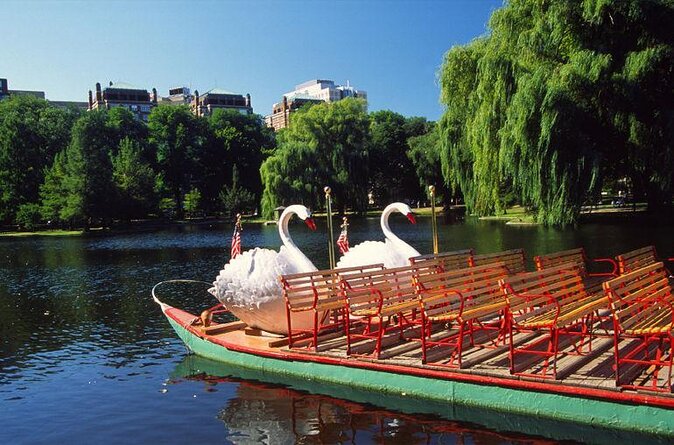
This is not a “listen to a guide and follow along” tour. It’s a walk-and-find challenge that turns Boston into a low-key puzzle route.
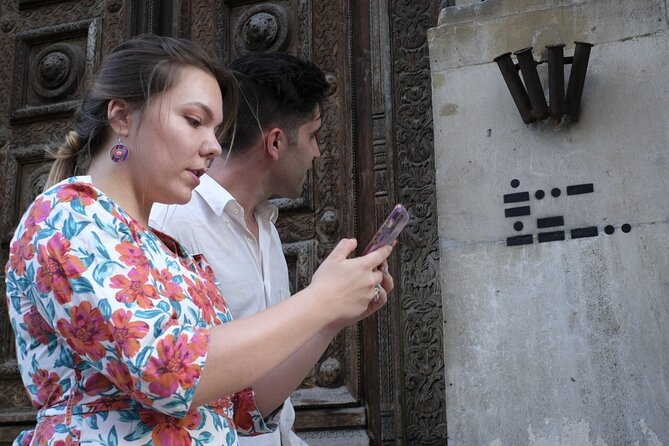
You’ll use a mobile ticket in the Questo app and follow clue prompts at a set of landmarks—starting at the Boston Public Library (Central Library) and ending at Union Oyster House. The whole point is that you’ll pause, scan the scene, and earn your way to the next spot.
And because it’s designed to work without an internet connection, you’re not stuck waiting for loading screens or hunting for signal. That matters in Boston, where you can move from one busy corner to another fast.
You can also read our reviews of more guided tours in Boston



Price and time: $5.99 for about 80 minutes of walking
At $5.99 per person, this is priced for the “quick but meaningful” side of touring. You’re not paying for a live guide. You’re paying for a structured route and clue prompts that keep you moving through some of Boston’s best-known areas.
The timing clocks in at about 1 hour 20 minutes on average. Realistically, your pace controls the exact duration. If you love reading details and checking the surroundings carefully, it can stretch. If you’re focused and keep answers moving, you’ll likely finish closer to the faster end of that estimate.
For value, the big win is coverage: you hit a wide range of Boston landmarks that would normally take multiple separate outings to string together.
How the app game works (and why offline is a big deal)
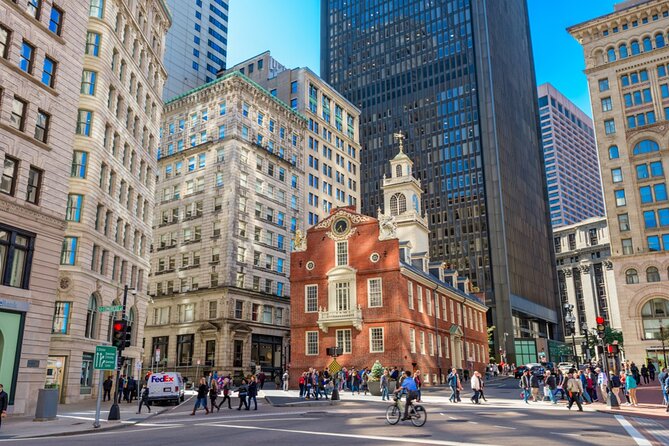
The experience is private, meaning it’s only your group—no human contact required. That’s a comfort factor if you don’t want to coordinate with other people’s footsteps or deal with the pressure of keeping up.
You can also choose your start time and keep control of your schedule. You’re not locked into one rigid departure, and you can take a break and resume later. That flexibility is useful if you’re pairing this with museum time, a morning coffee stop, or a separate sightseeing plan.
Most importantly for day-to-day travel: the hunt is built so you can play without an internet connection. So even if you step into a pocket with weak service, your clue path should keep going.
Boston Public Library: finding answers at a landmark built for public access
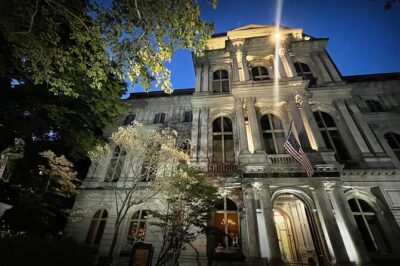
Your route starts at the Boston Public Library – Central Library on 700 Boylston St. This isn’t just a pretty building to photograph from the steps. It’s a historic institution with serious “firsts” behind it: it was the first large free municipal library in the U.S., the first to lend books, and the first to have a branch library and a children’s room.
In the hunt, you’ll be prompted to look around and find the answer to move on. That’s a smart way to slow down your viewing. Instead of passively admiring the façade, you’re scanning for clues tied to what makes the library historically important.
Practical tip: give yourself a little extra time at the start. When a game begins, you usually want to get oriented to how clue prompts look in the app. If you rush this first stage, you can end up feeling behind for the rest of the walk.
Copley Square: from Art Square to a classic Boston meeting point
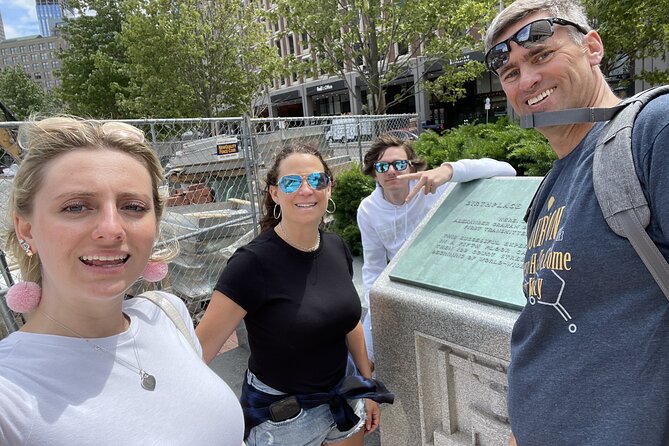
Next up is Copley Square, in Boston’s Back Bay. The square takes its name from painter John Singleton Copley, and it used to be known as Art Square because it was surrounded by major cultural institutions—some of which still exist today.
In the scavenger hunt, you’ll again look around to find what the prompt is asking. Copley Square can feel like a “just walk through it” stop, but the game makes you treat it like a puzzle box: you’re not only moving through space; you’re reading it.
What to watch for: signage, building details, and how the square is laid out. Copley Square is a busy crossroads, so when you’re trying to spot the answer quickly, pick one direction of travel and commit to it—don’t zigzag in every direction.
You can also read our reviews of more tours and experiences in Boston




Arlington Street Church: architecture and history across from the Public Garden
Then you’ll head to the Arlington Street Church, a Unitarian Universalist church across from the Public Garden. It was completed in 1861, designed by Arthur Gilman and Gridley James Fox Bryant, and it’s known for resembling James Gibbs’ St. Martin-in-the-Fields in London.
This stop is one of those Boston moments where the streetscapes connect American and European architectural influence. The hunt’s clue format encourages you to look at the building’s features rather than treating it as a backdrop.
Practical tip: if you’re visiting at a busy time, aim for a quick but respectful exterior look and keep your pace. Churches are active places, even when the sightseeing focus is outside.
The Ether Monument: a 40-foot reminder of anesthesia history
Near the northwest corner of the Public Garden—by the intersection of Arlington Street and Marlborough Street—you’ll find The Ether Monument, also called The Good Samaritan.
It commemorates the use of ether in anesthesia, and the monument is about 40 feet tall. It’s also noted as the oldest monument in the public garden. The design has been attributed to William Robert Ware and the sculptor John Quincy Adams Ward.
This is a great clue stop because it’s visually distinctive. A tall statue and fountain don’t blend into the background, which makes it easier to locate quickly and focus on the puzzle.
How to make it work: treat this as your “reset” moment. If you’ve been rushing through earlier clues, slow down here. The monument is an obvious anchor point for your attention.
Massachusetts State House: politics, place, and building details
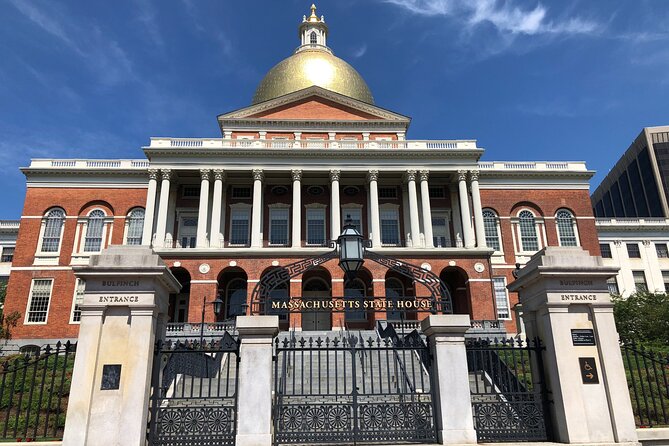
The route then heads to the Massachusetts State House in Beacon Hill. You’re looking at the state capitol and seat of government for the Commonwealth of Massachusetts, housing the Massachusetts General Court (the state legislature) and offices of the Governor.
The building was designed by Charles Bulfinch and completed in January 1798. It originally cost $133,333, which was more than five times the budget. It has been enlarged repeatedly since—so the structure is part architecture, part historical record of how the state grew.
In the game, you’ll again need to look around and find the answer for the next location. That makes you pay attention to the building as more than a landmark icon. You start noticing how the environment reflects government power, public space, and civic identity.
Practical tip: if you’re trying to finish within the average time, don’t get stuck reading everything at once. Hit the clue target, then give yourself just a little extra time to take in the architecture.
Shaw Memorial: the bronze relief you should actually pause for
Opposite 24 Beacon Street at the edge of Boston Common, you’ll stop at the Memorial to Robert Gould Shaw and the Massachusetts Fifty-Fourth Regiment.
This is a bronze relief sculpture by Augustus Saint-Gaudens. It depicts Colonel Robert Gould Shaw leading members of the 54th Regiment Massachusetts Volunteer Infantry as they marched down Beacon Street on May 28, 1863 to depart the city to fight in the South. It was unveiled on May 31, 1897.
The memorial is also described as the first civic monument to pay homage to the heroism of African American soldiers. That alone makes this stop more than just a photo op. The game’s clue format is a nudge to stand still and connect the scene in front of you to the story represented in bronze.
What to do: take one minute before you look for the game answer. Even a quick pause helps the information land instead of bouncing off your brain.
Park Street: a quick stop where the puzzle can slow you down
The hunt continues to Park Street, laid out in 1804 as Park Place, replacing the previous Sentry Street.
In the 1880s, the Woman’s Journal was published on Park Street. Later, Houghton Mifflin was headquartered here beginning in the late 19th century. So yes—this is a transit-adjacent spot with strong publishing and civic roots.
Here’s the caution: Park Street is active and has a lot of movement and entrances. Even if you’re great at finding places, clue-style questions tied to a transit area can take a bit longer than you expect because you may need to line up what the app is pointing you toward.
Strategy: slow down near the station area and follow the instruction carefully. Don’t let the momentum of crossing streets pull you away from where the clue expects you to be.
Tremont Temple at 88 Tremont Street: fire history and rebuilding
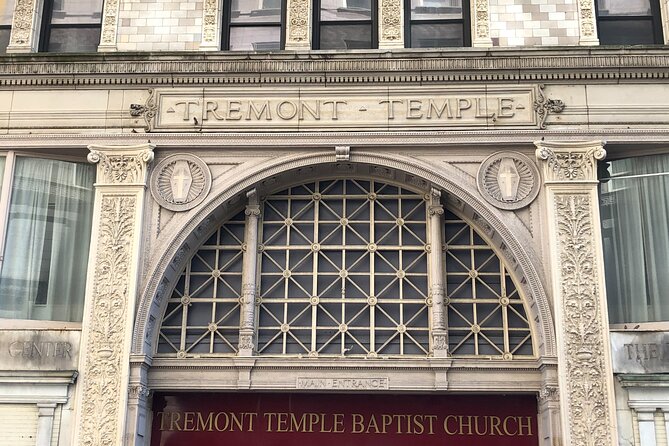
At 88 Tremont Street, you’ll visit the Tremont Temple, a Baptist church affiliated with the American Baptist Churches, USA.
The existing multi-storey structure was designed by architect Clarence Blackall and opened in May 1896. It replaced a much smaller 1827 structure that repeatedly suffered damage by fires.
This stop is a good reminder that Boston’s religious buildings often carry multiple layers of history. The game’s clue approach keeps it practical: you’re not getting a long lecture, but you’re forced to pay attention to what makes this temple period-specific.
Practical tip: since this is a church, you’ll likely get the most out of focusing on the exterior and the setting rather than expecting an inside viewing based on what’s provided.
Alexander Graham Bell and the telephone story tied to Boston University
Next, you’ll reach a spot connected to Alexander Graham Bell, a Boston University professor from 1874 to 1879.
Bell invented the telephone in 1876, and the description ties it to BU-funded research on a new device for transmitting speech. He’s also referenced here at a 1916 BU reception marking the 40th anniversary of his invention.
This clue stop gives you a “history of ideas” moment: the hunt isn’t only about government and monuments. It also connects invention to the Boston area.
Tip: treat this like a small “read-the-marker” stop. If you’re the type who normally speed-walks plaques, slow down just enough to catch the key dates and the BU connection.
The Tavern since 1795: where printers, politics, and sailors met
The route then brings you to The Tavern, a place dating back to 1795. It served as a gathering point for printers and politicians, sailors and students, and it quickly became the city’s most famous alehouse.
In a hunt like this, a stop like The Tavern works because it’s easy to imagine daily life in the past. It’s also a natural “take a breath” moment—your legs may welcome the idea of an eventual break.
Practical tip: if you’re trying to keep the whole hunt close to the average time, use The Tavern as your pacing checkpoint. Take a quick look, then move on so you’re not stuck hovering too long.
Union Oyster House: the smart finale you can eat at
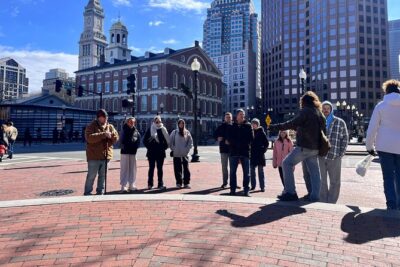
The game ends at Union Oyster House at 41 Union St on the Freedom Trail area near Faneuil Hall. It’s famous as America’s oldest restaurant, housed in a building dating back to pre-Revolutionary days and serving food since 1826.
One detail that makes this a satisfying ending: the description notes that Daniel Webster was a constant customer, and that the oyster bar’s stalls are in their original positions. After a puzzle route through Boston landmarks, ending at a working historic restaurant gives you a clean “done” moment.
Timing note: Union Oyster House lists opening hours as 5:00 AM–9:00 PM (daily, within the provided date range). If your hunt ends later in the day, you’ve still got a reasonable window to grab food.
Clue reality check: the Union Oyster House area can also take a little extra care to solve correctly because you’re dealing with a recognizable destination that attracts attention. Plan to slow down and read what the app asks for, rather than trying to power through.
Cues, not a lecture: what you actually learn
This hunt is built around the idea that sightseeing sticks better when you’re looking actively. You’ll absorb facts like:
- Boston Public Library’s early public library model and children’s room history
- Arlington Street Church’s London-inspired architectural reference
- The Ether Monument’s link to anesthesia
- The Shaw Memorial’s role in commemorating African American soldiers
- Park Street’s publishing and business connections
- Bell’s BU connection and the telephone timeline
- Union Oyster House’s pre-Revolutionary roots and long-running service since 1826
It’s more “look closer” than “learn everything.” If that’s your style, you’ll likely enjoy the pacing.
The one trade-off: clue sharpness can vary by stop
This is the practical part you should know before you buy. A few clue prompts can feel less straightforward than you’d expect, so you might spend extra time figuring out what the app wants you to notice.
The areas where this kind of slowdown is most likely are near Park Street and Union Oyster House. If you hate puzzles where the answer requires reading the environment carefully, this can feel frustrating for reasons that aren’t about effort—they’re about how the clue is worded.
Fix: go in with patience. Treat each stop as a chance to look around for one specific detail, not a quest for a “wow, that’s clever” answer every time.
Who should book this Boston Record Breakers hunt
I think this works best for people who:
- want a structured walking route without committing to a guided tour
- like historical landmarks but prefer self-paced exploration
- want a private activity that avoids human contact and can help you sidestep crowds
- travel with a phone and don’t mind following clue prompts instead of listening to commentary
It may not be ideal if you want deep explanations, long narrative context, or a human to answer questions on the spot. The experience is designed to be self-contained—so if you want a conversational tour guide, you’ll feel the difference.
Should you book Boston Record Breakers: Self-Guided Scavenger Hunt?
If your goal is a fun, affordable way to walk through central Boston with an offline-friendly mission, I’d say it’s an easy choice. $5.99 is low enough that you can treat it like a playful add-on to your day, not a major financial bet. The lineup of places—Boston Public Library, Copley Square, Arlington Street Church, the Ether Monument, State House, Shaw Memorial, and Union Oyster House—covers a lot of recognizable ground in one route.
But if you know you get annoyed when clues are slightly vague or you want guaranteed cleverness at every stop, you might feel let down. Go in expecting a light scavenger hunt with a couple moments that ask you to slow down and read carefully.
FAQ
Is this hunt playable without an internet connection?
Yes. This activity includes offline play, so you do not need an internet connection to play the city game.
How long does the Boston Record Breakers hunt take?
It runs for about 1 hour 20 minutes on average.
How much does it cost?
The price is $5.99 per person.
What language is the hunt offered in?
It is offered in English.
Is there a live guide with this experience?
No. It is self-guided and described as having no human contact.
Where do I start and end the hunt?
You start at Boston Public Library – Central Library, 700 Boylston St, Boston, MA 02116 and end at Union Oyster House, 41 Union St, Boston, MA 02108.
Does it work with a mobile ticket?
Yes. The experience includes a mobile ticket, and you follow instructions in the Questo app.
Can I start at any time and pause during the hunt?
Yes. It offers full flexibility: you can start at any hour, take a break, and resume later.
Is this a private activity?
Yes. It’s listed as private, so only your group participates.
Are service animals allowed?
Yes. Service animals are allowed.
What are Union Oyster House’s opening hours listed for this activity?
Union Oyster House is listed as open Monday–Sunday, 5:00 AM–9:00 PM (within the provided date range).