REVIEW · FREEDOM TRAIL TOURS
Freedom Trail: Boston Common, Old State House, Faneuil Hall
Book on GetYourGuide →Operated by Tours by Foot · Bookable on GetYourGuide
History hits fast on Boston streets. This Freedom Trail highlights tour packs major Revolutionary-era moments into a short, walkable loop, starting at Boston Common and finishing at Faneuil Hall. I especially like how the route turns famous names into real places you can point at.
Two big wins for me: the guide’s storytelling (Brian is a standout) and the way you cover the must-see sites without feeling rushed. One thing to consider: it’s a tight 2-hour walk, so if you want long stops inside buildings, you may feel a bit pressed for time.
In This Review
- Key takeaways before you go
- Meeting at Park Street: a smart start that keeps you moving
- Boston Common and Park Street Church: the calm launch, then the first loud lesson
- Granary Burying Ground and King’s Chapel: founders, symbols, and uncomfortable truths
- Old South Meeting House to Old Corner Bookstore: plotting the Tea Party and spreading ideas
- Old State House and the Declaration balcony moment: when liberty becomes public
- Boston Massacre site and Faneuil Hall: from tension to action
- Price and value: $39 for a compact, high-impact overview
- Who should book this Freedom Trail highlights walk
- Should you book this tour?
- FAQ
- Where does the tour start?
- Where does the tour end?
- How long is the tour?
- What is the price?
- What’s included in the tour?
- What’s not included?
- Is the tour wheelchair accessible?
- What’s the cancellation and booking policy?
Key takeaways before you go
- Start in Boston Common at America’s oldest public park, a calm launch for the rest of the walk
- Tea Party planning to Declaration reads: you’ll connect the dots between key revolutionary sparkpoints
- Cemeteries that matter at Granary Burying Ground, with famous Revolution-era figures and Crispus Attucks nearby
- Churches with political backstories like Park Street Church and King’s Chapel, tied to anti-slavery and loyalist connections
- Real narrative flow from early colonial life through unrest, then to the “Cradle of Liberty” at Faneuil Hall
Meeting at Park Street: a smart start that keeps you moving
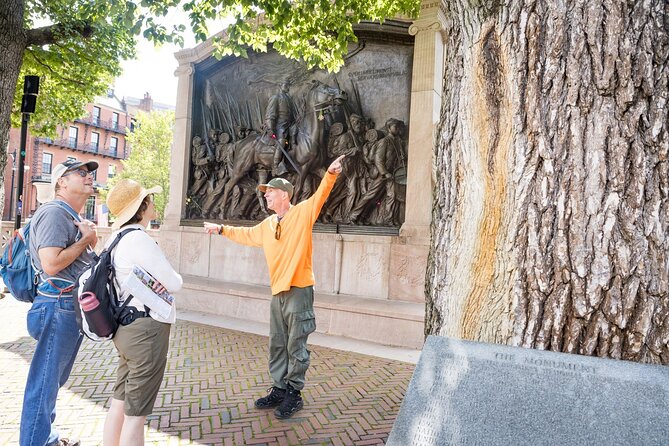
You meet outside the Park St. T Station on the eastern edge of Boston Common. That’s a good call because Boston Common is your mental reset button. Before you get slammed with battles and speeches, you start in a big, open green space built for everyday life.
This tour is designed as a highlights walk—about 2 hours—so you’ll be moving from stop to stop. That matters. If you only have a morning (or a short window between other plans), you get a concentrated hit of the Freedom Trail’s headline moments rather than wandering and guessing what’s important.
Your guide is a live, English-speaking, licensed professional. The best part isn’t just the facts—it’s the way the stories get told. The reviews you shared repeatedly credit Brian for being entertaining and easy to engage with, including answering practical questions about Boston along the way. If you like history that has momentum, you’ll probably enjoy this format.
You can also read our reviews of more tours and experiences in Boston.


Boston Common and Park Street Church: the calm launch, then the first loud lesson
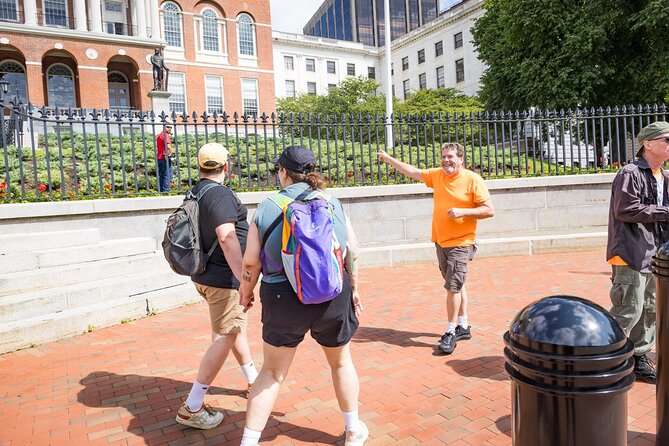
You begin at Boston Common, founded in 1634. It’s more than a pretty starting point. Boston Common sat at the center of British troop activity during the Revolutionary War, and it also saw later civic action in the 20th century. In other words, this park isn’t just old—it’s been used by people when they wanted change.
From there, the tour heads to Park Street Church (built in 1809). This stop is a great example of why a walking highlights tour works. The church’s steeple is a skyline landmark, but the real payoff is the political thread: the site is connected to the first public anti-slavery address in the U.S.
What I like about this pairing—Common plus Park Street Church—is how it shifts you from “town green” to “moral debate.” You can walk a few minutes and feel the era tighten around you.
Practical tip: Boston weather can change quickly. Since this is an outdoor walking tour, wear layers you can adjust. Even in challenging conditions, the guide’s energy is described as steady, which helps keep the walk enjoyable.
Granary Burying Ground and King’s Chapel: founders, symbols, and uncomfortable truths
Next up is Granary Burying Ground, one of Boston’s oldest cemeteries. This is where the tour gets emotionally real. You’ll see the resting places of major American Revolution figures, including Paul Revere, Samuel Adams, and John Hancock.
Then there’s a second, darker connection at the cemetery area: you can pay respects at the grave of Crispus Attucks, identified here as the first casualty of the Boston Massacre and a symbol of the fight for freedom. That detail changes how you read the Revolutionary story. It’s not abstract. It has people.
After that comes King’s Chapel (built in 1754). This stop adds complexity to the usual “patriots vs. British” framing. The church is tied to loyalist congregants during the Revolution, which gives you a fuller sense of how divided communities could be. You’ll also see a clear Georgian architectural example, one of Boston’s older churches.
The balanced value here is big: Revolutionary history isn’t one uniform mood. A guide who can explain both sides without turning it into a lecture is the difference between “I saw buildings” and “I understand the moment.”
Old South Meeting House to Old Corner Bookstore: plotting the Tea Party and spreading ideas
Now you move into the story-building stage—the part of the Revolution that’s about organization, communication, and public pressure.
You’ll visit the Old South Meeting House (built in 1729), described as where plans for the Boston Tea Party were set into motion. This matters because the Tea Party wasn’t random vandalism in the popular imagination. It was a coordinated act that built momentum for the larger independence effort.
From there, the tour goes to the Old Corner Bookstore, once a hub for the 19th-century literary elite. The practical value of including this stop is that it shows how information travels. Books and publishing don’t win revolutions on their own, but they shape ideas, networks, and debate. It’s a quieter kind of power than muskets and ships, and Boston had plenty of both.
This sequence—tea planning, then publishing—also helps you understand something useful for your own trip planning: if you like museums, you’ll likely want to pair this walk with one or two indoor stops later. This tour gets you oriented and emotionally primed, so follow-up reading or museum time feels meaningful.
Old State House and the Declaration balcony moment: when liberty becomes public
One of the most dramatic stops is the Old State House (dating back to 1713). This building served as the seat of colonial government, so it’s a natural place for power to collide with protest.
Here’s what you’ll learn at this stop: the Declaration of Independence was read from the Old State House balcony. That’s a vivid moment to tie to the broader Revolutionary narrative, because it connects documents to streets—words becoming public events.
This is also where the tour links toward the idea of ignition: the quest for liberty doesn’t appear out of nowhere. It shows up through anger, decisions, and public pressure—then it spreads.
A good guide makes these moments feel less like textbook trivia and more like real civic theater. The reviews you shared emphasize Brian’s storytelling and sense of humor, which is exactly what helps when you’re standing in the same spots where these moments were supposed to land.




Boston Massacre site and Faneuil Hall: from tension to action
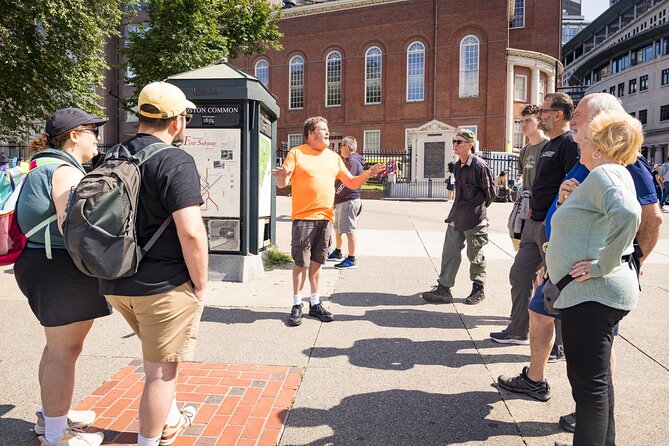
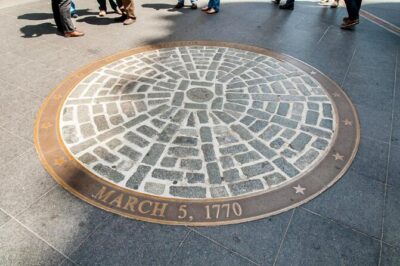
The tour includes the Boston Massacre site, marking where tensions between colonists and British soldiers escalated in 1770. This stop is stark by design. Even without dramatic reenactments, the location helps you understand why the Revolution moved the way it did—one side’s fear meets the other side’s anger, and then the public outcome changes everything.
Then you finish at Faneuil Hall, called the Cradle of Liberty. It’s been a marketplace and meeting hall since 1742, and that combination is important: commerce and civic debate lived side by side. When independence supporters gathered here, it wasn’t only speeches—it was a social space where arguments could turn into action.
If you like your history with a clear arc, this ending is satisfying. You start in the Common, you travel through organizing and communication, you hit the government-and-declaration moment, and you close with a public forum for debate.
The tour ending at Faneuil Hall also helps you keep your day flexible. After 2 hours, you can either keep exploring the area on foot or pivot to a nearby museum or meal.
Price and value: $39 for a compact, high-impact overview
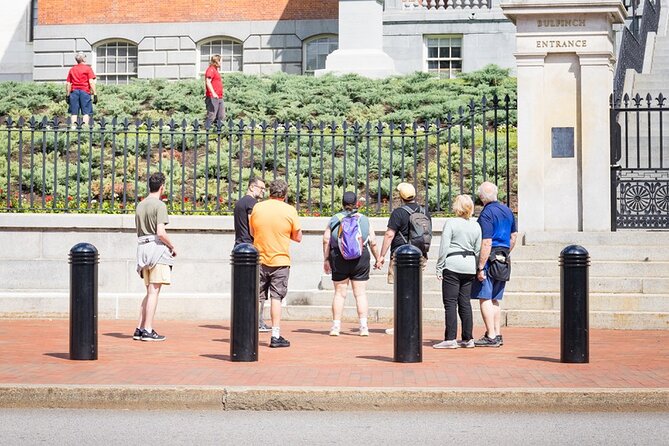
At $39 per person for a 2-hour guided walk, the value depends on one thing: how you like to travel. If you’re the type who wants a guided backbone so you don’t miss the key beats, this price looks fair fast.
Here’s why it feels worth it based on what’s included:
- You get a guided highlights format designed for a short timeline
- You hit multiple Freedom Trail anchor points in one flow
- You’re not doing the work of figuring out which sites matter and why
Also, the guide being described as enthusiastic, engaging, and approachable matters. A tour like this lives or dies on delivery. The reviews point to Brian as a strong communicator—fun to listen to, strong on detail, and friendly enough that questions don’t feel like interruptions.
What’s not included is food and drinks. That’s normal, but it’s worth planning for. I’d bring a bottle of water and a small snack if your day runs long. You’ll likely want your energy steady for the walking pace.
Who should book this Freedom Trail highlights walk
This tour is a great fit if:
- you want the Freedom Trail’s biggest moments in a short amount of time
- you like guided storytelling that makes names and dates feel connected
- you’re traveling with kids or a mixed-history group and want everyone engaged
It may be less ideal if:
- you want extended time in museums or long interior visits (this is built as a highlight walk)
- you prefer totally self-directed touring where you set every pace and stop length
For most people, though, it’s a smart “first pass” through Boston’s core. You leave with enough context to understand what you’ll see next, even if you don’t go deep into every site.
Should you book this tour?
Yes—if you’re looking for a tight, high-impact Freedom Trail overview from Boston Common to Faneuil Hall, this is the kind of tour that saves time and reduces guesswork. The biggest reason to book is the combination of a compact route and a guide style that keeps things moving without turning serious history into a slog.
If you’re the kind of traveler who likes to feel how events linked together—Tea Party planning, the Declaration moment, the Massacre site, then Faneuil Hall debates—you’ll probably leave glad you chose the guided highlights format.
FAQ
Where does the tour start?
It starts outside the Park St. T Station on the eastern edge of Boston Common.
Where does the tour end?
The tour ends at Faneuil Hall.
How long is the tour?
It lasts about 2 hours.
What is the price?
The price is listed as $39 per person.
What’s included in the tour?
Included are a guided highlights tour with an expert licensed guide, and it’s positioned as the best option to cover the highlights in a short amount of time.
What’s not included?
Hotel pickup and drop-off, plus food and drinks, are not included.
Is the tour wheelchair accessible?
Yes, it’s listed as wheelchair accessible.
What’s the cancellation and booking policy?
You can cancel up to 24 hours in advance for a full refund, and there’s a reserve now & pay later option.