REVIEW · MUSEUM & ATTRACTION TICKETS
Boston: Children’s Museum Entry Ticket
Book on GetYourGuide →Operated by Boston Children's Museum · Bookable on GetYourGuide
Three floors. One big playground. I like how the Boston Children’s Museum mixes hands-on fun with real learning, especially with the three-story climbing structure and the Japanese House. It’s the kind of place where kids can’t help but move and make choices.
My favorite parts are the Construction Zone and Kid Power—both push kids to do, not just watch. One is all about building and creating, and the other turns health and fitness into interactive play that feels more like games than lessons.
The main drawback is simple: at $28 per person, this can add up fast for larger families, and it’s a kid-first setup with rules about adult supervision. Plan your day around active exhibits, not a quiet adult break.
In This Review
- Key Things to Know Before You Go
- A $28 Ticket That Works Like a Whole-Day Plan
- Your Best Order Inside the Museum (Without Overplanning)
- Climb the Museum’s Three-Story Structure for Real Coordination Wins
- Kid Power: Turning Health and Fitness Into Games
- Construction Zone: Build Together, Not Just Look Around
- STEAM Lab: Science Fun for the Curious Crowd
- The Japanese House: A Cultural Stop That’s More Than Decor
- PlaySpace for Toddlers: A Setup That Helps Everyone
- Rotating Exhibits: Why Your Second Visit Can Feel Fresh
- What’s Included, What’s Not, and the Rules That Matter
- A Rainy-Day Favorite in Real Life
- Who This Fits Best
- Should You Book the Boston Children’s Museum Entry Ticket?
- FAQ
- How much is the Boston Children’s Museum entry ticket?
- How long is the experience valid for?
- What does the ticket include?
- Is there free cancellation?
- Can I reserve now and pay later?
- When can I use the ticket?
- Who provides help at the museum?
- Is the museum wheelchair accessible?
- Who needs a ticket for entry?
- What are the rules about kids and adults?
Key Things to Know Before You Go

- Three-story climbing structure is a true stamina test for little athletes
- Kid Power turns health and fitness into hands-on activities
- Construction Zone is made for building, creating, and teamwork
- Japanese House (an authentic 100-year-old house) adds real cultural context
- PlaySpace keeps toddlers in their own zone, so the youngest aren’t steamrolled
- Rotating exhibits mean you may see something new on a return visit
A $28 Ticket That Works Like a Whole-Day Plan
For $28 per person, you’re buying entry to a museum experience designed for kids and families. That price makes the most sense when you treat it like your main activity for the day—especially if Boston weather turns nasty or you want something that doesn’t depend on naps, lines, or outdoor walking.
This is not a quick in-and-out museum. It’s built around the idea that children learn by doing, touching, climbing, building, and playing. If your group has energy and you want a place where kids can take the lead, the time will feel worth it.
You also get a couple of helpful booking features: you can reserve in advance and use a pay-later approach, which is great when your schedule is still moving around. And if plans change, the ticket has free cancellation up to 24 hours before. (See the FAQ for the exact details.)
You can also read our reviews of more tours and experiences in Boston



Your Best Order Inside the Museum (Without Overplanning)

I recommend you don’t try to “see everything.” Instead, pick a few anchors and let the rest happen around them. The museum includes rotating exhibits, so there’s always a chance something new is in play. That’s a big deal in a children’s museum—kids often love repeats, but they also enjoy the surprise factor.
Here’s a practical approach that fits how these spaces work:
Start with the high-energy draw—like the three-story climbing structure—early, when kids are fresh. Then aim for the hands-on build and learn areas (Construction Zone, Kid Power, STEAM Lab). Save the quieter cultural element (Japanese House) for when you want calmer attention.
Finally, if you have toddlers, route the day so PlaySpace is part of your plan early or mid-visit. It’s designed for younger kids, and that matters when you’re trying to keep everyone content.
Climb the Museum’s Three-Story Structure for Real Coordination Wins

One of the most talked-about parts is the museum’s iconic three-story climbing setup. This isn’t just a photo op. It’s built for kids to test balance, coordination, and agility in a way that feels like play.
Why I like it: it gives kids a goal that their bodies understand. They’re not just shifting from one exhibit to another—they’re working through height, movement, and problem-solving. That naturally burns energy fast, which is exactly what you want in an indoor outing.
What to consider: climbing setups can mean you’ll spend more time than you expect. If your group has a strict nap window or you’re racing against another plan later that day, give the climbing area extra room in your schedule.
Kid Power: Turning Health and Fitness Into Games
After the climbing, Kid Power is a smart next stop. It’s themed around health and fitness, but the approach is interactive, meaning kids learn through fun activities rather than lectures.
For many families, this is the exhibit that helps the day feel balanced. You get movement from the climbing, and then you switch to play that still involves activity—just in a different style. It’s also a good “reset” when kids want something new but still want to stay hands-on.
Construction Zone: Build Together, Not Just Look Around
If you’re traveling with kids who love blocks, building, and making things with their hands, Construction Zone is a must. This is where the museum leans into family creativity—kids can build and create, and adults can join in without needing to be an expert.
Why this is valuable: it turns problem-solving into something you can share. You’re not translating museum labels for little ones. You’re both in the same play world—hands moving, ideas forming, and the final result often changing as the child thinks of something new.
The main consideration here is attention span. Hands-on build areas can keep kids busy for a long time, which is great if you’ve planned a full day. If you only have a short window, you’ll want to pick one “build session” and set expectations for leaving.
You can also read our reviews of more museum experiences in Boston






STEAM Lab: Science Fun for the Curious Crowd

The STEAM Lab is aimed at science enthusiasts, and it’s a great match if your child likes experimenting and figuring things out. You don’t need background knowledge. The museum format is built so kids can explore through play.
Think of it as the “show me how it works” part of the day. It pairs well after you’ve already gotten moving at Kid Power and Construction Zone. By the time you get here, kids often have the right mindset: curious, ready to test, and willing to try again if something doesn’t work at first.
If you’ve got a mixed-age group, this is also a practical choice. Science-style exhibits usually give kids multiple ways to engage, even if their interests don’t match perfectly.
The Japanese House: A Cultural Stop That’s More Than Decor
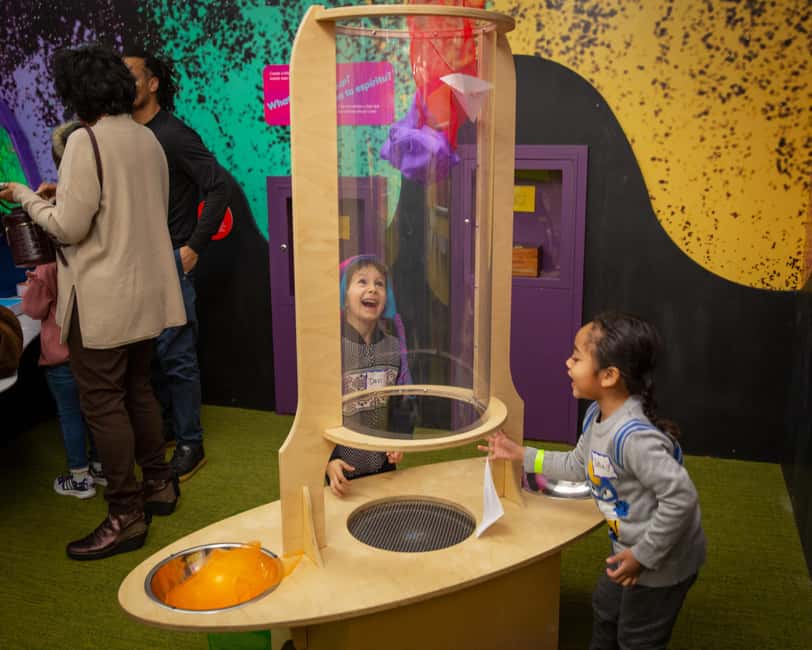
The Japanese House is an authentic 100-year-old house, and that detail matters. This isn’t just a themed room. It’s a real-world cultural stop that helps kids connect stories and traditions to a physical space.
I like that it gives the day variety. After climbing and building, kids can shift into observation and learning. If you’ve got a child who likes culture, stories, or “how people live,” this is the exhibit that can give your museum day more meaning.
What to watch for: this kind of exhibit may move slower than the more kinetic areas. If your child is purely energy-driven, you might only get partway through and that’s fine. Plan a quick stop rather than forcing a full cultural tour.
PlaySpace for Toddlers: A Setup That Helps Everyone

If you’re visiting with toddlers, PlaySpace is a big part of why this museum can work for families. It’s designed specifically for younger kids, which means the environment is geared toward toddler needs rather than expecting them to handle the same challenges as older children.
For mixed groups, this reduces the daily chaos. Toddlers aren’t competing with older kids for space and attention. Adults also get a clearer role: you can stay close and help toddlers engage without constantly redirecting around the rest of the museum.
Rotating Exhibits: Why Your Second Visit Can Feel Fresh

The museum features rotating exhibits, and that’s a practical advantage. Even if your kids want to repeat a favorite, there’s also a chance something new is in the mix. That keeps the day from feeling identical each time you go.
If you’re visiting Boston for only a short time, rotating exhibits may help you catch something that lines up with your interests. If you live nearby, it’s a built-in reason to return without burning out on the same rooms.
What’s Included, What’s Not, and the Rules That Matter
Your entry ticket covers admission to the museum. That means once you’re inside, you’re free to explore the exhibits and programs offered during your visit.
A few rules are clearly listed, and it’s smart to follow them without fuss:
- No weapons or sharp objects
- No smoking or vaping
- No alcohol and drugs
The other rule I’d focus on is the supervision requirement. All children age 15 and under must be accompanied by an adult age 16+. If an adult comes unaccompanied, they’re required to leave a government-issued photo ID at the Admissions Desk under the museum’s unaccompanied adult policy.
This affects planning more than you might think. If you’re trying to handle drop-off or a quick museum visit with teens or kids, make sure you’re staffed appropriately with adults.
A Rainy-Day Favorite in Real Life
One verified booking highlighted the museum as a go-to for a rainy Sunday, with kids staying indoors all day and loving the experience. That matches what the museum design suggests: it’s built to keep families busy without relying on outdoor plans.
I also like that the museum supports seasonal themes. In that same experience, the family was planning to return for a Halloween theme. That’s the kind of flexibility you want when traveling: you can build your plan around one indoor anchor and keep your options open as events change.
Who This Fits Best
This is a strong choice if:
- Your kids love hands-on, active play
- You want an indoor option that works for more than one age group
- You’re traveling with toddlers and need a dedicated space like PlaySpace
- You want a mix of movement (climbing, fitness play), creativity (Construction Zone), and learning (STEAM Lab, Japanese House)
It may be less ideal if you’re traveling as adults only, or if your group expects a quiet museum tour with long seated time. This place is designed for children and families, so you’ll feel that in how the space is used.
Should You Book the Boston Children’s Museum Entry Ticket?
I’d book it if you want one indoor activity that can genuinely hold a family’s attention. The value is strongest when you treat it as a full-day plan: start with the climbing structure, rotate through Kid Power, Construction Zone, and STEAM Lab, then finish with Japanese House and PlaySpace depending on your ages.
Skip the booking only if:
- Your group can’t handle active exhibits or short attention spans
- You’re looking for a low-noise, adult-focused cultural stop
- The $28 per person cost would crowd out your other priorities
For most families, this ticket is a solid deal: you’re paying for entry to a place where kids can climb, build, explore, and learn—all in one day in Boston.
FAQ
How much is the Boston Children’s Museum entry ticket?
The price is $28 per person.
How long is the experience valid for?
The ticket is valid for 1 day.
What does the ticket include?
The ticket includes entry to the museum.
Is there free cancellation?
Yes. You can cancel up to 24 hours in advance for a full refund.
Can I reserve now and pay later?
Yes. There’s a reserve now & pay later option, where you can book your spot and pay nothing today.
When can I use the ticket?
The ticket is valid for 1 day, and you’ll need to check availability to see starting times.
Who provides help at the museum?
There is a host or greeter, and the service language is English.
Is the museum wheelchair accessible?
Yes. The museum is wheelchair accessible.
Who needs a ticket for entry?
Everyone after their first birthday requires a ticket. Infants under 1 are free.
What are the rules about kids and adults?
All children (15 and under) must be accompanied by an adult (16+). Adults who are unaccompanied are required to leave a government-issued photo ID at the Admissions Desk under the museum’s unaccompanied adult policy.