REVIEW · LEXINGTON & CONCORD TOURS
Boston Lexington and Concord Revolutionary War full day tour
Book on Viator →Operated by Trailblazer Tours Boston - Private Tours · Bookable on Viator
Boston’s revolution story starts fast. You feel it as soon as your guide points out the first neighborhoods and key turns in the siege. I love the private group setup (up to 4, with pick-up options) and the way the day weaves Boston events into the first shots at Lexington Green and the stand at the Old North Bridge without wasting time. One thing to plan for: a few stops are only exterior viewing, and not all admission is included, like Bunker Hill Monument and Louisa May Alcott’s Orchard House.
You’ll spend the day moving between the places where decisions were made, rumors traveled, and soldiers reacted in real time. The best part is the pacing: quick drive-bys where they matter, short walks where they count, and just enough context to make each site feel connected. Guides such as Christian and Martin are known for clean explanations and a friendly, story-driven style that keeps kids and adults on the same page.
If you’re expecting a long, slow museum day, this won’t be that. It’s a history-focused route built for seeing more than one turning point in a single day, so comfortable shoes and a snack strategy help.
In This Review
- Key Points Worth Knowing Before You Go
- Entering the Revolution by Car, Not a Classroom
- South Boston to Dorchester Heights: Siege Details You Can Picture
- Charlestown and USS Constitution Views: History in Plain Sight
- Bunker Hill Monument: The One Ticket You Might Want to Add
- Harvard Square: Where New Ideas and the War Meet
- Lexington Green: The First Shots and the Walk Across the Green
- Buckman Tavern and Hancock-Clarke House: Militia Waiting and a Refuge Plan
- Battle Road Trail to Munroe Tavern: The Route Paul Revere Took
- Orchard House or a Pass-By: Little Women Fans Get a Choice
- Sleepy Hollow Cemetery and Old North Bridge: Famous Names, Then the Shot
- Walden Pond State Reservation: A Breather Outside Concord
- Price and Value: What $995 Buys You for Up to 4
- Weather, Comfort, and Who This Tour Suits Best
- Should You Book This Boston–Lexington–Concord Day?
- FAQ
- FAQ
- How long is the Boston, Lexington, and Concord Revolutionary War full day tour?
- Is hotel pickup available?
- What’s included in the price?
- Are admission fees included for every stop?
- Is lunch included?
- What happens if the weather is bad or I need to cancel?
Key Points Worth Knowing Before You Go
- Private transportation for up to 4 means you’re not competing for space or waiting behind other groups
- A tight 10:00 am to ~6:00 pm rhythm keeps the day moving from Boston to Concord
- Most stops are free on admission, with only a couple of major ticket add-ons
- Harvard Square + Lexington Green + Old North Bridge give you the “why” behind the “where”
- Orchard House is flexible for Little Women fans, without forcing it on everyone
- Optional Walden Pond pause gives you a breather on the way back
Entering the Revolution by Car, Not a Classroom
This tour works because it treats the American Revolution like a lived-in timeline, not a list of dates. You start in Boston proper, then work outward into the towns where the war’s first sparks grew into organized resistance.
With a private vehicle for your group, you gain two big benefits: less logistical stress and more control over how much you want to ask. You’re dropped at the main meeting point area in the morning and end back there at the finish—simple, with no confusing transfers.
And since the tour is designed for your group only, you can keep a steady pace without listening to someone else’s itinerary.
You can also read our reviews of more tours and experiences in Boston

South Boston to Dorchester Heights: Siege Details You Can Picture
The day begins with a drive through South Boston—the kind of place where neighborhood identity matters, and it sets the tone for how local communities experience national events. It’s a short stop, but it helps you get oriented fast before your guide starts connecting geography to strategy.
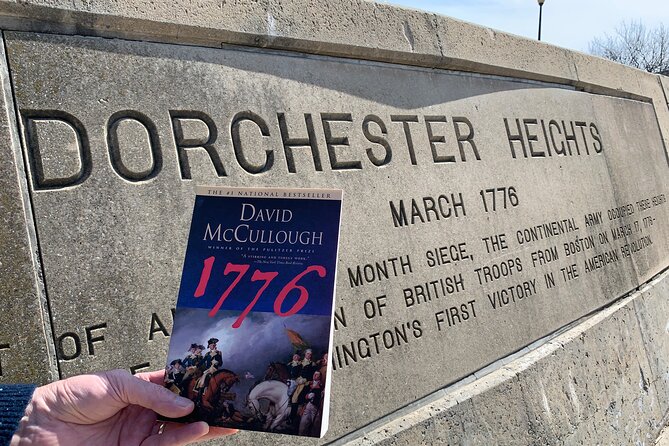
Next comes Dorchester Heights, just outside Boston. This is one of those locations where the story is bigger than the parking lot. The hill mattered because it changed what the British needed to do to control Boston. You’ll get the plot in plain language, plus why this wasn’t just a dramatic moment, but a turning point that helped end the siege.
What I like here is the cause-and-effect approach. You’re not just being told where people stood; you’re learning why that ground had leverage.
Charlestown and USS Constitution Views: History in Plain Sight
From Dorchester Heights you swing into Charlestown, another neighborhood where the past sits close to the present. You’ll drive through and pass USS Constitution, and even if you’re not stepping inside, it’s a visual reminder that American maritime power and Revolutionary-era ideas overlap in real places.
Charlestown also gives you a feel for how crowded, built-up areas can still hold strategic importance. It’s a nice contrast to the more open battle sites you’ll see later.
If you’re the type who likes to photograph quickly, this portion is good. Stops are brief, and the guide keeps the day moving.
Bunker Hill Monument: The One Ticket You Might Want to Add
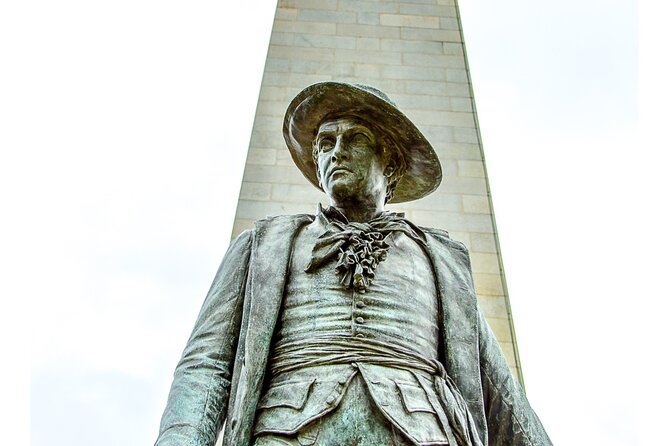
Your next major milestone is Bunker Hill Monument. This battle helped build support for independence, not because it was neat and easy, but because the resistance showed something mattered: that locals could fight back and not fold immediately.
Here’s the practical note: admission isn’t included for this stop. If you want the monument experience beyond the exterior view—maybe going higher or taking in ticketed elements—plan extra time and money. Even if you don’t buy a ticket, the explanation should still make the site feel purposeful.
Harvard Square: Where New Ideas and the War Meet
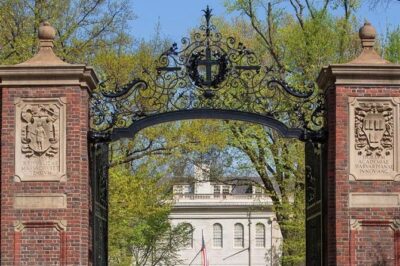
Then you head to Harvard Square for a walking tour of public parts of Harvard Yard and surrounding buildings tied to militia and early American military life. You’ll also hear how prominent figures associated with the era show up in the city’s physical fabric, including connections to George Washington.
This stop is valuable because it adds texture. Later in the day you’ll be in field-and-fence country. Harvard Square reminds you that the Revolution was also shaped by people thinking, organizing, and training in urban settings.
You typically get about 30 minutes, which is enough for key stops without forcing you into a long walk. If it’s hot or rainy, your guide’s pacing usually keeps it manageable.






Lexington Green: The First Shots and the Walk Across the Green

The emotional heart of the route is Lexington Green. From Cambridge, the drive is short but meaningful—about ten miles—because it places you in the same corridor where fast decisions were made.
At Lexington Green, you get time to walk across the green and understand how the battle started and what unfolded afterward. The place is open, and that matters: the geography makes it easier to imagine movement and confusion, not just heroic poses.
This is a stop where listening time pays off. The more you focus on the guide’s sequence of events—who moved when, what signals meant—the more the site clicks.
You’ll have roughly 45 minutes, which is a good balance: enough to feel the space, not so long that you’re exhausted before the quieter, story-heavy stops.
Buckman Tavern and Hancock-Clarke House: Militia Waiting and a Refuge Plan

From Lexington, you head into the small-town details that make the Revolution feel human.
At Buckman Tavern, you’ll look from the outside and hear how local militia waited for British forces. The story also includes how people tried to keep morale up with refreshments—an unglamorous detail that actually helps you picture the day as normal life interrupted.
Next is the Hancock-Clarke House, again primarily an exterior stop. The key angle here is refuge: why Sam Adams and John Hancock ended up there and how the threat of capture shaped where leaders could safely stay.
These two stops work together. One gives you the waiting and readiness of local fighters. The other shows the fear and planning leaders faced.
Battle Road Trail to Munroe Tavern: The Route Paul Revere Took
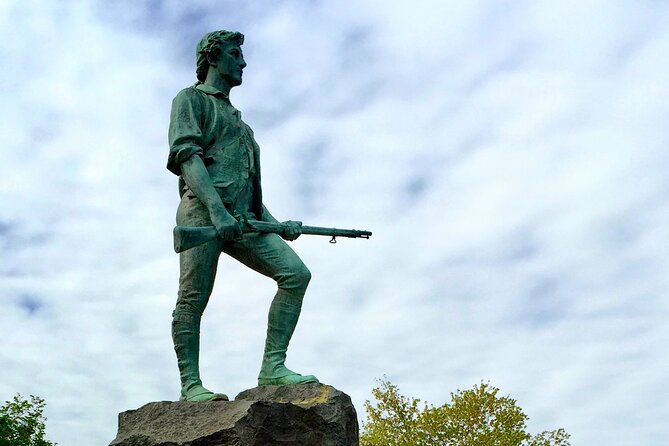
After that, the day leans into the chase-and-response side of the Revolution.
On Battle Road Trail, you follow the route British forces used on the morning of April 19, 1775 and stop at a Paul Revere capture location. This is the kind of moment that turns a name into a place you can stand on. It’s not about spectacle—it’s about recognizing that a fast ride carried real risk and real consequences.
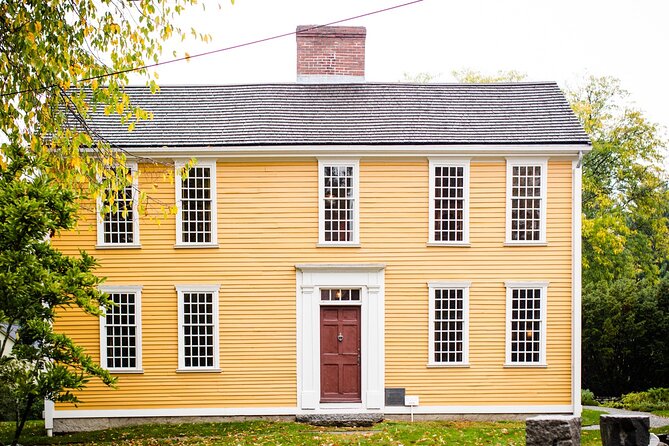
Then you move to Munroe Tavern, described as a former British army headquarters and field hospital in 1775. You’ll also hear how the story of Paul Revere’s journey to Lexington gets tied to this location.
Short stops like this can feel thin on paper, but the way your guide links events helps. You’re not just collecting locations—you’re tracing pressure moving down a line.
Orchard House or a Pass-By: Little Women Fans Get a Choice
One of the smartest parts of the design is how Louisa May Alcott’s Orchard House is handled. If you’re a Little Women fan, the tour can be customized to give you time to visit, with admission not included in the tour price.
If you’re not into it, you typically pass by. That flexibility keeps the day from turning into a stop that some people resent and others rush through.
With about 45 minutes when customized, it’s enough time to see the house experience without turning the whole day into a detour.
Sleepy Hollow Cemetery and Old North Bridge: Famous Names, Then the Shot
Before you hit Concord’s most famous flashpoint, you’ll stop at Sleepy Hollow Cemetery to see graves of well-known authors. It’s only around 10 minutes, but it adds a literary thread that fits naturally with Concord.
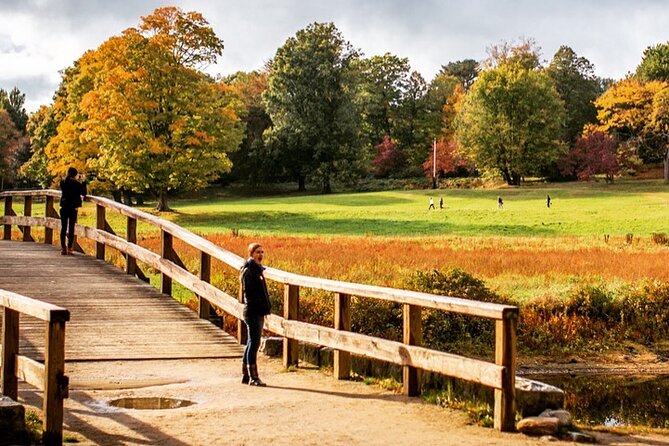
Then comes the big one: the Old North Bridge. You’ll walk onto the site associated with the shot heard round the world and understand how British forces met resistance from Massachusetts minutemen and militia that was underestimated.
This stop is one reason I like the tour structure. You’re not ending the day with a vague “and then it happened.” You’re ending with a physical place that explains the outcome in human terms—tension, timing, and reaction.
You get about 15 minutes here, which is short enough to keep energy up, but long enough to walk the space with the story attached.
Walden Pond State Reservation: A Breather Outside Concord
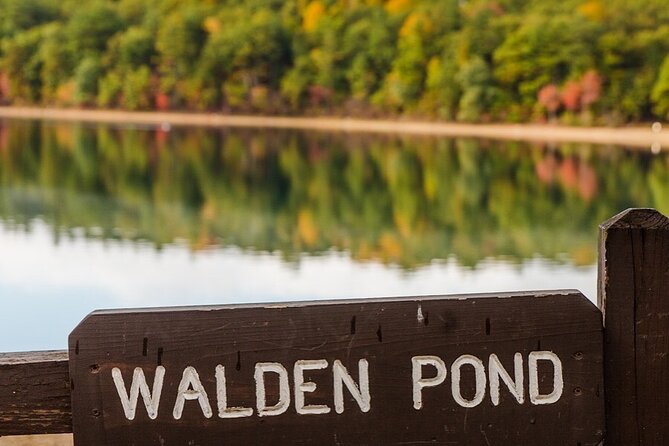
On the way back to Boston, there’s a brief stop at Walden Pond State Reservation for about 15 minutes. It’s not a museum stop. It’s a reset—time to look at water and open space after more than a half day of war-related stops.
This matters if you’re traveling with kids, or if you’re the kind of adult who gets a little “facts overload” by late afternoon. A short pause also makes photos easier, and it gives your brain a break.
Price and Value: What $995 Buys You for Up to 4
The price is $995 per group (up to 4) for about 6 hours, with private transportation included. That means the cost per person depends on how full your group is:
- If you use the full four seats, it’s about $248.75 per person
- If it’s just you or two people, your per-person share climbs quickly
For me, this is strongest value when you’re traveling as a small group that wants a tight plan without crowded logistics. It’s also a good deal if you care about getting explanations that fit your interests—because you can ask follow-up questions on the spot.
Also note the money-saving structure: many stops have free admission. The main likely ticket add-ons are Bunker Hill Monument and, if you choose it, Orchard House. Lunch is not included, so bring your own plan—snacks help keep morale up between stops.
Weather, Comfort, and Who This Tour Suits Best
This experience requires good weather. If conditions are poor, it’s offered a different date or a full refund. So if you hate being stuck indoors with an altered day, keep an eye on forecasts close to your departure.
The tour says most travelers can participate, and it allows service animals. It’s also described as near public transportation, which can matter if you’re arranging your own way to the meeting point.
This is a great match if you:
- want a high-impact route with minimal planning
- prefer a private guide over a large group bus
- have kids who do better with story-based stops than lecture-only pacing
- love American history but don’t want to spend the whole day inside museums
A nice touch from the guide-style notes you may encounter: Christian’s approach has included extra attention to clear voice projection for hearing needs, using the small-group vehicle setup to help communication stay steady.
Should You Book This Boston–Lexington–Concord Day?
I’d book it if you want the Revolution story connected into one logical line: siege to first shots to warning rides to resistance at the bridge. The route is compact, guided explanations are central, and the tour’s small-group format keeps it from feeling rushed in the wrong way.
I’d skip it or adjust expectations if you need long museum time, or if you’re primarily interested in only one landmark. This day is designed to cover many key places, so it’s best for travelers who like movement and story.
FAQ
FAQ
How long is the Boston, Lexington, and Concord Revolutionary War full day tour?
It runs for about 6 hours (approx.) starting at 10:00 am, and it ends back at the meeting point.
Is hotel pickup available?
Yes. You can be picked up at a downtown Boston hotel or accommodation, or you can meet at Flour Bakery + Cafe on Farnsworth St.
What’s included in the price?
Private transportation is included, along with a mobile ticket and the tour is offered in English.
Are admission fees included for every stop?
Not all of them. Bunker Hill Monument admission is not included, and Orchard House admission is not included. Other stops are listed as free or as outside viewing.
Is lunch included?
No. Lunch is not included, so you’ll need to plan your own meal or snacks.
What happens if the weather is bad or I need to cancel?
The experience requires good weather. If canceled due to poor weather, you’ll be offered a different date or a full refund. You can cancel for a full refund up to 24 hours before the start time.