REVIEW · BOSTON
Boston Walk Through History Private & All-Inclusive Tour
Book on Viator →Operated by ForeverVacation · Bookable on Viator
Boston tells its story on foot. This private all-inclusive style walk strings together big-name sites, classic neighborhoods, and Boston’s food culture with a guide steering the pace and the talk. You’ll also use a mobile ticket, so you spend less time fussing and more time watching for the next turn.
I especially like how the tour gives you Freedom Trail context in a way that helps your brain place everything on a map, not just a list of stops. And I like that guides can adapt on the fly; one guide, Manny, reportedly asked what you already saw and what you still wanted, which is a smart way to make a private tour feel truly personal.
One possible drawback: the pace can feel fast, and timing matters. If traffic hits, delays happen—Michael reported a wait of more than an hour due to a crash causing major slowdown, and that can throw off a half-day plan.
In This Review
- Key highlights worth your attention
- Getting your bearings in Boston Common and Beacon Hill
- Granary Burying Ground and King’s Chapel: the city’s quieter timeline
- Faneuil Hall to Paul Revere House: markets, messaging, and homegrown drama
- Old North Church and the Boston Tea Party signal story
- The Freedom Trail: your guided shortcut through 16 history stops
- Fenway Park, Beacon Hill, and why this tour isn’t only colonial
- Museum of Fine Arts, the Museum of Science, and the North End’s living culture
- Harvard University and student-led walking options for campus lore
- Price and pacing: is $339 per person worth it?
- Who this tour suits best (and who should skip it)
- Should you book Boston Walk Through History Private & All-Inclusive Tour?
- FAQ
- How long is the Boston Walk Through History private tour?
- What is the price per person?
- Where does the tour start and end?
- Is this a private tour?
- What language is the tour offered in?
- Do I need to pay admission at the stops?
- Does the tour include the Freedom Trail?
- Is there a mobile ticket?
- What happens if the weather is bad or the tour is canceled?
Key highlights worth your attention

- Freedom Trail focus without the guesswork: you get the big 2.5-mile route idea (and the 1h 30m allotment) with context.
- Free-entry stops keep value high: Boston Common, State House, Granary Burying Ground, King’s Chapel, Faneuil Hall, Paul Revere House area, and Old North Church are listed as free admission.
- A private guide can personalize the day: Manny reportedly asked what you’d already seen and what you wanted next.
- Revolution and religion landmarks side-by-side: from Boston Tea Party to King’s Chapel to Old North signals, the story changes tone fast in a good way.
- Neighborhood and institution stops broaden the picture: Beacon Hill, Fenway Park, the North End, and options pointing toward Harvard, MFA, and the Museum of Science.
- The tour ends with subway help at South Station: handy if you’re heading onward right after the walk.
Getting your bearings in Boston Common and Beacon Hill
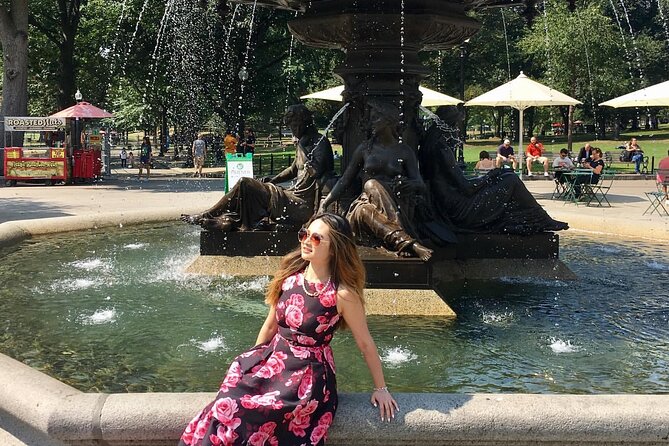
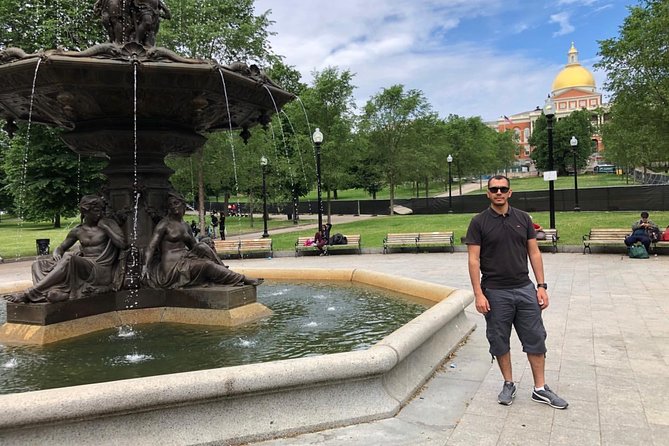
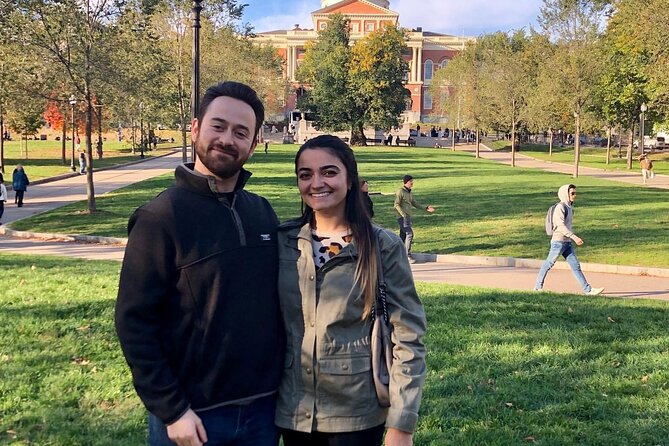
If you’ve ever stared at Boston’s streets and thought, I’ll never figure this out, this tour starts in a smart place. Boston Common is the oldest city park in the U.S., dating to 1634, and it acts like a time machine your feet can reach. Even when you’re short on time, stepping into this central green space helps the whole day feel connected instead of random.
From there, you move into Beacon Hill territory with the Massachusetts State House. This is the seat of government for the Commonwealth of Massachusetts, so it’s more than a photo stop. The building’s importance helps you understand why so many Revolutionary-era ideas were tangled up with law, power, and public life—Boston didn’t invent politics as a hobby; it lived it.
Why this works: Boston can feel layered—colonial streets, early government, later neighborhoods, and still more reinventions. Starting with Boston Common and the State House gives you anchors early, so later stops land with more meaning.
Time note: the listed time for each of these early stops is about 15 minutes. That’s enough for photos and basic orientation, but it’s not enough to linger for deep, quiet reading.
You can also read our reviews of more walking tours in Boston



Granary Burying Ground and King’s Chapel: the city’s quieter timeline
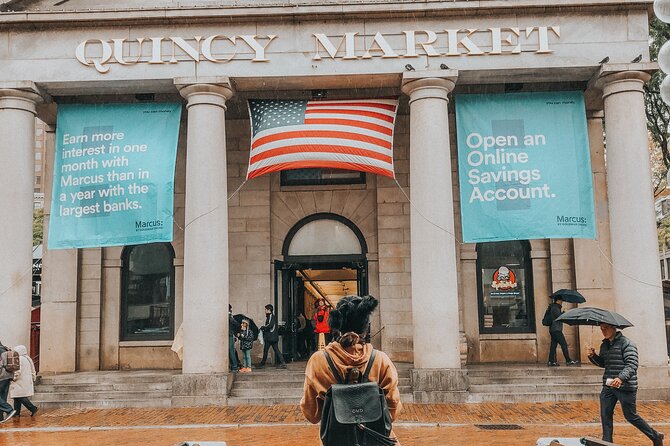
Next come two places that slow the story down—one through the cemetery, one through the church.
Granary Burying Ground, founded in 1660 and described as Boston’s third-oldest cemetery, is one of those stops that can make you look up and around instead of just forward. It gives you a sense of how close the past sits to daily life here. The fact that it’s on Tremont Street also matters; this isn’t a museum campus you reach by bus. It’s woven into the downtown grid.
King’s Chapel adds another layer: religion. It’s an independent Christian Unitarian congregation affiliated with the Unitarian Universalist Association, and its description is very specific—unitarian Christian theology, Anglican in worship, congregational governance. That blend is exactly the kind of detail that helps you understand why Boston’s history isn’t a single straight line. People disagreed, adapted, and mixed influences.
What to expect: short stop lengths (about 15 minutes listed) mean you’ll get the highlights and context, not a long ceremony. If you love architecture or want to read inscriptions slowly, tell your guide early so they can adjust where possible.
Faneuil Hall to Paul Revere House: markets, messaging, and homegrown drama
Faneuil Hall Marketplace is the pivot from “government and faith” into “people and public debate.” It’s a shopping-and-restaurant area built around three historic market buildings plus a promenade. That matters because it reflects how Boston has always made public spaces useful—markets weren’t just commerce; they were gathering places where ideas traveled fast.
Then the tour turns toward Paul Revere with the Paul Revere House, a colonial home built around 1680. This is where the Revolutionary story feels more human. Instead of abstract dates only, you get a sense of who lived where and what ordinary streets contained before they became legend.
Why I like this pairing: Faneuil Hall tells you the city’s habit of public talk. Paul Revere House tells you what it looked like when that talk mattered enough to risk everything. Together, they make the Revolution feel local.
Old North Church and the Boston Tea Party signal story
Old North Church (in the North End area) is a must for anyone who likes the mechanics of history—how messages actually moved. This is the site associated with the famous signal: One if by land, two if by sea. Whether you view it as legend detail or as Revolutionary communication, it gives you a clear, memorable plot point that sticks.
Right around this stretch, the tour also points to the Boston Tea Party: the Sons of Liberty protest on December 16, 1773. Even without extra theatrics, knowing the date and the group helps you put the Tea Party into the same story arc as the church signal. It’s all part of the same tension—merchants, protests, and the pushback that turned political disagreements into actions you can almost picture.
Practical tip: If you’re the type who likes to take notes, this is the area where you’ll want a couple of minutes to write down the signal phrase and the Tea Party date. That’s what will make the rest of the day click.
The Freedom Trail: your guided shortcut through 16 history stops
The Freedom Trail is the heart of the day. The trail is a 2.5-mile-long path through downtown Boston passing 16 locations significant to U.S. history, and your tour time includes about 1 hour 30 minutes here. That’s enough to feel the rhythm of the route without turning it into a marathon.
What you’ll love is the way a good guide keeps you from treating the trail like a scavenger hunt. Instead of thinking, next stop, next plaque, the talking points help you connect the dots: government, rebellion, communication, and public life.
A quick reality check: the tour’s listed stop times elsewhere are short, so you won’t have unlimited linger time on the trail. If you want long museum-style reading, plan for that by arriving early another day.
Why this is good value: Boston’s historical core can be pricey if you start adding paid attractions. Here, many of the core stops are listed as free admission, and the guide time is what you’re really buying—context and momentum.
You can also read our reviews of more private tours in Boston


Fenway Park, Beacon Hill, and why this tour isn’t only colonial
Not everything here is 1773, thankfully. The tour description also includes Fenway Park, described as America’s Most Beloved Ballpark. Even if you don’t care about sports, it’s a great example of how Boston keeps reinventing itself while staying attached to identity.
Then you get a closer look at Beacon Hill’s South Side, historically home of Boston’s old-money families, often called the Brahmins. That’s a useful contrast after the Revolutionary and working-public-space stops. It helps you understand how power moved: from early colonial leadership and public debate to later social structures and elite neighborhoods.
If you’ve ever worried that a history tour will ignore modern Boston, this one tries not to do that. The story of Boston isn’t only the 1700s. It’s also how different groups shaped the city in later eras.
Museum of Fine Arts, the Museum of Science, and the North End’s living culture

The tour also references major institutions: the Boston Museum of Fine Arts and the Museum of Science. The MFA is described as a leading art museum with strong collections ranging from Impressionist paintings to ancient Egyptian treasures, plus Asian and Persian fine arts and works from ancient Greece and the Middle East. The Museum of Science is described as hands-on learning for science and technology, and not just for kids.
Even if you don’t go inside, these stops matter because they show Boston as a learning city. If you do have time later, these names are helpful for planning a second visit.
Then there’s the North End, one of Boston’s most Italian-character areas. It has changed compared to when it was filled with newly arrived Italian immigrants, but it still holds onto its lively flavor and identity. For me, pairing the North End with Revolution-era landmarks is smart because it shows how Boston’s immigrant story sits close to its founding story.
Harvard University and student-led walking options for campus lore
Harvard gets included as a big highlight. It was founded in 1636 and is described as the oldest institution of higher learning in the United States, widely considered one of the world’s leading academic centers. That alone gives the stop weight.
The tour information also points you to the Harvard Information Center for a free walking tour of the campus guided by a student, focused on history, Harvard lore, and personal perspective. That’s a great match for how private-guided walking works: you get the main points, but also the human angle from someone who’s living the place.
If you’re short on time: your best move is to ask your guide what to prioritize on the day. The tour is built to cover a lot, and Harvard can take on different levels of importance depending on your interests.
Price and pacing: is $339 per person worth it?
At $339 per person for a 3 to 6 hour private tour, you’re paying for guide time and route coordination more than for ticket costs. Many of the core stops listed are free admission, so you’re not stacking entrance fees on top of the price.
So the real question is: will you benefit from a guide who can explain how these sites connect? The positive feedback you have here suggests yes. Manny reportedly made the experience exciting by asking what you already saw and what you wanted next, which is exactly how private touring should work.
The negative feedback is also instructive. When a guide is late or rushes, the tour can feel like it’s moving through history at a speed you didn’t agree to. If you’re the kind of person who likes slow conversation, build that into your expectations.
My practical take: this is a strong buy for first-timers who want structure, context, and flexibility in one half-day. It’s a tougher fit if you want to wander freely or spend long minutes inside buildings, because the stops are largely short.
Who this tour suits best (and who should skip it)
This tour is a good match if you want:
- A private guide who can tailor the day, like Manny reportedly did by checking what you’ve already seen.
- A fast way to understand Boston’s major threads: government, religion, Revolution, and later identity.
- A guided walk that uses the Freedom Trail as your backbone.
It may not be your best choice if:
- You hate a tight pace and want lots of quiet time at each site.
- You have a strict schedule and can’t absorb delays. (Traffic delays are real; Michael reported waiting more than an hour due to a crash and gridlock.)
Should you book Boston Walk Through History Private & All-Inclusive Tour?
I’d book it if you’re the kind of traveler who values being shown how the story connects. The combination of Boston Common, the State House, Granary Burying Ground, King’s Chapel, Faneuil Hall, the Paul Revere House, Old North Church, the Boston Tea Party context, and a guided Freedom Trail segment is a smart “big picture, then details” approach.
I’d think twice if your ideal day is slow and museum-heavy, because much of the time here is allocated for quick stops. Also, because the private guide meeting time can be affected by real-world traffic, plan buffers if you have another commitment after the tour ends at South Station.
If you do book, one simple move makes a big difference: tell your guide right away what you care about most—Revolution story points, government and law, or neighborhood culture—so the day flows in a direction you’ll enjoy.
FAQ
How long is the Boston Walk Through History private tour?
The tour lasts about 3 to 6 hours.
What is the price per person?
The price is $339.00 per person.
Where does the tour start and end?
It starts at Tremont St opp Temple Pl, Boston, MA 02108, and ends at South Station, 700 Atlantic Ave, Boston, MA 02110.
Is this a private tour?
Yes. It is private, meaning only your group participates.
What language is the tour offered in?
The tour is offered in English.
Do I need to pay admission at the stops?
Many of the listed stops show admission ticket free, including Boston Common, the Massachusetts State House, Granary Burying Ground, King’s Chapel, Faneuil Hall Marketplace, the Paul Revere House, and Old North Church.
Does the tour include the Freedom Trail?
Yes. It includes the Freedom Trail, a 2.5-mile route with 16 significant locations, and the time listed for the Freedom Trail segment is 1 hour 30 minutes.
Is there a mobile ticket?
Yes. The tour includes a mobile ticket.
What happens if the weather is bad or the tour is canceled?
The experience requires good weather. If it’s canceled due to poor weather, you’ll be offered a different date or a full refund.