REVIEW · BOSTON
Boston: Votes for Women History Tour of Back Bay
Book on Viator →Operated by Hub Town Tours · Bookable on Viator
Boston has more women than you expect. This 2.5-hour walking tour maps key women’s rights moments across Back Bay with a tight small group (up to 15) and an expert guide who brings the stories to life as you walk. I like that you get personal attention on the sidewalk, and I love how the tour spotlights both big movers and overlooked figures tied to real buildings you can still see today. One practical drawback: it’s a lot of standing and strolling for a long stretch, so I’d plan on comfortable shoes and a moderate stamina level (it’s not recommended if standing for extended periods is hard for you).
You also get good value for the money because most stops are free, outdoor-or-building-exterior moments rather than paid museum time. In my view, that makes it easier to fit into a typical Boston day without turning your schedule into a ticket-scramble. You’ll finish on the Commonwealth Avenue Mall by the Boston Women’s Memorial, about 0.8 miles from where you start, so it’s a tidy route that helps you actually use the day instead of just traveling between far-flung sites.
In This Review
- Key highlights you’ll remember
- Why Back Bay is the perfect setting for Votes for Women
- Getting started at Make Way for Ducklings, then finding the thread
- Public Garden and the Washington statue: public space as a political stage
- Marlborough Street and the suffrage financiers you rarely hear about
- A 1630 church, Transcendentalist ideas, and split opinions on voting rights
- The Ames family political fight: Mary Shreve Ames vs. Blanche Ames
- College Club of Boston and the idea of women’s education
- Natural history building, MIT ties, and Katherine McCormick’s fashion protest
- Copley Square and the Boston Public Library: print, journals, and public debate
- Boston Marathon finish, a Spiritualist Temple, and the Women’s Memorial finish line
- Price and value: why $35 feels fair for this format
- Who should book this tour (and who might skip it)
- Should you book the Votes for Women History Tour?
- FAQ
- How long is the Boston Votes for Women History Tour in Back Bay?
- How much does the tour cost?
- How big is the group?
- What language is the tour offered in?
- Where do I meet, and where does the tour end?
- Do I need to buy admission tickets for stops?
- What should I wear or bring for the walking route?
- Are there guides in period costume?
- Can I bring a service animal?
- What happens if the weather is bad?
Key highlights you’ll remember
- A Back Bay route built around suffrage finance, advocacy, and opposition
- Landmarks you already walk past, now explained with names and purpose
- Free outdoor stops that keep the tour moving without extra ticketing
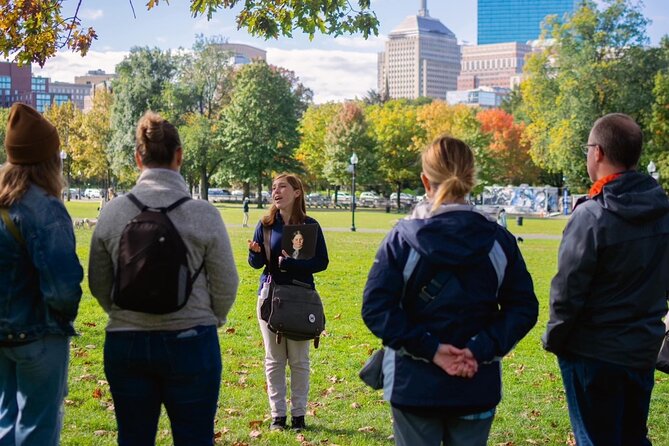
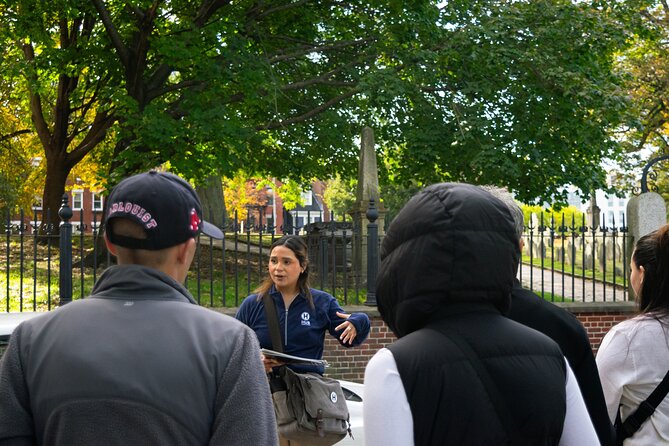
- A guide who invites questions and turns facts into stories
- Real women with real contradictions, including pro- and anti-suffrage voices
- A satisfying finish at the Boston Women’s Memorial
Why Back Bay is the perfect setting for Votes for Women
Boston’s women’s rights story is bigger than the handful of names people remember. What I like about this tour is that it uses Back Bay’s architecture as a storybook. You’re not just hearing about suffrage—you’re seeing the streets, institutions, and meeting spaces where organizing and debate happened.
Back Bay can look like a postcard of polished facades and grand public buildings. But that’s exactly the point. The tour shows how serious political work often happened in places that look ordinary from a distance—homes, clubs, and civic institutions—plus how public opinion was fought out in the same city streets where you’ll be shopping and dining today.
It also helps that the group size stays small. With a max of 15 people, you’re more likely to ask questions and get direct answers, not just listen and move on. If you’ve ever done a big “walk and read signs” tour, you’ll feel the difference right away.
You can also read our reviews of more historical tours in Boston


Getting started at Make Way for Ducklings, then finding the thread
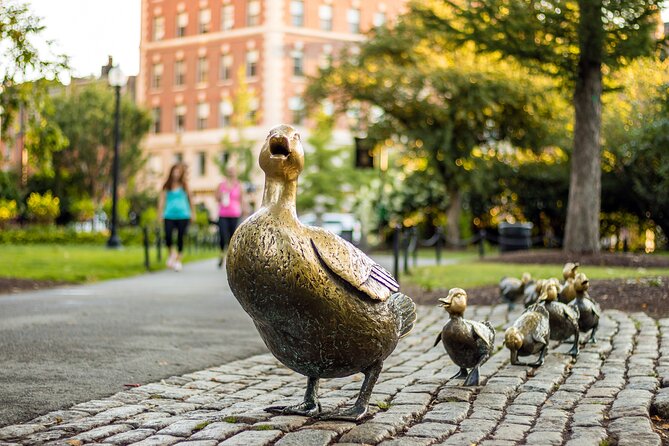
The tour begins at the Make Way for Ducklings sculpture by Nancy Schön, based on Robert McCloskey’s classic picture book. It’s a fun opener because it reminds you Boston has always mixed everyday life with public art. From there, you’re basically switching gears from childhood-remembered Boston to adult political Boston—without the day feeling like homework.
From the start, you’ll get oriented fast: you’re in the Back Bay zone, and the walk is designed around short stops—often around 5 to 10 minutes—so you can keep pace without being dragged through a long “wait in line” rhythm. The route is also structured so you reach the major theme points one after another: public garden and monuments, women’s suffrage organizers and opponents, clubs and institutions, then the memorial finish.
This matters because it keeps the story coherent. You’ll notice how each location connects to a different piece of the movement: fundraising and organizing, education and clubs, print and journalism, meeting spaces where women could speak, and even how activism showed up in culture and public visibility.
Public Garden and the Washington statue: public space as a political stage
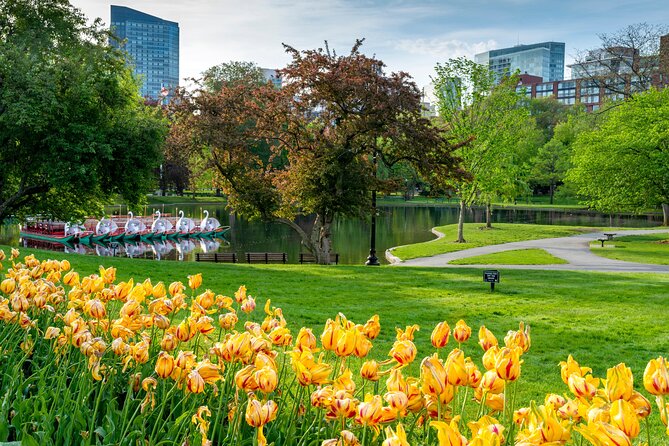
Your early stop is the Boston Public Garden, established in 1837 as the first public botanical garden in the United States. The guide uses the setting to frame a bigger idea: public spaces aren’t neutral. They’re where communities gather, where visibility happens, and where social change can’t stay hidden.
Next you’ll see the equestrian statue of George Washington by Thomas Ball, commissioned in 1859. It’s a familiar landmark, but the tour turns it into a lens for thinking about who gets celebrated in public memory and how political legitimacy gets built through symbols. Even if you’re not a statue person, this part is worth it because it helps you read the city like a document.
Practically, these early stops are also a smart pacing choice. They’re free and outside, so you’re not stuck with long waits. You’re warm-up ready by the time you hit the more specific suffrage sites.
Marlborough Street and the suffrage financiers you rarely hear about
One of the most compelling stops is at 6 Marlborough St, home of Pauline A. Shaw. She’s described here as a financier of Boston’s women’s suffrage movement and the founder of the Boston Equal Suffrage Association for Good Government. That’s a powerful shift from the usual “poster-name” version of history. Money, organization, and strategy matter—and Shaw’s role is a reminder that activism isn’t only speeches and marches.
What makes this segment work on the sidewalk is how it changes your mental model. Instead of picturing the movement as one unified front, you see a web of people with different talents: fundraising, leadership, communications, and political structure.
If you like tours where the facts are sharp enough to help you explore afterward, you’ll appreciate the way the guide ties individuals to specific locations. You’re not just learning names—you’re learning how the movement operated.
A 1630 church, Transcendentalist ideas, and split opinions on voting rights
Then the route moves into a cluster of sites that show how ideology played out in Boston. You’ll stop at a church that traces back to 1630, later becoming a center of the Transcendentalist movement. Even without getting lost in doctrine, the takeaway is clear: ideas, dissent, and debate found homes in places meant for community discussion.
From there, the tour doesn’t flatten the story into a single moral line. You’ll visit the home of Elizabeth Putnam, described here as an anti-suffragist and the first woman to preside over a state electoral college. That contrast is jarring in a useful way. It teaches you that suffrage didn’t simply happen to people who agreed—it was contested, argued, and actively opposed by real individuals with real civic influence.
You’ll also see the home of Julia Ward Howe, plus the home of Blanche Ames, a pro-suffrage cartoonist and an early advocate for birth control. That birth-control note matters because it connects women’s rights to bodily autonomy, not only the vote. It also nudges you to think about how different kinds of activism—art, public persuasion, and policy debate—could operate side by side.






The Ames family political fight: Mary Shreve Ames vs. Blanche Ames
One of the tour’s most memorable stretches is the Ames Mansion area and the surrounding homes connected to the Ames family. The information you’ll get here is specific: the mansion was part of the Ames family fortune and connected to politics through Mary Shreve Ames (described as an anti-suffragist) and Blanche Ames (described as a suffragist).
So you get a rare, real-life contradiction: the same family orbit contains both pro- and anti-suffrage leadership. That makes the story feel more honest and human. Political families exist on a spectrum, and people can disagree sharply even when they share wealth, status, or social circles.
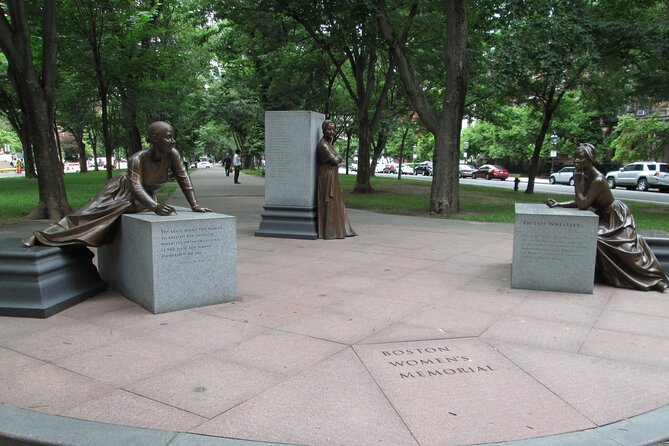
The tour also includes the long, historic avenue feel—tree-lined, grassy areas, park benches, and statues—so you’re not only standing at doors. You get a breather while the guide keeps the narrative moving forward.
College Club of Boston and the idea of women’s education
Stop 3 is the College Club of Boston, noted here as the first women’s college club in the United States. This is one of those stops where you can feel the movement pivot from voting rights as a single demand to education and leadership as a foundation.
The practical value: after hours of hearing about homes and opposition, you start seeing the movement as a structure that can train, organize, and sustain itself. A club isn’t just social. It can be infrastructure—helping women build networks, discuss issues, and act with continuity.
Even if you’re short on time back in Boston, this stop delivers a clear message: women’s rights activism wasn’t only a reaction. It was also planning.
Natural history building, MIT ties, and Katherine McCormick’s fashion protest
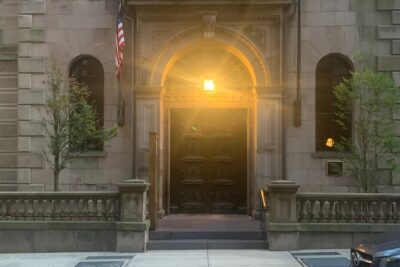
Stop 4 takes you to RH Boston | The Gallery at the Historic Museum of Natural History, a building that served as the museum home from 1864 to 1951. You’ll also hear that it was previously the site of an MIT lab where Katherine McCormick protested popular fashion as part of the suffrage movement.
I like this stop because it broadens what activism looks like. It’s easy to think of suffrage as signs and speeches only. But here the guide points to culture and public appearance—how norms get enforced and challenged.
The building itself adds another layer: built in 1877, and cited by members of the American Association of Architects as one of the top 10 buildings in the United States. That’s a great reminder that the movement lived in the same city as the institutions people admire for their design and status.
Copley Square and the Boston Public Library: print, journals, and public debate
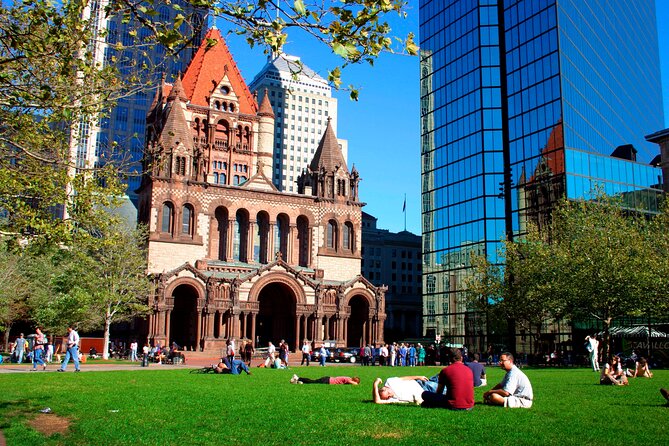
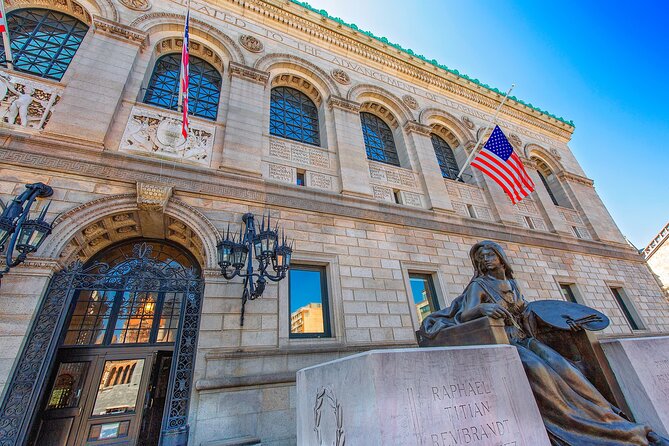
Next comes Copley Square, described as Boston’s cultural center, followed by the Boston Public Library. The library was founded in 1848 and is now the third-largest public library in the United States, which alone makes it a worthy stop on a city visit.
But the tour doesn’t stop at the impressive building. It ties the library zone to the suffrage press and organizing spaces. You’ll learn that the nearby area was known as Chauncy Hall, home to offices for pro-suffrage organizations including the Massachusetts Woman Suffrage Association and The Women’s Journal. That detail helps you understand why lobbying the public mattered: words had power, and the vote wasn’t only discussed in salons.
You’ll also hear about the Kensington Building (demolished in 1967), which housed offices of the Massachusetts Association Opposed to Further Extension of Suffrage to Women. So you’re seeing both sides of the argument, literally in the same geography.
The result is a tour that feels like it’s giving you a map of ideas—who published, who organized, and who fought back.
Boston Marathon finish, a Spiritualist Temple, and the Women’s Memorial finish line
As you move along, you’ll pass the finish line of the Boston Marathon. It’s not a suffrage location, but it works as a symbolic reset: this is still Boston, still public spectacle, still about who’s visible in the civic story.
You’ll also walk past a popular shopping and dining street with luxury brands, plus a former Spiritualist Temple where women were allowed to lead public meetings. That’s an important thread. Even before the vote, women needed places where they could speak publicly and build confidence in front of an audience.
Finally, you’ll end at the Boston Women’s Memorial, featuring Abigail Adams, Phillis Wheatley, and Lucy Stone. This finish is more than pretty stone. It ties the earlier stops into a clean emotional conclusion: the movement mattered, the people mattered, and Boston holds memory for them in a visible, public way.
Price and value: why $35 feels fair for this format
At $35 per person for about 2 hours 30 minutes, this is priced for a high-impact walking experience rather than a museum day. The big value is the format: you’re getting an expert-guided route through women’s rights landmarks in Back Bay, with a max of 15 guests so the guide can actually interact and answer questions.
Also, most stops are designed around free outdoor viewing or free-to-access landmark areas. That matters when you’re traveling on a budget. You’re not being hit with surprise entry fees to keep the story moving.
One more value point: the itinerary uses short stop durations (many around 5–10 minutes). That keeps your attention fresh and helps you see more than one major theme without burning your whole day.
If you only want “sit and look” sightseeing, this might feel a bit talk-heavy. If you like walking tours that make the city make sense, it’s a strong match.
Who should book this tour (and who might skip it)
This is a great choice if you:
- Want women’s suffrage history tied directly to Boston buildings and streets
- Like learning through guided walking instead of reading plaques alone
- Enjoy hearing how activism included organizing, finance, clubs, journalism, and even cultural protest
- Appreciate stories that include both supporters and opponents, like Elizabeth Putnam and the Ames family split
You might skip it if you:
- Struggle with standing and walking for an extended stretch
- Prefer a purely outdoor, minimal-talk tour (this is guided, with narrative detail)
- Want indoor museum visits as the main event (admission inside museums isn’t included)
Should you book the Votes for Women History Tour?
Yes, if you want a smart, walkable way to understand Boston’s role in the women’s suffrage story. The tour’s strongest asset is how it turns familiar streets into a set of named, meaningful places. You come away with a clearer sense of how the movement was built—by organizers like Pauline A. Shaw, educators and club leaders like the College Club of Boston, writers and journals around Chauncy Hall, and activists with unusual tactics like Katherine McCormick’s protest of fashion.
If your schedule allows, book it. And bring comfy shoes—you’ll earn the finish at the Boston Women’s Memorial, where the story lands with real emotional weight.
FAQ
How long is the Boston Votes for Women History Tour in Back Bay?
It lasts about 2 hours 30 minutes.
How much does the tour cost?
The price is $35.00 per person.
How big is the group?
The tour has a maximum of 15 travelers.
What language is the tour offered in?
The tour is offered in English.
Where do I meet, and where does the tour end?
It starts at Make Way for Ducklings – Nancy Schön, 4 Charles St, Boston, MA, and ends at the Boston Women’s Memorial on 256 Commonwealth Ave.
Do I need to buy admission tickets for stops?
Most landmark stops listed are free, but admission inside museums is not included.
What should I wear or bring for the walking route?
You should plan for a moderate physical fitness level and be able to stand for extended periods. Comfortable walking shoes help.
Are there guides in period costume?
Guides in period costume are not included.
Can I bring a service animal?
Yes, service animals are allowed.
What happens if the weather is bad?
The tour requires good weather; if it’s canceled due to poor weather, you’ll be offered a different date or a full refund.