REVIEW · FREEDOM TRAIL TOURS
Boston’s Freedom Trail: A Revolutionary Walking Tour
Book on GetYourGuide →Operated by Boston History Company · Bookable on GetYourGuide
Boston’s Freedom Trail gets real on foot, with a guide-led walk that threads through all 16 official sites. I especially like how you see the Golden Dome of the Massachusetts State House up close, right in the middle of the action. Starting at The Embrace on Boston Common keeps the whole route feeling grounded and easy to follow.
I also like the tour’s focus on the people you actually want to remember: John Hancock, Paul Revere, and Samuel Adams, plus the ideas that pushed Boston forward. It’s not just famous names either. You’ll hear stories that bring in women, African Americans, and immigrant patriots and pioneers, all tied back to what happened on these streets.
The main thing to consider is simple: this is a 2.5-hour walking tour with lots of stops, so plan for steady pace and comfortable shoes—especially if you want slow breaks or have limited mobility.
In This Review
- Key highlights you’ll feel on this Freedom Trail walk
- Freedom Trail in 2.5 Hours: What This Walk Really Covers
- Start at The Embrace by Boston Common: Getting Oriented Fast
- Park Street Church to the Golden Dome: The Core “Boston Decides” Stretch
- Old South Meeting House to the Old State House: Tea Party and Massacre on the Streets
- Hancock, Revere, and Adams: More Than Founder Names
- Old North Church and Copp’s Hill: Lanterns, Legends, and Ordinary Lives
- USS Constitution and Bunker Hill Monument: The Revolution’s Big Finale
- Guides Make or Break It: The Humor-Plus-Storytelling Style
- Price and Tickets: Why $31 Feels Like a Deal
- Who This Freedom Trail Tour Fits Best (and Who Might Want Options)
- Should You Book? My Practical Take
- FAQ
- Where does the tour start?
- How long is the Freedom Trail walking tour?
- What is the price per person?
- What language is the tour guide?
- Does the tour include entry tickets?
- Is it wheelchair accessible?
- Are video recordings allowed?
- Where does the tour end?
- What should I bring?
- Can I cancel for a full refund?
Key highlights you’ll feel on this Freedom Trail walk
- All 16 official Freedom Trail sites covered in one guided loop, so you are not piecing together stops on your own
- Golden Dome moments and major civic buildings where key Revolutionary events unfolded
- Lantern story payoff at the steeple connected to the two lanterns plan
- Bloody Massacre Site context with the setting explained where it actually happened
- Hancock, Revere, and Samuel Adams final resting places worked into the narrative of the Revolution
- Guides with strong personality, like Kenneth, Rob, Alissa, Matthew, Charlie R, and Stewart, who were repeatedly praised for keeping the walk lively
Freedom Trail in 2.5 Hours: What This Walk Really Covers
This is a classic Boston “see it all” experience, built for people who want the big map of the American Revolution without turning it into a multi-day checklist. In about 2.5 hours, you cover the full Freedom Trail arc, with stops running from Boston Common down through downtown landmarks and out toward Charlestown for the Revolution’s dramatic finale.
The value is not just the number of sites. It’s the way the tour keeps events connected. You’ll pass places tied to the Boston Tea Party and the Boston Massacre, then move from those crisis moments to the political and cultural aftershocks that shaped Boston afterward.
One practical note: entry tickets are not included, so you should only expect exterior viewing at most stops. Where attractions do have their own admissions, this tour keeps you moving rather than turning your afternoon into a queue.
You can also read our reviews of more walking tours in Boston

Start at The Embrace by Boston Common: Getting Oriented Fast
Your tour starts just inside the action at The Embrace statue, right next to the Visitor Center on Boston Common (listed at 139 Tremont Street). This matters more than it sounds. Boston’s Freedom Trail can feel like it’s fighting your navigation at first, but starting at a clear meeting point helps you get your bearings fast.
You’ll also have an easy way to spot your guide: no costume, just a flag that identifies the company (Boston History Company). That small detail saves stress, especially if you show up a few minutes early and do not want to hunt.
From the beginning, the guide sets the tone: tales of rebels, gangs, and Midnight Riders, plus a handful of light jokes (including the kind of cheap dad jokes that keep a long walk from feeling heavy). The result is a pace that feels like walking through a story, not marching through a lecture.
Park Street Church to the Golden Dome: The Core “Boston Decides” Stretch
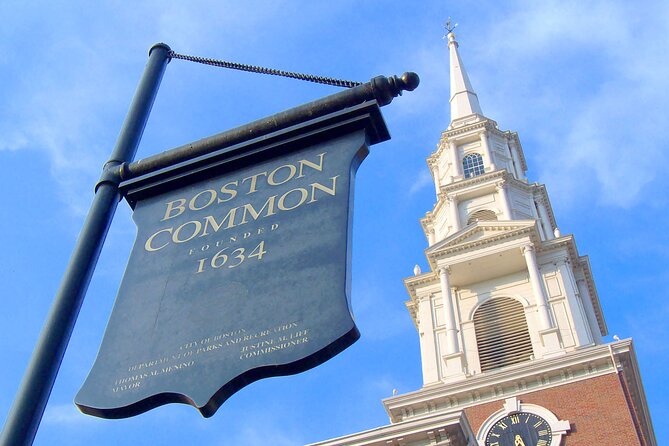
Once you leave Boston Common, the tour threads through the kind of spaces where Boston’s civic identity was formed. You’ll move past places like Park Street Church and Granary Burying Ground, both of which help you understand how the city memorialized its leaders and how “public life” looked in the 1700s.
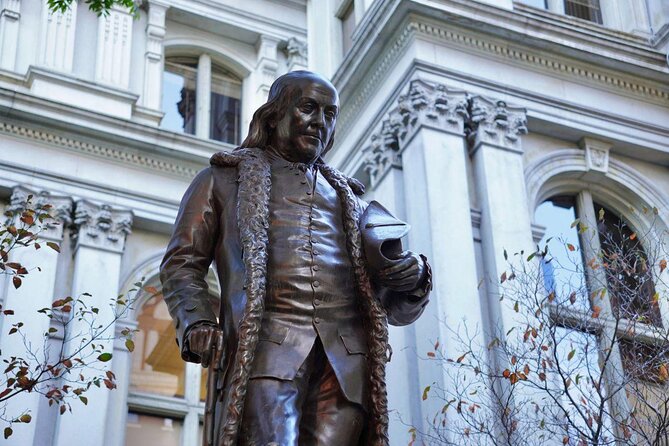
The guide also points out the religious and institutional backbone of the neighborhood. Stops include King’s Chapel and the Benjamin Franklin statue, which help connect Revolution-era politics to the everyday thinkers and organizers Boston produced. Even if you know Franklin as a name, seeing the statue in context makes the city feel less like a set of monuments and more like a functioning brain.
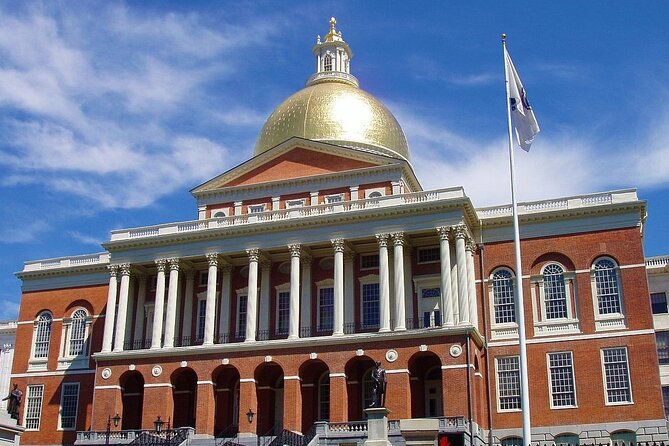
Then comes one of the most satisfying visual moments: the Golden Dome of the Massachusetts State House. This is where it clicks that Boston did not just fight the British. It built the American system afterward, with Massachusetts leaning into education, abolition, and immigration as parts of its long-term identity. The tour ties those themes back to what you just walked past, instead of letting them float off as trivia.
A trade-off: this part can feel dense because you’re seeing multiple “major stop” locations with short transitions. If you like long photo pauses, you may want to ration them early.
Old South Meeting House to the Old State House: Tea Party and Massacre on the Streets
The Freedom Trail stops get intense quickly, and this tour does not shy away from that. You’ll visit key buildings like the Old South Meeting House and the Old State House, where public anger and governance were in constant negotiation.
This is where the story stops being about who the founders were and starts being about what the conflict actually felt like. The guide brings in explosive events tied to the Boston Tea Party and gives setting for the Boston Massacre, so you can place the violence in a real streetscape rather than a textbook paragraph.
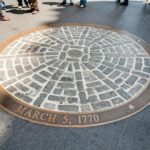
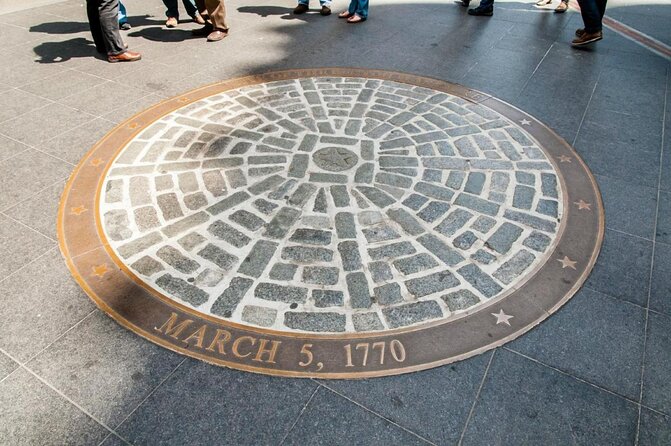
One of the tour’s strongest moves is that it keeps you at the sites where the story happened, not just at the commemorative markers. The Boston Massacre Site is a good example. It turns a famous label into a specific location in time, which makes the name feel less mythic and more human.
If you care about how political movements grow, this is also the section where you’ll start noticing patterns in what people did when they thought the system was failing them. That’s one reason the tour works well for first-timers: it teaches cause-and-effect, not just chronology.
Hancock, Revere, and Adams: More Than Founder Names
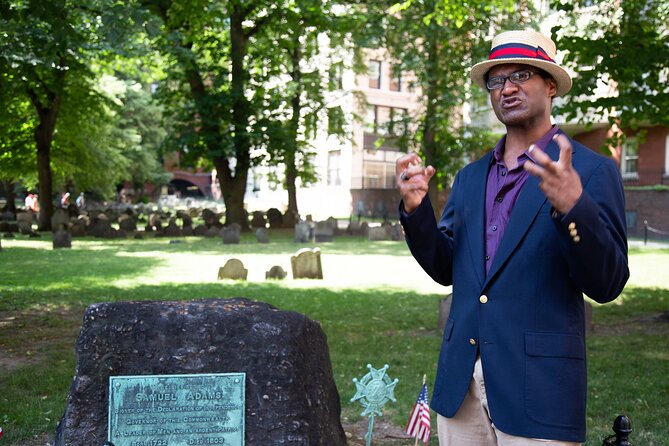
A standout feature is how the tour brings you to the final resting places of major Revolutionary figures, including John Hancock, Paul Revere, and Samuel Adams. Seeing where they are laid to rest does something subtle. It makes the Revolution feel like it had consequences that lasted long after the fighting.
The tour also leans into the idea that Boston’s “patriotism” had many faces. The guide includes stories of women, African Americans, and immigrant patriots and pioneers, showing that the push for independence was not limited to a narrow cast of well-known men. That perspective can be a welcome correction if your mental picture of the Revolution is mostly portraits and speeches.
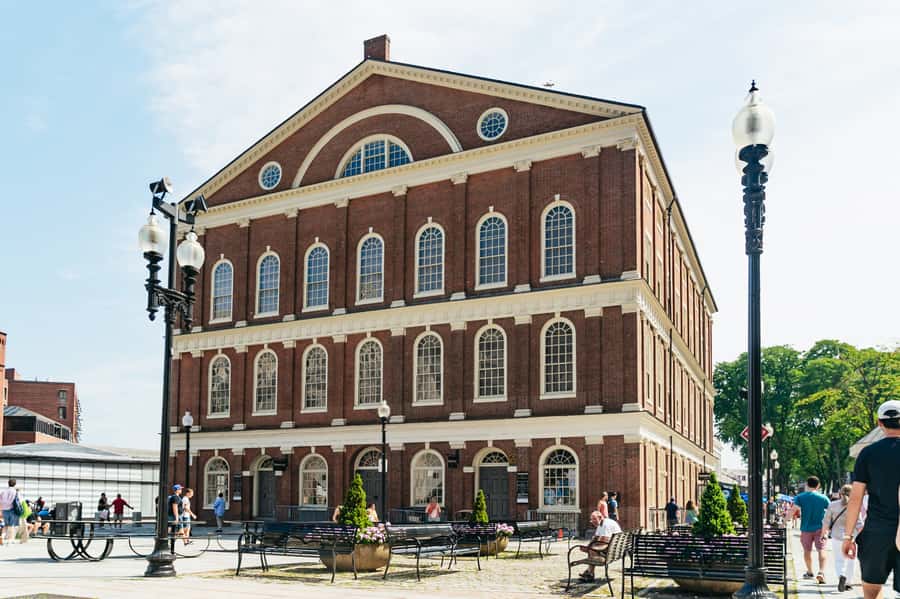
You’ll also pass through Faneuil Hall and the Paul Revere House, which help bridge the gap between symbolism and daily life. Faneuil Hall is often treated like a historical set piece. With the guide’s explanation, it becomes a place where political speech and crowd energy mattered.
This is also one of the quieter “value” moments of the tour. If you’ve got a short trip window, it helps you leave with more than just surface familiarity. It gives you an emotional sense of who mattered to Boston, and why.






Old North Church and Copp’s Hill: Lanterns, Legends, and Ordinary Lives
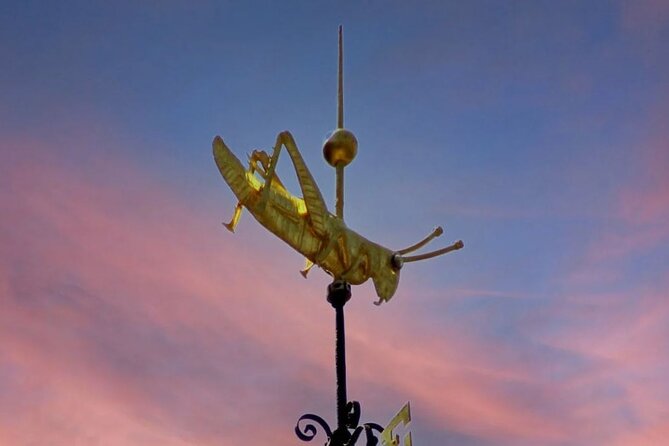
The lantern story is a Freedom Trail headline, but it lands best when you see the building in front of you. You’ll visit the Old North Church, including the steeple where the two lanterns were hung. Instead of treating it like a movie scene, the tour places it in a broader context of messaging, timing, and risk.
From there, you continue toward Copp’s Hill Burying Ground. Cemeteries sound passive until you start noticing what they reveal. They show you how a community understood status, memory, and loss. On this route, that meaning gets woven back into the narrative so the stop doesn’t feel like dead time.
This stretch also helps you understand Boston’s mixed community beyond the loud Revolutionary moments. The tour’s inclusion of immigrant stories and African American perspectives keeps the walk from becoming a single-track founder parade. It gives you a fuller sense of who lived here and what they might have been pushing for.
One small practical tip: this section includes a fair bit of changing street angles and terrain. Keep your pace comfortable and stay aware of your footing. It’s historical, but it’s still city walking.
USS Constitution and Bunker Hill Monument: The Revolution’s Big Finale
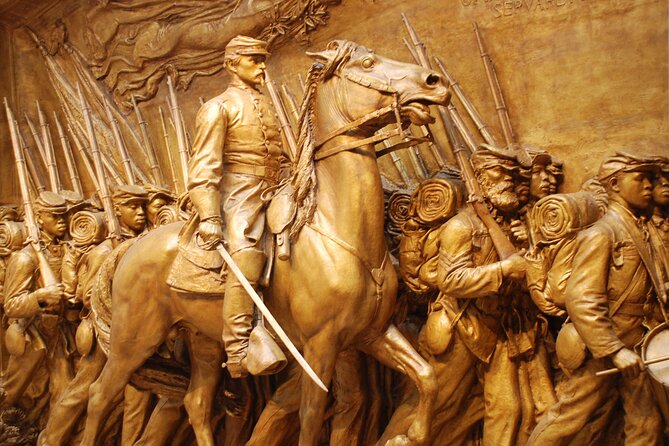
The tour does a great job landing the plane at the Charlestown end of the Freedom Trail. You’ll see USS Constitution, one of the best-known Revolutionary-era ties in Boston, and that alone is worth the walk if you like ships and military history.
Then you finish at Bunker Hill Monument. The name is famous, but being there helps you feel the scale of what the Revolution tried to do at the hard end of the map. This stop is also where you get a sense of what “victory” meant in practical terms. Even when outcomes were complicated, people were learning fast, adapting, and changing strategy.
The best part is how the tour ties these final sights back to earlier sites. You do not get a totally separate “Charlestown chapter.” Instead, the guide keeps connecting you to what you saw downtown: politics, fear, communication, and the ways Bostonians made plans under pressure.
You’ll end back at the meeting point at Boston Common, so you are not stuck on the wrong side of town with no plan.
Guides Make or Break It: The Humor-Plus-Storytelling Style
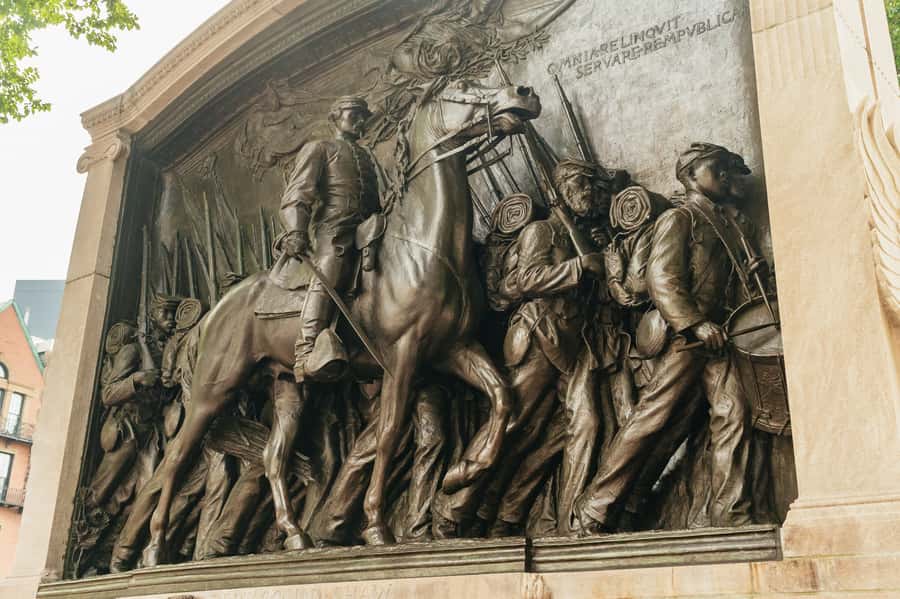
This tour lives or dies by the guide, and the guide talent here is consistently praised. I noticed repeated names in the feedback that point to the same overall skill set: Rob, Kenneth, Charlie R, Alissa, Matthew, Stuart, Noah, Malcom, Jim, Sam, Megan, Julia, and Stewart.
What these guides have in common is the ability to package history into stories you can keep. People highlighted that the walk flows quickly, that the guide answers questions, and that the explanation feels personal rather than scripted. You also get that mix of humor and context, including the dad-joke style moments built into the rhythm of the tour.
One consideration if English is not your first language: one review noted that a guide can speak fast, so clarity may depend on your listening comfort. If you know you prefer slower delivery, you might want to choose the starting time that fits when you’re most alert.
Bottom line: you’re not just collecting facts. You’re getting a narrated walk that turns landmarks into scenes.
Price and Tickets: Why $31 Feels Like a Deal
At $31 per person, the price is the kind that makes this tour hard to beat if you care about efficiency. You get a live guide for roughly 2.5 hours and you hit the entire Freedom Trail route in one go. If you were to plan your own stops, you’d spend time figuring out logistics and you’d still miss the connections the guide makes.
Tickets are not included, but that doesn’t automatically weaken the value. Most of the Freedom Trail experience is about seeing the exterior sites and understanding what happened there. The tour keeps you focused on interpretation rather than admissions.
What you should do is match expectations. If you want museum-style interiors at every location, you may need additional tickets and a separate plan. If you want the best possible overview and story context, the $31 price makes the most sense.
Who This Freedom Trail Tour Fits Best (and Who Might Want Options)
This tour is ideal if:
- you’re in Boston for a short window and want the full Freedom Trail story in one afternoon block
- you like guided context more than reading plaques
- you want a route that covers both well-known landmarks and lesser-highlighted perspectives like women, African Americans, and immigrant patriots
It may be less ideal if:
- you struggle with sustained walking, since it is a compact route with many stops over 2.5 hours
- you need slower pacing or frequent breaks
- you require very controlled mobility assistance, because the info given is mixed: it says wheelchair accessible but also notes it’s not suitable for people with mobility impairments
If you fall into that last group, I’d treat this as a “confirm with your own needs first” situation. The best tour in the world can still be the wrong format if the pace and terrain don’t work for you.
Also note: video recording is not allowed, so plan on photos and attentive listening.
Should You Book? My Practical Take
If you want a guided Freedom Trail walkthrough that covers the whole official route in one session, this is an easy yes. The structure is built for value: all 16 sites, a clear start at The Embrace, and a guide-driven narrative that ties the Boston Tea Party, Boston Massacre, lantern plan, and final Charlestown stops together.
If your goal is wandering without explanation, you might be happier with self-guided plaques. But if you want the kind of walking tour where humor shows up alongside real context, and where the route ends back where it began, booking makes sense.
If you are deciding at the last minute, go for it if you’re comfortable with steady walking, good shoes, and listening to an active guide for 2.5 hours. That’s the whole deal.
FAQ
Where does the tour start?
The tour starts at The Embrace statue right next to the Visitor’s Center on Boston Common, listed at 139 Tremont Street.
How long is the Freedom Trail walking tour?
It runs for about 2.5 hours.
What is the price per person?
The price is $31 per person.
What language is the tour guide?
The tour is conducted in English.
Does the tour include entry tickets?
No. Entry tickets to attractions are not included.
Is it wheelchair accessible?
The activity lists it as wheelchair accessible, but it also notes it is not suitable for people with mobility impairments, so it’s worth checking how the pace and route fit your needs.
Are video recordings allowed?
No, video recording is not allowed.
Where does the tour end?
The tour ends back at the meeting point.
What should I bring?
Bring comfortable shoes, water, and comfortable clothes.
Can I cancel for a full refund?
Yes. Free cancellation is available up to 24 hours in advance for a full refund.