REVIEW · FREEDOM TRAIL TOURS
Boston Freedom Trail Walking Tour with Costumed Guide
Book on Viator →Operated by The Salem Night Ghost Tour · Bookable on Viator
Freedom Trail trivia gets better when it’s costumed. This walk threads a tight slice of Boston’s revolution story with a guide in period attire, plus an easy finish near major sights. I especially like the 1.2-mile pace and the way the guide keeps you moving from stop to stop without turning it into a slog.
My second big win is the lineup of landmarks: Massachusetts State House with its gold dome, Park Street Church with a standout music-history detail, and Granary Burying Ground where you’ll meet key names like Sam Adams and John Hancock in a single cemetery stop. Guides such as Ben and Katherine are often cited for making the facts stick.
One thing to consider: the tour can run with a large group (up to 50), so if you’re sensitive to hearing distance, try to position yourself near the front and be ready for occasional pacing hiccups—especially around the cemetery stop.
In This Review
- Key highlights at a glance
- A 1.2-mile Freedom Trail loop you can actually finish strong
- Costumed storytelling: how guides keep Boston’s revolution from becoming homework
- Stop-by-stop: State House to Paul Revere Mall (and the moments you’ll remember)
- 1) Massachusetts State House (New State House) — the gold dome and the power center
- 2) Park Street Church — where a famous song first landed
- 3) Granary Burying Ground (Granary Cemetery) — the cemetery that reads like a who’s who
- 4) Boston Latin School — America’s first public school
- 5) The oldest commercial building stop — where famous works were published
- 6) Old South Meeting House — the Boston Tea Party and Paul Revere Bell details
- 7) Old State House — Boston Massacre storytelling
- 8) Samuel Adams statue location — the story behind an inaccurate statue
- 9) Paul Revere House — seen from outside, with the key story
- 10) Paul Revere Mall — the ending that keeps you near everything
- Value at $26: why this tour is a smart use of a Boston day
- When the tour clicks (and when it might not)
- Should you book this Freedom Trail walking tour?
- FAQ
- How long is the Boston Freedom Trail walking tour?
- How much walking is involved?
- Where do I meet the guide, and where does the tour end?
- Is the tour offered in English?
- How much time do you spend at Granary Burying Ground?
- Are admission tickets included for the sites?
- Does the tour run in bad weather?
- Can I cancel for a refund?
- Are service animals allowed?
Key highlights at a glance

- Costumed, in-character guides like Ben, Katherine, Elaina, and others help the story land fast
- Tight 1.2-mile route that avoids a long, exhausting cross-town haul
- Big landmark density: State House, churches, meeting houses, and the North End finish
- Granary Burying Ground time can run up to 45 minutes, so the stop has weight
- Humor is a feature, so it works best when you like your history with some spice
A 1.2-mile Freedom Trail loop you can actually finish strong
This tour is built for people who want the Freedom Trail experience without committing to a marathon. The route covers about 1.2 miles along Boston’s most story-packed stretch, and it stays concentrated in the city core rather than pushing all the way across the Charles River. The result feels efficient: you get the main scenes without needing a second day just to recover.
You start and end at Paul Revere Mall. That’s handy because you’re not left stranded on some random side street far from restaurants and other top sights. Once you finish, you can roll straight into the North End area for food and wandering.
Also, this is a walking tour with a real guide, which matters here. Boston’s Freedom Trail marks are helpful, but they don’t explain why each site matters in the big American story. A good guide does. On this kind of short route, the benefit is huge: you see a lot, but you also understand what you just saw.
You can also read our reviews of more walking tours in Boston

Costumed storytelling: how guides keep Boston’s revolution from becoming homework
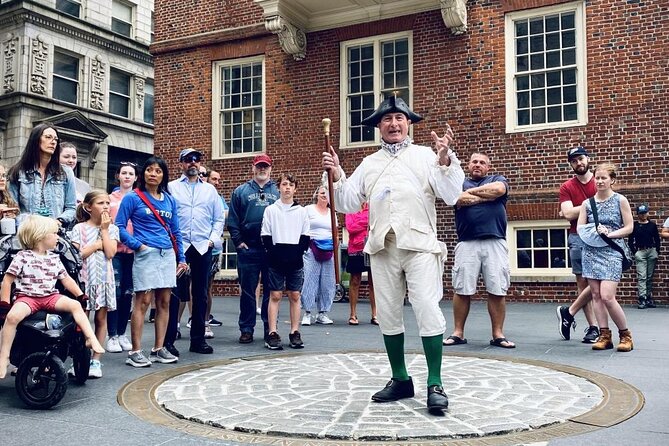
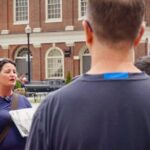
The core appeal is the guide in period costume. The point isn’t just dressing up—it’s using character to pace the story. In practice, it means you’re less likely to tune out when you’re standing still in front of a building that looks similar to the one you saw two stops ago.
From the guide styles I’ve heard about, the tour can lean funny. People often note guides like Ben as humorous, and other guides such as Katherine, Elaina, and David Stokle for engaging delivery that works for mixed ages. If you like history best as narrative (and not as a lecture), that’s a big plus.
That said, humor can come with a tradeoff. A few people felt the guide leaned more toward comedy than deeper factual context. If you want very granular dates and a heavy academic tone, you may want to balance this with a bit of independent reading during your trip.
Stop-by-stop: State House to Paul Revere Mall (and the moments you’ll remember)
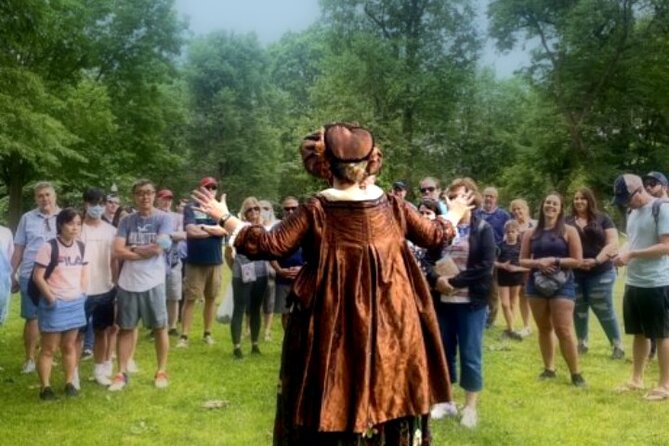
This is where the tour earns its value. The route hits landmark after landmark, and each stop is designed to show a different angle of Boston’s revolutionary era—government, worship, writing and publishing, public meetings, and the people who made history personal.
1) Massachusetts State House (New State House) — the gold dome and the power center
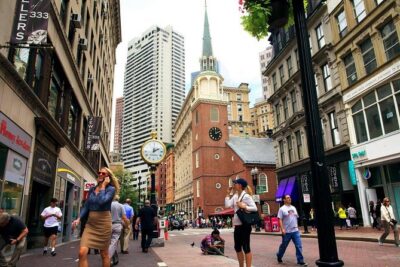
You’ll spend about 10 minutes here. The gold-domed Massachusetts State House (built in 1798) is the visual anchor for the tour’s political side. This stop sets the stage for how colonial and revolutionary Boston organized power and argued about it.
Expect a story-driven walk-up: how the building fits into the shift from colonial rule toward revolution. You might also hear a fun line tied to Oliver Wendall Holmes—an old quote about the State House being the hub of the solar system—which is a great way to remind you that government wasn’t remote back then. It was local, visible, and talked about on the street.
2) Park Street Church — where a famous song first landed
Next is Park Street Church for about 10 minutes. This is a classic Freedom Trail stop, but the standout detail here is music history: on Independence Day in 1831, America My Country ’Tis of Thee was performed for the very first time near the church steps.
The church itself gives you a “civic life” lens on Boston. It’s not only about battles; it’s also about how communities gathered, sang, and formed shared identity. If you like the human side of history—what people actually did day to day—this stop is a good one.
You can also read our reviews of more guided tours in Boston





3) Granary Burying Ground (Granary Cemetery) — the cemetery that reads like a who’s who
This is the most emotionally intense stop. Plan on up to 45 minutes to let the stories land. Even though the formal time window is often listed as 25 minutes, the tour leans into the storytelling here, so the stop can stretch.
This cemetery is where you’ll meet major names: Sam Adams, John Hancock, Paul Revere, James Otis, and Boston Massacre victims, plus three signers of the Declaration of Independence. That’s a lot of impact in one place, and a guide helps you connect each person to the larger plot.
One practical note: cemeteries can feel colder in shade and wind, even in mild weather. Bring layers you can handle while standing still. If you’re traveling with kids, this stop can go either way—some love the “real people” aspect, while others need a bit more movement.
4) Boston Latin School — America’s first public school
You’ll get about 10 minutes at Boston Latin School. This stop is short, but it’s a strong reminder that education helped power the revolution, not just the guns and papers.
Boston Latin School is described as America’s first public school, and you’ll hear about famous alumni such as Benjamin Franklin and Samuel Adams, plus a Benjamin Franklin statue you can look for. It’s a tidy way to show that revolutionary thinking didn’t just happen in taverns and meeting halls—it was also taught, debated, and passed on.
5) The oldest commercial building stop — where famous works were published
There’s also a quick stop at Boston’s oldest commercial building, tied to publishing history. This is where works including Nathaniel Hawthorne’s The Scarlet Letter, Thoreau’s Walden, and Longfellow’s Midnight Ride of Paul Revere were all published.
This stop is easy to miss if you only care about political sites, but it adds a valuable layer: ideas travel through print. Boston wasn’t only a place of speeches—it was a place where writing got produced and spread. If you like intellectual history, this one is worth paying attention to.
6) Old South Meeting House — the Boston Tea Party and Paul Revere Bell details
Old South Meeting House gets about 10 minutes. This is where the tour brings you right up to the Boston Tea Party story—specifically, what happened outside the meeting house.
You’ll also hear about the Paul Revere Bell. That detail matters because it ties Paul Revere to a broader pattern: Boston’s communication systems and warning networks were part of how people responded quickly when events escalated.
7) Old State House — Boston Massacre storytelling
Next is Old State House for about 15 minutes. This is the stop built around the Boston Massacre story. A guide here helps you place the event in context—who was involved, why tensions were already high, and how the massacre turned into political fuel.
This stop is especially good for first-timers because it makes the crisis feel real, not abstract. You’ll probably come away with a clearer sense of how unrest can shift from local conflict to national symbolism.
8) Samuel Adams statue location — the story behind an inaccurate statue
Then you’ll reach the Samuel Adams statue location for about 15 minutes. Here you’ll hear about Faneuil Hall context and—according to the tour description—the story behind the statue being inaccurate.
Even if you can’t fully verify the sculptural details on the street, the lesson is useful: public monuments can be simplified versions of history. A guide’s job is to show what’s missing, which turns the statue into a thinking point instead of just a photo stop.
9) Paul Revere House — seen from outside, with the key story
At the Paul Revere House area, you’ll spend about 5 minutes, viewing it from outside. The tour focuses on the story rather than an extended look inside, since the ticket for this stop is listed as not included.
This is a “quick portrait of a person” moment. Paul Revere isn’t just a famous name you’ve heard; he becomes part of how Boston’s revolution unfolded on the ground.
10) Paul Revere Mall — the ending that keeps you near everything
The final stop is brief—about 1 minute—at the outdoor Paul Revere Mall. It’s basically a reset point. You finish near where you started, and you can choose your next move: nearby sights, a snack, or a relaxed walk without the stress of getting back to transit.
Value at $26: why this tour is a smart use of a Boston day
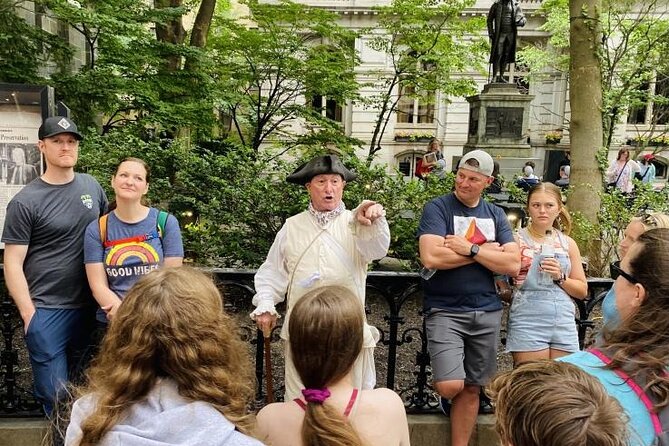
For $26 per person and around 1 hour 45 minutes, this is priced like a “do it once” experience that’s still worth your time. You’re paying for the guide’s interpretation—especially on a route where the stop density is high. If you tried to replicate this on your own, you’d likely spend more time searching for context than absorbing it.
This is also where the short route pays off. A longer Freedom Trail route can be tiring, and fatigue is when people stop listening. Here, the walk is long enough to feel like a real sightseeing commitment, but short enough to stay alert through the major stops like Granary and Old State House.
The cost also makes sense because the tour covers a lot of ground in the places you’ll likely want to see anyway: Massachusetts State House, Park Street Church, Granary Burying Ground, Old South Meeting House, Old State House, and ends in the North End zone.
If you’re a first-time visitor, this tour is a clean on-ramp. It gets you oriented fast, so later museum visits and self-guided wandering feel more connected.
When the tour clicks (and when it might not)
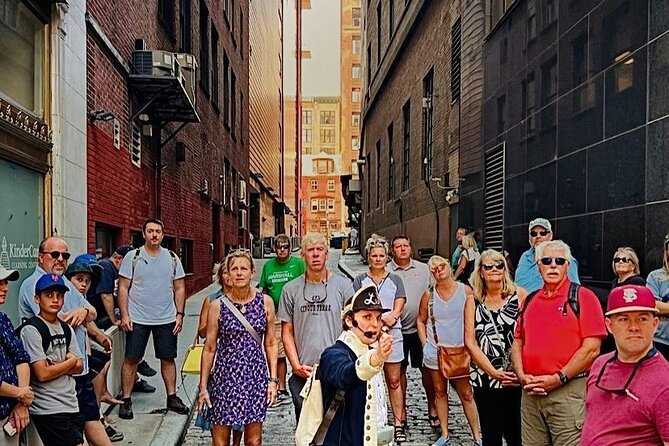
This tour is a strong fit if you want:
- A walkable Freedom Trail segment without the full-day commitment
- A guide who uses character and humor to keep you engaged
- A stop list that mixes politics, worship, writing, and key people
- An ending point that’s convenient for food and more exploring
It may be less ideal if you:
- Need lots of inside-the-building time (this is mostly a walking approach)
- Want strict lecture-style history with minimal humor
- Struggle to hear in a group setting—especially if you end up farther back
If you care about hearing clearly, don’t be shy about where you stand at the start. With up to 50 people, your position can make a noticeable difference.
Should you book this Freedom Trail walking tour?
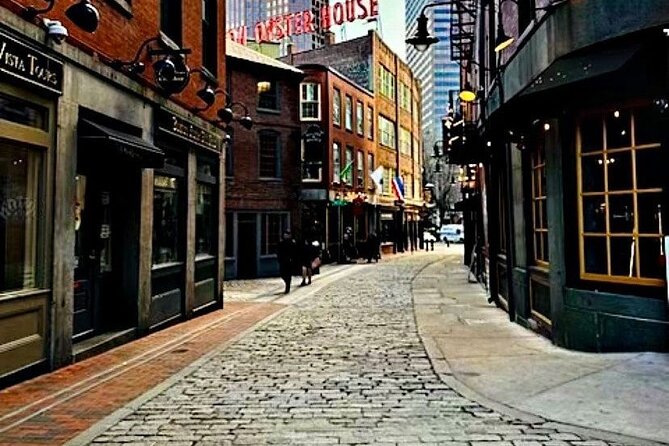
I’d book it if your goal is to experience Boston’s revolutionary core with a guide in costume, in a time-boxed way, and finish close to the North End action. The combination of a short 1.2-mile walk and landmark density makes it a practical choice, not just a fun one.
I might pass if you’re chasing quiet, highly academic depth only. In that case, you might prefer a slower, more text-heavy approach, or you might pair this with a museum visit where you can sit down and absorb.
Overall: if you want history that feels like a story—and you like staying on your feet while someone guides your attention—this is a good use of your time in Boston.
FAQ
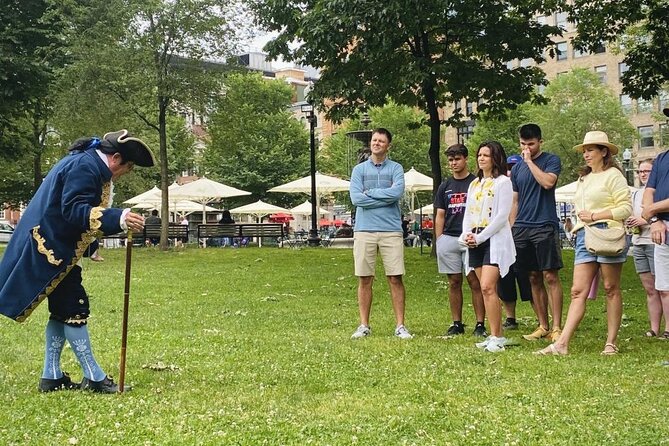
How long is the Boston Freedom Trail walking tour?
The tour runs about 1 hour 45 minutes (approximately).
How much walking is involved?
The route is about 1.2 miles.
Where do I meet the guide, and where does the tour end?
The meeting point and end point are both listed as Paul Revere Mall, Boston, MA 02113.
Is the tour offered in English?
Yes, it’s offered in English.
How much time do you spend at Granary Burying Ground?
Granary Burying Ground is one of the longer stops. You should expect up to 45 minutes there, based on the tour description.
Are admission tickets included for the sites?
Many listed stops note admission is free. However, the Samuel Adams statue location and the Paul Revere House are marked as not included for admission.
Does the tour run in bad weather?
The tour operates in all weather conditions, so dress appropriately.
Can I cancel for a refund?
Yes. You can cancel up to 24 hours in advance for a full refund. If it’s canceled due to poor weather, you’ll be offered a different date or a full refund.
Are service animals allowed?
Yes, service animals are allowed.