REVIEW · FREEDOM TRAIL TOURS
Boston’s Freedom Trail: A Revolutionary Walking Tour
Book on Viator →Operated by Boston History Company · Bookable on Viator
Sixteen stops, one walk, and the Revolution clicks. This Freedom Trail tour strings together redcoat tension, abolitionist courage, and the people who pushed American ideas forward, as you move across downtown Boston with a guide. I love that you can check off all 16 official Freedom Trail sites in one go, and I love the focus on more than the usual names through stories that stretch beyond the Revolution.
The biggest thing to plan for is the pace. It covers a lot of ground in about 2 hours 30 minutes, and that means you’ll want comfortable shoes and the stamina to keep up, especially around the burying grounds.
In This Review
- Key highlights to know before you go
- Freedom Trail in 2.5 Hours: What You Really Get for $31
- Start at The Embrace on Boston Common: A Civil Rights Warm-Up
- Massachusetts State House and Samuel Adams’ Cornerstone Legacy
- Churches and Burying Grounds: Abolition and the Weight of Memory
- A First Anglican Church, Old South, and Tea Party Sparks
- Old Corners and Publishing Power: Ticknor & Fields
- Old State House, Boston Massacre, and Faneuil Hall’s Cradle of Liberty
- Revere House and Old North: From Home Front to Midnight Signal
- Copp’s Hill Terrace and Bunker Hill: Seeing the Battle’s Terrain
- USS Constitution Views and the North End Finish Line
- Pacing, Hearing, and What to Wear for a 2.5-Hour Walk
- Who This Tour Fits Best (and Who Might Want a Different Option)
- Book It or Skip It: My Advice
- FAQ
- How long is the Boston Freedom Trail walking tour?
- Where does the tour start and where does it end?
- What does it cost?
- Is it offered in English?
- Is a mobile ticket provided?
- What is the group size limit?
- Is the tour dependent on weather?
Key highlights to know before you go
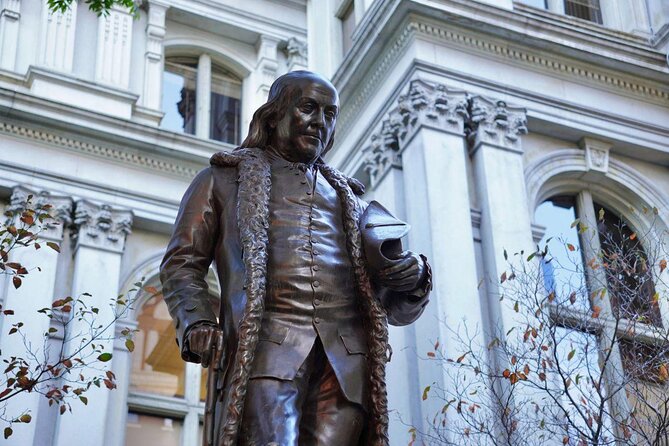
- All 16 official Freedom Trail sites in one guided route, so you’re not piecing together stops on your own
- Martin Luther King Jr. and Coretta Scott King at The Embrace start you with a broader view of civil rights, not just 1775
- Abolition and civic change show up early, including church history tied to anti-slavery speeches
- Paul Revere’s connections are concrete, from the Revere House to the Old North signal of one if by land, two if by sea
- Bunker Hill is a real-feeling ending, with Copp’s Hill views and the Bunker Hill Monument in sight, plus USS Constitution views
Freedom Trail in 2.5 Hours: What You Really Get for $31
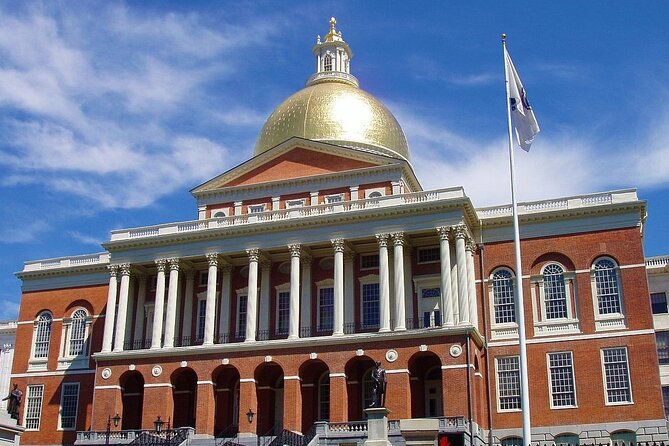
At $31 per person for about 2.5 hours, you’re paying mainly for one thing: time plus a guide who can turn markers into story. Boston’s Freedom Trail can look simple from the sidewalk, but the guide work is what makes it click—where the conflicts started, who spoke up, and how events chained together.
This tour also has a nice scope. You don’t just move through colonial-era sites. The framing includes Boston’s later leadership in areas like abolition, women’s rights, education, and immigration, so the walk feels like a long argument for change, not only a battle reenactment.
The group size caps out at 25. That’s big enough to make it lively, but small enough that a good guide can keep things moving and still answer questions.
You can also read our reviews of more walking tours in Boston

Start at The Embrace on Boston Common: A Civil Rights Warm-Up
You begin at The Embrace at 139 Tremont Street, right by the Boston Common Visitor Information Center. It’s a smart choice for a starting point because it tells you the tour isn’t stuck in one century. Beginning with Martin Luther King Jr. and Coretta Scott King sets a tone of struggle and rights—then the walk carries that energy backward and forward through American history.
Practical note: this is a walk-and-listen tour. You’ll spend your energy early, so it helps to arrive a few minutes early, be ready to start, and keep water on hand.
And yes, the statue area is right in the heart of things, so it’s easy to reach via public transit.
Massachusetts State House and Samuel Adams’ Cornerstone Legacy
Next up is the Massachusetts State House, famous for that golden dome. You’ll hear about its long history, including Samuel Adams laying the cornerstone in 1795. The value here is context. Standing outside a building that still functions as a seat of government, the story makes revolution feel less like a myth and more like a system that keeps evolving.
If you’ve ever visited big government buildings and wondered why people cared so much, this stop answers that. It’s not just architecture—it’s power, legitimacy, and who gets to steer the ship.
Churches and Burying Grounds: Abolition and the Weight of Memory
A big reason this tour works is that it keeps returning to places where ordinary people fought for basic rights, and it doesn’t shy away from heavy settings.
You’ll visit a red brick church built in 1809 that hosted an abolitionist congregation. The tour is set up to highlight fiery anti-slavery speeches delivered there—one of the earlier anchors connecting Boston to the idea that justice wasn’t optional.
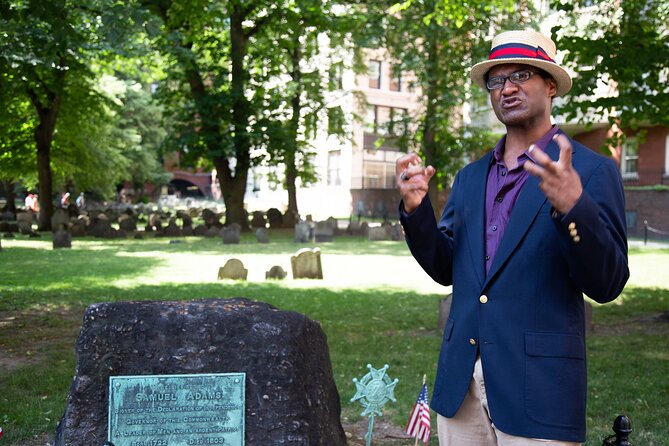
Then comes the burying ground dating to 1660. This is where the Revolution becomes personal. The guide will bring you to graves of major figures like John Hancock, Paul Revere, and Samuel Adams, and the stories make it feel less like a history lecture and more like a map of lives that shaped the country.
One consideration: cemeteries make walking slower, especially if you need extra time or want to take breaks. If you use a walking stick, or you prefer unhurried stops, this is the part where you’ll feel the tour’s momentum most.
A First Anglican Church, Old South, and Tea Party Sparks
Another highlight is the visit to the church built in 1754, described here as the first Anglican Church in Boston. What makes it interesting isn’t just the building’s age—it’s the tour’s focus on construction stories, the nearby burying ground, and crypts beneath. Even if you’re not a church-architecture person, the guide work tends to make it easy to picture how the site functioned in everyday life.
After that, you’ll hit the Puritan meeting house built in 1729 where the Boston Tea Party began. This is one of the tour’s key cause-and-effect moments: you learn how the most famous act of civil disobedience in world history got its start.
If you love tea party details, here’s the only heads-up. In about 2.5 hours, the tour can’t become a full scene-by-scene replay of that specific evening. You’ll get the origin and the spark. If you want the whole playbill, plan to add a second stop later with more time.






Old Corners and Publishing Power: Ticknor & Fields
One of the more surprising stops is the 1718 brick building that began as a colonial apothecary and later housed the 19th-century publishing house Ticknor & Fields. This is a reminder that revolutions don’t run only on muskets. They run on ideas, printing, books, and distribution.
Even if you’re not into literary history, you’ll likely enjoy the way the guide connects this spot to famous publishing names and the spread of ideas. It’s one of those moments where you realize Boston’s influence wasn’t only in the streets.
Old State House, Boston Massacre, and Faneuil Hall’s Cradle of Liberty
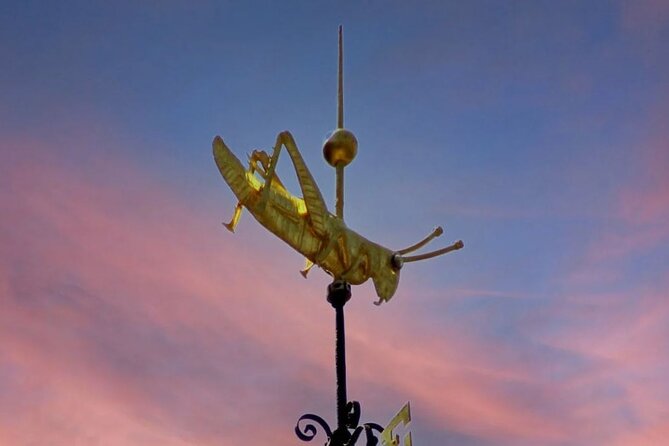
The Old State House is a major political stop. Built in 1713 and marked with symbols associated with Great Britain (including a Lion and Unicorn), it was once the center of British government in Massachusetts. Here the tour leans hard into conflict: speeches, confrontations, and the building’s role as a pressure point.
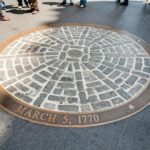
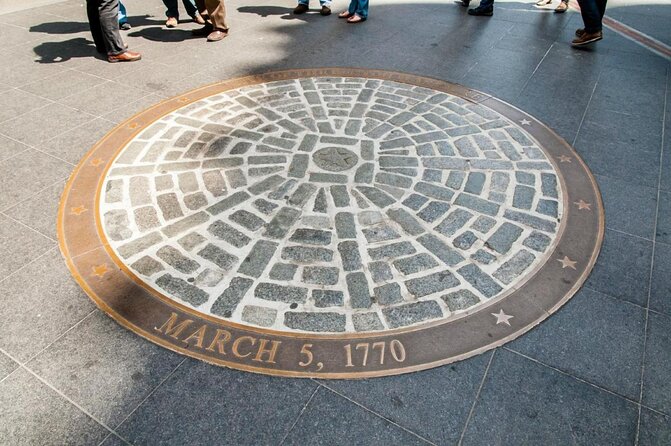
From there, you’ll stand at the circle of stones marking the official site of the Bloody Massacre of 1770. This stop is built for story pacing—a moment-by-moment account of that night, including redcoat musket fire leaving five colonists dead. It can feel intense, and it’s also the kind of place where listening carefully matters, because the guide’s narrative is what turns a marker into an event.
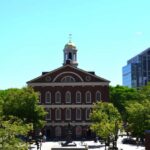
Then comes Faneuil Hall, where the second floor’s meeting hall earned the nickname Cradle of Liberty. Expect the tour to focus on the kind of speeches that stirred resistance—because in Boston, arguments often sounded like ignition.
Revere House and Old North: From Home Front to Midnight Signal
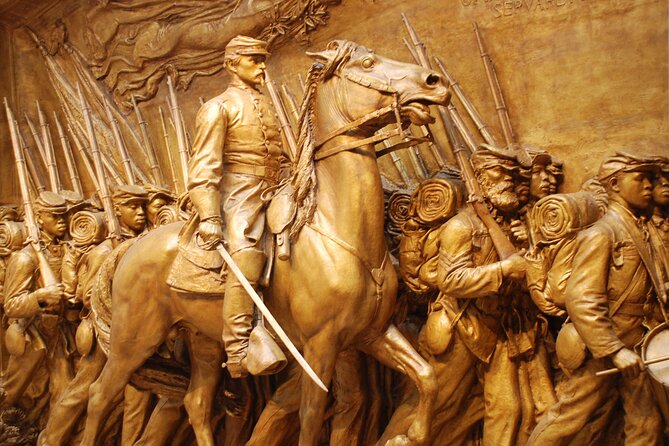
If your interest is the Revolution’s action side, two stops do most of the heavy lifting: the Revere House and Old North.
The wooden house dating to 1680 is presented as the oldest building in Boston and once home of the Revere family. Paul Revere’s life there is part of the story, and you’ll hear how his route from these doors connects to major American history moments.
After that, you’ll reach Old North Church, where on April 18th, 1775, the famous signal of one if by land, two if by sea was lit from the steeple. This is the midnight-riders story, but told with the kind of practical clarity that makes it feel real—how the signals were arranged and why they mattered.
If you like your history with clear timelines, these two stops are where the tour tends to land hardest.
Copp’s Hill Terrace and Bunker Hill: Seeing the Battle’s Terrain
The tour then pivots toward Bunker Hill and the ground itself. You’ll visit the burying ground dating to 1660, described here as the site of British cannon emplacements during the Battle of Bunker Hill. The guide ties the terrain to what happened, which is the advantage of walking and standing in place.
At Copp’s Hill Terrace, you’ll view the Bunker Hill Monument, described as 221 feet and marking where colonial militia defended hastily made earthworks and repelled two redcoat charges before retreating. Even if you don’t climb anything, this is one of the more satisfying visual stops. You can look, orient yourself, and connect the story you just heard to the skyline.
USS Constitution Views and the North End Finish Line
The tour ends at Copp’s Hill Terrace in Boston’s North End, with views over to Bunker Hill Monument and the USS Constitution in Charlestown. You’ll specifically get a look at the masts and rigging of Old Ironsides from the terrace.
That ending matters because it shifts you from listening mode into a quick wrap-up: you see the Revolutionary-era legacy stretched into later American military history. It’s also a convenient finish if you want to keep exploring the North End after the walk.
The tour still feels like downtown Boston by the time you reach the end, so plan a little time afterward to soak in the area—especially if you’re pairing it with food or a second self-guided stroll.
Pacing, Hearing, and What to Wear for a 2.5-Hour Walk
This tour covers a lot in 2.5 hours, and the pacing can feel quick at times. Most stops are short, but you’re constantly moving from one point to the next. Comfortable shoes aren’t optional here; they’re how you keep the experience enjoyable rather than tiring.
Hearing is the other practical factor. Some stops (especially the ones where groups spread out or the guide isn’t directly facing you) can make it harder to catch every sentence. If you’re hard of hearing without assistance, pick a spot closer to the guide when you can.
Weather also matters. This is described as requiring good weather, and if the tour is canceled due to poor conditions, you’re offered a different date or a full refund. For Boston, that’s a serious reason to check forecasts the day before.
Who This Tour Fits Best (and Who Might Want a Different Option)
This is ideal if you:
- want to see all 16 official Freedom Trail sites without building a route
- like your history with story-driven explanations (not just dates)
- are visiting Boston for the first time and want a strong orientation
- enjoy learning beyond the headline names, including the people tied to abolition and civic rights
It may be less ideal if you:
- need a slow, linger-everywhere pace, since the route covers lots of ground
- want an ultra-deep focus on one event (like a full tea party evening replay), since the tour prioritizes the broader trail narrative
If you do want that extra depth, treat this as the backbone tour, then add a follow-up based on what grabbed you most.
Book It or Skip It: My Advice
I think you should book this Freedom Trail tour if you’re the kind of visitor who likes to understand the why behind the what. For $31, you’re buying efficient coverage plus guided storytelling that connects Revolution sites to bigger themes of rights and reform.
If you’re worried about pacing, plan to show up ready: good shoes, layers for Boston weather, and a mindset of short stops and frequent movement. And if hearing every detail matters a lot to you, position yourself near the front of the group when you can.
FAQ
How long is the Boston Freedom Trail walking tour?
The tour lasts about 2 hours 30 minutes.
Where does the tour start and where does it end?
It starts at The Embrace, 139 Tremont St, Boston, MA 02108, and ends at Copp’s Hill Terrace, 520 Commercial St, Boston, MA 02109 (with street address listed as 7 Jackson Ave, Boston, MA 02113).
What does it cost?
The price is $31.00 per person.
Is it offered in English?
Yes, it’s offered in English.
Is a mobile ticket provided?
Yes, it includes a mobile ticket.
What is the group size limit?
The tour has a maximum of 25 travelers.
Is the tour dependent on weather?
Yes, it requires good weather. If canceled due to poor weather, you’ll be offered a different date or a full refund.