REVIEW · BOSTON
The Full Revolutionary Story Epic Small Group Boston Walking Tour
Book on Viator →Operated by The Revolutionary Story Tour · Bookable on Viator
Boston Revolution stories come alive.
This 3 to 3.5 hour small-group walk maps the lead-up to independence across Boston, with guides who focus on the story, not just the sights. I like how you follow the American Revolution timeline through the city, then step off the usual path for lesser-seen corners of modern Boston too.
Two things I really like: first, the tour treats the Freedom Trail like a timeline, not a random route. Second, the guides bring in practical visuals and interactive moments, including props some guides use like Lego soldiers for the Battle of Bunker Hill. One consideration: it is a lot of outdoor walking, and it can feel long if you are not used to city pacing.
In This Review
- Key things I’d put on your radar
- Why this Boston Revolution tour is more story than stamp-collecting
- Starting at City Hall Plaza, with an instant photo moment
- City Hall, King’s Chapel Burying Ground, and the Puritans you thought you knew
- Granary Burying Ground: where the Revolution gets personal
- Walking the Freedom Trail like a timeline, not a line on the map
- Franklin, the Boston Massacre site, and the argument over power
- Tea Party momentum to Faneuil Hall: protests that turned into revolution
- Green spaces, Paul Revere House, and the slow switch from politics to identity
- Old North Church to Bunker Hill, then a harbor finish that feels like closure
- North End, Boston Harborwalk, and where the tour ends for real-life plans
- Price and value: why $55 feels fair for a 3–3.5 hour story walk
- Who this is best for (and who should think twice)
- Should you book the Full Revolutionary Story Boston Walking Tour?
- FAQ
- How long is the Boston walking tour?
- How much does it cost?
- Is the tour only on the Freedom Trail?
- Where do you start and where do you end?
- Is this tour a reenactment or costume experience?
- What happens if weather is bad?
Key things I’d put on your radar
- Freedom Trail in chronological order: you do it the way the events unfolded, not just left-to-right sightseeing.
- Detours off the main trail: you hit major sites plus more local, less-touristed history.
- Small group size (max 15): you get real attention and room to ask questions.
- Modern Boston is part of the lesson: you see how the city built itself around the revolutionary past.
- North End and the harbor finish: the story ends with views and a feel for today’s Boston.
Why this Boston Revolution tour is more story than stamp-collecting
Most Boston “history” tours are basically a greatest-hits walk. This one does something smarter: it builds the Revolution like a chain of choices and consequences. You start at the downtown civic core, move through the burying grounds and political buildings, then keep pushing forward toward the events that made independence unavoidable.
The big win is how the guide handles the Freedom Trail. Instead of treating it like a fixed walking line, you move through the key sites in a chronological order that helps dates, people, and motives stick. That makes the city feel like one connected classroom, not a set of disconnected plaques.
And you do not only chase old stones. The route also stops in places that show how Boston grew around the rebellion. The result is a tour that helps you understand why modern Boston still talks the language of protest, politics, and public speech.
You can also read our reviews of more walking tours in Boston

Starting at City Hall Plaza, with an instant photo moment
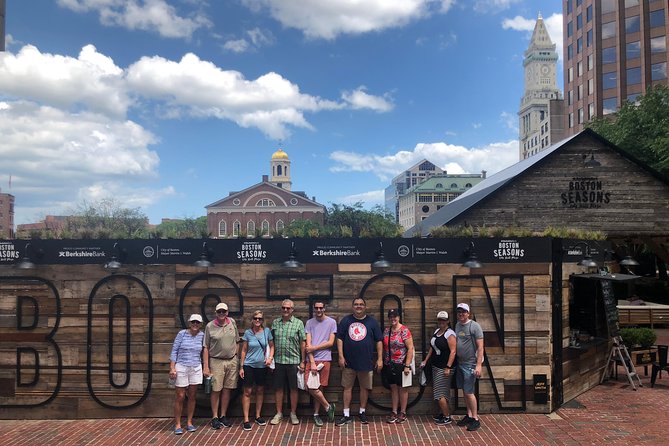
You meet at City Hall Plaza, a pedestrian-only space that sits across from and overlooks Faneuil Hall. It is one of those good meeting spots where you can orient quickly, then get to the point.
Look for the guide near the seasonal beer garden area, in front of the area by the large Boston sign with Faneuil Hall in the background. There is also a statue of Bill Russell nearby, so if you want an easy first photo, this is the spot.
Before you start moving, you get a sense of what the tour will feel like: guided, story-first, and designed for small-group listening. The pace is active, but you also get little breathers, including a built-in stop structure that keeps the whole thing from turning into one long sprint.
City Hall, King’s Chapel Burying Ground, and the Puritans you thought you knew
One early stop is Boston City Hall, famous for its architecture. It is not a “wow” landmark in the old-world sense, but it sets up a theme you will keep hearing: government and public life in Boston have always been in the spotlight.
Then comes King’s Chapel Burying Ground, where you get an anchor for the earliest Massachusetts Bay settlers. The guide’s tone matters here. Instead of treating the Puritans like a one-note backdrop, the tour makes them feel like real people with strange habits, strong beliefs, and real community power.
Along the walk you also pass the first Anglican church in Boston, which helps show how religious life was never one simple lane. And there is an especially memorable stop idea tied to Brimstone Corner: July 4, 1829, where William Lloyd Garrison gave his first public speech against slavery. That jump from colonial-era roots to later reform adds a useful perspective on Boston’s long-running argument over freedom.
Granary Burying Ground: where the Revolution gets personal

Next you reach Granary Burying Ground, and this is where the tour leans into names you will hear again and again during the American Revolution story. The guide points you toward the tombs of Paul Revere, John Hancock, and Sam Adams and connects who they were to what they represented politically and socially.
This kind of stop works because burying grounds do two jobs at once. You see physical history, and you also get a human scale for the story. Even if you already know the famous names, you tend to remember them more clearly once you are standing near where they were laid to rest.
You also get a sense that Boston’s revolutionary movement was not just a military story. It was public leadership, messaging, organizing, and constant tension over legitimacy.
Walking the Freedom Trail like a timeline, not a line on the map
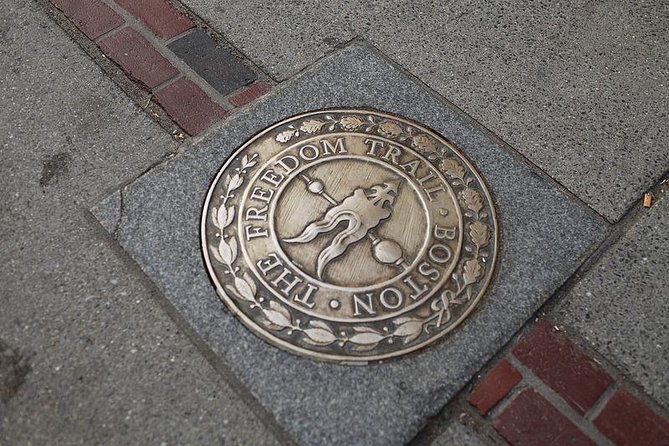
At the Freedom Trail, you get the version most people miss: the tour weaves around the city visiting key sights in chronological order rather than simply following the brick route from one end to the other.
That order is what turns “I saw some historic spots” into “I understand how events pushed the next events.” You connect earlier resistance and public pressure to later turning points, so the city starts to feel like a cause-and-effect puzzle.
From there, you keep moving into the political heart of the story. Old City Hall and Old State House show you the old engine room of Massachusetts politics, the place where British authority and American rights collided in real debates. You are not just reading about the conflict; you are walking through the urban setting where that conflict mattered.






Franklin, the Boston Massacre site, and the argument over power
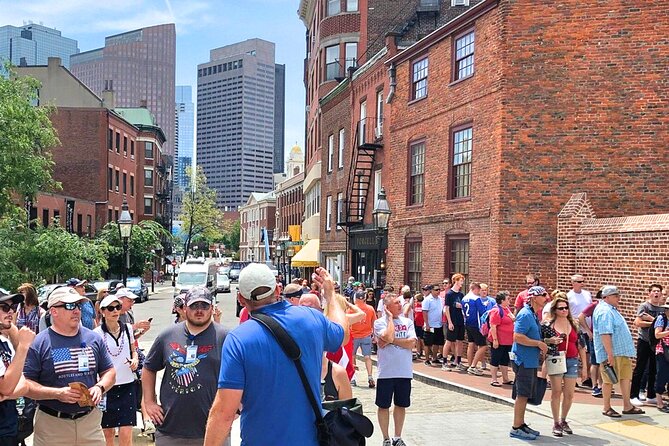
You stop for Benjamin Franklin’s statue, and the point is not just who Franklin was. The guide connects him to public education ideas and even points out Franklin’s famous pupil. It is a reminder that revolution is not only about war plans. It is also about shaping ideas and training minds.
Then you hit the Boston Massacre site, which is one of those stops where the guide helps you see the mixture of soldiers, citizens, loyalists, and patriot leaders all tangled into a single spark. The massacre becomes less like a lone headline and more like the outcome of mounting anger and rising expectations on both sides.
This section is where the tour starts to feel less like sightseeing and more like civic psychology. You begin to understand how rumors, fear, public speech, and crowd pressure can harden into history fast.
Tea Party momentum to Faneuil Hall: protests that turned into revolution
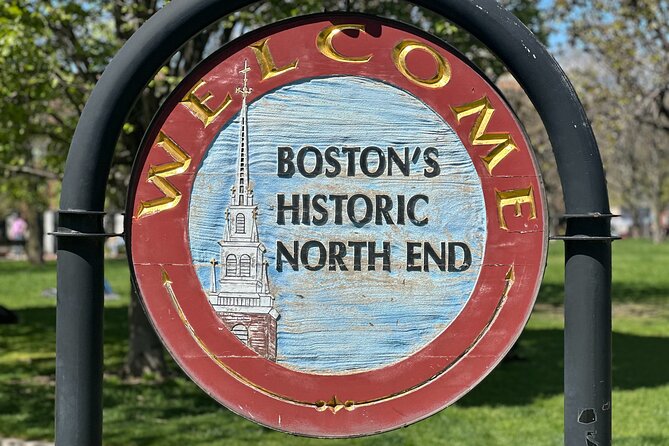
The route takes you through the part of Boston where political theater mattered. Old South Meeting House is a key stop, tied to the start of the Boston Tea Party. The guide frames it as an irreversible moment: once that kind of action happens, you cannot quietly go back to how things were.
Then you move through the working downtown core with Post Office Square and the Financial District as context. This is the tour’s practical move: it helps you see that the road to revolution ran through the center of daily life, not off to the side in some museum corner.
You eventually reach Faneuil Hall Marketplace, often described as the Cradle of Liberty. The way this tour explains it is useful: a protest becomes a revolution when it gains the momentum of public support and political direction. You are right there in the square, with the city energy around you, and it clicks.
There is also time set aside for Quincy Market. You get a warning in the tour style here: tourist traps exist, and this is one of those places. Still, it works as a break, and the guide can help you plan what to do with that time without derailing the story.
Green spaces, Paul Revere House, and the slow switch from politics to identity
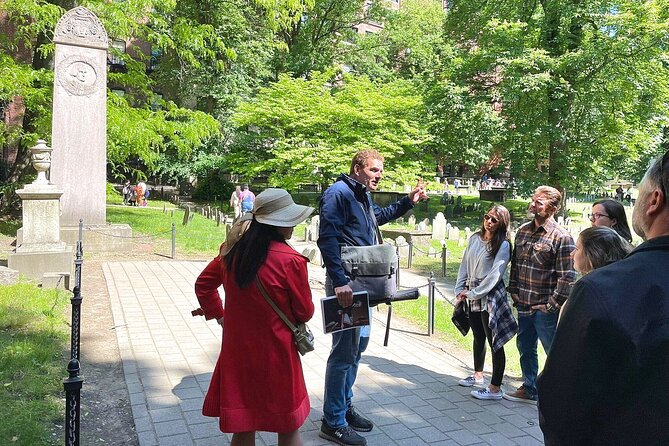
After the civic core and meeting houses, the tour softens the pace while still moving forward in the story. You pass the Rose Fitzgerald Kennedy Greenway, a long public garden strip that gives you a real sense of how Boston reuses space and makes the city walkable.
Then you reach the Paul Revere House area. This is where the tour helps you see the legend as a person with a life in a specific neighborhood. The stop sits in one of the oldest and most charming squares, and you also get practical cues for food nearby later.
Next comes North Square Park, described as the oldest residential square in America. You will feel the neighborhood history in the layout and the proximity to modern life. It is a great reminder that people lived the revolution, not just the leaders.
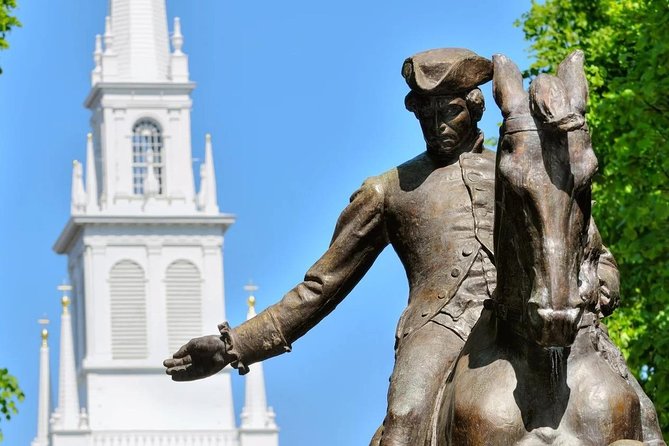
You also pause for a Paul Revere statue photo moment, then continue toward the more dramatic final steps of the story.
Old North Church to Bunker Hill, then a harbor finish that feels like closure
Near Old North Church & Historic Site, the tour hits the legendary warning story: one if by land, two if by sea. You walk through the setup for Paul Revere’s midnight ride and then the chain that followed, including Lexington & Concord. The guide ties it all back to the turning point energy that made conflict feel inevitable.
There is also a brief outer look at another key burial location across from a terrace. The idea here is views: you get spectacular sightlines over Charlestown and Boston Harbor without trying to cram in yet another heavy interior stop.
Then comes Bunker Hill Monument, with a tour-style recreation of the Battle of Bunker Hill. One of the most praised interactive moments is when a guide uses visuals and props, including Lego soldier style illustrations, to make the battle’s chaos feel understandable instead of abstract.
After that, you catch a view of Old Ironsides, the oldest commissioned naval vessel in the world, from the harbor side. The guide is clear that it is not part of the American Revolution itself, but it is still a smart context piece for thinking about how naval power and shipbuilding became part of American identity.
North End, Boston Harborwalk, and where the tour ends for real-life plans
Your final stretch brings you into the North End, described as the oldest residential neighborhood in America. This is not a random finale. It is where you get a sense of continuity: history layered over daily life.
Then you stroll along the Harbor Walk for city views and ocean breezes, finishing near Lewis Wharf. The tour includes a surprise tea party moment on the harbor, meant to land the story with a bit of playful closure.
Lewis Wharf also makes life easier at the end. There are public restrooms, nearby transportation, and it is only a short walk back toward where you started. Restaurant recommendations are included too, which is a practical bonus after 3+ hours of walking.
Price and value: why $55 feels fair for a 3–3.5 hour story walk
At $55 per person for roughly 3 to 3.5 hours, this tour sits in the “very good value” category for Boston. Here is why. You get a small group (max 15), a guide-led Freedom Trail masterclass, and a route that hits a lot of major sites in a structured order.
The stops are built around free admission ticket locations for the landmark points discussed. And the guide intentionally goes beyond the obvious trail so you get more than just the usual Freedom Trail photo set.
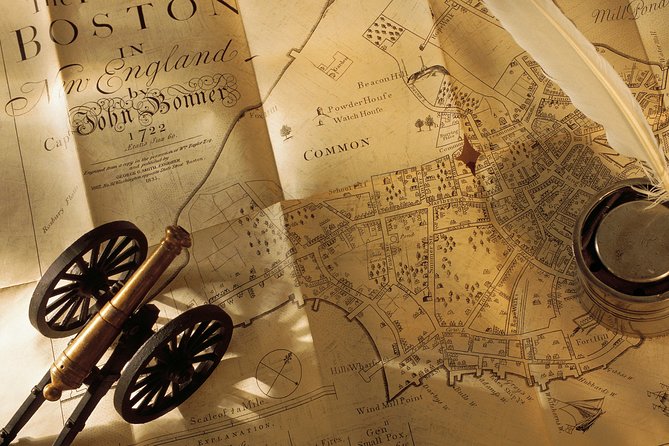
Also, the tour’s strength is learning design. It is not a lecture delivered at one speed. The guide uses interactive tools like maps and visual props, and you get chances for questions. In plain terms: you pay for someone to connect the dots for you, in the right order, while you walk through the actual places.
Who this is best for (and who should think twice)
This tour is a strong fit for you if you:
- want a clear, chronological American Revolution lead-up
- like storytelling that connects people, politics, and places
- enjoy walking and can handle an active city route
It is also a good pick for families, including kids old enough to sit with the story. The tour is described as appropriate for all ages, but it is not a kids-only version of the events.
Think twice if you:
- have mobility limits and know you may struggle with steady outdoor walking
- get very frustrated by long days in the weather
Bring the right gear. This is an outdoor tour with no museum walls to buffer you, so wind, rain, and cold can change the comfort level fast. Good weather matters, and layers help.
Should you book the Full Revolutionary Story Boston Walking Tour?
Yes, if your goal is to leave Boston with more than photos. Book it if you want the Revolution explained in a way that makes the city feel like a story with cause and effect.
I would especially recommend it if you enjoy guides who use props and visuals, like the Lego-style battle illustration described by one guide named Tyler. The best guides here know how to keep the pacing up while still giving facts that stick.
If your preference is shorter walks with lots of indoor breaks, or you want only the classic Freedom Trail sites with no detours, you might find the long route less appealing. But for many first-time visitors and history lovers, this is one of the easiest ways to understand Boston’s role in independence.
FAQ
How long is the Boston walking tour?
It runs about 3 hours to 3 hours 30 minutes.
How much does it cost?
The price is $55.00 per person.
Is the tour only on the Freedom Trail?
No. The tour uses the Freedom Trail, including walking it in an order that matches how events happened, but you also veer off to see other historical sites and you experience modern Boston too.
Where do you start and where do you end?
You start at City Hall Plaza, Boston, MA 02203, and you end at Lewis Wharf, Boston, MA 02110.
Is this tour a reenactment or costume experience?
No. It is described as scholar-style storytelling, and the tour is not in costumes or reenactments.
What happens if weather is bad?
This experience requires good weather. If it is canceled due to poor weather, you will be offered a different date or a full refund.