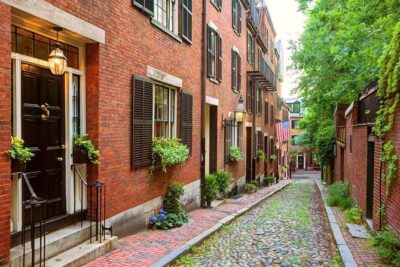
REVIEW · SALEM DAY TRIPS
Private Day Tour of Salem and Boston
Book on Viator →Operated by Boston Hidden Gems · Bookable on Viator
Two cities, one tight day, big stories. This private 7-hour tour links Salem’s witch trials with Boston’s American Revolution sites, all with round-trip transport. You’ll spend the morning in Salem’s most meaningful places, then shift to Boston for Paul Revere and the Freedom Trail area.
I especially like the private guide format, with real time for questions and follow-ups. It also feels built for history lovers who want narrative, not just dates—guides like Alexandria and Maria are praised for turning Salem’s complicated past into clear, watchable storytelling.
One trade-off: the tour price is $950 per group (up to 6), but meals and a few attractions you’ll see are not included, so your total day cost can creep up. Add in the vehicle and family rules (luggage limits and child car seats), and it helps to plan ahead.
In This Review
- Key things to know before you go
- A Salem-to-Boston story arc you can actually finish
- Pickup, the Toyota Sienna van, and what that means for your day
- Salem in the morning: maritime wealth at East India Square
- Salem Common and the Puritan heart of the town
- The Witch Trials Memorial: what happened, in plain language
- Burying Point and the cemetery connection to the trials
- Houdini Way and Bewitched: Salem’s later legends, explained
- The Witch House: one of the few remaining linked buildings
- Ropes Mansion, Chestnut Street, and the gilded-age contrast
- Proctor’s Ledge Memorial: the execution site landmark
- Lunch time and shopping break at Boston Public Market
- Paul Revere House and Old North Church: Revolutionary Boston up close
- Freedom Trail drive-by and Boston Common’s Puritan-era setting
- Value check: is $950 per group worth it?
- Who this tour fits best (and who should reconsider)
- Should you book this Salem and Boston private day?
- FAQ
- How long is the Salem and Boston private day tour?
- What does the tour cost and how many people can it include?
- Is lunch included?
- Are the main attraction admissions included?
- Do children need car seats?
- Can I bring luggage on the tour van?
Key things to know before you go

- Private storytelling time: you can ask questions and steer the pace with your guide
- Salem’s witch-trial sites in one run: Memorial, Burying Point, Proctor’s Ledge, and the Witch House area
- Revolutionary Boston highlights: Paul Revere landmarks and Old North Church without doing it all on foot alone
- Market lunch break built in: free time at Boston Public Market for food and shopping
- A small-group van reality: the Toyota Sienna works great for up to 6, but luggage fit is strict
A Salem-to-Boston story arc you can actually finish
This tour works because it keeps the day moving while still giving you time to look at what matters. In Salem, you get a guided path through the town’s Puritan beginnings, its maritime wealth era, and the physical reminders tied to the witch trials. Then the day pivots to Boston for the Revolutionary-era sights most people come to see—Paul Revere’s world and the church tied to the midnight ride signal.
What I like about the flow is that it creates a storyline instead of a checklist. Salem stops are grouped around themes: wealth and maritime life, Puritan settlement, the accusations and aftermath, and the later pop-culture afterglow. Then Boston gives you the next chapter—where the Revolution became public myth and public memory.
Timing is also realistic for a single-day trip: you’re not trying to run a marathon. Most Salem stops are short, usually 10–25 minutes, which is exactly what you want when you’re also driving back to Boston and still getting time for food.
You’ll also benefit from the format if you travel with kids or anyone who gets bored by museum-style lectures. One family highlight was how the guide made the witch trials and Boston history fun enough for children to stay engaged.
You can also read our reviews of more private tours in Boston



Pickup, the Toyota Sienna van, and what that means for your day
Your day starts at the meeting point at Snow Hill Street & Hull Street in Boston, with the tour ending back there. You’re using an air-conditioned vehicle, and bottled water is included. Parking fees and fuel surcharge are covered too, so you’re not worrying about logistics once you’re in the van.
This is a private tour, so it’s just your group. The vehicle is a Toyota Sienna minivan, which is comfortable and easy for short rides between stops. But the minivan also has limits that matter if you’re traveling with luggage or a full group of six.
Here’s the practical part to plan for:
- If you’re bringing luggage, the vehicle can only seat up to four guests with luggage comfortably. The back row can be collapsed to fit 4–5 suitcases or smaller bags, but the van still won’t fit six passengers with luggage plus more than one personal item each.
- If you show up with more luggage than the van can safely hold, your guide can cancel the tour without refund. That’s a risk worth avoiding by contacting the provider if you’re not sure.
If you’re traveling with kids, Massachusetts law requires kids in passenger vehicles to be in a federally approved child restraint until age 8 or over 57 inches, and the tour operator does not provide car seats. That’s non-negotiable—if the right seats aren’t brought, the tour can’t run.
Physically, the tour fits people with moderate fitness expectations: short walks, outdoor viewing, and a lot of time seated in the van.
Salem in the morning: maritime wealth at East India Square
Salem starts you off with East India Square, a quick stop that sets context fast. Even before the witch trials dominate the conversation, Salem’s story includes trade and maritime power. You’ll hear how this was one of the richest cities in America at its peak, and why that wealth mattered to what came next.
This first stop is useful because it prevents the “Salem equals witch trials” tunnel vision. If you only connect Salem to one dark episode, you miss the why behind the town’s later fears, tensions, and power struggles.
It’s also a nice warm-up because it’s only about 15 minutes, with admission listed as free. So you get information without burning your stamina early.
Salem Common and the Puritan heart of the town
Next you’ll be at Salem Common, the town’s historical center. This is where the Puritan settlement angle becomes clearer. Your guide will point out why this area mattered to Salem’s civic life and how the town was organized when the community was still shaping its identity.
Stop length is around 25 minutes, and admission is marked free. That’s enough time to get your bearings—how Salem was laid out and why certain places became social and political anchors.
If you’re visiting with kids, this kind of stop tends to land well. It gives something tangible and visible, not just a story about people long gone.
The Witch Trials Memorial: what happened, in plain language
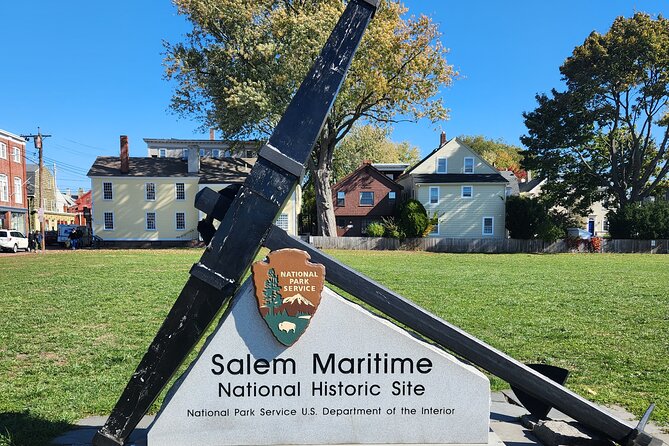
At the Salem Witch Trials Memorial, you get the moment most people picture when they think of Salem—but this is where your guide’s job really shines. The memorial is meant to help you understand the accusations and the consequences, with a focus on what really happened rather than turning it into spooky theater.
This is a short stop (about 25 minutes, admission free), but it’s often the emotional core of the day. If you’re sensitive to heavy topics, this is the place to know that the content is serious.
One reason I’d consider this tour for history lovers is that guides here are praised for making the witch-trial information feel clear, even when the details are uncomfortable. Your Q&A time can help you get the parts you’re still wondering about after the memorial.






Burying Point and the cemetery connection to the trials
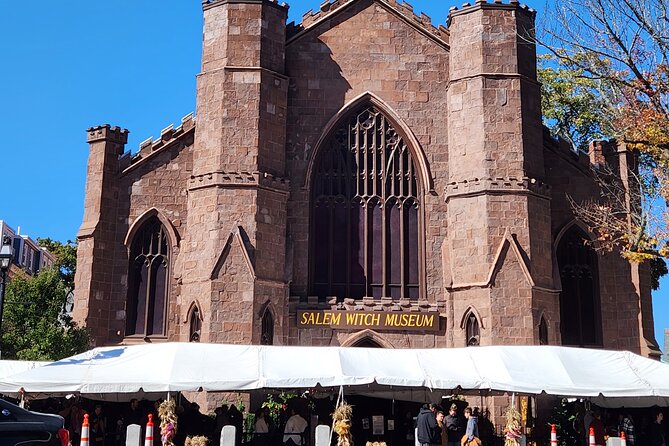
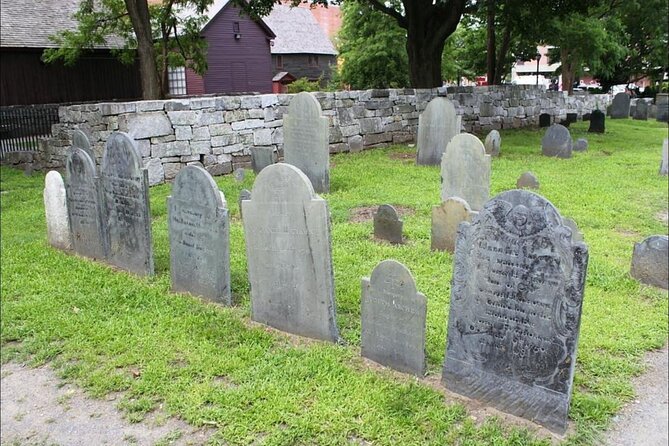
Then you’ll head to the Burying Point, described as the oldest cemetery in Salem, with graves dating back to the era of the witch trials. This stop is about 15 minutes and is free.
Cemeteries can feel abstract, but they’re also among the most straightforward ways to connect a story to physical reality. The big value here is that you’re not just hearing about fear and punishment; you’re seeing how the community lived with the aftermath.
This is also a good pause for photos, and for simply slowing down for a moment. Outdoor time between Salem landmarks keeps the day from feeling like a blur.
Houdini Way and Bewitched: Salem’s later legends, explained
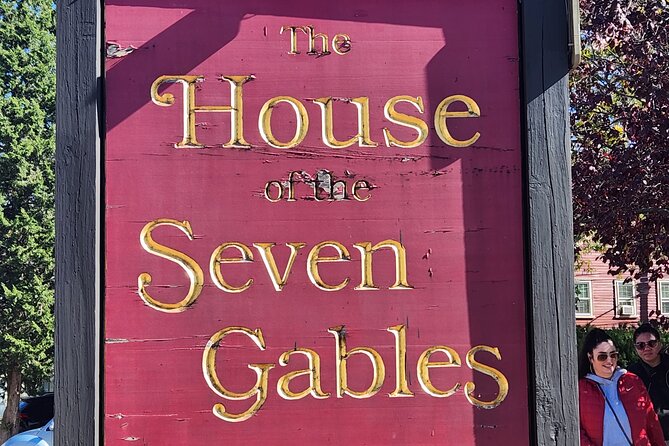
After the heavy stops, the tour gives you a little tonal shift with Houdini Way, a short stop (about 10 minutes, free). Harry Houdini’s jail escape story is one of those Salem legends that shows how the town’s past gets retold in the language of entertainment.
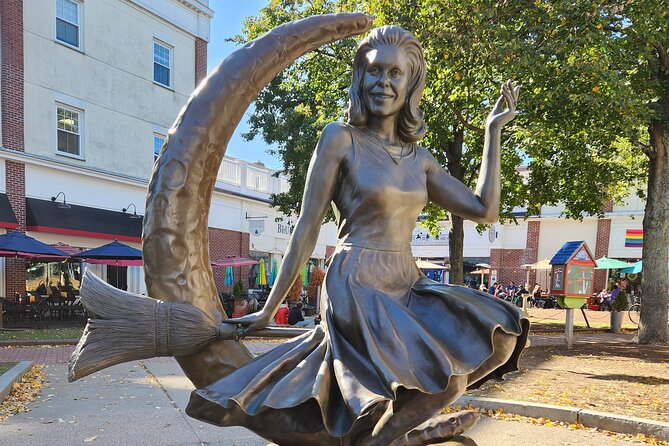
Then comes the Bewitched Statue of Elizabeth Montgomery (about 10 minutes, free). This is pop-culture history at a local level: how a TV show helped put Salem on the map for visitors. Even if you aren’t a TV fan, it gives you useful context for how Salem became a destination brand.
These stops are quick, but they matter. They help explain why you’ll see witch-trial references everywhere once you start noticing them. The town didn’t just remember the past—it repackaged it for later audiences.
The Witch House: one of the few remaining linked buildings
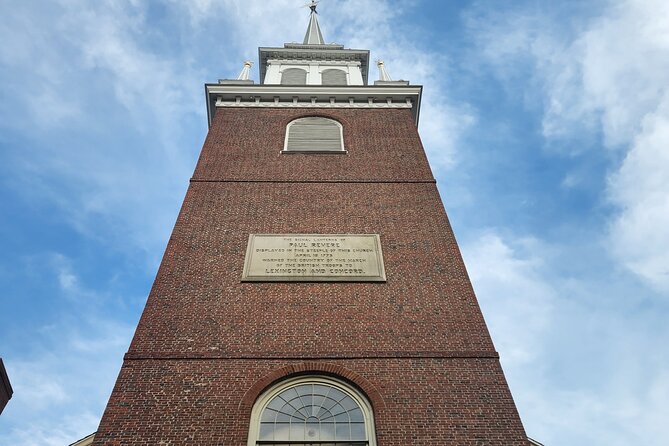
The highlight stop for many people is the Witch House at Salem, one of the only remaining buildings associated with the witch hysteria. You’ll spend about 20 minutes, with admission listed as free on this tour.
This is where your guide can turn the history into something you can picture. A surviving building is powerful because it anchors the story. You can stand there and imagine what it meant for real people in real days—before the myth-making took over.
Even better, this is not just scary history. It’s also a story about religion, authority, and how communities explain uncertainty. If your guide is the type praised for clear storytelling (Alexandria and Maria are cited as standouts), you’ll likely leave this stop with a much better grasp of the bigger picture.
Ropes Mansion, Chestnut Street, and the gilded-age contrast
From there, you’ll visit Ropes Mansion and Garden (about 15 minutes, free). The mansion appears in Hocus Pocus, and your guide will connect that movie fame to local ghost lore, including the idea of famous ghosts still linked to the property.
Next is a stroll at the Chestnut Street District (about 15 minutes, free). This is where Salem’s later wealth becomes visible: multi-million-dollar mansions built during the gilded age. It’s a direct contrast to the earlier Salem story beats—another reason the day feels balanced rather than one-note.
Then you get a short stop at Hamilton Hall (about 5 minutes). Admission here is listed as not included, so you might not get inside depending on timing or your guide’s approach. It’s still worth a quick look if you’re interested in historic performance spaces and how venues shaped social life.
Proctor’s Ledge Memorial: the execution site landmark
The day returns to trial-era gravity at Proctor’s Ledge Memorial (about 15 minutes, free). This is the place where the witches were hanged during the Salem Witch Trials.
It’s short, but it’s not light. If you’re hoping for a Halloween-style scare, this stop will feel like serious history instead. Keep your expectations aligned: the point is remembrance and understanding, not shock value.
Lunch time and shopping break at Boston Public Market
Once Salem wraps, the tour includes a return drive to Boston and a longer free time block at Boston Public Market. You’ll have about 60 minutes for lunch and shopping, with admission not included since it’s personal time rather than a ticketed stop.
This part of the day is practical for two reasons:
- You choose what fits your tastes and budget.
- You avoid the common pitfall of a rushed group lunch where nobody’s happy.
Based on what’s been recommended on this tour style, I’d plan to try local New England comfort foods while you have the chance. For example, one guide recommendation included Red’s Best for clam chowder and Beantown Pastrami Company for pastrami and corned beef sandwiches, plus Bova’s Bakery for cannoli if you want something sweet.
If you care about sticking to one plan, eat here and then treat the rest of Boston as sightseeing with no meal pressure.
Paul Revere House and Old North Church: Revolutionary Boston up close
Back in Boston, you’ll see Paul Revere’s House for about 20 minutes, with admission marked not included. This stop gives you a sense of scale and era—wooden-house Boston feels different when you can stand near it.
Then you’ll go to Paul Revere Mall (about 10 minutes, free). This is the area with an iconic Paul Revere statue view paired with the backdrop of Old North Church. Your guide will also point out plaques around the park tied to other Revolutionary figures, plus the real story behind the midnight ride.
Finally, you’ll visit Old North Church & Historic Site for about 15 minutes, with admission also marked not included. Even if you don’t pay for every interior area, the exterior storytelling matters here: it connects a symbol-filled legend to the actual signal system.
If you’re a first-time visitor, this is the Boston section that tends to feel most “I get it now.” It’s why so many people start planning their Massachusetts trip around these names.
Freedom Trail drive-by and Boston Common’s Puritan-era setting
The tour ends with time focused on the Freedom Trail area, mostly as a drive-through experience. You’ll spend about 30 minutes learning about Boston’s role in the American Revolution, with listed free admission at this stage.
Then you finish at Boston Common (about 15 minutes, free). Boston Common is America’s oldest public park, and your guide will help connect the setting to the Puritan-era hangings that took place there.
This final stop is useful because it shows how the Revolution and the earlier colonial era overlap in the same city space. It also gives you one last moment to orient yourself for future days in Boston.
Value check: is $950 per group worth it?
At $950 per group up to 6, this is not a budget tour. But it can be good value if you compare it against the real cost of doing two separate day trips, plus paying for transportation gaps, plus buying individual tickets, plus the time cost of trying to coordinate everything yourself.
Here’s where the math tends to work:
- You get private round-trip transport from Boston, with an air-conditioned van.
- You get bottled water, parking fees, and fuel surcharge included.
- The itinerary is packed with free stops in Salem, so your money goes into guided interpretation rather than entrance fees for every stop.
- You get time for lunch on your terms at Boston Public Market.
Where costs can rise:
- Lunch is not included.
- A few major attractions are marked admission not included, including Paul Revere’s House, Old North Church, and Hamilton Hall.
- If you’re traveling with luggage or kids who need car seats, you may need extra planning to avoid last-minute problems.
My honest take: the price makes sense when you’re a family or a small group who values guided context and wants to see both cities in one day without driving yourself. If you’re traveling solo or two people who can handle transit and ticket planning easily, you might find cheaper options. But if you want the story delivered with a live Q&A guide, this format holds up.
Who this tour fits best (and who should reconsider)
This tour fits best if you:
- Like history when it’s told as a story, not a worksheet
- Want Salem and Boston in one day without the stress of route planning
- Travel as a small group who can share the group price
- Appreciate landmarks tied to specific Revolutionary figures and Salem sites connected to the witch trials
You might reconsider if you:
- Are very budget-focused and don’t want extra ticket or meal spending
- Have lots of luggage, because the minivan has strict fit rules
- Are traveling with children who require car seats and don’t already have appropriate ones
If you’re flexible on timing and can handle a day that’s mostly short stops plus driving, you’ll likely enjoy how much you can absorb.
Should you book this Salem and Boston private day?
I’d book if your priority is a guided, question-friendly day that takes you through both Salem’s witch-trial landmarks and Boston’s core Revolutionary icons, with a real lunch break built in. The strongest reason to choose it is the guide impact: people highlight how guides like Alexandria and Maria are engaging storytellers who keep the information clear, even when the topic is heavy.
One last practical note: it runs with good-weather requirements, and cancellation is free up to 24 hours before start time. That gives you some safety margin.
If you want a compact day that feels like a guided narrative tour across two connected cities, this is a strong fit.
FAQ
How long is the Salem and Boston private day tour?
It runs for about 7 hours (approx.).
What does the tour cost and how many people can it include?
The price is $950.00 per group, up to 6 people.
Is lunch included?
No. Lunch is not included, but you do get free time at Boston Public Market for lunch and shopping.
Are the main attraction admissions included?
Some stops are listed as free, while others are marked as admission not included, including Hamilton Hall, Paul Revere’s House, and Old North Church & Historic Site.
Do children need car seats?
Yes. Massachusetts law requires children in passenger vehicles to be in a federally approved child passenger restraint until age 8 or over 57 inches tall, and the tour does not provide child seats.
Can I bring luggage on the tour van?
There are luggage limits. The Toyota Sienna can only seat up to four guests with luggage, and it can fit about 4–5 suitcases or smaller bags if the back row is collapsed. If luggage plus passengers can’t all safely fit, the tour may be canceled without refund.