REVIEW · GHOST & HAUNTED TOURS
True Crime Tour of Boston
Book on Viator →Operated by Boston Ghosts By Us Ghost Adventures · Bookable on Viator
One dark detail at a time, Boston tells stories. This True Crime Tour of Boston uses real locations to explain famous cases and infamous moments, with a narrative that keeps sensitive material structured and respectful.
Two things I really like: you get a walkable route of major landmarks and you’re not paying extra for stop entry since each site is listed as free. I also appreciate that the tour is built around a professional local guide with thorough, accurate historical context.
One drawback to consider: if you’re expecting only today’s headline-style criminal cases, you may find the mix includes fraud, legal history, and even episodes tied to grave robbing and local tragedies.
In This Review
- Key highlights you’ll actually feel on the walk
- Meeting at the George Washington Statue: timing, pace, and what to wear
- How the guide keeps Boston’s worst moments organized (and why it matters)
- Stop 1 in Boston Public Garden: the Ether Monument and the first female serial killer angle
- Boston Marathon Survivor Memorial: bravery after terror
- Copley Square: the Craigslist Killer location and modern urban fear
- Central Burying Ground: grave robbing’s surprisingly “practical” roots
- Emerson College: the Hitchhiker Killer’s Boston terror period
- Parkman Bandstand: debt and death behind a name
- Boston Common’s Frog Pond: intrigue, forgeries, and a suicide attempt
- 27 School St and Charles Ponzi: the fraud that made the name
- John Adams Courthouse: the youngest serial killer in American history
- Massachusetts State House and Mary Dyer: execution under unfair anti-Quaker laws
- Is $32 worth it for a 2-hour Boston true crime walk?
- Who should book this tour, and who might want to skip it
- Final call: should you book the True Crime Tour of Boston?
- FAQ
- How much is the True Crime Tour of Boston?
- How long is the tour?
- Where does the tour start and end?
- What time does the tour begin?
- Is the tour offered in English?
- What is included with the tour ticket?
- Can I get a full refund if I cancel?
Key highlights you’ll actually feel on the walk
- 10 Boston stops in about 2 hours keeps the pace focused without turning into a marathon
- Free listed entry at each stop means you can spend time listening, not buying tickets
- A structured, respectful approach helps the stories land without getting sensational
- Mobile ticket + small group size (max 20) keeps things smooth for a late-afternoon start
- Guides with strong storytelling energy (Kai, Andrew, Kyle are repeatedly praised) can make or break the experience
- Real settings tied to real cases lets you picture events in the places where they happened
Meeting at the George Washington Statue: timing, pace, and what to wear
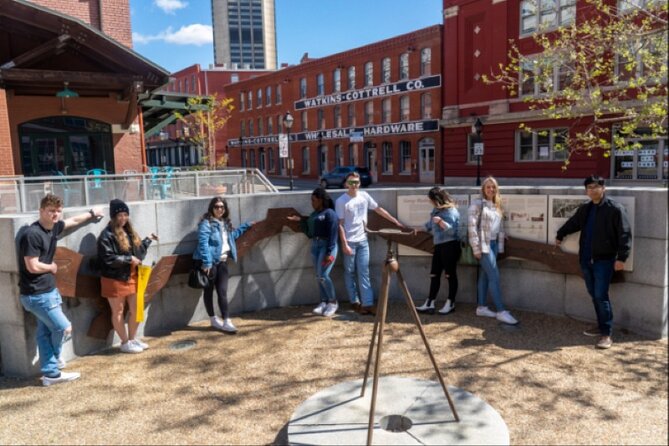
The tour starts at the George Washington Statue in Boston and ends at the Massachusetts State House area near the Mary Dyer statue. It’s scheduled to begin at 3:00 pm and runs about 2 hours, with a maximum of 20 people—small enough that you can hear the guide clearly, but big enough that it won’t feel too cramped.
You’ll be doing a true walking tour, so bring shoes you can handle on city sidewalks and in uneven pavement. The tour info flags a moderate physical fitness level, and many of the stops are outdoors, meaning weather matters. Plan for a chill if you’re walking in late-day air, and bring a light layer.
There’s also a practical advantage: you get a mobile ticket, and the route is described as near public transportation, which makes it easier to slot into a day of sightseeing without a lot of fuss.
You can also read our reviews of more tours and experiences in Boston.


How the guide keeps Boston’s worst moments organized (and why it matters)
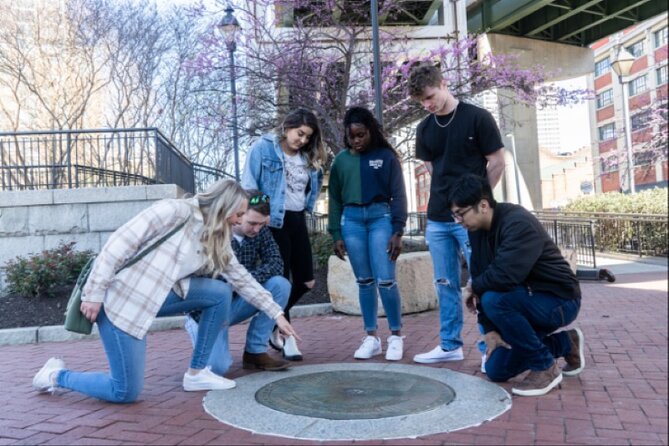
True crime can go two ways. It can be a shock-fest, or it can be a story with boundaries. This tour leans hard into the second option: the narrative is designed to keep sensitive topics structured and respectful.
That tone matters because the itinerary covers everything from serial killers and violent tragedies to courtroom history and legal persecution tied to early Quaker laws. On a tour like this, you don’t just want facts—you want someone who can pace the material and keep it understandable.
In the feedback, the strongest experiences are tied to guide delivery. Guides like Kai, Andrew, and Kyle get called out for staying engaging, friendly, and funny in small ways, which helps the walk feel human instead of grim. On the flip side, there are also mentions of one guide feeling more like they were reading word-for-word, and one no-show situation that turned frustrating fast. That’s a reminder to arrive on time and double-check your details the day of the tour.
Stop 1 in Boston Public Garden: the Ether Monument and the first female serial killer angle
You begin at Boston Public Garden, where the Ether monument frames the story of what’s described as the first female serial killer. The point here isn’t just the label—it’s how Boston’s urban landscape and medical-era context can shape what people believe and what authorities can or can’t confirm at the time.
This is a good opening stop because it gives you a hook fast: you’re standing in a famous garden, and the story quietly flips the postcard into something more complicated. It also sets the tour’s tone—short scene-setting, then a focused narrative that ties the crime to the place.
One tip: keep your expectations aligned. This doesn’t feel like a museum exhibit with wall-to-wall documents. It’s more like case notes delivered while you’re in the right location.
Boston Marathon Survivor Memorial: bravery after terror
Next comes the Boston Marathon Survivor Memorial. Instead of centering on a perpetrator, this stop focuses on the terror of the days and weeks around the Boston Marathon Bombing and the bravery that followed.
This is an important contrast within the tour. The route isn’t only about catching serial patterns or profiling criminals. It also treats real harm and real resilience as part of the historical record. If you’re the kind of person who likes your true crime with moral weight and context, this stop is a strong anchor.
The practical side: memorials work best when you give them a moment. If you rush through, you’ll miss the emotional intent.
Copley Square: the Craigslist Killer location and modern urban fear

At Copley Square, you’ll hear about the Craiglist Killer at one of his haunts. This stop shifts you from earlier historical eras into a more modern kind of fear—urban anonymity and the way people can be targeted in everyday settings.
Because this story is tied to a public, recognizable area, it can be unsettling in a different way than cemetery or courthouse stops. You’re looking at a place people pass through, and the tour asks you to picture a darker narrative unfolding in an ordinary moment.
If you’re hoping for lots of specific investigative detail, you might wish for more. The tour’s format keeps each stop fairly tight (about a dozen minutes), so the stories are often shaped as clear overviews rather than exhaustive case files.




Central Burying Ground: grave robbing’s surprisingly “practical” roots
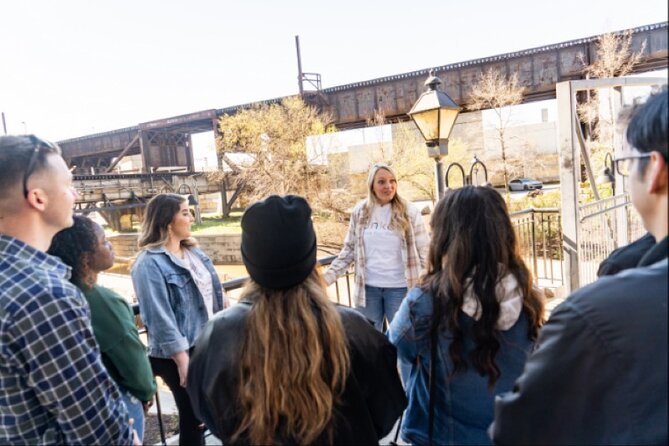
At the Central Burying Ground, the theme becomes macabre in a more historical way. You’ll learn about grave robbing and how, in the 18th and 19th centuries, cemeteries were sometimes raided for reasons that weren’t always about sinister motives.
This stop is valuable because it challenges the simple idea that all “crime” stories are modern. Sometimes the story is about demand—medical or academic pressures, loopholes, and social norms colliding with ethics.
And the location itself matters. Cemeteries don’t feel like a set. They feel like a record. If you like history that’s tangible, this is one of the stops that gives you that sense of place.
Emerson College: the Hitchhiker Killer’s Boston terror period
Around Emerson College, the tour turns to the Hitchhiker Killer, described as a 1970s serial killer who terrorized Boston for 8 months. This stop helps connect the geography of fear: how the city’s streets, walkways, and everyday movement patterns become part of a case timeline.
I like this stop because it’s not only about the criminal label. It’s about the time window—an 8-month stretch that would have felt like an ongoing threat rather than a single event.
One consideration: since the tour keeps a similar timing at each site, you’ll want to bring a mindset of “overview first.” You can still learn a lot, but it’s not the same as a deep academic lecture.
Parkman Bandstand: debt and death behind a name
At Parkman Bandstand, you’ll hear a family story tied to debt and death, and how that story inspired the bandstand’s naming. This is one of the more “Boston weird” stops, because it shows how crime-adjacent drama can turn into city identity.
It’s also a reminder that crime stories aren’t always about police chases. Some are about the consequences of relationships, money problems, and legal outcomes that become part of local memory.
If you like city trivia that also has teeth, this stop is a fun one to anchor in your mental map.
Boston Common’s Frog Pond: intrigue, forgeries, and a suicide attempt
The walk continues to Boston Common Frog Pond, where the tour investigates a suicide attempt linked to intrigue, forgeries, and family strife. This isn’t the typical serial-killer framing. It’s closer to a story about people, conflict, and the messy ways social pressure can erupt.
This stop can land especially well if you’re the type who likes moral complexity. The “why” is as important as the “what.”
The only caution: because it deals with suicide, the respectful structure described for the tour matters. Keep it in that mental lane—facts and context, not shock.
27 School St and Charles Ponzi: the fraud that made the name
At 27 School St, you’ll view the structure connected to Charles Ponzi, and the fraud that eventually became known by his name. This is a shift in theme from violence to exploitation.
I like including fraud stories in a true crime tour because it shows how crime can be clever, not just brutal. Ponzi-style schemes rely on trust, timing, and persuasion—things that can feel uncomfortably modern.
If you’re the kind of person who reads about scams for fun, this stop may be the one you remember most later.
John Adams Courthouse: the youngest serial killer in American history
The tour reaches the John Adams Courthouse, tied to the trial of the youngest serial killer in American history. This is where the legal system becomes the main character.
This stop is valuable for understanding how cases moved through courts, how evidence was handled, and how society responded to frightening acts. Even if you don’t know the full background, the courtroom setting forces the story into a framework you can process: charge, procedure, judgment.
One note: courthouse stops often feel less cinematic and more procedural. That’s not a bad thing—it’s just a different kind of interest.
Massachusetts State House and Mary Dyer: execution under unfair anti-Quaker laws
The tour ends at the Massachusetts State House, near the Mary Dyer statue, where you’ll explore the tragic tale of a woman executed along with three other women for violating unfair anti-Quaker laws. This is crime history in a broader sense: persecution, laws used as weapons, and consequences played out in public.
I like how this ending reframes the whole walk. Even after serial killers, grave robbing, and fraud, the tour ends on legal injustice and religious conflict. It makes you see the “crime” label as something that can be shaped by power, not just behavior.
Also, it’s a solid capstone from a visual standpoint: the State House is a major landmark, and finishing there gives the walk a clear, final destination.
Is $32 worth it for a 2-hour Boston true crime walk?
At $32 per person for about 2 hours, the value comes from a few practical wins.
First, you’re paying for a guided narrative rather than self-guided hopping. Ten stops in a tight timeframe is hard to replicate without a plan, and the tour is already built as a coherent storyline.
Second, each stop is listed with free admission, so you’re not hitting your wallet with extras. Third, the group size stays at 20 or fewer, which helps the experience feel more like a talk walk than a crowd shuffle.
If you’re into true crime, history, and Boston’s street-level details, this price typically feels like a fair exchange. If you want long, documentary-style depth at each site, you might feel time is tight—each stop is only about 12 minutes.
Who should book this tour, and who might want to skip it
Book it if you want:
- A structured true crime approach that keeps things respectful
- A way to see famous Boston landmarks through an offbeat lens
- A guide-driven story that connects cases to real places
Skip or reconsider if you:
- Want only modern, high-profile criminal cases with lots of investigative detail per stop
- Need lots of time at each location for photos, reflection, or reading
- Are extremely sensitive to topics like suicide (the tour covers it, though it’s framed in a structured way)
Final call: should you book the True Crime Tour of Boston?
I’d book it if your goal is a fun, focused walk that adds a darker layer to places you already know. The route is tight, the stop entry is listed as free, and the strongest version of this tour seems guided by lively storytelling from people like Kai, Andrew, and Kyle.
If your true crime taste leans toward one exact category—say, only serial killers with deep case files—then set your expectations for a guided overview rather than a full-blown investigation.
FAQ
How much is the True Crime Tour of Boston?
The price is $32.00 per person.
How long is the tour?
The tour lasts about 2 hours.
Where does the tour start and end?
It starts at the George Washington Statue, Boston, MA 02116 and ends at the Massachusetts State House area near the Mary Dyer statue at 24 Beacon St, Boston, MA 02133.
What time does the tour begin?
The tour start time is 3:00 pm.
Is the tour offered in English?
Yes, it’s offered in English.
What is included with the tour ticket?
The tour includes a professional local guide and thoroughly researched and accurate history.
Can I get a full refund if I cancel?
Yes. You can cancel for a full refund if you cancel at least 24 hours before the experience’s start time.