REVIEW · FOOD
A Taste of the Freedom Trail: Boston’s Iconic Food & History Tour
Book on Viator →Operated by Bites of Boston Food Tours · Bookable on Viator
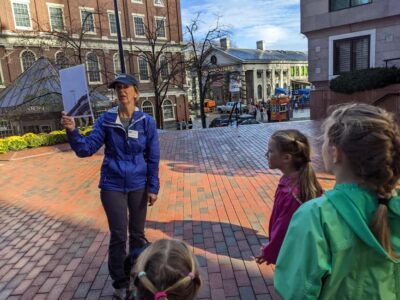
Food and history share the same sidewalk here. In a small group, you taste your way through Boston while walking key Freedom Trail stops, with guide storytelling that connects the dishes to the city’s big moments. I especially like how generous tastings keep you full, not just nibbling.
Second, I like the pacing: a compact route in about three hours, with a real mix of classic tavern stops and modern-ish marketplaces so you get the “how Boston eats” picture, not just a list of famous names. One drawback to consider: this is a walking tour, and it’s designed for good weather, so plan to dress for the outdoors.
In This Review
- Key Highlights You’ll Feel Right Away
- A 3-Hour Freedom Trail Walk That Actually Feels Like Lunch
- Beantown Pub Starter: Classic Boston Comfort Right Downtown
- Freedom Trail Bites: Four Eateries, One Story Thread
- Boston Sign Photo Stop and the Government Center Crossroads
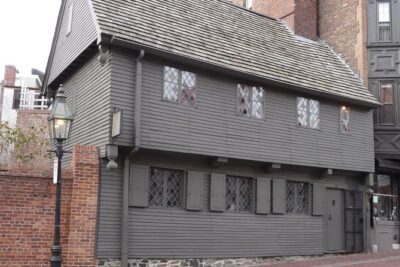
- Faneuil Hall to Bell in Hand: Revolution-Era Energy Meets a 1700s Tavern
- Haymarket and Boston Public Market: Where You Feel Local Food Systems
- Omni Parker House Finish: Boston Cream Pie and the Rolls That Started It
- Price and Value: What $135.45 Really Buys You
- Who This Tour Fits Best (and Who Might Skip It)
- Should You Book This Freedom Trail Food-History Tour?
- FAQ
- How long is the tour?
- What does the tour cost?
- How many people are in a group?
- What’s included with the ticket?
- Is alcohol included?
- Can I cancel for a refund?
Key Highlights You’ll Feel Right Away
- Small group max of 12 means easier questions and a more relaxed vibe at each stop
- Hearty, meal-like tastings at four local eateries, plus dessert at the finish
- Freedom Trail route layout helps you orient the city fast, even if it’s your first time
- Taverns and institutions you can still visit today, like Bell in Hand and Omni Parker House
- Optional craft beer or handcrafted cocktail for grown-ups who want to add something extra
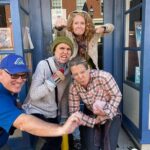
- Guides with real personality, including named guides like Katie (#102) and Judy in recent groups
A 3-Hour Freedom Trail Walk That Actually Feels Like Lunch
This tour is built for people who want two things at once: a memorable Boston food hit and a quick mental map of where everything sits. You’ll be moving at a comfortable pace for about three hours, starting at 11:00 am, and you’ll finish near Omni Parker House—close enough that the day’s rest of your sightseeing still feels doable.
The standout is the way the food is handled. Instead of “here’s a taste, go away,” you’re given enough to make a solid lunch out of it. Multiple guides on the route are described as making each tasting portion feel properly planned, not skimpy.
You’re also not stuck with a lecture. The history is tied to the places you’re standing in and the foods you’re eating, which is exactly how you remember it later.
You can also read our reviews of more food & drink experiences in Boston
Beantown Pub Starter: Classic Boston Comfort Right Downtown
You begin at Beantown Pub at 100 Tremont St, right in the downtown core, an easy start if you’re already near transit. It sets the tone immediately: casual Boston energy with classic local dishes, served in a way that feels like you’re meeting the city before you start checking off landmarks.
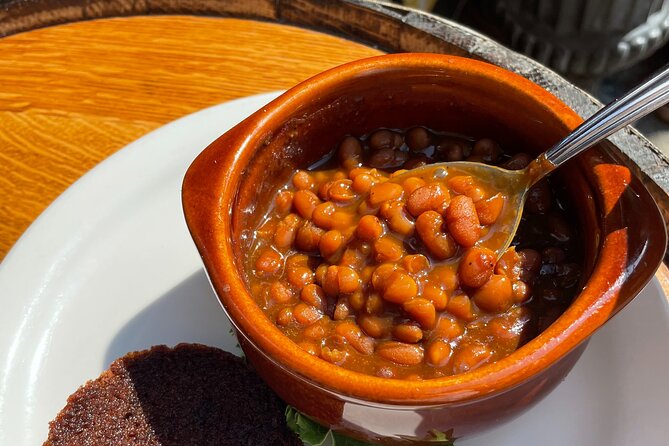
This first stop includes a ticketed tasting, and the focus is on two Boston classics. The tour notes one once-popular, slow-cooked supper dish you’ll taste, along with Boston brown bread. If your idea of Boston comfort food starts with baked beans, you’re in the right neighborhood—except Boston style is more than the stereotype. The story matters here: why these ingredients show up on local tables and what “old Boston” tastes like.
Practical tip: eat slowly at the first stop. It’s the one that can quietly set the pace for the whole tour. If you go too fast, later tastings can feel like a marathon instead of a feast.
Freedom Trail Bites: Four Eateries, One Story Thread
From the early “comfort food” start, you shift into the Freedom Trail portion where history and food line up. The tour follows the Trail while sharing lesser-known food history at multiple sites—and then you’ll pause at four beloved eateries for iconic local dishes.
Based on the tour’s featured foods and what people rave about, you can expect the main Boston lineup: baked beans and brown bread, clam chowder, a lobster roll, and the dessert finale. That mix is smart. Chowder and lobster roll give you the coast. Beans and brown bread ground you in a long-running New England food tradition. Then dessert wraps it up with a sweet “only-in-Boston” moment.
The guides also tend to connect each bite to the setting. You’ll learn not just what the dish is, but how the place became associated with it. That’s why this works as a first or second day activity: it gives you vocabulary for what you see when you later wander on your own.
Small-group payoff: with a maximum of 12 people, you get more time for the kind of question you actually want to ask, like where locals go for the next version of the dish you just ate.
Boston Sign Photo Stop and the Government Center Crossroads
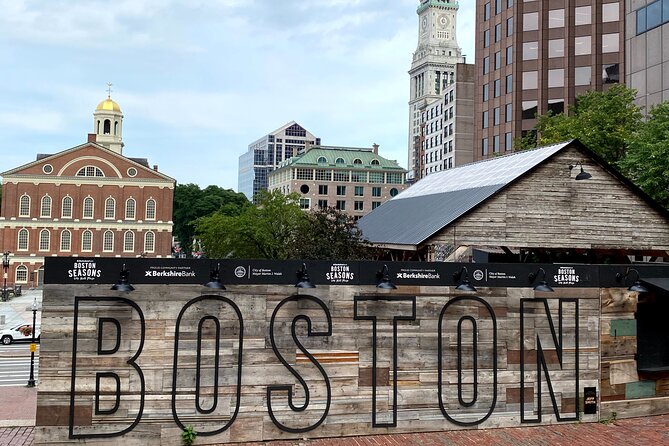
After a food-focused stretch, the route breaks for a quick photo moment at the Boston Sign in Government Center. This is short on purpose. It gives your legs a chance and lets your eyes reset before the next leg of the walk.
Then the tour moves through Government Center, where the guide points out how old and new Boston sit side by side. Even if you’re not a “civic architecture” person, this stop helps you understand the city’s center of gravity—where big institutions cluster and why that matters for how people moved and gathered over time.
You’ll also get that “we’re in the middle of things” feeling here. It’s a city that keeps layering itself, and Boston is one of the few places where you can still read old traditions in the layout.
Faneuil Hall to Bell in Hand: Revolution-Era Energy Meets a 1700s Tavern
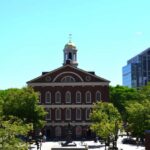
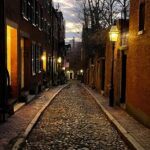
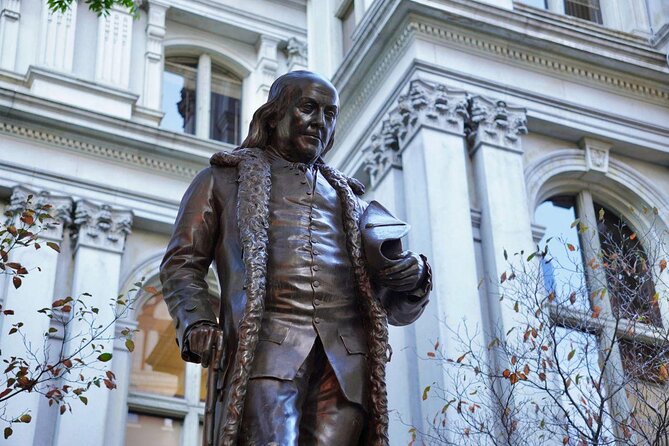
A big part of the Freedom Trail experience is getting to the places that acted like public living rooms. That’s why the tour heads to Faneuil Hall Marketplace. It’s known for its history and for its food-and-shop atmosphere today, with lots of activity around the cobblestones.
The tour doesn’t linger too long here, but it gives you the essential context: this was a meeting place for early revolutionaries, and now it’s a gathering spot where you can feel the city’s constant push and pull between “big ideas” and “what’s for dinner.”
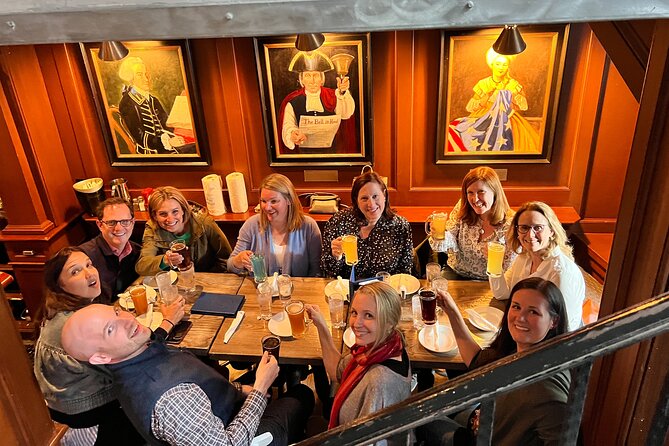
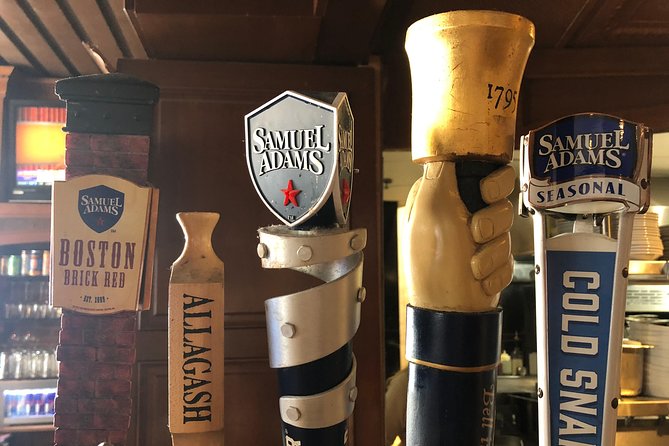
From there, you go to Bell In Hand Tavern, just steps away. This is one of the most impressive stops on the whole walk. It’s described as the oldest continuously operating tavern in the country, serving Bostonians since the 1700s. The tour also points out “Boston classic” history reaching back to the late 1700s.
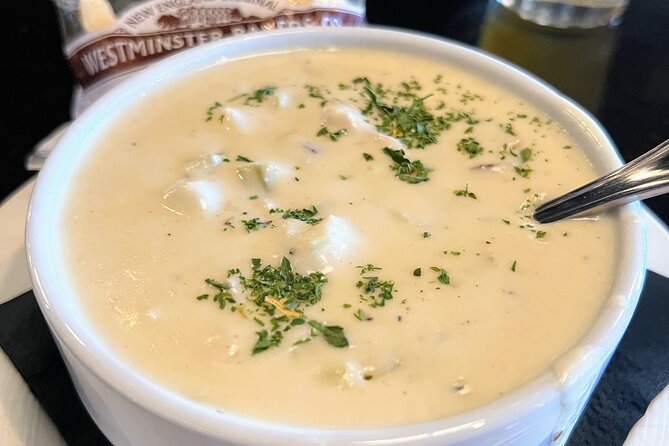
Your tasting at Bell in Hand is a coastal New England seafood classic, and the guide adds detail beyond the food. There’s also a fun bit of secret whimsy tied to paintings on the walls—exactly the kind of odd, human detail that makes you remember a place after you’ve left.
If you like taverns and don’t want your sightseeing to feel like museum-only tourism, this stop is a major win.
You can also read our reviews of more tours and experiences in Boston


Haymarket and Boston Public Market: Where You Feel Local Food Systems
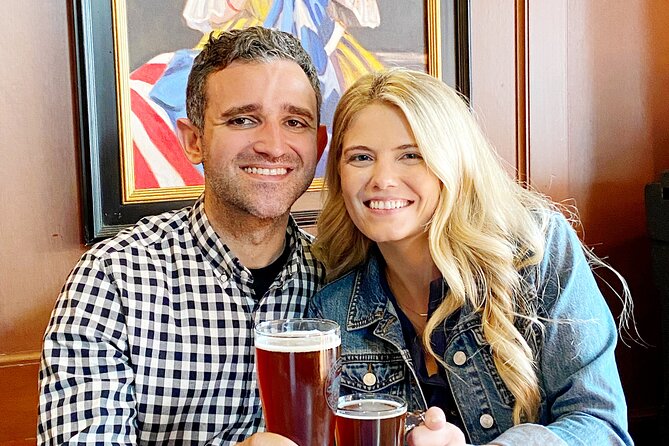
After the tavern stop, the tour shifts into a market mindset. You’ll hit Haymarket, an open-air market known for fresh produce and seafood on weekends, where prices often feel more “street-level” than tourist-level. Then you’ll move into Boston Public Market, which is all indoors and year-round.
Why these market stops matter: they show you how Boston gets its food beyond the restaurant version. Even if you don’t buy a thing, you’ll start to notice patterns: what’s available seasonally, how people browse, and how food businesses package themselves for local life.
What to expect here: more motion and sights than long sitting time. This is where you’ll get that “real food city” feeling, especially if you’ve been thinking about Boston as only museums and statues.
Omni Parker House Finish: Boston Cream Pie and the Rolls That Started It
Your last stop is Omni Parker House, near 60 School St. This is the kind of ending that makes sense for a food tour: a place with a famous food origin story built in.
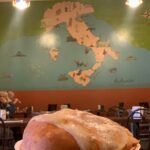
The tour points out that Parker’s Restaurant is the birthplace of Boston Cream Pie and Parker House Rolls. It also sets you up with the right mental note: Boston Cream Pie is not pie in the way some people expect, and that quirky naming is part of the charm.
If you care about food history that shows up on menus in real life, this stop delivers. You don’t just taste something. You taste something with a lineage you can explain later.
Practical tip: if dessert is your thing, come hungry and go slow at the final tasting. This is the finish most people remember, and it’s also the easiest place to overschedule yourself afterward. Plan a lighter meal later that night—or just treat the tour as your full lunch.
Price and Value: What $135.45 Really Buys You
The price is $135.45 per person for about three hours with all fees and taxes included. That might look steep at first glance, until you think about what’s actually part of the deal: guided walking time, history context, and generous tastings at four local eateries.
This isn’t a “try four bites” concept. The tastings are sized so you won’t need a meal immediately after. Multiple people describe this tour as more food than expected, which is a huge value factor in expensive cities.
You also get options for adults. There’s an optional upgrade that includes either two local craft beers or one handcrafted cocktail. Alcohol isn’t included in the base price, but you can add it when booking.
One more value angle: the tour ends near where it started, so you’re not paying to be carted across town. You’re paying for concentrated access to a key area and a guided line through it.
Who This Tour Fits Best (and Who Might Skip It)
This tour is ideal if you:
- want a first-time Boston orientation that’s food-based, not map-based
- like classic dishes and want to understand why they became local staples
- enjoy small-group guiding, where you can ask questions without feeling pushed aside
- want a day activity that runs about three hours and won’t eat your whole afternoon
You might want to consider another option if:
- you don’t enjoy walking for part of the day
- you prefer strictly one dish type (this one covers multiple Boston classics)
- you’re extremely sensitive to outdoor conditions, since it requires good weather
Should You Book This Freedom Trail Food-History Tour?
I think it’s worth booking if your goal is to leave Boston with both a sharper mental map and a fuller stomach. The route is compact, the food is planned for real hunger, and the history doesn’t feel tacked on—it explains why the dishes matter.
If you’re the kind of traveler who remembers places by what you ate there, you’ll love this. And if you’re a couple, solo traveler, or small group who likes structure without rigidity, the max of 12 people keeps it personal.
FAQ
How long is the tour?
It lasts about 3 hours.
What does the tour cost?
The price is $135.45 per person.
How many people are in a group?
This tour has a maximum of 12 travelers.
What’s included with the ticket?
It includes all fees and taxes, a guided experience along the Freedom Trail, and generous food tastings at four local eateries. A mobile ticket is used.
Is alcohol included?
Alcohol isn’t included in the base ticket. There’s an optional upgrade that includes either two local craft beers or one handcrafted cocktail.
Can I cancel for a refund?
Yes. You can cancel up to 24 hours in advance for a full refund.