REVIEW · FOOD & TASTING TOURS
Boston Seafood to Freedom Trail Highlights Private Tour
Book on Viator →Operated by WeVenture · Bookable on Viator
A 5-hour walk can still feel fun and easy. This Boston tour pairs the Freedom Trail landmarks with real New England seafood stops, so you get history you can see and food you can taste. I like that it stays practical, not “lecture-y.”
Two things I’d pick right away are the small group size (max 12) and the lunch-style seafood sampling that adds up to a full meal. You’re not just looking at old buildings; you’re also learning why Boston developed a serious food culture.
One possible drawback: it’s still a walking tour, so plan for steady pavement and downtown crowds, and come hungry. If seafood isn’t your thing, you’ll need to rely on the note that there’s a worthy substitute, but details aren’t spelled out here.
In This Review
- Key highlights to expect
- Why this Boston food-and-history walk works
- Price and what’s included in the $39 experience
- Meeting point and how to pace yourself for a 5-hour start
- Stop-by-stop: Samuel Adams through Boston’s old meeting places
- Old City Hall, King’s Chapel, and the church-and-state side of Boston
- Granary Burying Ground and Boston Common: Revolutionary names in plain sight
- Beacon-area streets, the Shaw memorial, and a statehouse view that hits hard
- Public Garden as the calm pause before the seafood part
- Waterfront views at Independence Wharf and the South Boston edge
- Union Oyster House: the seafood finish that feels like a real meal
- Who should book this tour (and who should choose a different style)
- Should you book Boston Seafood to Freedom Trail?
- FAQ
- How long is the Boston Seafood to Freedom Trail Highlights private tour?
- Where does the tour start?
- What time does the tour start?
- How much does the tour cost?
- Is the tour private?
- How many people are allowed in the group?
- What food is included?
- Are there any attractions that require paid admission?
Key highlights to expect
- Freedom Trail storytelling tied to iconic sites like Faneuil Hall, Old State House, and Old South Meeting House
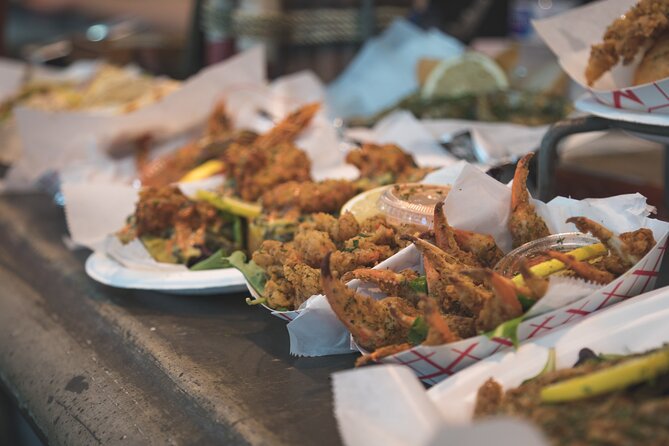
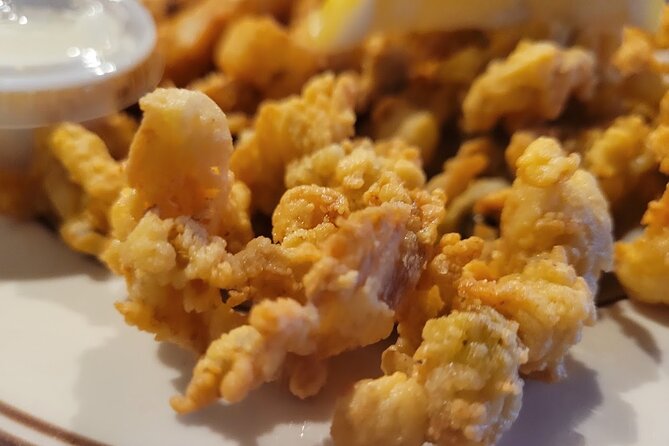
- Lunch-style seafood tasting built to equal a full meal (clam chowder, lobster roll, fried clams)
- Max 12 travelers keeps the pace personal and questions actually get answered
- Stops include King’s Chapel and the Granary Burying Ground Revolutionary-era connections
- A photo-friendly moment with the Bronze Donkey at Old City Hall
- Seafood views from the waterfront near Independence Wharf and Fort Point
Why this Boston food-and-history walk works
Boston has a way of teaching you if you let it. You can read about the Revolution, or you can stand in the same downtown corridor where people planned protests, argued policy, and changed the course of a country. This tour does the second one, and it does it on foot.
What makes it click is the pairing. You’ll move from Revolutionary landmarks like Old State House (site tied to the Boston Massacre) to meeting places like Faneuil Hall—then you’ll transition to the city’s culinary identity with stops built around classic New England seafood. It’s not random; the guide’s job is to connect the dots between people, priorities, and what Boston ate.
The other big factor is the group limit of 12. That matters on a walking tour. With a small crew, the stops don’t feel like a cattle call, and the guide can slow down when you want an extra minute to ask, look, or take a photo.
You can also read our reviews of more private tours in Boston

Price and what’s included in the $39 experience
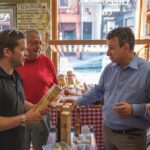
For $39 and about 5 hours, this is strong value because the tour includes a guide and a lunch-style food plan, not just a couple of small bites. The food portion is described as samples that will total a full meal, with examples like lobster roll, New England clam chowder, fried clams, and a worthy substitute if you need one.
That means you’re paying for two costs at once: guided walking + your meal. In a city where “guided” often means “plus you’ll buy everything,” this one sets you up better. You’ll still want to budget for anything outside the included food (extra drinks, snacks, souvenirs), and tips aren’t included.
The stops are also listed as free admissions where applicable, which keeps your spending simple while you’re hopping between landmarks.
Meeting point and how to pace yourself for a 5-hour start
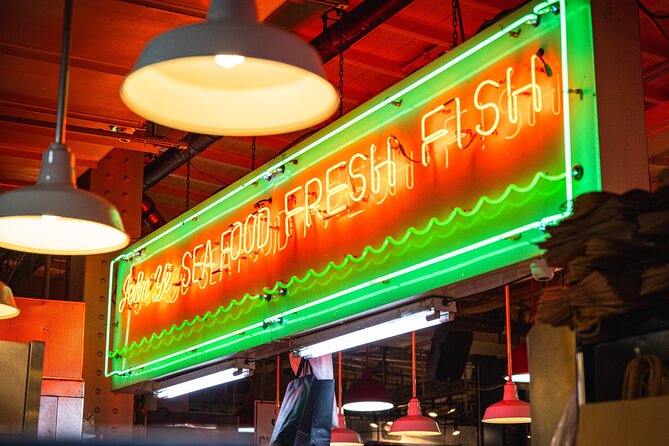
The tour starts at 470 Atlantic Ave, Boston, MA 02210 with a 1:00 pm start time. It’s near public transportation, and you’ll have a mobile ticket, which is convenient the day-of.
Because this is a downtown-heavy walking day, you’ll enjoy it more with the usual planning: comfortable shoes and a layer for Boston weather swings. You’ll be out long enough that you should think of this as an actual half-day plan, not a quick stroll between museums.
A small practical tip: build your expectations around snacks and sitting time. You’ll have frequent short stops (often 15–25 minutes), but the longest “food moment” is where you’ll likely want to focus, order, and eat without rushing.
Stop-by-stop: Samuel Adams through Boston’s old meeting places
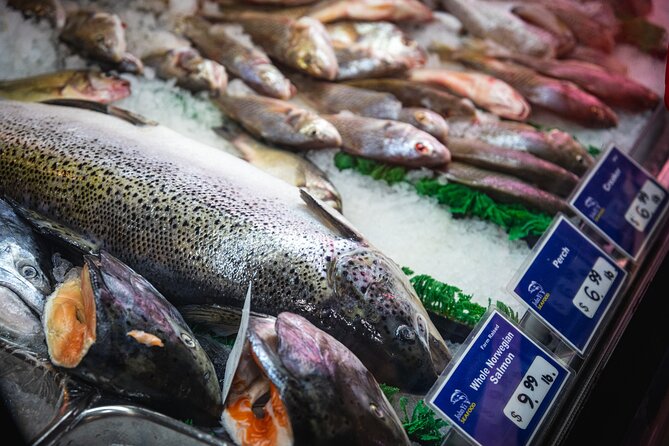
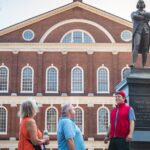
The tour’s opening is smart. It starts with a famous face that helps you orient the whole story: the Statue of Samuel Adams. This isn’t just “here’s a guy.” It sets up Samuel Adams as an American political thinker and founding figure, so when later landmarks connect to protest and rebellion, you’re not starting from scratch.
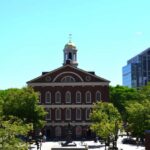
Next comes Faneuil Hall Marketplace. Even if you’ve seen it on postcards, it hits different in person because it still functions like a public space. This is where many notable Americans pushed independence from Great Britain, and being close to the waterfront keeps the setting feeling real rather than museum-sterile. You get about 30 minutes here—long enough to take it in and then move on.
Then you’ll stand in front of the Old State House. This stop is short, but it matters. The building is one of Boston’s most iconic and it’s tied to the Boston Massacre. The guide’s explanations are what turn a historic facade into a “this is why it mattered” moment—especially when you’re walking through Downtown Boston and everything feels layered with time.
After that, you reach Old South Meeting House, associated with the Boston Tea Party era. It’s described as a church and noted for its size in 1773, when it was the largest building in the city. That detail helps you picture what “gathering” meant back then: people filled a room like it was their only chance to be heard.
Right after, the tour passes a site connected to the first bookstore in Boston. The guide’s linkages to writers and works you probably know—Thoreau’s Walden, Hawthorne’s The Scarlet Letter, and Longfellow’s The Midnight Ride of Paul Revere—add a nice “Boston as an idea factory” feeling. You’re learning that revolutions also need words, printing, and persuasion.
Old City Hall, King’s Chapel, and the church-and-state side of Boston
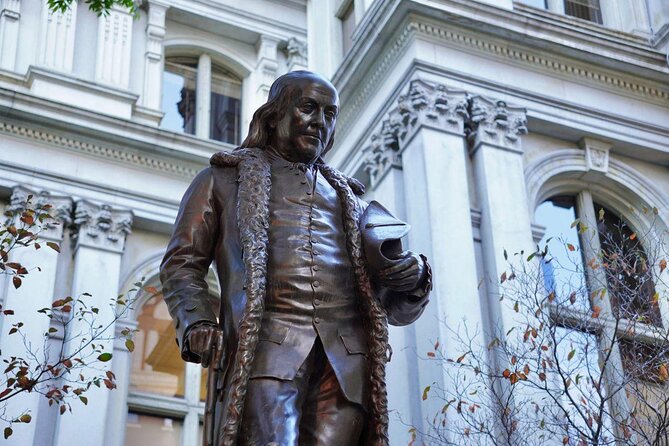
Downtown Boston has a lot of big stone energy. This tour uses that well, especially at Old City Hall. You get 15 minutes, plus a photo-friendly detail: the famous Bronze Donkey. The building is also described as having French architecture, and it’s tied to practical civic milestones like a city council and the first public school in America.
If you like the “how society worked” side of history, this is one of the best stops. It nudges you away from only thinking about battles and toward thinking about institutions.
Then you’ll move to King’s Chapel, the first Anglican church in New England. It’s a meaningful contrast point because it shows how long-standing institutions evolved across centuries. The guide will cover its history and progression over time, and if you’re lucky, you may hear the organist practicing on what’s described as the oldest church organ in the US. Even if you don’t catch music, the setting is still worth the short trek.
This is also a good stretch for photos and a quick reset—because after church history, you shift into burial grounds and the big outdoor public spaces that anchor the Freedom Trail feel.





Granary Burying Ground and Boston Common: Revolutionary names in plain sight
Next up: Granary Burying Ground, originally part of Boston Common, dating back to 1660. This is where the tour turns personal. You’re walking in a cemetery connected to major Revolutionary figures like John Hancock, Paul Revere, and Sam Adams. The guide’s job here is to make the names connect to the story you’ve been building since the first stop.
From there, you’ll reach Boston Common, described as the oldest city park in the United States. It’s a calming shift after tight, dense downtown streets. Expect memorials, fountains, and recreation areas—plus the feeling of a place that’s been used daily since 1634.
Two small notes to keep your experience smooth:
- You might want to slow your pace here and let the guide finish thoughts, since outdoor spaces can tempt people to wander.
- This is a great photo moment if you don’t mind sharing the space with locals.
Beacon-area streets, the Shaw memorial, and a statehouse view that hits hard
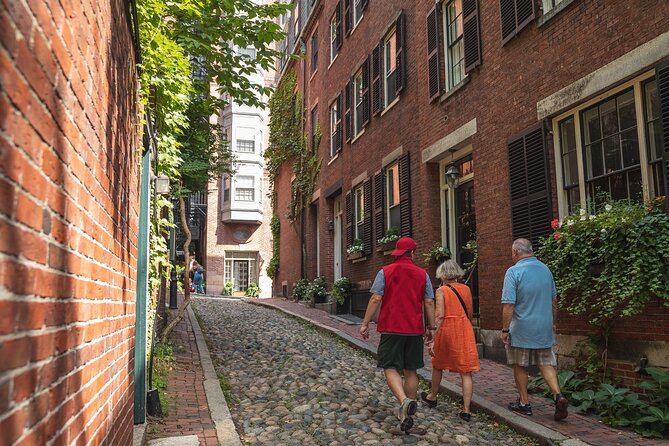
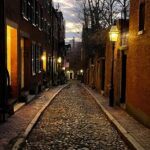
The tour then heads through a popular red-brick streets area tied to Boston’s long development. The wording here emphasizes the feel of the area and the guide’s focus on how the neighborhood grew over time. It’s a nice change from the biggest landmark blocks.
After that comes a memorial of major significance: the one connected to the first African American regiments in the Civil War and its colonel, Robert Gould Shaw. Even in a short stop, memorials like this do something valuable—they widen your understanding of American history beyond a single era. It’s not just “Revolution Day.” It’s a reminder that history keeps moving.
Then you’ll see the Massachusetts State House with its glittering dome, designed and built by Charles Bulfinch in 1798. The exterior is the star here, and the guide also points out views of modern Boston—Downtown, the Financial District, and the John Hancock Tower, described as the tallest building in New England. This is one of those moments where the city’s timeline gets visual: old government building in front, skyscrapers behind.
Public Garden as the calm pause before the seafood part
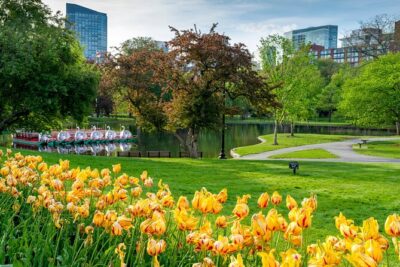
The first half ends at Boston Public Garden. This isn’t just a pretty break. It’s where many people reset for the second half because you’re shifting from heavy landmark walking into the food-focused portion.
The garden is described as a place where residents do everything from walks and exercise to just a quiet moment. For you, that means you’re more likely to enjoy the second half because you’re not running on fumes or getting stiff.
From here, the tour continues with passes through Rose Fitzgerald Kennedy Greenway, described as connected parks with public art, gardens, and event spaces. Even as “pass through” sections, these stretches help keep the day from feeling like a nonstop sprint.
Waterfront views at Independence Wharf and the South Boston edge
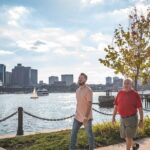
Now you get the sea air, which helps the theme make sense. At Independence Wharf, you’ll get views of Fort Point and the Seaport District—a place where generations of fishermen have docked with fresh catch. That’s exactly the kind of context that makes your seafood stop feel grounded instead of random.
This area is also connected to one of the most famous pre-Revolution moments: the Boston Tea Party. The guide will connect the visual setting to the story, so you’re not just hearing facts; you’re seeing the city’s geography where events would have played out.
Then the tour continues through the Seaport District / South Boston Waterfront, described as Boston’s lifeblood with commerce and recreational activity. This part works especially well if you like skyline views. It also helps you understand how Boston stayed a working port while history kept reshaping the city.
Union Oyster House: the seafood finish that feels like a real meal
The tour’s food centerpiece happens at Union Oyster House, listed as the Freedom Trail stop with 30 minutes. It’s described as a local gem serving excellent New England standards since the early 1800s—so you’re eating in a place with old-school Boston identity.
This is where the included tasting matters most. The food examples provided are classic: clam chowder, lobster rolls, and fried clams, with a worthy substitute if needed. The included lunch is framed as enough samples to equal a full meal, not a token taste.
This stop is also where I think the guide’s style really matters. The reviews emphasize that guides here can be both funny and able to slow down and explain. Guides named Nabeal and Tim are specifically praised for that mix of humor and clear storytelling, and that combination is exactly what you want while you’re eating—so you enjoy the food without losing the thread of the day.
If you have dietary needs, check before you go and be ready to ask about substitutes. The tour data says there is a worthy substitute, but it doesn’t say what it is. You’ll be glad you asked clearly.
Who should book this tour (and who should choose a different style)
This tour is a great match if you want:
- Food + history on the same walking day
- A route that hits major Freedom Trail landmarks without doing it like a checklist
- A guided experience that stays personal thanks to the 12-person limit
- Something that works for families, since the seafood tasting and story pace can keep kids engaged (and that’s reflected in the strong overall ratings)
It may be less ideal if:
- You don’t want seafood to be the star (the tour does note a substitute, but specifics aren’t provided)
- You prefer a slower “sit-down and museum” pace rather than repeated short walking segments
Also consider timing. A 1:00 pm start means you’ll likely be hungry by the time the seafood lunch happens, which is perfect for this style of tour. If you start the day light, you’ll enjoy the food more.
Should you book Boston Seafood to Freedom Trail?
Yes, if you want a half-day plan that feels like Boston—sidewalk story + seafood lunch. For $39, you’re getting guided landmark time plus a meal-style tasting, and the small group limit helps keep it from becoming background noise.
If you’re a big Freedom Trail fan, you’ll like the way stops layer into each other: Adams and the civic buildings, then churches and burial grounds, then the waterfront and the tea-party connection. If you’re more of a foodie first, you’ll still get context that makes the seafood feel earned, not tacked on.
My only hesitation is the one you should think about honestly: it’s a walking tour, and seafood is central. If that fits you, this is a strong value pick for Boston.
FAQ
How long is the Boston Seafood to Freedom Trail Highlights private tour?
It’s about 5 hours.
Where does the tour start?
The meeting point is 470 Atlantic Ave, Boston, MA 02210.
What time does the tour start?
The start time is 1:00 pm.
How much does the tour cost?
The price is listed as $39.
Is the tour private?
Yes. It’s a private tour/activity, meaning only your group participates.
How many people are allowed in the group?
There’s a limit of 12 travelers, which keeps the experience personal.
What food is included?
A lunch-style set of food samples is included. Examples listed include lobster roll, New England clam chowder, and fried clams, with a worthy substitute if needed.
Are there any attractions that require paid admission?
The tour lists admission as free at the stops provided (with free admission ticket noted for the listed landmarks).