REVIEW · BOSTON
Relive 1776: See Boston’s History in Augmented Reality (AR)
Book on Viator →Operated by See Reality Boston · Bookable on Viator
History walks with you, in AR form. Relive 1776 blends augmented reality with the Freedom Trail so you relive key Revolutionary moments from 1765 to 1775 with a real guide alongside you. I love the hands-on, scene-by-scene approach, especially the choice of Meta Quest AR headsets or tablets so you keep your bearings and avoid VR-style nausea. One thing to consider: the format is built from short AR moments, so if you want nonstop, detailed lecturing, you may have to ask questions and lean into the narration.
The tour runs about 2 hours and caps at 8 people, which makes it feel more like a guided experience than a crowded bus stop. You’ll move through major Freedom Trail landmarks, meet key figures along the story under Boston Common’s Great Elm Tree, then finish at Bunker Hill.
You’ll start at the Boston Common Visitors Center (139 Tremont St) and end back at the same meeting point. It’s priced at $30 per person and runs in English, with mobile tickets and a reusable Illegal Tea souvenir included.
In This Review
- Key highlights at a glance
- What Relive 1776 really feels like on the Freedom Trail
- Gear check: Meta Quest AR headsets vs tablet mode (and staying comfortable)
- How the 2-hour route works: from Boston Common to Bunker Hill
- Stop-by-stop: what happens at each Freedom Trail landmark
- 1) Boston Common: meeting the people behind the pushback
- 2) Granary Burying Ground: another Revolutionary-year turning point
- 3) Statue of Benjamin Franklin: ideas in motion
- 4) Old Corner Bookstore: words, planning, and persuasion
- 5) Old State House: action and consequence
- 6) Faneuil Hall Marketplace: the story keeps accelerating
- 7) Paul Revere House: the Revolutionary timeline tightens
- Final beat at Bunker Hill: closing with impact
- Guide-led storytelling: how to get facts without losing the fun
- Price and value: is $30 worth it for an AR Freedom Trail walk?
- Who this tour suits best (and who might want a backup plan)
- Tips to get more out of your AR headset experience
- Should you book Relive 1776 on your Boston trip?
- FAQ
- How long is Relive 1776?
- Where does the tour start and end?
- How much does it cost?
- Do I need to use a headset?
- Is it VR?
- What language is the tour offered in?
- How big is the group?
- What’s included in the ticket price?
- Can I bring a service animal?
- Is there free cancellation?
Key highlights at a glance
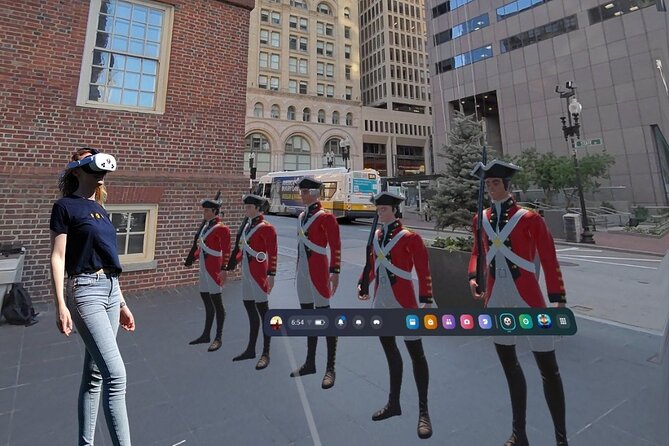
- AR, not VR: you see the real world at all times, using headsets or tablets
- 5-part Freedom Trail story: short scenes tied to 1765–1775 moments, led by your guide
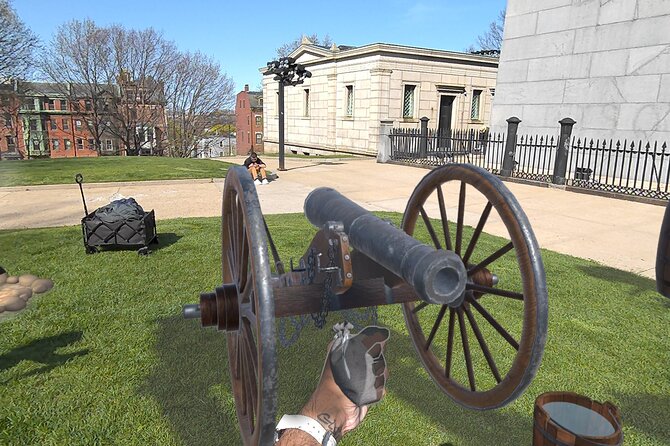
- Hands-on historical play: expect interactive moments like trying on colonial fashion and operating a historically accurate field cannon
- Designed to be quick and fun: each AR experience lasts about 5–15 minutes and includes a short video
- Small group feel: maximum of 8 travelers for easier pacing and support
- A souvenir worth keeping: Illegal Tea reusable tea bag plus a discount card
What Relive 1776 really feels like on the Freedom Trail
Relive 1776 is a guided walk where the “homework” is turned into short, on-site scenes. Instead of stopping at each landmark for a long talk, you get a sequence of mini episodes from the Revolution years, paced by a guide who’s keeping the story moving.
The big appeal is that you aren’t stuck reading a plaque or listening to someone from 20 feet away. AR places the action in your view right where it happened in the story, so the Freedom Trail landmarks become stage sets for the 1765–1775 storyline.
I also like that the experience is built to be fun first, not scary. There’s no gore, and the moments are short enough that even if you’re not a hardcore history person, you still get momentum instead of fatigue.
A possible mismatch: if you came for deep, fact-heavy history delivered like a lecture, this tour’s structure may feel more like guided storytelling plus AR moments than a traditional history rundown. The good news is that your guide is there in the real world with you, and you can steer your attention toward facts by asking questions during transitions.
You can also read our reviews of more historical tours in Boston



Gear check: Meta Quest AR headsets vs tablet mode (and staying comfortable)
This is where the tour’s design makes sense. You use AR, not full VR. That means you’re not sealed into a virtual bubble. You see the world around you, and the AR layer sits on top of it.
You get two ways to participate:
- Meta Quest AR headsets
- Tablets for AR moments without using the headset
The tour’s promise here is comfort. With AR, you can keep situational awareness, and the experience is set up to avoid the nausea concerns that sometimes come with VR-style setups. You still want to bring basic headset common sense—cleaning wipes help, and you’ll want to keep a steady stance during the AR action.
It also helps for your group. If someone in your group gets uneasy with headsets, tablet mode gives them a path in without forcing the whole experience into one format.
One practical note: each AR moment includes a short video component, and the whole interaction is timed. So if you’re the type who needs extra time to read every screen, plan to accept that the tour moves like a story—scene to scene, then onward.
How the 2-hour route works: from Boston Common to Bunker Hill
The walking portion follows the Freedom Trail, with the tour story traveling through several well-known landmarks. You’ll start at the Boston Common Visitors Center and end back there, even though the tour finishes at Bunker Hill as the final story beat.
In the real world, that matters because you don’t need to figure out how to get back across town after the experience. You can tack it into a day that already includes other Freedom Trail sights, or you can treat it like the main event and let it set your bearings.
Timing works in short blocks. Each location brings a separate historical scene that lasts about 5–15 minutes, with a quick 1-minute video inside that experience. That pacing is a strength: you get variety without spending half the tour stuck in one place.
Group size also matters here. With a maximum of 8 travelers, you should have an easier time getting help from your guide with the headset/tablet setup and knowing when it’s your turn to step into the next scene.
Stop-by-stop: what happens at each Freedom Trail landmark
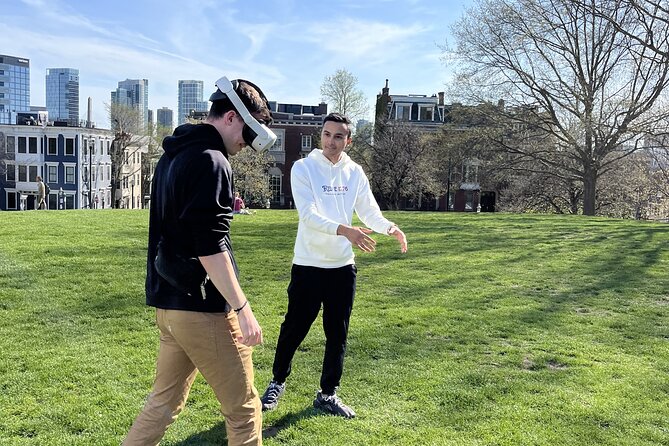
Rather than being one continuous presentation, the tour is built from five distinct AR experiences across major landmarks. Think of each stop as a chapter opener: your guide ties the story to the location, then you get a short AR moment that turns that chapter into something you can see in place.
1) Boston Common: meeting the people behind the pushback
Your first scene begins at Boston Common. This is where the story gets its human core. You and your guide connect with key figures under the Great Elm Tree, including Paul Revere, John Hancock, and Samuel Adams, then shift toward the idea of pushing back against tyranny.
This opening is strong because it sets the tone. You aren’t starting with dates and names in isolation. You start with people, choices, and momentum, and then the AR helps visualize the events as you stand in the actual public space where the story unfolded in the tour’s version.






2) Granary Burying Ground: another Revolutionary-year turning point
Next comes Granary Burying Ground, where the tour continues to move through the 1765–1775 timeline. Even if you don’t know the details, the guide’s job is to translate the story into something you can follow in the moment.
What makes this stop work for the AR format: you’re not just looking at a landmark. You’re stepping into a short historical scenario designed to keep your attention anchored to the exact place you’re standing.
3) Statue of Benjamin Franklin: ideas in motion
At the Statue of Benjamin Franklin, you shift from personalities to ideas. This is still within the guide-led AR story, so you’ll see the chapter unfold through a short experience that stays respectful and educational.
The key benefit here is perspective. The tour uses AR to make the chapter feel less like trivia and more like part of a living timeline. If you like history that connects concepts to real places, this middle stretch usually clicks.
4) Old Corner Bookstore: words, planning, and persuasion
At the Old Corner Bookstore stop, the tour keeps the story moving using another scene from the years leading toward independence. You’ll experience a short AR moment paired with video and audio narration, meant to be fun without turning graphic.
If you’re traveling with kids, this type of stop often lands well because it’s less about long standing and more about short “see it now” moments.
5) Old State House: action and consequence
The Old State House stop is where the tour leans into more hands-on historical play. The tour description hints at interactive moments, including operating a historically accurate field cannon and other role-based experiences like trying on colonial fashion (depending on how the scene plays out in your session).
This part is one of the reasons the tour gets such high praise. When AR turns a landmark into a stage for a quick action moment, you remember it later. It’s the kind of experience that feels unique to Boston because you’re not doing it in a studio.
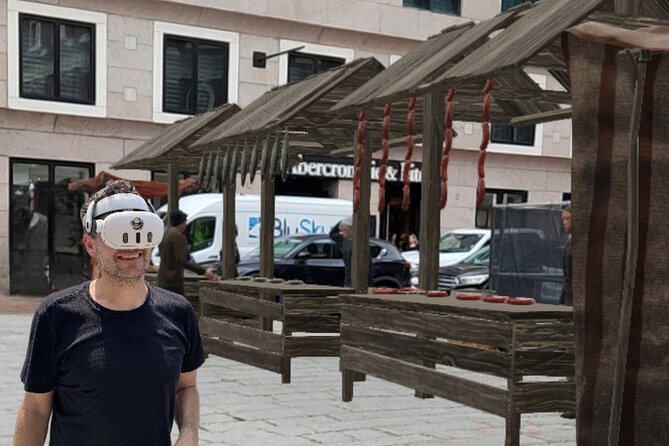
6) Faneuil Hall Marketplace: the story keeps accelerating
At Faneuil Hall Marketplace, you’re still in the guided AR rhythm: short experiences, quick video, then you move on. This stop helps close the distance between the earlier “setup” scenes and the later story push toward confrontation.
The drawback to watch for: because each part is short, the tour doesn’t aim to replace a full-on guidebook read. If you like to go deeper after, you’ll want to leave some time later in the day for your own follow-up.
7) Paul Revere House: the Revolutionary timeline tightens
Next is the Paul Revere House stop, part of the Freedom Trail progression through the Revolution years. This is also where the story edges closer to the turning-point events.
Late in the tour experience, you’ll get into planning and execution connected to Paul Revere’s Midnight Ride and the run-up to Lexington and Concord (the tour is designed to lead your attention there as the story heads toward the end).
Final beat at Bunker Hill: closing with impact
The last experience is at Bunker Hill, where the walking tour ends. This ending matters because it lands the story arc, giving you a sense that you’ve arrived at the climax rather than just ticking off landmarks.
If you want the strongest payoff, time your day so you’re not rushed right before this part. It’s easier to feel the emotional conclusion when you’re not counting your next transit connection in your head.
Guide-led storytelling: how to get facts without losing the fun
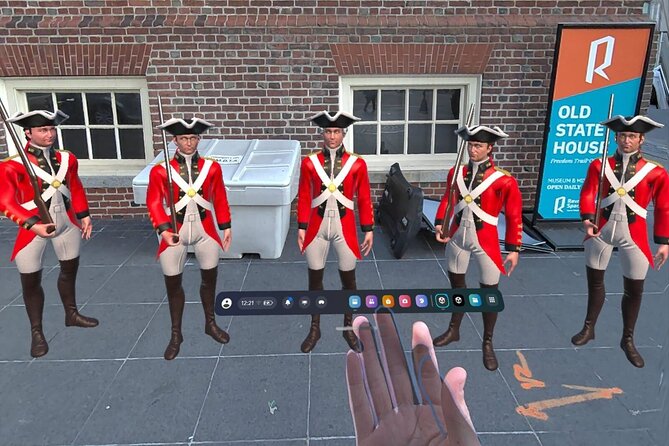
The tour depends on your guide to connect the AR moments to the Revolutionary-year story. In one highlighted experience, the guide was Tommy, and the setup was described as smooth and easy for both kids and adults.
Here’s the practical trick: treat the guide like a live Q&A partner. The AR scenes are timed, but the transitions are real chances to ask for context. If you want more explanation at a specific stop, say so. If you only listen passively, you might feel like the tour is lighter on facts than you hoped.
That said, the tour’s design is still educational. It covers key moments across 1765–1775, and it’s intentionally structured to be fun and non-graphic.
So you’re balancing two things:
- letting the AR do its job (quick, memorable scenes)
- making sure the guide understands what kind of history you want next
Price and value: is $30 worth it for an AR Freedom Trail walk?
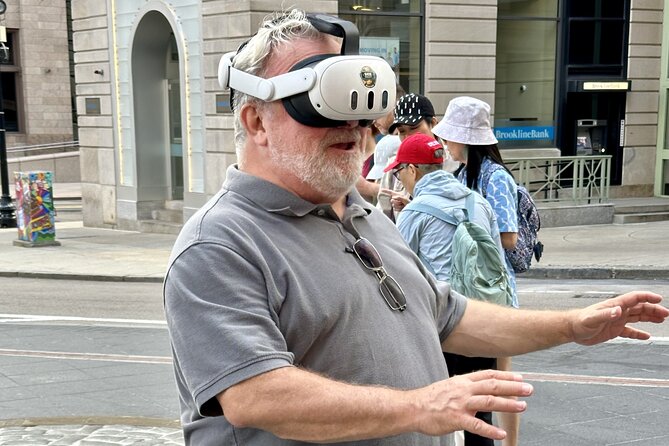
$30 for about two hours doesn’t sound crazy for Boston, especially because the price includes real help and real equipment. You’re not just paying for “someone to point at things.”
What you actually get for that cost:
- a tour guide (English only)
- Meta Quest AR headsets
- tablets for AR experiences if you don’t want headsets
- the short AR scenes at multiple stops
- a souvenir: Illegal Tea reusable tea bag with a discount card
Value here comes from the equipment and the format. A guided Freedom Trail walk alone can be cheaper, sure. But AR changes the way you remember each location. When action happens in your field of view right at a landmark, it tends to stick.
Also, the group cap of 8 people makes the experience feel more controlled, not like a free-for-all.
Who this tour suits best (and who might want a backup plan)
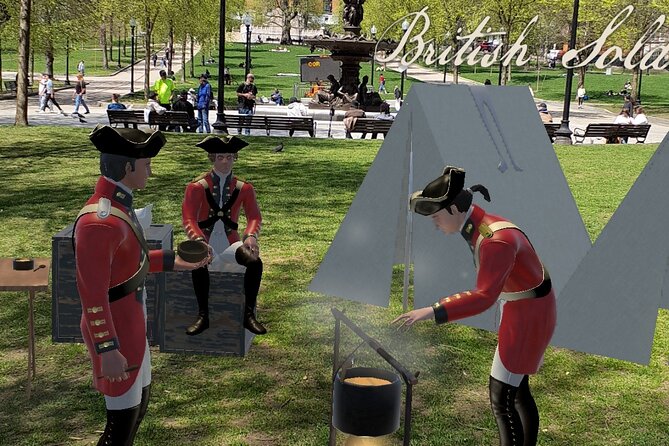
This is ideal if you:
- want Boston history without feeling stuck in a long lecture
- like tech that supports a real-world walk
- are traveling with kids old enough to enjoy short activities (one experience specifically mentioned kids around 8+)
- enjoy interactive, role-based moments like fashion try-ons and other action scenes
It can be a weaker fit if you:
- want a traditional, deeply detailed history talk at every stop
- dislike time-limited experiences
- prefer to read on your own pace rather than follow a guided sequence
If you fall into the second category, don’t panic. You can still make it work by asking your guide for extra context and choosing headset or tablet mode based on what helps you focus.
Tips to get more out of your AR headset experience

A few small moves can make this tour smoother:
- Wear something comfortable for standing and walking. You’ll be on your feet through multiple short scenes.
- Decide headset vs tablet based on your comfort, not your curiosity. If headsets make you self-conscious, tablets are a smart choice.
- Keep your eyes on the guide during transitions. AR scenes are timed, and the guide is the one syncing your group.
- Ask one good question at the start. It helps your guide shape the tone as you go.
- Leave yourself flexibility after Bunker Hill. If the ending makes you curious, you’ll want time to follow up on your own.
One more practical thought: AR is fun, but it works best when you let the story land in your body and memory first, then you add details later.
Should you book Relive 1776 on your Boston trip?
Book it if you want a Freedom Trail experience with a modern twist that still respects the real locations. At $30, the deal is strongest when you value guided pacing plus AR moments that make the Revolution years feel immediate.
Skip it (or add a traditional tour alongside it) if you mainly want long, fact-heavy history delivered without any tech component. This experience is designed to be playful and fast-moving, not a full lecture.
If your goal is to leave Boston with vivid scenes you can picture later—like AR action moments tied to actual landmarks—Relive 1776 is a smart choice.
FAQ
How long is Relive 1776?
It lasts about 2 hours.
Where does the tour start and end?
The start is at Boston Common Visitors Center, 139 Tremont St, Boston, MA 02111, USA. The activity ends back at the meeting point.
How much does it cost?
The price is $30.00 per person.
Do I need to use a headset?
No. You can use Meta Quest AR headsets or tablets for the AR experiences without headsets.
Is it VR?
No. It uses augmented reality (AR), so you see the real world while the historical scenes appear on top.
What language is the tour offered in?
The tour guide speaks English only.
How big is the group?
The tour has a maximum of 8 travelers.
What’s included in the ticket price?
A tour guide (English only), Meta Quest AR headsets, tablets for AR experiences without headsets, and an Illegal Tea reusable tea bag souvenir with a discount card.
Can I bring a service animal?
Yes, service animals are allowed.
Is there free cancellation?
Yes. You can cancel for a full refund up to 24 hours in advance of the experience start time.