REVIEW · BOSTON
Boston History Tour: Scenic Walk Through Time & Landmarks
Book on Viator →Operated by Intrepid Urban Adventures - USA · Bookable on Viator
History is under your feet in Boston. This Boston History Tour turns first-time orientation into a walk with real stories, sweeping you from Faneuil Hall to Beacon Hill and the Boston Public Garden with a local guide who actually knows how to make the past stick (I heard standout names like Bob, Nabil, Alivia, and Lexie show up). I love the pacing: it’s only about 2.5 miles total, yet you still cover the big Revolution-era markers and learn how neighborhoods work today. I also like the human extras—insider tips, and that surprise local treat the guide adds along the way.
One thing to consider: you will spend time in lively downtown corridors near marketplaces, so if you’re hoping for only quiet historic stops, some sections can feel more like moving through busy streets than stepping into a museum room.
In This Review
- Key highlights to pay attention to
- Two Hours to Learn Boston’s Revolutionary Map
- Price, Pace, and What You Actually Get for $39.80
- Starting at Rose Kennedy Greenway Carousel: the easy kickoff
- Faneuil Hall Marketplace to Custom House Tower: independence begins in plain view
- Old South Meeting House: the Boston Tea Party planning moment
- A First Bookstore Site Pass and the “literature in the streets” feeling
- Old City Hall and King’s Chapel: the French architecture + America’s first public school
- Old State House: Declaration day excitement and the Boston Massacre
- Boston Common: the oldest city park since 1634
- Beacon Hill cobbled streets and the Robert Gould Shaw memorial
- Massachusetts State House dome views and the cornerstone ceremony story
- Granary Burying Ground: Revolutionary heroes in a compact, haunting space
- Boston Public Garden: end your tour with space to breathe
- Who this tour is for (and who should pick something else)
- Should you book this Boston History Tour?
- FAQ
- How long is the Boston History Tour?
- What’s the walking distance on this tour?
- Where do I meet, and where does the tour end?
- Is the tour offered in English?
- How big is the group?
- What stops are included on the route?
- Is the surprise local treat included?
- What is the cancellation policy?
Key highlights to pay attention to
- Small group size (max 16): easier questions and more back-and-forth than the big-bus style tours
- 2 hours, ~4 km walking: enough time to get oriented, not so much that you’re cooked by lunchtime
- Revolution-era focus with modern Boston context: you’ll connect events like the Declaration and Boston Massacre to the city’s streets
- Included surprise local treat: sometimes alcohol may be served, so bring ID if you want it
- Carbon-neutral, B Corp-certified operator: a sustainability angle that doesn’t slow you down
Two Hours to Learn Boston’s Revolutionary Map
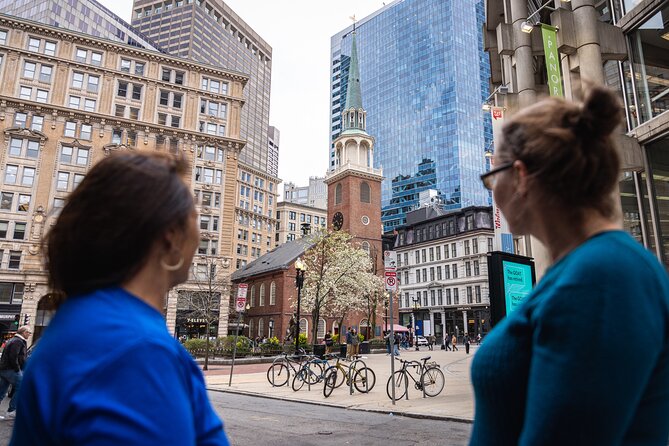
The best way to understand Boston is to treat it like layers, not a list. This tour is built for that mindset. You start in the Rose Kennedy Greenway area and then keep stepping through the downtown and Beacon Hill corridors where the Revolutionary story keeps surfacing.
What I like most is the way the guide links political moments to physical places. It’s not just names and dates. You learn why these buildings and corners mattered, and you also get a feel for how people live and move through the same streets now.
You’ll also get a small-group experience. With a cap of 16, it’s easier for the guide to keep things interactive, and you’re not shouting over a herd of people.
You can also read our reviews of more walking tours in Boston

Price, Pace, and What You Actually Get for $39.80
For $39.80 per person (about 2 hours), the value is in what’s included—not just the walking. You get an expert English-speaking guide, multiple landmark stops with free admission at the listed sites, plus insider tips for where to eat, explore, and relax after you learn the story.
The pace is relaxed but steady. The tour covers about 4 km (2.5 miles), which is very doable for most visitors. You’re not spending long stretches standing in one place, yet you’re not rushing either. That balance is why it works well on your first day.
Another value point: the itinerary includes major downtown anchor areas and a couple of “pause and look” moments—like seeing the Massachusetts State House dome from the right angle and taking in the Granary Burying Ground setting. Even if you’ve seen photos, those spots land differently in person.
Starting at Rose Kennedy Greenway Carousel: the easy kickoff
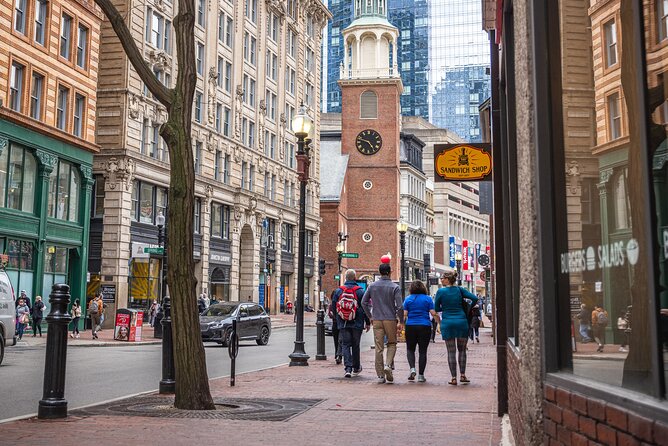
You meet at 191 Atlantic Ave by the Greenway Carousel. The location is convenient because it’s easy to find and near public transportation. You’ll also get everyone gathered before you start moving.
This opening matters more than it sounds. It’s your “landing” phase. You’ll get a quick sense of what the guide thinks you should notice as the day unfolds—architecture, street layout, and the way key sites connect.
It’s also a calm start compared with other tours that launch you immediately into intense crowds. Even if you’re jet-lagged, you get momentum without chaos.
Faneuil Hall Marketplace to Custom House Tower: independence begins in plain view
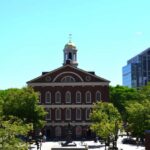
The tour starts in the Faneuil Hall Marketplace area, where you’ll learn about the revolutionaries who pushed for independence from Great Britain. This is where Boston politics stopped being abstract and became public talk.
From here, you’ll also be able to see Custom House Tower, described as Boston’s first skyscraper and originally a storage location for incoming goods. That connection is important. Boston’s independence story wasn’t only ideological—it was also economic and logistical. You’ll hear how trade, taxation, and shipping pressure fed the anger that led to rebellion.
If you’re doing this on a first day, this is a smart early stop. It gives your brain a framework before you move into smaller streets and less obvious corners.
Old South Meeting House: the Boston Tea Party planning moment
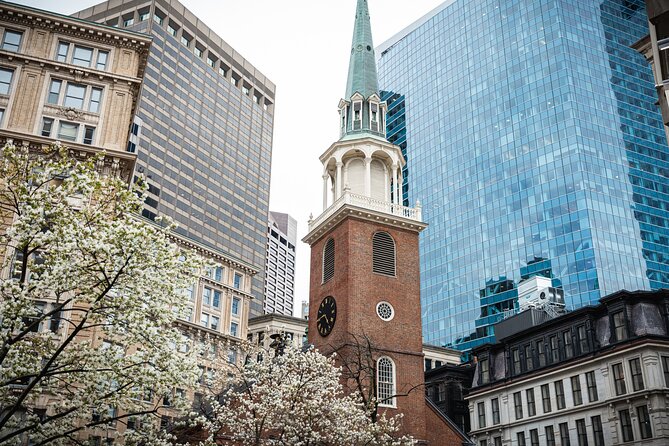
Next up is the Old South Meeting House, a former church tied directly to the build-up to the Boston Tea Party. Even though you can’t treat it like a timed performance, the guide’s job here is to make the planning and social energy feel real.
You’ll also hear about the famous anti-taxation idea that was driving the movement—people weren’t only angry about taxes; they were insisting on representation. That theme carries forward through several stops, so the tour doesn’t feel like nine separate lessons.
A practical note: this stop is short. You’ll get the key story beats and then move on. If you want to linger longer for photos, you’ll need to be ready to do it quickly or plan to revisit nearby after the tour.
You can also read our reviews of more historical tours in Boston






A First Bookstore Site Pass and the “literature in the streets” feeling
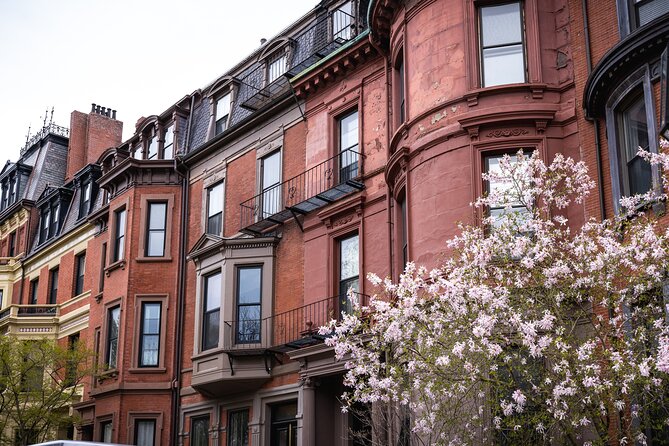
From Old South, you’ll pass by the site of Boston’s first bookstore. The tour mentions publishers associated with Walden by Thoreau, The Scarlet Letter by Hawthorne, and Midnight Ride of Paul Revere by Longfellow.
This is one of the more interesting “side streets” parts of the day because it broadens the Revolution story beyond meetings and battles. Ideas traveled in print, and communities formed through shared texts. You’ll get a sense that Boston’s civic culture was also a learning culture.
Don’t expect a long stop here. Think of it as a mental breadcrumb. The guide uses these quick passes to help you read the city like a timeline.
Old City Hall and King’s Chapel: the French architecture + America’s first public school
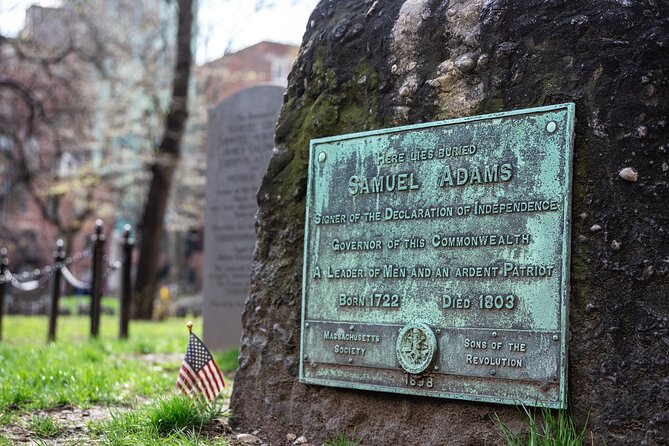
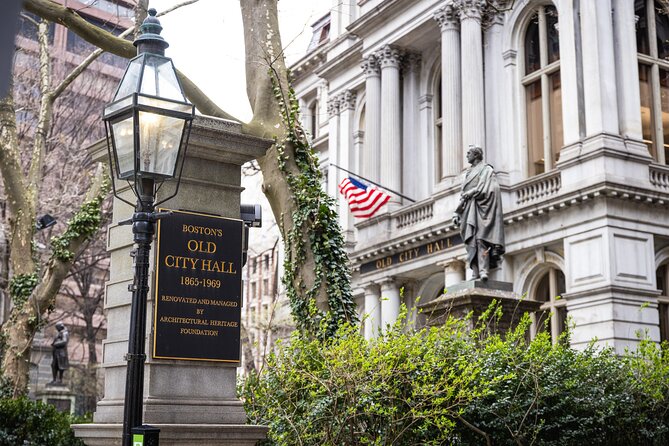
The tour then moves to Old City Hall, where you’ll learn it housed the city council and America’s first public school. It’s one of those details that makes you rethink how early Boston’s civic ambitions started.
You’ll also see a quirky photo moment: the Bronze Donkey. This kind of stop sounds minor, but it helps break the lecture feel. You’re on foot, you’re looking around, and you get a moment to actually be present.
Next, you’ll walk through Downtown Crossing, pass Old City Hall again, and visit King’s Chapel. If conditions are right, you might catch the organist on the oldest church organ in the US. Even if you don’t, the building is still worth your attention because it adds a spiritual and cultural layer to the political route.
Old State House: Declaration day excitement and the Boston Massacre
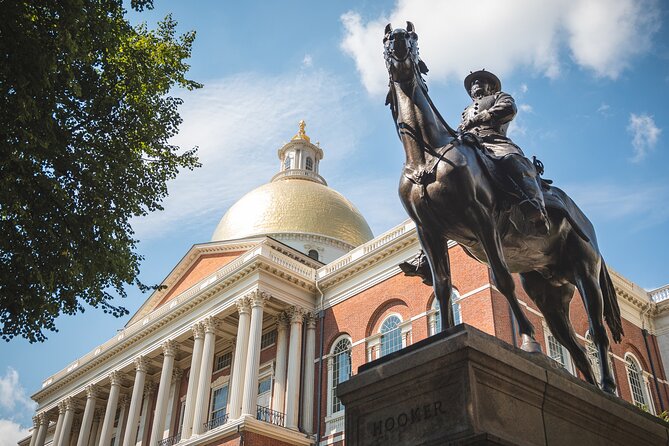
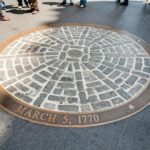
At the Old State House, you’ll hear the moment the Declaration of Independence was announced in 1776, and then you’ll pivot to the Boston Massacre. This is the emotional center of the tour for many people because it covers both the high hopes and the tragic backlash.
I like how the guide keeps it balanced. You get the excitement, but you also get the cost. Standing in this area, you can almost feel why these events shaped public trust and public anger.
The stop is about 15 minutes. That’s just enough to get the story and snap a few photos without the schedule turning into a museum marathon.
Boston Common: the oldest city park since 1634
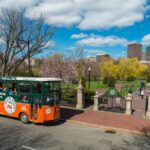
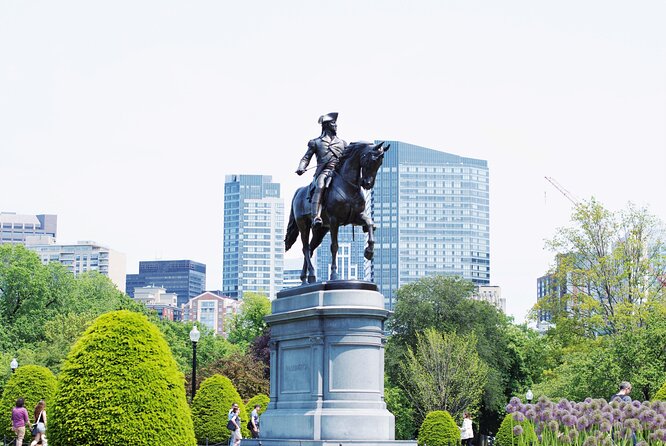
Then you walk into Boston Common, the oldest city park in the US. As you move through, you’ll notice memorials, fountains, recreation areas—and the fact that people have enjoyed this space since 1634.
This park stop does two jobs. First, it gives your legs a slightly easier beat after the dense downtown streets. Second, it helps you understand Boston as a lived-in city. Even in Revolutionary moments, public space mattered.
You’ll also get a sense of how the area changed over time, including how sailors and British soldiers contributed to early reputation shifts before it became the iconic public center it is today.
Beacon Hill cobbled streets and the Robert Gould Shaw memorial
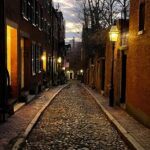
One of the standout parts of the route is how it treats Beacon Hill as more than a pretty postcard. You’ll explore the cobbled streets while the guide explains how the neighborhood’s story evolved into the familiar place people want to visit.
You’ll also stop at the Robert Gould Shaw memorial, described as honoring one of the first African American regiments in the Civil War and their colonel. This is a meaningful contrast to the tour’s earlier Revolutionary focus, and it broadens what “Boston history” means.
If you care about learning beyond the headline moments, this part is worth slowing your attention down for. It’s the kind of stop that sticks because it connects history to human bravery and political change.
Massachusetts State House dome views and the cornerstone ceremony story
Next is the Massachusetts State House, with its glittering dome and major political symbolism. You’ll learn about John Hancock, the original landowner, and hear how Paul Revere presided over the 1795 cornerstone ceremony.
This is a “look up” stop, and I mean that literally. When you see the dome in person, the scale helps you understand how power and governance wanted to look in that era. You also get the sense that government wasn’t tucked away—it was meant to be seen.
The time here is short, around 10 minutes, but it’s high-impact. It’s the kind of stop that makes the rest of the route click: you start noticing how these civic buildings were designed to command attention.
Granary Burying Ground: Revolutionary heroes in a compact, haunting space
At Granary Burying Ground, you’ll learn it dates back to 1660 and was originally part of Boston Common. This is where the tour leans into reflection.
You’ll pass graves of major Revolutionary figures like John Hancock, Paul Revere, and Sam Adams. Even without getting too lost in names, you’ll feel the weight of the place because it’s intimate and close to the city’s everyday motion.
The stop is about 10 minutes. If cemeteries aren’t your thing, you might feel slightly rushed here. But if you like understanding how memory works in a city, this will be one of your favorite moments of the day.
Boston Public Garden: end your tour with space to breathe
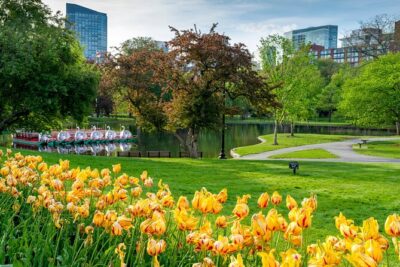
You finish at Boston Public Garden (or nearby) at 4 Charles St. The Public Garden is described as the first public park in America, and it’s a place locals and visitors use for walks, relaxation, and exercise.
The guide ties this space back to earlier uses, including how it played a role during the Revolution and beyond. Then you get to end your walk somewhere peaceful instead of another shopping street.
I like ending here because it gives you options. You can continue exploring nearby neighborhoods at your own pace, grab a snack, or just sit for a while. If your energy is still good, it’s an easy transition into a broader day.
Who this tour is for (and who should pick something else)
This Boston History Tour is a strong fit if you want:
- a first-day walkthrough of major Revolutionary-era landmarks
- a guide who brings stories to life with humor and quick connections
- a manageable walking plan (about 2.5 miles) that doesn’t eat your whole day
- insider suggestions on where to eat, relax, and keep going afterward
It’s less ideal if you’re the type who wants only quiet, purely historic interiors. Parts of the route pass through busy downtown areas near marketplaces and crossing streets, and the schedule favors coverage over deep lingering.
Also, if you’re sensitive to weather, remember this runs rain, shine, or snow. You’ll want layers and a plan for slippery sidewalks.
Should you book this Boston History Tour?
If your goal is to get your bearings fast and understand why Boston looks the way it does, I’d book it. The route hits the big names you’ll keep hearing about—Faneuil Hall, Old State House, Boston Common, Beacon Hill, and the Public Garden—and it does so in a time window that won’t wreck your itinerary.
The added value for me is the balance: politics and conflict on one side, civic life and everyday spaces on the other. Plus, the surprise local treat and the insider tips make it more than a “stand and point” style tour.
Pick it early in your trip. You’ll walk away knowing what to revisit and what to explore on your own. And if you like the idea of carbon-neutral sightseeing with a B Corp-certified operator, this is also a feel-good choice without sacrificing convenience.
FAQ
How long is the Boston History Tour?
It’s about 2 hours.
What’s the walking distance on this tour?
You’ll cover about 4 km (2.5 miles) on foot.
Where do I meet, and where does the tour end?
You start at the Greenway Carousel, 191 Atlantic Ave, Boston, MA 02111. You end at Boston Public Garden (or nearby), 4 Charles St, Boston, MA 02116.
Is the tour offered in English?
Yes, it’s offered in English.
How big is the group?
It’s a small-group experience with a maximum of 16 travelers.
What stops are included on the route?
You’ll visit or pass key areas including Faneuil Hall Marketplace, Old South Meeting House, Old City Hall, Old State House, Boston Common, the Robert Gould Shaw memorial area, the Massachusetts State House, Granary Burying Ground, and Boston Public Garden. The route also includes Rose Kennedy Greenway and Custom House Tower, and it references Quincy Market.
Is the surprise local treat included?
Yes. The tour includes a surprise local treat, and alcohol might be served, in which case proper ID will be required.
What is the cancellation policy?
Free cancellation is available up to 24 hours in advance for a full refund. If you cancel less than 24 hours before the start time, the amount paid is not refunded.