REVIEW · BOSTON
Building Blocks of Boston : Downtown Walking Tour
Book on Viator →Operated by Behold Boston Tours · Bookable on Viator
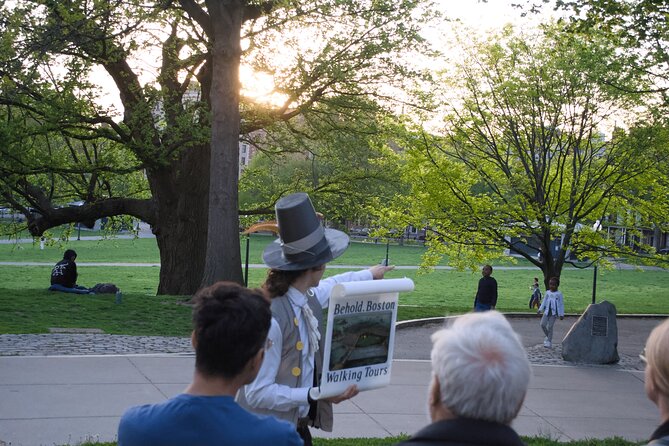
Boston feels like a puzzle with answers. This downtown walk links key places to plainspoken stories, with Arty using an UltraHD scroll so the past feels visual and easy to track.
I love how the guide slows down for the details that actually explain why Boston looks the way it does, not just what happened. I also like the way the tour keeps moving while still making time for questions and photo moments.
You’ll also appreciate the practical rhythm. Every stop is presented as free to visit in the time you’re there, and you get a planned AC/restroom break so the tour stays comfortable.
I like that the pacing is built for a real downtown walk, with enough structure that you won’t feel lost.
One thing to consider: the experience runs only in good weather, so rain or wind can mean a change of plans. It’s still a walking tour, so wear shoes you trust on city pavement.
In This Review
- Key things I’d mark on your map
- What $29.40 Gets You in Boston’s Downtown
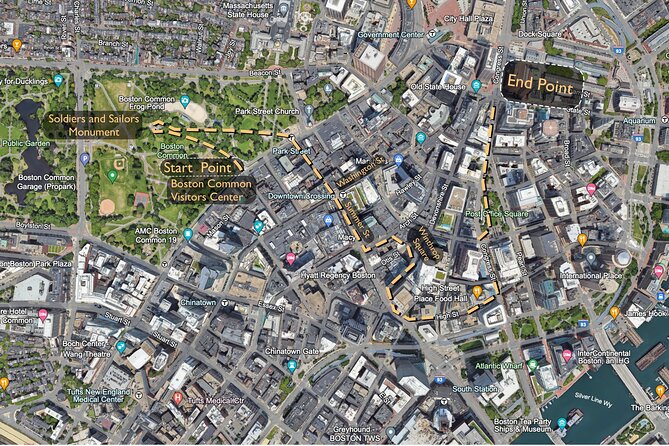
- Group Size, Walking Pace, and Where It Starts/Ends
- The Guide’s Style: Calm, Detailed, and Built for Real Understanding
- Stop-by-Stop: Boston Common to the Old State House
- Boston Common: The Start of the Story in One Place
- Soldiers and Sailors Monument: Civil War Symbols and a Back Bay View
- Back Bay Rebuilt: From a Bay to a Business Neighborhood
- The Embrace: MLK Jr., Coretta Scott, and a Boston Connection
- Park Street Church: Former Tallest, First Subway, and a Busy City Corner
- Downtown Crossing: The Burnt District and Three Centuries in One Walk
- Winthrop Square: A Short Break With Fountains and the Great Hall
- South Station: Rail, Highways, Tunnels, Boats, and Charlie
- Post Office Square: Cow Paths, Parking Prices, and Morse Around
- Old State House: A 300-Year Time Capsule of British Symbols
- Weather, Comfort, and What to Bring
- Should You Book Building Blocks of Boston Downtown Walking Tour?
- FAQ
- FAQ
- How long is the Building Blocks of Boston Downtown Walking Tour?
- What is the price per person?
- Where does the tour start and end?
- Is the tour offered in English?
- Do I need a paper ticket?
- How big is the group?
- Are there restrooms during the tour?
- Is admission included for the stops?
- What happens if the weather is bad?
- Is there free cancellation?
- Are service animals allowed?
Key things I’d mark on your map
- UltraHD scroll visuals: restored photos, movies, and sounds at key corners
- Small group size (max 16): better listening, easier questions, less rush
- Free admissions at the featured stops during your visit time
- A 10-minute reset with accessible restrooms and air conditioning
- Story threads through Boston’s layout: from filled-in Back Bay to MLK’s Boston connections
What $29.40 Gets You in Boston’s Downtown
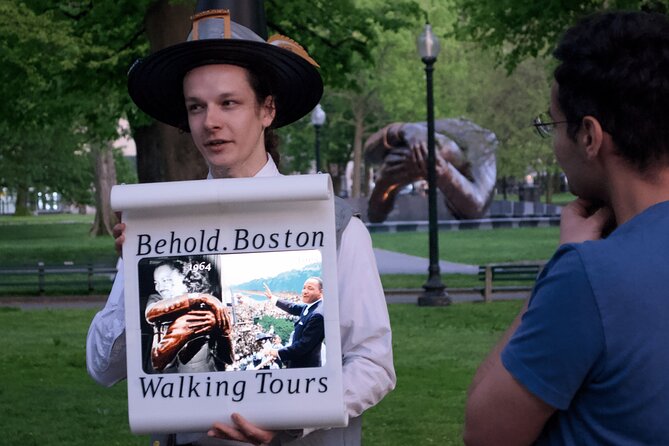
This tour is priced at $29.40 per person, and you’re not just buying a route—you’re buying interpretation. For a little over two hours, you get an expert guide plus an on-the-street presentation that uses a screen with restored photos, movies, and sounds. That’s how you turn “I’ve seen a building” into “I understand why it’s here.”
The value also comes from the focus. You’re not covering every street in downtown. You’re hitting a set of anchors—Boston Common, major monuments, the city’s religious and transit landmarks, and the Old State House—so you walk away with a clearer mental map of how Boston grew.
You can also read our reviews of more walking tours in Boston


Group Size, Walking Pace, and Where It Starts/Ends
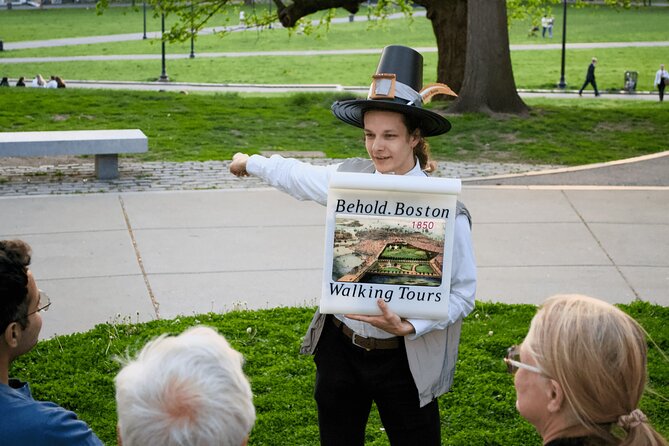
This walk runs about 2 hours 5 minutes and caps at 16 travelers. That matters. In a smaller group, the guide can actually keep track of who’s hearing the story, who wants a photo, and who’s curious about the “why,” not just the “what.”
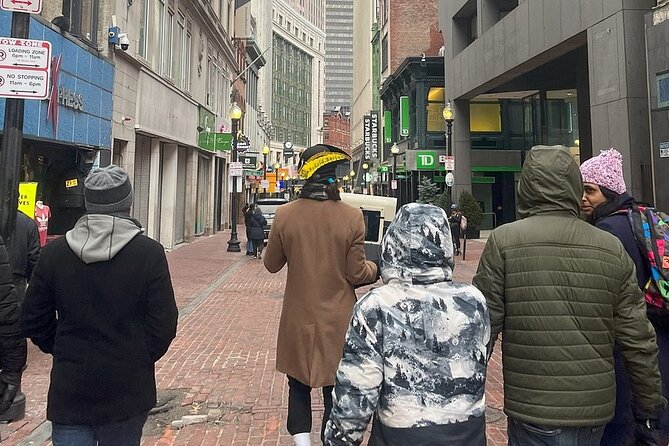
It starts at 139 Tremont St and ends at 11 Congress St. If you need to get back to the start point afterward, it’s listed as a roughly 15-minute walk. The tour is near public transportation and you’ll be dealing with typical city distances—so plan on comfortable shoes and water.
The Guide’s Style: Calm, Detailed, and Built for Real Understanding
The standout here is how the guide delivers information without turning the walk into a lecture. Arty’s approach is patient and kind, with details that are organized enough to stay in your head after you leave the sidewalk.
The other big help is the way the tour uses UltraHD visuals. When you’re standing in front of something modern—or something that looks familiar but has a complicated past—the screen support makes it easier to imagine the earlier version. It also keeps the stories grounded in what you’re looking at right now.
If you care about photos, you may get guidance on where to stand and how to frame the sites. That’s especially useful for spots like Boston Common edges, monument viewpoints, and the church-and-transit area around Park Street.
Stop-by-Stop: Boston Common to the Old State House
Boston Common: The Start of the Story in One Place
Boston Common sets the tone immediately. You’ll hear about Boston’s early roots, including an Englishman who lived alone on the land starting in 1625, and a bold figure who spent 10 weeks sailing through stormy seas to help seed the city. This isn’t just romantic storytelling—it’s a quick way to understand that Boston’s beginnings were shaped by survival and choices, long before the grand buildings.
You also get the “why” behind this being central. Boston Common isn’t just a park. It’s the reference point for the city’s early layout, and it anchors a lot of what comes next.
Practical note: you’ll spend about 15 minutes here. It’s enough time to hear the story, take a couple photos, and move on without feeling stalled.






Soldiers and Sailors Monument: Civil War Symbols and a Back Bay View
Next comes the Boston Soldiers and Sailors Monument, where you’ll reflect on its Civil War focus and the symbols connected to the people who helped establish Boston. What I like about this stop is that it connects a specific conflict to the broader community identity.
You’ll also get a strong sense of the city’s shape from here, including an excellent view into Back Bay. This matters because later you’ll learn how Back Bay went from water to land—standing where you can see that contrast makes it click faster.
Back Bay Rebuilt: From a Bay to a Business Neighborhood
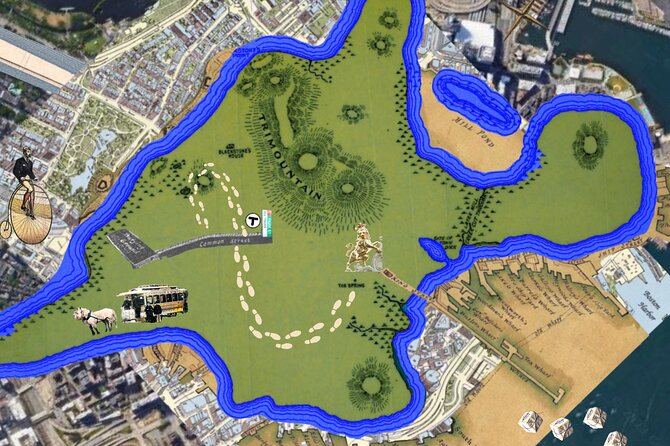
Then you’ll shift into the story of Back Bay, when it was literally a bay. You’ll see how it was filled in and turned into a beautiful neighborhood for business and residents.
This is one of those Boston facts that sounds technical until someone ties it to real streets and real building plans. Once you understand the “it used to be water” idea, the whole area feels less random. It becomes intentional city-making.
Drawback to keep in mind: this segment is short. If you’re the type who wants to linger at every corner, you’ll have to choose your favorite viewpoint and let the rest roll by.
The Embrace: MLK Jr., Coretta Scott, and a Boston Connection
At The Embrace, you’ll hear the story that inspired the sculpture commemorating MLK Jr. One of the key details: he met his wife Coretta Scott in Boston while studying at Boston University.
What makes this stop powerful is the link between a modern monument and a real life chapter. It’s not an abstract lesson. It’s a reminder that Boston University wasn’t just a campus—it was part of someone’s personal story that changed the world.
This stop is brief—about 5 minutes—so think of it as a focused emotional pause before you hit the heavier downtown layers.
Park Street Church: Former Tallest, First Subway, and a Busy City Corner
Near Park Street Church, you’ll hear a set of facts that instantly raise your eyebrows:
- It was the (former) tallest building in America
- It sits near the site of America’s first subway
- It’s tied to one of Boston’s busiest street areas
This stop is where Boston’s “old versus new” feels physical. A landmark that helped define an earlier era is now surrounded by modern traffic patterns, transit rhythms, and pedestrian flow.
The practical upside: because this area is naturally active, you’ll understand the city’s energy better than if you only tour quieter neighborhoods.
Downtown Crossing: The Burnt District and Three Centuries in One Walk
Downtown Crossing is where the tour zooms out to show how downtown changes over time. You’ll discover the transformation spanning three separate centuries, including the old nickname Burnt District after a devastating fire.
What I like here is that you’re not being asked to memorize dates. You’re being shown how one major event can reshape a whole commercial zone, which then sets the stage for what you see today.
This stop runs about 25 minutes, which is long enough to absorb it and still keep the day moving.
Winthrop Square: A Short Break With Fountains and the Great Hall
Then you hit Winthrop Square, and the tour gives you a real break. You get around 10 minutes among the fountains, plus you’ll pass by the Great Hall in the Winthrop Center, described as brand new.
On the walk here, you’ll also talk about education and writings that influenced Bostonians and the wider world. This is the kind of theme that makes Boston feel like more than architecture. It turns the tour from “where things are” into “how ideas spread.”
I appreciate this placement. By the time you reach Winthrop Square, your feet have done their job, so the break feels earned.
South Station: Rail, Highways, Tunnels, Boats, and Charlie
Next is South Station, and the story shifts to transportation. You’ll learn about Boston’s transformation through railways, highways, tunnels, and boats that passed by the waterfront. You’ll also get the explanation of what changed in the connection between North and South Station.
One of the fun points here is learning about Charlie from the subway cards. That little reference ties transit history to something you can recognize today.
This stop is about 15 minutes. It’s long enough to cover the big picture, but short enough that you’re still walking through the city while your mental timeline is fresh.
Post Office Square: Cow Paths, Parking Prices, and Morse Around
At Post Office Square, the tour keeps things light while pointing at real urban quirks. You’ll hear playful questions about whether the streets of Boston were once cow paths, and why parking can feel so expensive here.
Then you’ll get a crowd-dependent joke: you’ll either horse around or morse around. That kind of humor isn’t just comedy. It’s a way to keep attention during a dense downtown stretch, especially when you’re walking between major landmarks.
This stop runs about 15 minutes, giving you time for both the funny angle and the context behind the square’s role in downtown.
Old State House: A 300-Year Time Capsule of British Symbols
The final anchor is the Old State House, framed as Boston’s bright time capsule. You’ll learn about British symbols atop the oldest public building in Massachusetts, including the story of their removal and replica presentation as the building’s meaning evolved over 300 years.
This stop is a strong way to end because it ties together the whole walk:
- early roots at Boston Common
- power and identity in monuments
- city design changes like Back Bay
- social impact connected to MLK
- transit and downtown growth
- political symbolism at the Old State House
It makes downtown history feel like a connected chain, not isolated attractions.
Weather, Comfort, and What to Bring

This tour is weather-dependent, so if conditions are poor, it can be changed or refunded. When weather is good, you’ll still want to dress for outdoor walking and standing at stops.
Bring:
- Comfortable shoes for sidewalks and curb edges
- A light layer, since downtown weather can shift
- Water, especially in warm months
Also note that the tour includes a planned 10-minute break with accessible restrooms and air conditioning. That’s a big deal if you’re touring in summer or carrying a camera and phone all day.
Should You Book Building Blocks of Boston Downtown Walking Tour?
I’d book this if you want a fast, focused way to learn Boston downtown without getting stuck in a museum. The price is reasonable for what you get: an expert guide, small-group setting, and UltraHD screens that make the stories easier to follow.
Choose a different option if you hate walking, want a long stop-and-stare museum pace, or you’re traveling when you expect lots of bad weather. This tour works best when you can enjoy time outdoors and keep moving.
FAQ
FAQ
How long is the Building Blocks of Boston Downtown Walking Tour?
It runs about 2 hours and 5 minutes (approx.).
What is the price per person?
The price is $29.40 per person.
Where does the tour start and end?
It starts at 139 Tremont St, Boston, MA 02111, and ends at 11 Congress St, Boston, MA 02109.
Is the tour offered in English?
Yes, it is offered in English.
Do I need a paper ticket?
No. You’ll use a mobile ticket.
How big is the group?
The tour has a maximum of 16 travelers.
Are there restrooms during the tour?
Yes. There’s a 10-minute break with accessible restrooms and air conditioning.
Is admission included for the stops?
The tour descriptions indicate admission is free for the featured stops during your visit time.
What happens if the weather is bad?
If the tour is canceled due to poor weather, you’ll be offered a different date or a full refund.
Is there free cancellation?
Yes. You can cancel up to 24 hours in advance for a full refund.
Are service animals allowed?
Yes, service animals are allowed.
If you tell me when you’re going and what you care about most (transit, Revolutionary Boston, or MLK/people stories), I can help you decide if this route fits your day.