REVIEW · FREEDOM TRAIL TOURS
Freedom Trail Experience
Book on Viator →Operated by The Salem Night Ghost Tour · Bookable on Viator
That first step onto the Freedom Trail sets the tone. This tour strings together the sites behind the American Revolution in about 90 minutes, with clear storytelling along the way. I especially love how the stops connect into a single timeline, and how the guide experience can feel extra lively, from period costume moments to guides like Roseli and Sarah using a mic setup. The one thing to consider is that the walking is steady for 90 minutes, and there’s a spot at Granary Burying Ground where stairs and dog rules matter.
Best for value and understanding, this feels like an efficient way to get your bearings fast in historic Boston. You’ll pass major landmarks like Park Street Church, Old South Meeting House, and the Boston Massacre site without getting bogged down. Just remember: the Paul Revere House admission is not included, so you may want to plan for that extra cost if you want to go inside (Paul Revere House).
In This Review
- Key Things to Know Before You Go
- A $35 Freedom Trail Primer in About 2 Hours
- Park Street Church: Where My Country ’Tis of Thee Takes Root
- Granary Burying Ground: Revolution Leaders in One Place
- Quick Hits That Teach the Founding-Era Background
- King’s Chapel: Faith and Power, Over Centuries
- Boston Latin School: First Public School, Big Names
- Benjamin Franklin Statue: Revolution Thinking, Not Just Events
- Old South Meeting House to the Boston Massacre Site: The Story Gets Tense
- Old South Meeting House: The Tea Party Starting Point
- Boston Massacre Site: Colonial Costumed Guide Energy
- Old Corner Bookstore and Old State House: Words, Government, and Power
- Old Corner Bookstore: Where Paul Revere’s Ride Was Published
- Old State House: Colonial Government Center
- The Paul Revere House and Paul Revere Mall: Finish on the Midnight-Ride Story
- Paul Revere House: Admission Not Included, But the Origin Is Here
- Paul Revere Mall: Statues and the Old North Church Connection
- Guides, Pacing, and What Makes This Feel Easy
- Price and Value: Is $35 a Good Deal?
- Who Should Book This Freedom Trail Tour
- Should You Book This Freedom Trail Tour?
- FAQ
- How long is the Freedom Trail experience?
- What is the price per person?
- Where does the tour start and end?
- Is the tour offered in English?
- Is there a mobile ticket?
- Are there any admission fees included at specific stops?
- Are service animals allowed?
- Can dogs enter Granary Burying Ground?
Key Things to Know Before You Go
- A focused 90-minute route that hits the core Freedom Trail stops without feeling like a marathon
- Mostly free admission stops, with a couple of paid-included elements like Granary Burying Ground
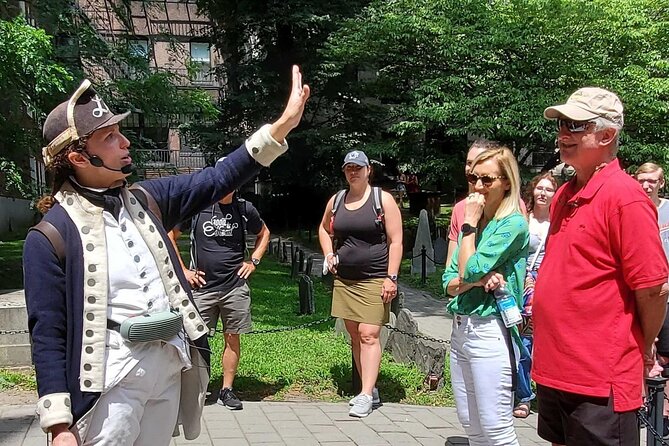
- Clear hearing setup on many runs, including guides using a speaker/mic style (Sarah is mentioned)
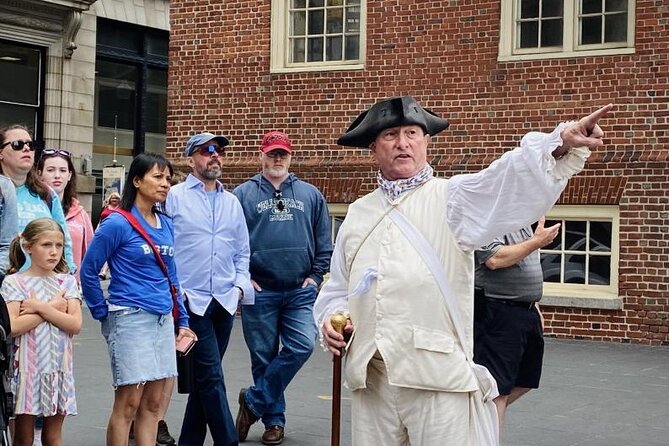
- Costume storytelling moments, like the Colonial Costumed Guide approach at the Boston Massacre site
- Limited group size (max 30), which keeps the pace manageable and the route organized
- Granary access details like a separate entrance option if stairs are an issue, plus strict dog rules there
A $35 Freedom Trail Primer in About 2 Hours
For $35 per person, you’re buying something that’s hard to get on your own: a guided thread. Freedom Trail sites are scattered enough that it’s easy to see buildings and miss the cause-and-effect. Here, you’ll get the who/what/why in the order that makes sense, plus short stop times that keep you moving.
The total duration is about 1 hour 30 minutes to 1 hour 55 minutes. In plain terms, that’s enough time to understand the big story and still feel good afterward, especially if you’re visiting multiple parts of Boston in the same day.
The tour is in English and uses a mobile ticket, so you don’t need to hunt for paper. The route also runs near public transportation, which helps if you’re combining this with other stops around the city.
You can also read our reviews of more tours and experiences in Boston.


Park Street Church: Where My Country ’Tis of Thee Takes Root
Your first major anchor is Park Street Church. This isn’t just any old church stop. It’s tied to the origin of the song My Country ’tis of Thee, and it also sits on a very important American Revolution site.
What I like about starting here is momentum. In many Boston walks, people start with famous buildings and end with random facts. Here, the opening quickly tells you what kind of story you’re about to hear: not just dates, but symbols, songs, and civic life.
This stop is short—around 5 minutes—so don’t expect a long interior visit. The value is in setting context before the route moves into graves, meeting houses, and government buildings.
Granary Burying Ground: Revolution Leaders in One Place
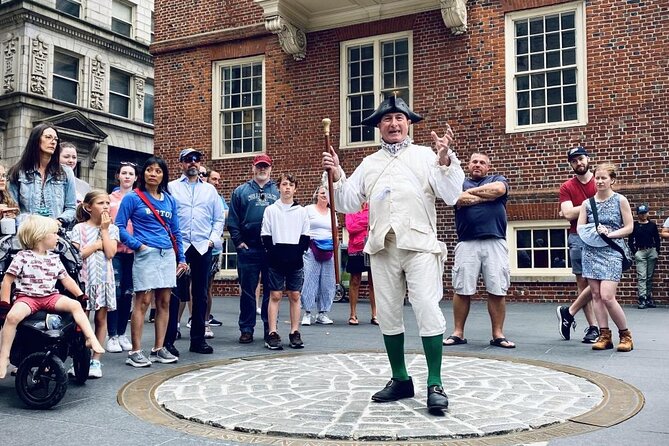
Next comes Granary Burying Ground, and this is where the Freedom Trail really starts to feel physical. It’s made up of multiple important stops, and it includes major Revolutionary figures such as Samuel Adams, Paul Revere, and John Hancock.
You’ll get about 20 minutes here, with admission included. That matters because it’s the kind of place where you need time to actually notice names, dates, and relationships. When you’re guided, the cemetery becomes more than a list of famous people. It becomes the human side of the Revolution.
Two practical notes you should plan for:
- Dogs cannot enter Granary Burying Ground. If you’re bringing a pup, you’ll want to know this ahead of time.
- If you cannot climb stairs, there’s a separate entrance option for entering Granary Burying Ground. That’s a big deal for anyone who needs easier access.
If you’re sensitive to uneven ground or you’re moving slowly, this is still workable because the stop is time-based and the group size is capped. Just don’t rush yourself here—this is one place where listening and looking at stones go together.
Quick Hits That Teach the Founding-Era Background
After Granary, the pace stays easy, but the meaning keeps stacking.
King’s Chapel: Faith and Power, Over Centuries
You’ll stop at King’s Chapel for about 2 minutes. It’s described as Boston’s first Anglican church in a Revolutionary town, and it connects directly to 300 years of stories. The quick timing works because the tour’s real goal here is framing: how older institutions persisted while revolutionary ideas grew.




Boston Latin School: First Public School, Big Names
At Boston Latin School (about 5 minutes), you’re in the realm of education and influence. It’s listed as the first public school in America, and the point for you is simple: some American founding figures were educated here. Even in a short stop, it adds a layer beyond politics—it shows how society trained future leaders.
Benjamin Franklin Statue: Revolution Thinking, Not Just Events
Then comes the Statue of Benjamin Franklin (about 5 minutes). This is an easy, quick connection to his role in Boston during the American Revolution. It’s not meant to be a long portrait session. It’s a reminder that the Revolution wasn’t only muskets and meetings. It was also ideas, writing, and problem solving.
These stops are mostly free and brief, but together they help you understand what was happening around the major flashpoints.
Old South Meeting House to the Boston Massacre Site: The Story Gets Tense
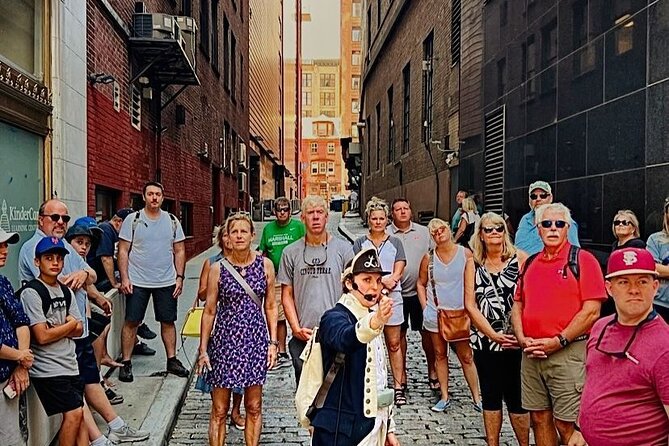
This part of the walk is where the Revolution feels loud.
Old South Meeting House: The Tea Party Starting Point
At Old South Meeting House, you’ll hear about the Boston Tea Party starting here. The stop is around 5 minutes, and the quick pace is actually a strength because you’re moving toward the next dramatic moment. The tour keeps you from getting stuck in one theme too long.
What makes this valuable for you is that you don’t have to piece it together yourself. You get the storyline and you see how meeting houses and public spaces shaped action.
Boston Massacre Site: Colonial Costumed Guide Energy
Then you’ll reach the Boston Massacre site for about 5 minutes. The notable detail here is that you get the story with a Colonial Costumed Guide.
This is one of those moments where a good guide changes the whole feel of the stop. If you’re thinking, I might not remember the date later—exactly. The value is the feeling and the cause-and-effect, delivered in a visual way. A costume also helps you keep listening even if you’re tired.
Between Old South and the Massacre site, you can sense how quickly tensions rose—then you move on to how those events were recorded and published.
Old Corner Bookstore and Old State House: Words, Government, and Power
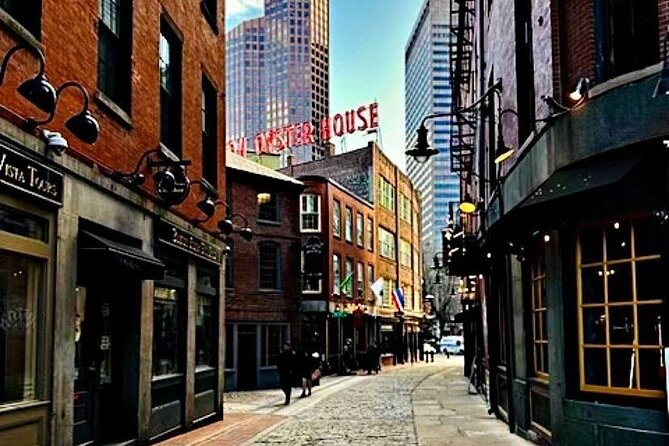
The Revolution happened in public spaces, but it also happened on paper.
Old Corner Bookstore: Where Paul Revere’s Ride Was Published
At the Old Corner Bookstore, the stop is about 5 minutes. You’ll learn about Paul Revere’s Ride and the fact that it was originally published at this location.
This is a smart stop for you if you like understanding how ideas spread. Posters, poems, and printed images moved people. When a guide points out where something was published, you start to see the Revolution as a media story too, not just a battlefield story.
Old State House: Colonial Government Center
Next is the Old State House for about 10 minutes. It’s described as the center of colonial government and it’s near the site of the Boston Massacre.
The longer timing here helps because government buildings are all about power and decisions. If you only glance, you miss how important they were. With a guide, you get why that location matters, especially right next to such a tense event.
The Paul Revere House and Paul Revere Mall: Finish on the Midnight-Ride Story
You end in Boston’s Historic North End, which is a nice way to close: the story lands where people associate Revere’s ride with real place.
Paul Revere House: Admission Not Included, But the Origin Is Here
The Paul Revere House is Boston’s oldest residential house from 1680. The tour describes it as the starting place of the famous midnight ride. You’ll spend about 15 minutes here, but admission is not included.
This is a key planning point. If your priority is seeing inside the house, budget time and money for entry on your own. If your priority is the outdoor storytelling and photos, you’re still in a good spot, since the tour includes the major narrative link.
Paul Revere Mall: Statues and the Old North Church Connection
Finally, there’s Paul Revere Mall for about 10 minutes, with admission included. It includes a famous Paul Revere statue and the nearby Old North Church connection.
This ending works because it gives you an image to carry home: the midnight ride isn’t just a legend. It’s tied to a physical setting you can stand in.
Guides, Pacing, and What Makes This Feel Easy
One reason this Freedom Trail experience scores high is the way guides handle the flow.
You’ll often find guides using a mic and speaker setup to keep you hearing clearly—Sarah is specifically mentioned with that approach. That matters because outdoor Boston can be noisy, and short stop times mean you can’t afford to miss half the story.
If you get a guide like Jeremiah Poope, the style described is friendly and fun, with a personable delivery that keeps the group engaged. Other guides mentioned include Roseli, Geoff (with period clothing), and Elaine, also nicknamed Mother Goose, who is described as an entertaining storyteller who even sang My country ’tis of thee while explaining its history.
And yes, rain can happen. One account notes that rain didn’t derail the experience, which is reassuring if you’re traveling in shoulder season or around Boston’s famous weather swings.
The walking is described as an easy amount, and the group size max is 30 travelers, which helps keep things organized. Still, wear comfortable shoes. This is a historic core where you’ll be on sidewalks and cross-street moments for most of the two hours.
Price and Value: Is $35 a Good Deal?
At $35 per person, you’re paying for four things:
1) a guided story that links sites into a timeline
2) reduced guesswork about what to look for
3) included admission at key stops like Granary Burying Ground (and Paul Revere Mall)
4) a short, efficient route that fits into a day of sightseeing
If you’re the type who likes to learn by standing in place and listening, this price makes sense. If you only want a free self-guided walk and you already know the details, you could spend less on a map and do it solo. But most first-time visitors to Boston’s core benefit from a guide who can explain what matters and what’s just background noise.
Also, some stops are free, which keeps your overall costs from ballooning. The one major exception is the Paul Revere House, where admission is not included.
Who Should Book This Freedom Trail Tour
This fits best if you:
- are new to the Freedom Trail and want the story in order
- like short stops rather than long museum-style visits
- want a group tour with a cap of 30
- prefer English narration and a mobile ticket approach
It’s also a solid choice for families or mixed ages because the pace is described as manageable. If you or someone in your group needs easier access for the Granary stairs, the separate entrance option is built into the experience.
Should You Book This Freedom Trail Tour?
I’d book it if you want to understand Boston quickly and leave with a mental map of the Revolution. The mix of major landmarks, a strong cemetery stop, and storytelling touches like the costumed Massacre site makes it more than just a checklist.
Skip it only if you’re set on doing everything yourself, you already know the Freedom Trail story very well, or you don’t want any extra audio and guidance. Also, if the Paul Revere House interior is your main goal, plan for admission since it’s not included here.
If you’re aiming for value, clarity, and a clean way to see the highlights in about two hours, this is a good bet.
FAQ
How long is the Freedom Trail experience?
It runs about 1 hour 30 minutes to 1 hour 55 minutes (approx.).
What is the price per person?
The price is $35.00 per person.
Where does the tour start and end?
It starts at 120 Tremont St, Boston, MA 02108 and ends at The Paul Revere House, 19 N Square, Boston, MA 02113.
Is the tour offered in English?
Yes, it is offered in English.
Is there a mobile ticket?
Yes, the experience uses a mobile ticket.
Are there any admission fees included at specific stops?
Granary Burying Ground and Paul Revere Mall are listed as having admission included. Paul Revere House admission is not included.
Are service animals allowed?
Yes, service animals are allowed.
Can dogs enter Granary Burying Ground?
No. Dogs cannot enter the Granary Burial Ground.