REVIEW · GHOST & HAUNTED TOURS
Haunted Boston’s Historic Streets Walking Guided Tour
Book on Viator →Operated by ExperienceFirst · Bookable on Viator
Boston has a way of making stories feel real. This 90-minute Haunted Boston walk ties ghost lore to real sites—executions, memorials, and old graveyards—so you’re not just hearing spooky talk. I love how the tour keeps things moving with short stops and clear historical anchors at each location, and I also like that it ends at the Old State House area, which helps you keep the whole story in view. One thing to consider: it’s more walking than it is a sit-and-listen show, and you’ll do lots of street-crossing along the way.
The route hits Boston Common, the Massachusetts State House, Granary Burying Ground, King’s Chapel Burying Ground, and a stop connected to Nathaniel Hawthorne’s ghostly experience. Most people can join, the group is capped at 20, and you’ll get a professional, entertaining local guide speaking English. You’ll also get a mobile ticket, which makes it easier to roll out on time.
In This Review
- Quick hits before you go
- Meeting at Shaw Memorial and walking to the Old State House
- Boston Common’s hanging tree: where the tour turns from spooky to real
- The Massachusetts State House and Mary Dyer’s martyr connection
- Hawthorne’s reverend ghost: Boston literature meets the supernatural
- Granary Burying Ground: the Declaration signers at rest
- King’s Chapel Burying Ground: Boston’s oldest cemetery mood
- How the guide turns a 20-person walk into a real experience
- Price and value: what $34 buys in 90 minutes
- Weather, street crossings, and how to get comfortable fast
- Who this tour suits best
- Should you book Haunted Boston’s Historic Streets walking tour?
- FAQ
- How long is the Haunted Boston historic streets walking tour?
- How much does the tour cost?
- Where does the tour start and end?
- What language is the tour offered in?
- Is the ticket mobile?
- How big is the group?
- What stops are included?
- Is admission required at the stops?
- Can I get a refund if plans change?
- Is the tour suitable for most people, and are service animals allowed?
Quick hits before you go
- A compact 1 hour 30 minutes route that squeezes spooky lore and real landmarks into one easy chunk
- Small group size (max 20) means you’re less likely to get lost in the crowd
- Boston Common’s hanging tree site gives the tour a darker, grounded start
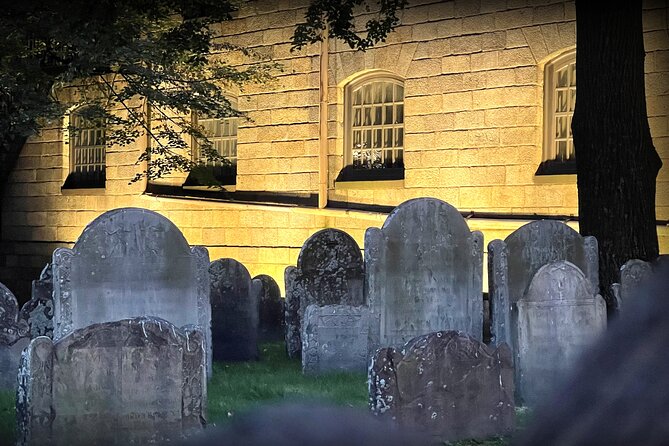
- Granary and King’s Chapel graveyards add the kind of old-world atmosphere ghost stories feed on
- Nathaniel Hawthorne’s first reverend ghost stop connects the supernatural to Boston’s literary past
- The guide matters: when sound is tough, standing closer helps a lot
Meeting at Shaw Memorial and walking to the Old State House
You start at the Robert Gould Shaw and the 54th Regiment Memorial at 26 Beacon St. That’s a smart place to begin because it’s near the core of downtown Boston, and it sets you up to walk into the historic grid without dealing with long subway transfers. The tour ends at the Old State House at 206 Washington St, so you finish in another heavy-hitter landmark area that’s easy to build the rest of your day around.
This is billed as an English-speaking guided experience with a professional local guide. The group maximum is 20, which is a big deal for a ghost tour. You want enough people to keep the energy up, but not so many that the guide has to shout over everyone. I’d plan to arrive a few minutes early so you’re not rushing into the group when the stories start.
You’ll also want to be ready for frequent movement. One negative experience highlighted that the tour can feel like lots of crossing and not enough time talking. That doesn’t mean it’s always like that, but it’s a good reminder: this is a walking tour first, and a storytelling tour second.
You can also read our reviews of more walking tours in Boston

Boston Common’s hanging tree: where the tour turns from spooky to real
The first stop is Boston Common, with a focus on the hanging tree and early executions. This is a powerful way to launch a haunted walking tour because it grounds the supernatural in something that actually happened. Even if you’re not trying to be scared, the setting does the work: you’re standing in a place tied to punishment and public spectacle, and that context changes how ghost stories land.
This stop is scheduled for about 20 minutes. That extra time matters because you’re not just making a quick photo stop. You get room for the guide to connect the location to the themes of fear, rumor, and memory that fuel ghost lore. Plus, Boston Common is the kind of landmark where you can reset your sense of direction. You’re in a central open space, so you’ll know where you are before the tour tightens into narrower, more historic stretches.
If you’re sensitive to darker topics, this is the stop to pay attention to. The hanging tree theme is not gentle, even when told in a story-forward way. It’s also why I think this tour works best when you like history that comes with teeth, not just spooky vibes on a loop.
The Massachusetts State House and Mary Dyer’s martyr connection
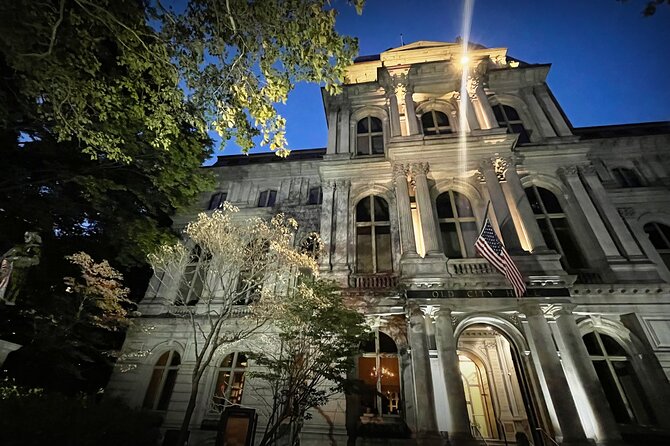
Next up is the Massachusetts State House, with a stop tied to the statue of martyr Mary Dyer. This is one of those moments where the tour’s “haunted” label can help you pay attention to something you might otherwise gloss over: public belief, public punishment, and how people remembered the dead.
The time here is around 15 minutes. That’s enough for a guide to explain why Mary Dyer’s story belongs in the same conversation as other eerie legends. In a ghost tour, you’re usually hearing about haunting as a metaphor—guilt, unresolved conflict, and the way communities carry stories forward. A martyr statue is a concrete version of that idea, and it fits the tour’s tone.
Practical note: statehouse areas are often busy with foot traffic. To get the most out of the stop, don’t linger too far from the guide when the story is at its most specific. Ghost tours reward focus. You don’t want to miss the details that make the stop feel more than just a statue beside a busy street.
Hawthorne’s reverend ghost: Boston literature meets the supernatural

One of the more intriguing stops is where Nathaniel Hawthorne first saw a reverend ghost. This is the tour’s pivot: the story moves from executions and memorials toward something more like folklore and literary haunting.
Even though the exact time block isn’t listed in the same way as the other stops, this portion fits into the tour’s broader pattern: short landmark pause, story explanation, then quick movement to the next site. The Hawthorne connection is valuable because it shows how ghost stories can travel through culture. It’s not only about fear happening in the street; it’s about fear getting written down, repeated, and reshaped until it becomes part of Boston’s identity.
If you like ghost tales that have a cultural backbone—meaning they’re tied to writing, rumor, and belief systems—this stop is likely to be a highlight. It also helps balance the darker locations earlier and later, since literature often brings a different kind of tone: eerie, thoughtful, and story-driven.
Granary Burying Ground: the Declaration signers at rest
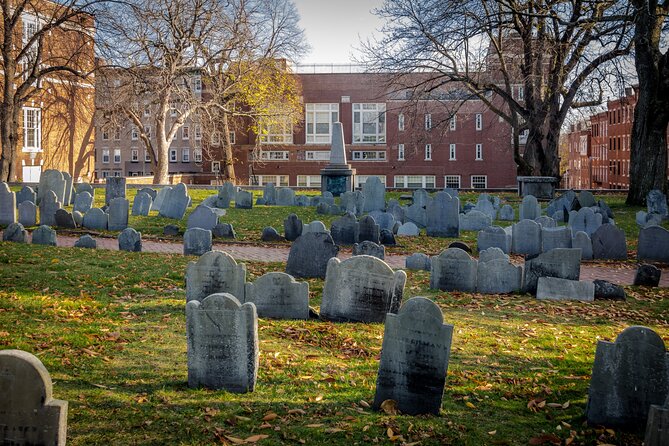
Granary Burying Ground is one of the best-known graveyards in the city, and this tour uses it well. The focus here is on the final resting place for three signers of the Declaration of Independence. That detail matters because it turns a cemetery from “creepy for a photo” into a place with political weight.
This stop is around 15 minutes. The value of that timing is that you get to connect the mood—silent stone, old city air—with specific historical significance. When a guide ties names and eras to the surrounding space, the cemetery stops being just background and becomes part of the story structure.
I also like that the tour includes this stop because it expands what haunted can mean. Some ghost tours focus only on spectral sightings. This one suggests haunting can also be about legacy: how the living remember the people they built a nation around. Even if you’re not a cemetery person, the Declaration signers give you a clear reason to pay attention.
If you want a smoother experience here, bring your curiosity. Look for the guide’s cues on what to notice. Cemeteries are easy to wander in. A good guide keeps you pointed toward the meaningful stones.
You can also read our reviews of more guided tours in Boston






King’s Chapel Burying Ground: Boston’s oldest cemetery mood
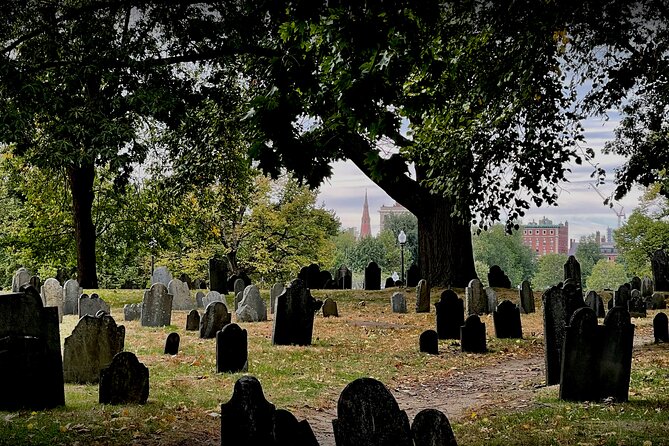
The last listed stop is King’s Chapel Burying Ground, described as the oldest cemetery in Boston. This is a classic ghost-tour ingredient because age equals atmosphere. Older cemeteries tend to feel more layered: there’s a sense of continuous presence, like the stories have been standing there for a long time.
You’ll get about 15 minutes here. That’s enough to absorb the setting and let the guide close the loop on the theme of memory. If earlier stops introduced the idea of punishment and belief, this one leans into time itself—how legends stick, change, and become part of a city’s daily landscape.
This is also a good place to watch how the guide ends the story. A strong ending turns a walking tour into a lasting picture you can carry with you. Even for skeptics, “oldest cemetery” plus a focused guide can do a lot to shift your mood from dismissive to intrigued.
How the guide turns a 20-person walk into a real experience

The tour is only as good as the person telling the story, and the guidance quality here is a major part of the overall value. The most praised experiences tied the tour to a guide named Charlie. The common thread in that kind of feedback is easy conversation: a guide who’s lively, answers questions, and keeps stories clear instead of dumping facts like homework.
Sound is one practical issue that can affect enjoyment. One experience mentioned that the guide was hard to hear and that a microphone would help future tours. Here’s the takeaway: if you’re near the front, you’ll likely get the best audio. If the group is standing unevenly, don’t be afraid to shift to a spot where you can actually catch the details.
One caution from the real world: there’s also been at least one report of a guide not showing up and refund trouble after contact with the booking platform. You can’t eliminate that risk entirely, but you can reduce stress. I’d make sure you have the exact meeting address saved, arrive early, and keep an eye on the tour start time.
Price and value: what $34 buys in 90 minutes
At $34 per person for about 1 hour 30 minutes, this is priced as a mid-range walking tour. The value comes from three things working together:
1) Local professional guide: you’re paying for interpretation—how the guide connects sites like Boston Common and Granary Burying Ground to the ghost theme. Without that, you’d just be walking through landmarks.
2) The stops are concentrated: the route moves through major historic anchors instead of spreading you across the city. That keeps your time usable, especially if you’re doing other Boston plans the same day.
3) You’re not paying extra admission at each location: the stop descriptions specify free admission tickets for the listed stops. That makes the total outlay predictable. You can spend the day without wondering what the next line-item will be.
If you’re the type who enjoys short, story-driven outings and likes seeing places with context, $34 can feel very fair. If you want long narration or minimal walking, you might feel the time compression. This tour is designed to move, and it uses that pace to keep you engaged.
Weather, street crossings, and how to get comfortable fast
Ghost tours sound calm until you’re standing outside in cold or rain. One experience noted it was pouring and freezing, and the guide kept enthusiasm going. That’s not unusual in Boston, so plan for weather that changes fast.
Wear layers you can peel on the go. Bring a rain layer you don’t mind getting splashed with. And expect street crossings. Even positive experiences can include a lot of moving between landmarks, and a negative note specifically complained about feeling like there were too many crossings and not enough talking time. Either way, the smart move is to be ready for stop-and-go pacing.
If you get motion-sick in stop-and-start city walking, give yourself extra time to move through crowds and keep your pace steady. Don’t sprint between stops. That’s not how these tours work best, and it makes it harder to hear the guide when you’re rushing.
Who this tour suits best
This is a strong fit if you want a spooky-but-historic Boston snapshot. I think you’ll enjoy it most if you:
- like ghost stories tied to real sites and real names
- want a short afternoon or evening plan that finishes near another major landmark
- enjoy hearing context that changes how you see Boston Common and the graveyards
It’s probably less ideal if you hate walking or if you prefer a mostly seated, low-movement experience. It’s also not the kind of tour where you’ll get to linger for a long self-guided museum-style visit at each stop, because the tour is built around brief story windows.
Should you book Haunted Boston’s Historic Streets walking tour?
I’d book it if you’re excited by the idea of ghost lore sitting on top of Boston’s actual landmarks—Boston Common’s hanging tree start, Mary Dyer’s statue stop, Hawthorne’s reverend ghost connection, and then the graveyards. The small group size and the fact that the guide experience is often praised for being engaging are big reasons to feel confident.
I’d hesitate if you want lots of listening time with minimal walking, or if you’re very hard of hearing and tend to struggle with street-noise. Also, because there has been at least one report of a no-show situation, I recommend arriving early and keeping your meeting-point info handy.
If you’re ready for a brisk, story-led walk through the city’s darker corners, this tour is the kind of experience that can turn a normal stroll into something you’ll remember later that night.
FAQ
How long is the Haunted Boston historic streets walking tour?
It runs about 1 hour 30 minutes.
How much does the tour cost?
The price is $34.00 per person.
Where does the tour start and end?
It starts at the Robert Gould Shaw and the 54th Regiment Memorial, 26 Beacon St, Boston, MA 02108, and ends at the Old State House, 206 Washington St, Boston, MA 02109.
What language is the tour offered in?
The tour is offered in English.
Is the ticket mobile?
Yes, it uses a mobile ticket.
How big is the group?
The maximum group size is 20 travelers.
What stops are included?
The tour includes Boston Common (hanging tree site), the Massachusetts State House (Mary Dyer statue), a stop connected to Nathaniel Hawthorne’s first reverend ghost sighting, Granary Burying Ground, and King’s Chapel Burying Ground.
Is admission required at the stops?
Admission tickets are listed as free for the stops provided.
Can I get a refund if plans change?
Free cancellation is available up to 24 hours in advance for a full refund.
Is the tour suitable for most people, and are service animals allowed?
Most travelers can participate, and service animals are allowed.