REVIEW · FREEDOM TRAIL TOURS
Walk the Historic Freedom Trail with Costumed Guide
Book on Viator →Operated by Boston Town Crier - Tours of Freedom Trail · Bookable on Viator
History on the street, with a character leading the way. This Freedom Trail walk mixes period-dress storytelling with a tight 90-minute route that hits major landmarks. I like the costumed guide approach, and I like how the schedule leaves you breathing room for the rest of your day.
The only real downside is sound. On busy streets you may have trouble hearing at times, so plan to stay close to the guide when traffic gets loud.
In This Review
- Key highlights you’ll actually feel
- The Freedom Trail, trimmed to the best 90 minutes
- Costumed guide storytelling that keeps you watching the curb, not your phone
- A short route with real stamina: what 90 minutes feels like
- Stop-by-stop: what each landmark teaches you
- Park Street Church: where Boston’s religious shifts show up
- Boston Common: the early heart of the city
- Massachusetts State House: built power, claimed consent
- Granary Burying Ground: history you can literally walk through
- King’s Chapel: Church of England roots in Boston
- Boston Latin School: education as a founding idea
- Old South Meeting House: the pre-Tea Party spark
- Old State House: the British-to-American handoff
- Boston Massacre Site: where the story got its famous image
- Faneuil Hall Marketplace: the tour’s conclusion and the revolution’s public face
- Logistics that affect your experience more than you’d think
- Where you start and end
- Getting there
- Mobile ticket
- Small group size and hearing the guide
- Weather, shoes, and how to dress so the tour feels easy
- Is it worth $30? Here’s how I judge the value
- Who should book this Freedom Trail walk (and who might not)
- Quick decision: should you book?
- FAQ
- FAQ
- How long is the Freedom Trail walk?
- What does it cost?
- What language is the tour offered in?
- Where do I meet the guide and where does it end?
- What sites are included on the route?
- Are admission tickets included?
- Is it a strenuous walk?
- How big are the groups?
- What happens if the weather is bad?
- Can I cancel for free?
- Are service animals allowed?
Key highlights you’ll actually feel
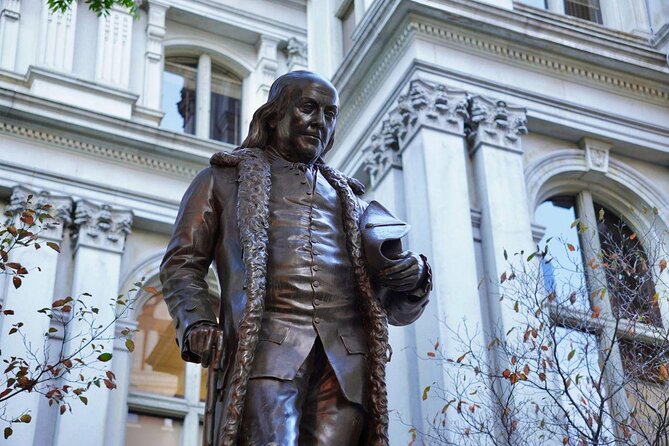
- Costumed, period-dress guide who narrates as you walk between sites
- 90-minute, gentle pace that works for time-tight trips
- Admission tickets included at each of the main stops
- A high-value route covering 11 of the 16 Freedom Trail sites
- Small group size capped at 45 travelers for better flow
The Freedom Trail, trimmed to the best 90 minutes
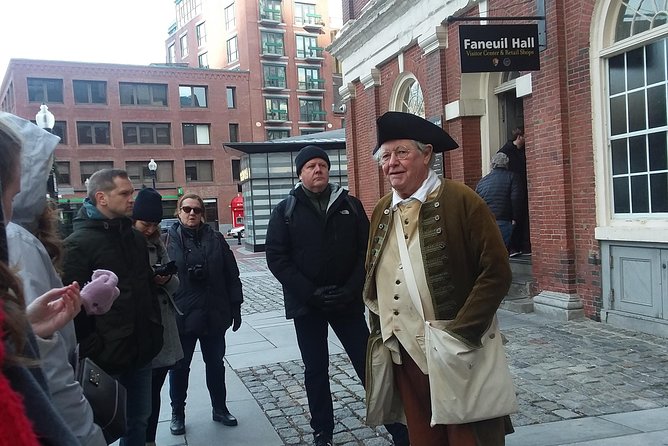
If you’re thinking about the Freedom Trail but you don’t want a long, full-day commitment, this walk is built for you. It is a 1 hour 30 minute guided stroll, and it tends to focus on the most memorable stops rather than every single marker. That matters, because downtown Boston is not only historic, it’s also busy—so a shorter route helps you keep the experience fun instead of exhausting.
Price is $30 per person, which is reasonable for a guided walk. The real value kicker is that you’re not only paying for commentary. You also get admission ticket included for each stop on the route, which removes a layer of logistics and cost you would otherwise have to manage on your own.
You can also read our reviews of more walking tours in Boston



Costumed guide storytelling that keeps you watching the curb, not your phone
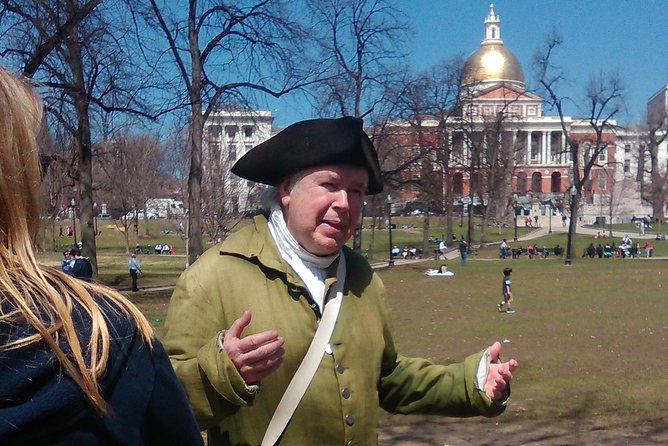
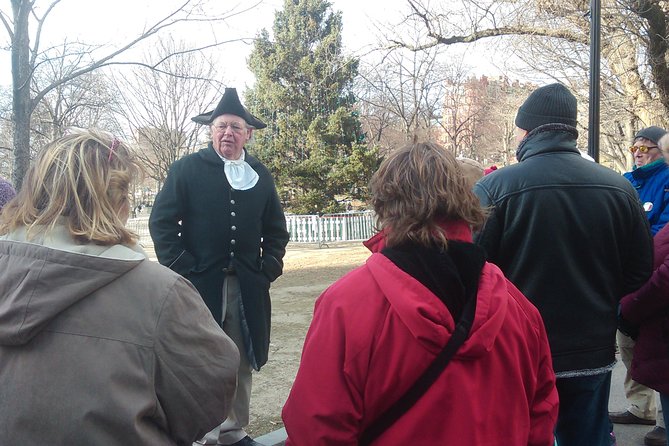
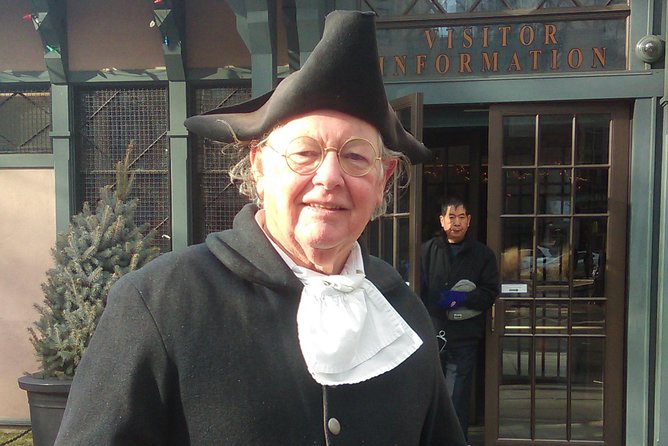
One of the best things about this tour format is the guide. The narration isn’t generic “and then we turned left” history. The tour uses a period-dress, costumed approach, and that visual cue helps you connect details to the era you’re hearing about.
In the reviews, names came up like James Otis, a long-time Freedom Trail guide who’s known for bringing the past to life. Other guides also got praise, including Thomas, Jeff, Steven, and Adri. You shouldn’t expect the same exact guide every time, but the consistency is that the guides use humor and personality to keep people listening.
That style is more than entertainment. It helps you learn the story of Boston in the same order the revolution unfolded. You’ll hear why certain buildings mattered, and you’ll start linking them—church to common, meeting house to marketplace—without needing to memorize dates.
A short route with real stamina: what 90 minutes feels like

This is a gentle walk, with a lot of standing and some walking between stops. Based on reported pacing, the walk is kept to less than a mile, and you cover 11 of the 16 Freedom Trail sites. That’s why families and time-crunched visitors often choose it.
Who it suits best:
- First-time Boston visitors who want a fast orientation
- History fans who want the big moments explained clearly
- Families with teens or mixed ages who might not handle a longer tour
- Anyone trying to fit Boston history between other plans
Who should think twice:
- If you struggle with repeated standing for short segments, you might find it a bit more tiring than it sounds. The pace is manageable, but it’s still a walking tour.
Stop-by-stop: what each landmark teaches you
Park Street Church: where Boston’s religious shifts show up
You start at Park Street Church. The tour frames it as a site where early Puritanism evolved toward Protestant abolitionist ideas. Even if you only catch a few points, it gives you a useful theme: Boston’s early debates were never only political—they were religious and moral too.
There’s also an included admission ticket, so you’re not stuck outside scanning plaques. You get a focused window to connect the building to the story the guide is telling.
You can also read our reviews of more guided tours in Boston





Boston Common: the early heart of the city
Next is Boston Common, where you’ll hear the early history of the city unfold. This stop works because it’s a real public space, not a museum hallway. You’re in an area locals still use, and the guide helps you see it as the city’s civic center rather than just a park.
Again, you receive admission included, which can save time if you’re trying to keep the whole tour smooth.
Massachusetts State House: built power, claimed consent
You then reach the Massachusetts State House, built in 1795. The tour highlights an idea that still feels modern: government is illegitimate without the people’s consent. That message gives context for why revolution-era ideas didn’t just disappear after 1776. They evolved into governance.
This is a quick stop—about 5 minutes—so the guide’s job is crucial here. Listen closely, because the point is interpretation, not lingering.
Granary Burying Ground: history you can literally walk through
This is one of the most striking stops: Granary Burying Ground, which is over 350 years old. The tour notes that it holds more signers of the U.S. Constitution than anywhere else in America. That claim, delivered on-site, makes the cemetery feel like a civic archive.
It’s allotted 15 minutes, so you have more time than most stops. Still, it’s a graveyard—so expect to spend time standing and looking. If you’re sensitive to quiet, cold, or long pauses, this is the one to consider.
King’s Chapel: Church of England roots in Boston
Then comes King’s Chapel, originally the Church of England, built around 1688. The guide uses this place to show how different Christian traditions shaped the early city. It’s a good reminder that “Boston history” includes cultural and institutional change, not only battles.
You’ll get another included admission ticket at this stop, which keeps the pace from turning into a sightseeing queue.
Boston Latin School: education as a founding idea
You’ll see Boston Latin School, known as the oldest public school in the United States, founded in 1635. This quick stop is short, but it’s powerful. It pushes the story beyond politics and war, showing that Boston’s leaders invested in education early.
At about 5 minutes, you won’t learn everything in one moment. The value is that you’ll know where the story goes next if you want to read more after the tour.
Old South Meeting House: the pre-Tea Party spark
Old South Meeting House is a standout. The tour points out meetings held here, including a meeting just before the Boston Tea Party in 1773. That detail matters because it connects a dramatic event to the organizing that came right before it.
You get about 10 minutes here, plus admission included. That combination helps you understand the building as a stage for collective decision-making.
Old State House: the British-to-American handoff
At Old State House (built 1713), the tour tells you what makes it crucial: it was first controlled by the British, then taken over by Americans in 1775. This is where the revolution stops being an idea and becomes a timeline you can see in a single location.
It’s a short 5-minute stop, but it’s also a great anchor point. Once you’ve heard the takeover story, the rest of the route feels like it’s marching toward Faneuil Hall.
Boston Massacre Site: where the story got its famous image
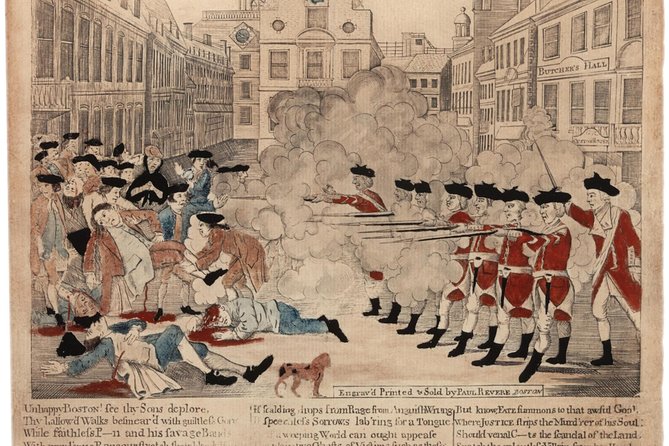
Then you reach the Boston Massacre Site, where five Americans were killed by British soldiers in 1770. The tour also notes that Paul Revere made a famous engraving of this site. That’s a key detail because it explains how events became propaganda and how images shaped public opinion.
You get about 10 minutes here, which is enough time for the guide to connect the incident to the larger path toward conflict.
Faneuil Hall Marketplace: the tour’s conclusion and the revolution’s public face
Your walk ends at Faneuil Hall Marketplace. The tour presents it as a final stop that ties the civic story together. You also see a statue of Samuel Adams, described as a founder of the revolution.
This ending is practical. Faneuil Hall is an easy place to transition into food, shopping, or a self-guided stroll toward the North End.
Logistics that affect your experience more than you’d think
Where you start and end
Meet at 139 Tremont St, Boston, MA 02111, and the tour finishes at Faneuil Hall Marketplace. Since it’s a point-to-point walk, you’ll want to plan how you’ll get from your last stop to your next activity.
Getting there
The tour is near public transportation, which helps a lot in downtown Boston. If you’re pairing this with other stops, you can likely hop on foot afterward without too much backtracking.
Mobile ticket
You’ll use a mobile ticket. This is a small thing, but it reduces stress on the day of travel.
Small group size and hearing the guide
The tour max is 45 travelers, which is reasonably small for a city-center walk. One theme that comes up is that street noise can interfere with hearing, especially near construction or heavy traffic. The guide setup includes sound support (guides are miked), and you’ll hear better if you position yourself closer to the speaker. If you have hearing concerns, it’s smart to stand near the front.
Weather, shoes, and how to dress so the tour feels easy
This experience requires good weather. When the forecast is iffy, dress for it and remember you’ll be outside. You’ll also want comfortable shoes because you’ll be on your feet with repeated short segments.
If you’re visiting in warmer months, plan for hydration and sun. If it’s colder or wet, prioritize grip and layers; Boston sidewalks can be slick.
Is it worth $30? Here’s how I judge the value
At $30, this tour competes well with other guided history options because:
- You get guided commentary by a costumed guide
- You cover a large share of the Freedom Trail in 90 minutes
- Admission tickets are included at the stops
- The route is designed to be manageable without turning into a long slog
It’s not trying to replace the full, longer Freedom Trail experience. One review notes that the full trail version runs about 3 hours and there’s a private option for the full route. If you want every single marker, consider a longer format. If you want the highest-impact stops with explanations fast, this is the right scale.
Who should book this Freedom Trail walk (and who might not)
Book it if:
- You want an easy way to see downtown Boston’s revolutionary-era highlights
- You like story-driven history, not just facts on a sign
- You have limited time and still want the “why” behind the buildings
Consider a different option if:
- You prefer walking on your own and controlling your pace fully
- You find cemeteries or standing quietly challenging
- You’re highly sensitive to noise and standing in the street environment
Quick decision: should you book?
I think this tour is a strong pick for most first-time visitors. It gives you a short, high-hit route, with admission included and a guide who uses humor and character to keep the story moving. If your goal is to get your bearings fast on the Freedom Trail and leave with places you can later revisit, this one fits the bill.
FAQ
FAQ
How long is the Freedom Trail walk?
It runs about 1 hour 30 minutes.
What does it cost?
The price is $30.00 per person.
What language is the tour offered in?
The tour is offered in English.
Where do I meet the guide and where does it end?
You start at 139 Tremont St, Boston, MA 02111 and end at Faneuil Hall Marketplace.
What sites are included on the route?
The tour includes stops at Park Street Church, Boston Common, Massachusetts State House, Granary Burying Ground, King’s Chapel, Boston Latin School, Old South Meeting House, Old State House, the Boston Massacre Site, and Faneuil Hall Marketplace.
Are admission tickets included?
Yes. Admission tickets are included at each stop listed on the route.
Is it a strenuous walk?
No. It’s described as a gentle 90-minute stroll, but it still involves walking and standing.
How big are the groups?
The tour has a maximum group size of 45 travelers.
What happens if the weather is bad?
The tour requires good weather. If it’s canceled due to poor weather, you’ll be offered a different date or a full refund.
Can I cancel for free?
Yes. You can cancel up to 24 hours in advance for a full refund.
Are service animals allowed?
Yes. Service animals are allowed.