REVIEW · 2-HOUR EXPERIENCES
2 Hour Boston Historical and Heritage Walking Tour
Book on Viator →Operated by Boston Free Walking Tours · Bookable on Viator
Boston history feels different when you hear the stories on the sidewalk. This 2-hour walk strings together major sites—Boston Common, abolitionist Park Street Church, the 54th Regiment Memorial, the State House, and more—without turning into a lecture you can’t follow. I especially like how the guide, Stephen, answers questions as you go, and how the route is loaded with free-to-see landmarks that make Boston feel personal fast.
I also love the small-group feel (up to 24 people), because it stays conversational and you’re not shouting over 40 strangers. One thing to keep in mind: this tour packs a lot of information into a short span, and on noisy city corners (plus wind or cold) you may want to arrive ready to listen closely.
In This Review
- Key highlights you’ll feel on the walk
- Starting at Boston Common Tablet: set your bearings quickly
- Boston Common to Park Street Church: where abolition and famous music intersect
- The 54th Regiment Memorial: bravery, names, and why it matters
- Massachusetts State House: the golden dome, plus Mary Dyer and Joseph Hooker
- A private Brahmin library stop: Boston’s “who held the pens” story
- The West End and Scollay Square: entertainment, then the political shadows
- Boston Massacre site and the Tea Party meeting: the streets get louder in your mind
- Irish Famine Memorial to Old Corner Bookstore: immigrant stories and the writers’ circle
- Boston Latin School and the donkey moment on School Street
- Faneuil Hall to Boston City Hall: the meeting place that keeps returning
- Price and value: why $5 feels like a deal
- Pacing, sound, and weather: how to make a short walk feel worth it
- Who should book this walk (and who might not love it)
- Should you book this Boston Historical and Heritage Walking Tour?
- FAQ
- How long is the Boston Historical and Heritage Walking Tour?
- How much does the tour cost?
- Where does the tour start and end?
- Is the tour in English?
- Do I need to buy tickets for the stops?
- How big is the group?
- What if weather is poor or I need to cancel?
Key highlights you’ll feel on the walk
- Stephen’s storytelling connects people, places, and consequences instead of just listing dates
- Photo-ready stops like Boston Common and Faneuil Hall Marketplace are timed for quick snapshots
- A real mix of Boston eras from Puritan beginnings to Civil War bravery and later immigrant stories
- Good Q&A moments along the route, not just at the end
- Free admission sites throughout (helpful when you’re trying to control costs)
- Noise and pace can be a factor in the city, so dress for the weather and keep your expectations realistic
Starting at Boston Common Tablet: set your bearings quickly
You begin at Boston Common, at the Tablet near Freedom Trail. It’s a solid starting point because it gives you instant context: the tour starts with the oldest public park in America and the idea that this ground has been used for big, messy moments for centuries.
From the first minutes, Stephen frames Boston as a place where politics, religion, and ordinary daily life rub shoulders. That matters, because by the time you reach the next stops you won’t just see buildings—you’ll understand why people fought over them.
And yes, Boston Common is also an easy win for photos. If you like the “I’m actually in the scene” picture (not just a distant skyline), this start delivers.
You can also read our reviews of more walking tours in Boston

Boston Common to Park Street Church: where abolition and famous music intersect
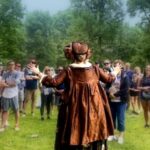
Boston Common isn’t treated like a pretty green patch. You learn how it was used for colonial military drills and later for civil rights-style organizing—plus earlier days when townspeople pastured cattle on those 45 acres. That contrast is the point: the Common has always been a public stage.
Next comes Park Street Church, a short walk that packs a big theme: the abolitionist movement. You’ll hear about the church’s role in advocating for freedom and justice, and Stephen also connects it to American music history. The tour includes the story that “My Country, ’Tis of Thee,” also known as “America,” premiered here on July 4, 1831.
What I like about this section is the way it shows religion as a real force in public life, not just an architectural stop. What to watch for: during this part of the walk, you’re outdoors and close to traffic, so if it’s windy or cold, keep moving and bundle up early.
The 54th Regiment Memorial: bravery, names, and why it matters
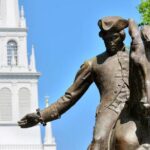
One of the most meaningful stops is the Robert Gould Shaw and the 54th Regiment Memorial. The focus is on the 54th Massachusetts Infantry Regiment—one of the first African American units in the Civil War—and the commander behind it.
This isn’t presented like a distant monument you glance at and move on. Stephen ties the memorial to the larger story of courage under pressure, and you get enough background to understand why this name belongs in Boston’s center of gravity.
If you’re a history buff, this stop will feel satisfying because it’s specific. You’re not left with a vague “important people happened here.” You walk away knowing who they were and what they were up against.
Massachusetts State House: the golden dome, plus Mary Dyer and Joseph Hooker
The Massachusetts State House is one of Boston’s most recognizable structures, thanks in part to the golden dome. Here, you learn it has been the seat of the state legislature since 1798, so you’re standing in the place where decisions have been made for generations.
Stephen also pulls in the personalities behind the buildings—starting with the statues, including General Joseph Hooker of unfortunate legend and Mary Dyer, executed for her Quaker beliefs. That mix is typical of this tour: it doesn’t isolate architecture from the moral and political conflicts that shaped the state.
My practical advice: allow yourself a minute to look upward and then outward. The dome grabs you, but the storytelling is about what the government symbolized—and what people sacrificed to challenge authority.
A private Brahmin library stop: Boston’s “who held the pens” story
Between the big public monuments, there’s time to hear about the Private Library of the Brahmins. This is the kind of stop that helps you see Boston beyond protests and parades.
You’re told about rare and valuable books and the literary and intellectual history of Boston’s elite—people who helped shape ideas in the wider American conversation. Even if you’re not a book-history person, I think you’ll appreciate it because it adds balance. Not all influence arrives through uniforms and speeches; sometimes it comes through publishing, scholarship, and private collections.
One note: this stop is shorter and more “listen closely” than “walk around.” If you like to read every plaque, you may find you want a longer visit later—so consider planning one extra stop in that neighborhood after the tour.
You can also read our reviews of more historical tours in Boston






The West End and Scollay Square: entertainment, then the political shadows
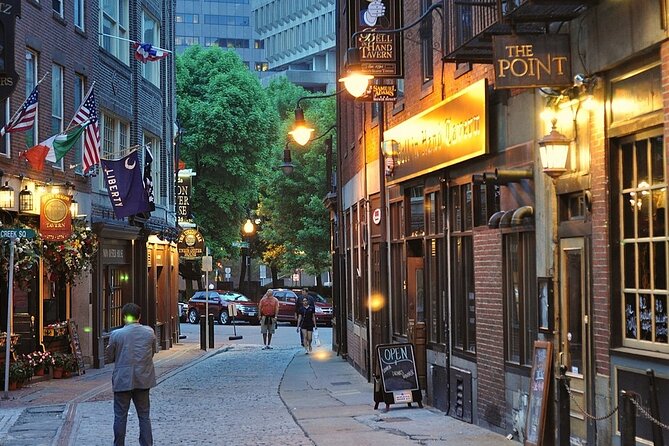
When the route reaches the West End (Scollay Square), you shift from politics to place-energy. The area is described as an entertainment district—think theaters and vaudeville—and Stephen adds the human texture, the kind of colorful characters that make a city feel lived-in.
You also get a peek at the Love Nest of the Kennedys, a small window into romantic lore tied to one of America’s most famous families. It’s not there to turn Boston into gossip; it’s there to show how neighborhoods attract stories, then become story-making machines.
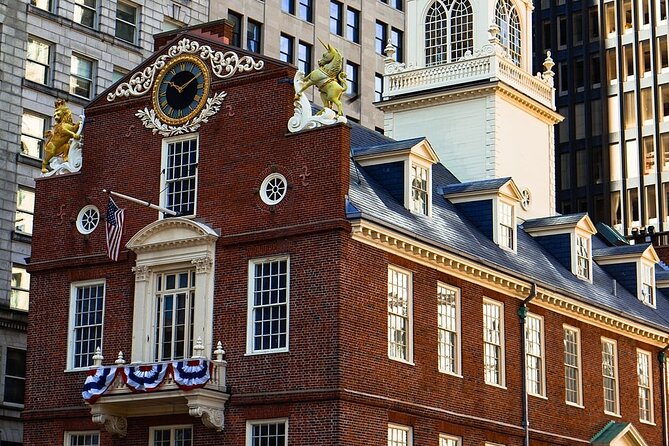
Then you’re back in historic mode for the Old State House. This section matters because it connects revolutionary events to a specific location. You hear about the reading of a copy of the Declaration of Independence to Boston citizens in 1776, and you learn the site’s rescue story later on—when it fell into disrepair, the city of Chicago offered to buy it, and Boston ultimately saved and meticulously restored it.
If you love the “how did we keep this?” angle of preservation, this part will stick.
Boston Massacre site and the Tea Party meeting: the streets get louder in your mind
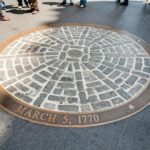
Next you visit the Boston Massacre site, tied to the lead-up to the American Revolution. Stephen gives the confrontation story between British soldiers and American colonists, and it’s presented as a trigger point—an event that fueled outrage and accelerated momentum toward revolution.
Right after that, the tour moves into the tea crisis moment. You hear about a gathering of five thousand citizens on December 16, 1773, where people agreed to prevent the landing of British tea ships. The story includes men disguised as Mohawk Indians who moved as a mob down Milk Street to Griffiths Wharf for what became the Tea Party.
This stretch is where Boston stops being “a place with history” and becomes “a place where history happened fast.” You’ll likely find yourself looking at the street corners differently afterward, because the tour gives you a sense of crowd movement and stakes.
Weather and sound matter here. This is an outdoor city. If it’s windy or there are tour groups nearby, you’ll want to position yourself where you can hear clearly.
Irish Famine Memorial to Old Corner Bookstore: immigrant stories and the writers’ circle
The Boston Irish Famine Memorial is one of the most moving stops on the walk. You learn it honors thousands of Irish immigrants who fled the Great Famine of 1845–52 and found refuge in Boston, becoming the largest ethnic group by 1850. It also functions as a tribute to immigrant groups more broadly.
This is a good reminder that Boston’s identity wasn’t formed only by revolutionaries. It was also formed by people who arrived with nothing and worked their way into belonging.
Then comes Old Corner Bookstore, a building with layered use: residence and apothecary in 1718, bookstore use beginning in 1828, and later for three decades home to Ticknor and Fields publishers. You also hear that it was a meeting place for major writers such as Henry Wadsworth Longfellow, Nathaniel Hawthorne, Oliver Wendell Holmes Sr., and Ralph Waldo Emerson.
If you love literary landmarks, this stop hits the sweet spot. It makes the famous names feel less like classroom quotes and more like people who talked, debated, and shared ideas in physical spaces.
Boston Latin School and the donkey moment on School Street
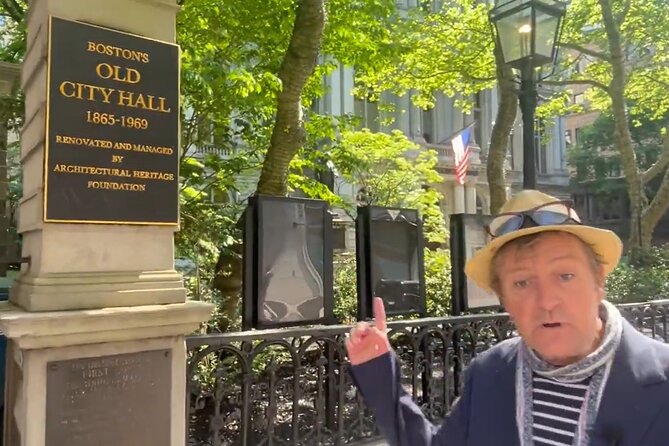
Boston Latin School gets you into education as a shaping force. You’ll learn that School Street is named for the site of the first public school in the United States, and the tour passes by nearby landmarks like King’s Chapel, Old City Hall, and the Parker House.
Stephen also includes the small, local wink: you meet Boston’s donkey waiting on School Street. It’s the kind of detail that breaks up the heavy topics without skipping them.
Why this works: after monuments and rebellions, you get a calmer beat. It helps you remember this is still a living city.
Faneuil Hall to Boston City Hall: the meeting place that keeps returning
The route finishes at Boston City Hall, in the shadow of two statues of James Michael Curley, a four-time mayor of Boston who also served as governor of Massachusetts and as a congressman. Stephen describes Curley as a flamboyant big-city boss and explains his long, controversial political presence over 50 years.
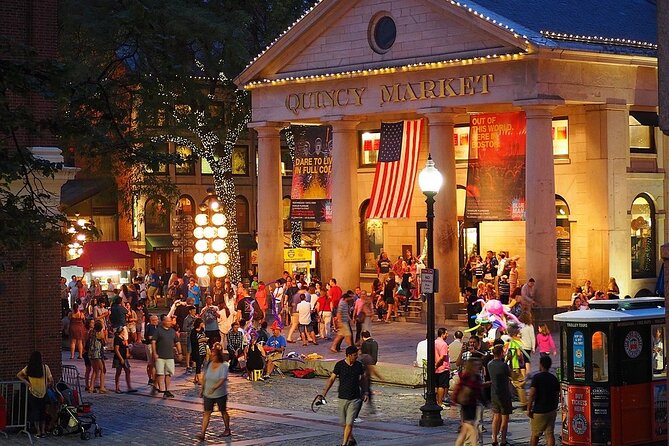
A few steps away are historic food and drink landmarks, including the Union Oyster House and the Bell in Hand tavern, noted as the oldest pub in town. The tour also points you toward Hanover Street as the gateway into the North End.
And importantly, the walk ends in the area that puts you right by Faneuil Hall—so if you want to keep exploring after the tour, you can pivot easily without a long commute.
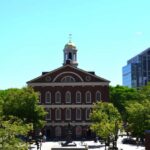
Faneuil Hall Marketplace itself is the earlier anchor of the finale, often called the Cradle of Liberty. You’ll learn the grasshopper weathervane detail and the origin story of the hall through Peter Faneuil, and Stephen ties it back to revolutionary leaders meeting there. There’s also a military angle: it’s the headquarters of the Ancient and Honorable Artillery Company of Massachusetts, described as the oldest military body in the Western Hemisphere, with a charter in 1837.
Price and value: why $5 feels like a deal
At $5 per person, this tour is priced in the “seriously affordable” category for Boston. The value isn’t only the cost; it’s that so many stops are free to see and the guide effort is built around connecting dots you might miss if you wander alone.
This is also a rare setup where the guide’s personality seems to matter as much as the facts. In the tour experience, Stephen consistently uses stories and answers questions in motion, which is exactly what you want for a short walking tour.
The one caution is that this is information-heavy. If you prefer slow, quiet sightseeing, you might feel rushed. If you like history that talks back, this price is almost too good to be real.
Pacing, sound, and weather: how to make a short walk feel worth it
You’re out walking, and the route is designed to cover a lot in a limited time window. Some people mention the walk can feel long if it’s cold, windy, or rainy, and I agree with the logic: Boston weather can turn a good morning into a survival test.
A few practical tips:
- Dress for wind and cold, not just temperature.
- Bring a warm layer and something for your ears if you’re sensitive to street noise.
- Don’t expect long photo sessions at every stop. You’ll usually get enough time for quick landmark shots.
Sound is also part of the equation. Boston corners can be loud, with other tour groups competing for attention. One review response from Stephen even mentions using a voice amplifier microphone to help everyone hear.
Finally, pay attention to pacing. There are signs that Stephen adjusts the route and timing based on wind and small breaks. So I suggest you plan this as a main activity block, not as a “must be done exactly at 1:00” situation.
Who should book this walk (and who might not love it)
I think this tour is a great fit if you:
- want a fast way to learn Boston’s key turning points without hiring a private guide
- like conversation and Q&A more than silent museum-style wandering
- enjoy history connected to real streets, churches, schools, and government buildings
You might consider a different format if you:
- dislike fast pacing or long explanations
- need frequent breaks to reset your attention
- struggle with hearing in noisy outdoor spaces
If you’re traveling with kids, it can still work, especially if they’re curious. Just plan to manage energy and weather, since this is a walking-forward experience.
Should you book this Boston Historical and Heritage Walking Tour?
Yes, if you want a compact, high-impact history walk anchored in Boston Common, the State House, revolution-era sites, and the literary/life-story landmarks like Old Corner Bookstore.
Book it when you can dress for the elements and you’re ready to listen closely. The $5 price makes it a smart gamble for value, and the small group size keeps it from feeling like a factory line.
Just go in with the right expectation: this is history with momentum, not a slow scenic stroll. If that’s your style, you’ll leave with more than photos—you’ll have a street-level understanding of how Boston kept rewriting its identity.
FAQ
How long is the Boston Historical and Heritage Walking Tour?
The tour lasts about 2 hours.
How much does the tour cost?
It costs $5.00 per person.
Where does the tour start and end?
It starts at the Boston Common Tablet at 1634 Freedom Trl, Boston, MA 02108. It ends at the James Michael Curley Statues at the corner of Congress St and North St, Boston, MA 02108, near Faneuil Hall.
Is the tour in English?
Yes, the tour is offered in English.
Do I need to buy tickets for the stops?
The listed stops have free admission as part of the experience.
How big is the group?
The maximum group size is 24 travelers.
What if weather is poor or I need to cancel?
The experience requires good weather. If it is canceled due to poor weather, you are offered a different date or a full refund. You can cancel up to 24 hours in advance for a full refund. If you cancel less than 24 hours before the start time, the amount you paid is not refunded.