REVIEW · 3-HOUR EXPERIENCES
3-Hour Private “Cold Weather- Warm Van” Driving Tour of Boston
Book on Viator →Bookable on Viator
Boston history, minus the cold. This private warm-van tour strings together major Boston landmarks—Paul Revere House, Old North Church, USS Constitution, Faneuil Hall, Boston Common, Back Bay, and more—while a driver-guide handles the storytelling. I love the hotel or port pickup that keeps your day simple, and I love that you stay comfortable in a climate-controlled van between short, easy stops.
One thing to keep in mind: you’re not doing a slow walk-through. Some stops are brief, and Boston parking and city traffic can limit how long you’ll be able to hop out for photos.
In This Review
- Key things that make this tour worth your time
- How the warm-van format changes Boston in winter
- Your driver-guide: where the value really shows
- Paul Revere House and Old North: the Revolution story starts close
- USS Constitution and Bunker Hill: two stops that explain momentum
- Faneuil Hall, Boston Common, and Back Bay: where Boston politics meets planning
- Copley Square to Christian Science Plaza: architecture with real context
- Fenway Park, MIT, and Harvard: modern icons, fast introductions
- Beacon Hill and Old South Meeting House: streets that explain the Revolution
- Price and value: when $495 makes sense
- What to expect on the day (and how to get the most out of it)
- Should you book this cold-weather Boston tour?
- FAQ
- How long is the Boston private driving tour?
- How much does the tour cost?
- Is this a private tour for only my group?
- Is pickup offered, and where can I be picked up?
- Is the tour in English?
- Does the itinerary include admission tickets?
- How many stops and which major sites are included?
- What are the tour’s operating hours?
- Are service animals allowed?
- What if the weather is poor or I need to cancel?
Key things that make this tour worth your time
- Cold-weather comfort: you ride in a climate-controlled van designed for winter days
- Hassle-free pickup: hotel or port pickup means less time herding yourself through Boston
- A real driver-guide: you get narrated context while someone else handles traffic
- Big-sight coverage in 3 hours: you hit Revolution-era and modern Boston landmarks
- Flexible pace with a good guide: stops and timing can adjust if traffic runs long or you ask for photo time
How the warm-van format changes Boston in winter
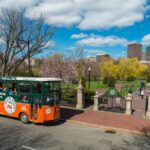
Boston can be brutal when the wind cuts across the harbor. This tour is built for that reality. Instead of spending your energy on freezing sidewalks, you spend it on the sights, with a heated, climate-controlled vehicle carrying you between stops.
That matters if you’re traveling with kids, older relatives, or anyone who gets uncomfortable fast. The itinerary is structured around short time outside—often 10 to 20 minutes at a place—so you’re not stuck with long stretches standing around hoping the weather improves.
There’s also a practical upside. When you don’t have to constantly stop, start, and park for every photo, you can cover far more ground in three hours. You get the feel of Boston’s layout without turning your schedule into a logistics puzzle.
You can also read our reviews of more private tours in Boston

Your driver-guide: where the value really shows
This kind of private tour lives or dies on the guide’s ability to keep the story moving while staying safe and on-time. In the experiences tied to this tour, guides like Peter stand out for a mix that’s hard to find: clear, engaging history, plus a driver who keeps things calm in tricky traffic.
One reason this works so well is that the narrative isn’t just dates and names. The guide points out what you’re looking at, then adds the human angle—why these places matter, and how Boston’s big events were planned and remembered.
You’ll also appreciate the safety piece. Multiple accounts emphasize a steady driving style and a tour flow that doesn’t feel chaotic even when roads get busy. And when you ask for it, the guide can often make time for photos without turning the whole schedule into a stop-and-gawk session.
Tip: If you have a must-see shot—like a specific angle of a historic building—ask early. It’s easier for the guide to build it into the timing while parking is still workable.
Paul Revere House and Old North: the Revolution story starts close
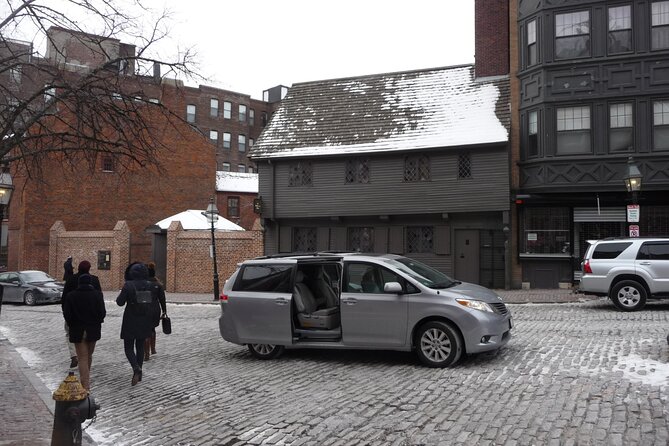
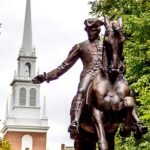
Your first stops put you right into the Boston that people talk about when they say the city changed America. You begin at the Paul Revere House, where the big theme is Revere’s role in colonial life and the early days of the United States—seen through the home where he raised sixteen children. Even if you know the famous ride story, the framing here helps you connect the icon to the man.
Then comes Old North Church & Historic Site. This is where the tour does something useful for first-time visitors: it corrects the popular version of the story. The famous part—Paul Revere’s ride to Lexington and Concord—didn’t happen exactly the way many people picture it from schoolbook lines. The point isn’t to spoil anything; it’s to make the history feel more real and less like a museum script.
Practical note: these are short stops. You’ll get enough time to see and understand, but don’t plan on reading every sign cover-to-cover. If you want to linger, you’ll need the guide to carve out a minute or two, and the best time to ask is when the group is still moving smoothly.
USS Constitution and Bunker Hill: two stops that explain momentum
From the Revolution-era streets, the tour shifts to the sea with USS Constitution—the ship known as Old Ironsides. The tour’s focus is the ship’s unique history and what made it stand out. This is a great pairing because it broadens the Revolution story. Boston wasn’t only about pamphlets and meetings; it was also about naval power and survival.
Next is Bunker Hill Monument. You don’t just hear that there was a battle—you hear why it was a turning point and how the outcome changed the course of American history. This stop works well because it gives you a sense of cause and effect. You leave understanding that Boston events weren’t isolated. They fed into larger decisions and larger risks.
Drawback to plan around: monument stops can be weather-dependent. In cold or windy conditions, you may want to keep your clothing practical so you can handle a quick look without rushing.
Faneuil Hall, Boston Common, and Back Bay: where Boston politics meets planning
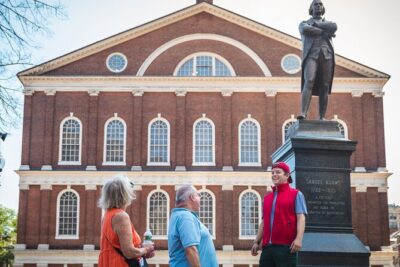
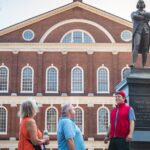
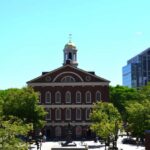
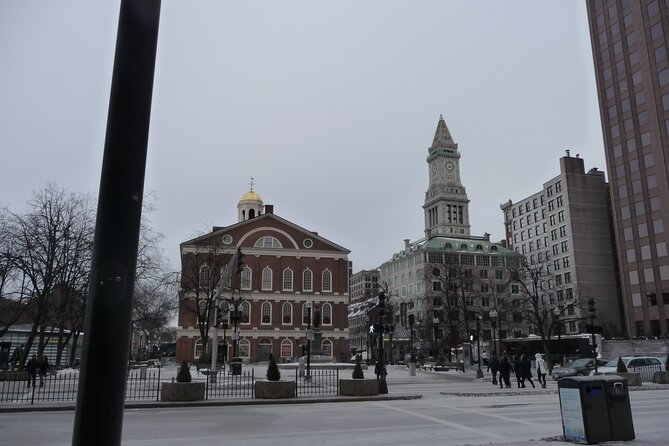
You’ll stop at Faneuil Hall Marketplace, often called a kind of starting point for Revolutionary organizing. The highlight here is understanding why it earned the nickname cradle of liberty and how discussions and plans tied into what led to the Tea Party.
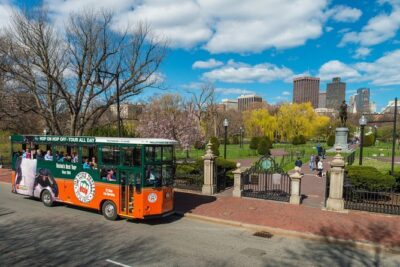
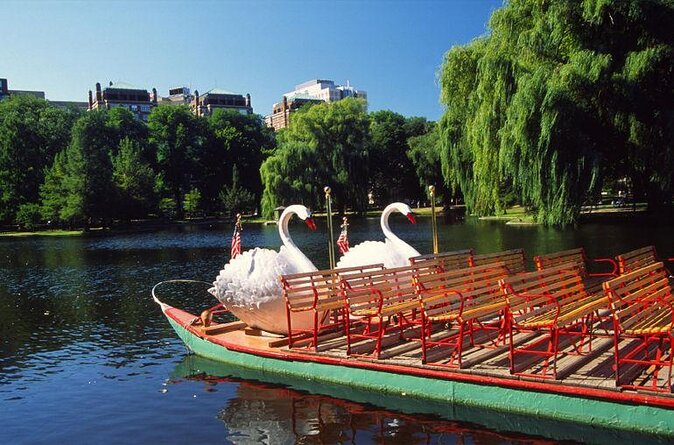
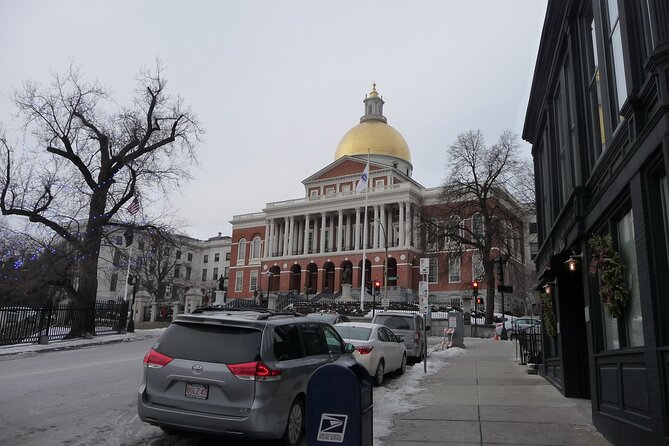
Then the tour heads to Boston Common, the oldest public park in America (established in 1634). The guide connects its early Puritan roots to how the park has been used over time—almost like the city’s public living room. This stop is especially good if you’re trying to learn Boston’s rhythm without needing a full walking tour.
After that, you swing into Back Bay—the neighborhood built on filled land, created over decades in the 19th century. The tour doesn’t just name buildings. It explains how the neighborhood developed, and why it matters today. If you’ve never seen the Back Bay streets before, this segment helps you read the city like a planner: grids, grand architecture, and neighborhood design that still shapes daily life.
Tip: If you want the best photos, ask the guide where to stand before you get out. City angles can be tricky, and you’ll get more value from your time outside the van.
You can also read our reviews of more tours and experiences in Boston
Copley Square to Christian Science Plaza: architecture with real context
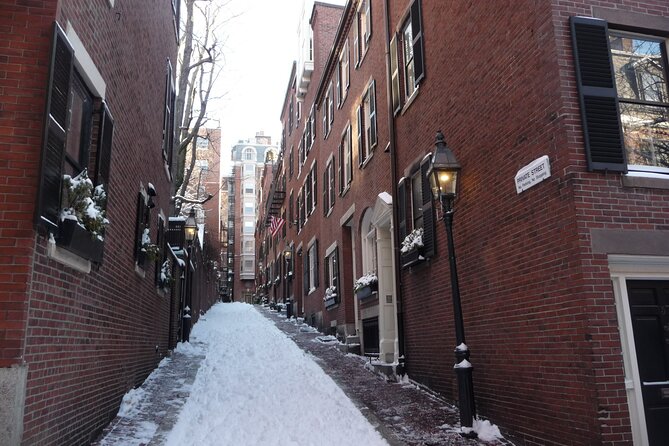
Next up is Copley Square, tied to John Singleton Copley and the square named for him. The tour focuses on why the square exists, what’s important about the centerpiece architecture, and how the space is used now. Even a brief stop can help because the guide tells you what to look for instead of leaving you to guess.
Then you visit Christian Science Plaza, a place tied to the Christian Science movement, founded in 1879. The tour explains how it grew across the nation and beyond. This stop is valuable because it broadens the city’s story beyond politics and sports—showing how Boston also influenced religion and social movement.
Cold-weather tip: plazas can feel open and windy. Wear layers you can quickly adjust, and keep gloves handy. You’ll want full fingers for camera settings.
Fenway Park, MIT, and Harvard: modern icons, fast introductions
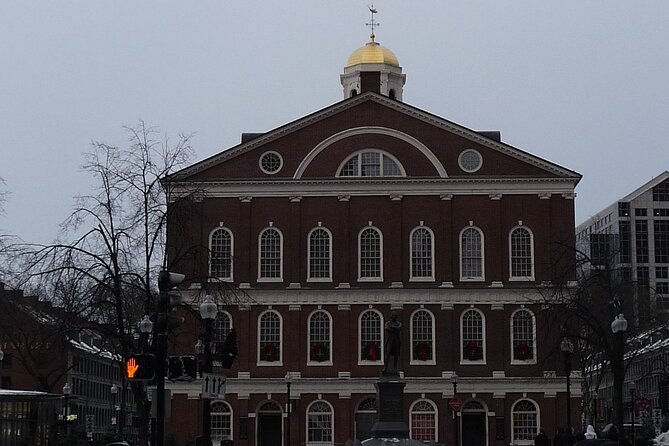
You’ll get a stop at Fenway Park, with a focus on the ballpark’s place in American sports and Boston identity—especially the Red Sox. This isn’t a stadium tour with deep history, but it’s a smart introduction. You see the landmark and get the stories that make it matter to locals.
Then the tour shifts into academic Boston with MIT. You’ll tour the campus area and hear about the history and culture of one of the world’s major research institutions. If you’re not sure what makes MIT distinct beyond stereotypes, this quick segment is a solid way to orient yourself.
After MIT, you head to Harvard University. The tour includes campus visits and highlights founding, significance, history, and architecture. The key value here is that the guide helps you connect the buildings to the institution’s story. That makes the architecture feel less random and more intentional.
A practical reality: these stops are short. You won’t cover every building or every historical detail. But you will get the big picture quickly, which is perfect when you’re balancing other activities during a limited trip.
Beacon Hill and Old South Meeting House: streets that explain the Revolution
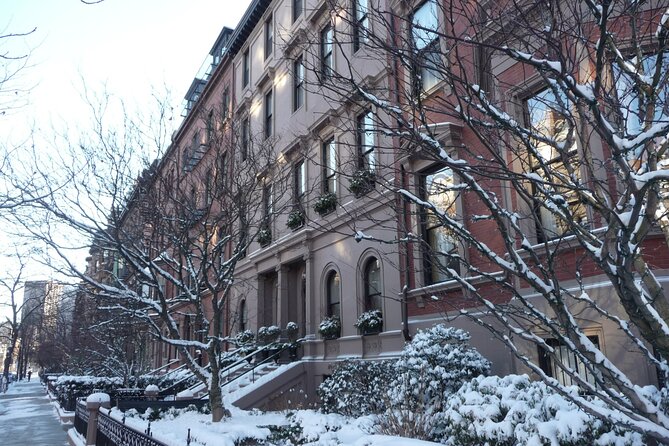
Finally, the tour goes into Beacon Hill—one of Boston’s original neighborhoods dating from the Puritan era. You’ll see homes, stores, and streets, with discussion about how neighborhoods affect everyday life and local character. This is where Boston starts to feel like more than a checklist. The guide helps you connect street-level design to how people lived.
Then you finish at the Old South Meeting House, tied to planning leading up to the Boston Tea Party. This is a strong ending because it circles back to the idea of organized public action. You’ve seen the lead-up across multiple sites; now you land on one place associated with the meetings and momentum.
If you’re deciding what to do next after the tour, Beacon Hill is a good place to wander afterward. The architecture and street layout make it easier to keep your bearings. And Old South gives you a clear framework for understanding what you see.
Price and value: when $495 makes sense
This tour costs $495 per group for up to 6 people and runs about 3 hours. That price can feel high if you’re traveling solo or as a couple. But it starts to look more reasonable when you split it across a full group.
Quick math:
- Up to 6 people means about $82.50 per person at the maximum group size.
- If you’re 2 people, it’s closer to $247.50 per person.
So the value comes down to your group size and what you want from the day. If you want a first-time overview plus comfort in cold weather, this is a smart way to buy time and reduce stress. You get private narration, easy pickup, and fast access to lots of big-name sites.
If you’d rather explore at your own pace and linger in museums, a self-guided plan might be cheaper. But for a short Boston visit—especially in winter—this format is often the fastest path to a coherent story.
What to expect on the day (and how to get the most out of it)
Because stops are frequent but brief, you’ll get better results if you travel light and dress smart. Wear comfortable shoes even if you’re not doing lots of walking. You’ll step out repeatedly, sometimes on uneven sidewalks, and you’ll want mobility.
Photo strategy helps too:
- Bring your questions for the guide early.
- If you want a longer photo moment, ask while the stop is still new. It’s harder to add time once parking and traffic have tightened.
Also, be realistic about winter conditions. Even with a warm van, you’ll be outside for parts of the tour. Layers and hand protection matter.
Lastly, go in with the right mindset. This is a tour built for orientation and context, not for deep, multi-hour museum study. You’ll finish with a much clearer mental map of Boston’s neighborhoods and key Revolutionary-era sites.
Should you book this cold-weather Boston tour?
Book it if:
- You’re visiting Boston in cold or blustery weather and don’t want your trip to be a survival test.
- You want a private, narrated overview that connects landmarks into one story.
- You’re traveling with a group (especially up to 4–6 people) and want real comfort plus convenience.
Skip it (or consider alternatives) if:
- You want to spend long periods inside buildings with deep historical reading.
- Your priority is leisurely wandering with no set stop times.
- You’re okay doing some self-navigation and prefer saving money over buying comfort and narration.
FAQ
How long is the Boston private driving tour?
It runs about 3 hours.
How much does the tour cost?
The price is $495.00 per group for up to 6 people.
Is this a private tour for only my group?
Yes. Only your group participates.
Is pickup offered, and where can I be picked up?
Pickup is offered from your hotel or port area.
Is the tour in English?
Yes, it is offered in English.
Does the itinerary include admission tickets?
The stops list Admission Ticket Free for each location shown in the itinerary.
How many stops and which major sites are included?
The tour includes Paul Revere House, Old North Church & Historic Site, USS Constitution, Bunker Hill Monument, Faneuil Hall Marketplace, Boston Common, Back Bay, Copley Square, Christian Science Plaza, Fenway Park, MIT, Harvard University, Beacon Hill, and Old South Meeting House.
What are the tour’s operating hours?
The listed hours are 10:00 AM to 2:00 PM, Monday through Sunday, within the stated date range.
Are service animals allowed?
Yes, service animals are allowed.
What if the weather is poor or I need to cancel?
The tour requires good weather. If it’s canceled due to poor weather, you’ll be offered a different date or a full refund. Free cancellation is available up to 24 hours in advance for a full refund.