REVIEW · FREEDOM TRAIL TOURS
Boston: Freedom Trail History and Architecture Walking Tour
Book on GetYourGuide →Operated by Boston CityWalks · Bookable on GetYourGuide
Freedom Trail nerves are gone fast. In just 70 minutes, you get the downtown timeline and architecture lesson you can’t piece together on your own, with a real local guide setting it all in context. I especially like how the route links famous moments to the buildings you’re actually standing in, not just names on a map. I also like that the walk stays practical: you move, you look up, you learn, and you still have time for the rest of your Boston day.
One thing to consider: the tour is in English, so if your English is shaky, you may lose details. A previous guest noted that stronger English helps you stay with the stories and questions.
In This Review
- Key Things I’d Focus On
- Getting Your Bearings on the Freedom Trail in 70 Minutes
- Finding the Meet-Up Spot at State and Congress
- Faneuil Hall to the State Houses: Power, Protest, and Building Styles
- Boston Massacre Site and Park Street Church: Stories You Can Stand Inside
- King’s Chapel and Old South Meeting House: Downtown Faith and Public Speech
- Old Granary Cemetery, Old Corner Bookstore, and First Schoolhouse
- Boston Common and the Irish Famine Memorial: Public Space With Memory
- Price and Value for a Fast Morning Walk
- Who This Tour Fits Best (and Who Might Want Another Option)
- Should You Book This Freedom Trail Walk?
- FAQ
- Where does the tour start?
- What’s the price and duration?
- What sites will we see on the walk?
- What area does the Freedom Trail cover on this tour?
- Is the tour guided?
- How long is the tour experience in total?
- Can I cancel for a refund?
- Can I reserve without paying right away?
Key Things I’d Focus On
- Freedom Trail, But With Context: You’re not just checking off stops; you’re learning how Boston changed over time.
- Architecture Through Story: Old vs. New civic buildings make the city’s evolution feel real.
- Teen-Friendly Pace and Q&A: The guide’s patient, with room for questions, even from younger visitors.
- More Than Landmarks: Cemeteries, meeting houses, and memorials add texture to the downtown experience.
- Smart Route Length: 70 minutes is long enough to matter, short enough to fit into any itinerary.
Getting Your Bearings on the Freedom Trail in 70 Minutes
The Freedom Trail is famous for a reason, but it can also feel like a list—until a guide turns it into a cause-and-effect story. This walk tackles that problem by focusing on Boston’s core downtown landmarks from Faneuil Hall to Boston Common. You spend your time where the city’s “why” lives: civic power, religious buildings, public speech, and memory all packed into a walkable stretch.
The timing matters. Seventy minutes is enough time to connect several major sites and hear how Boston grew from early settlement days into the city you see now. It’s also short enough that you don’t have to plan your whole morning around it. If you’re the type who likes to get your bearings early, this is a strong first move.
I also like the architecture angle because it’s not only about what’s pretty. You’re learning how Boston’s buildings reflect changing priorities—government, religion, and public life shifting across centuries. And since you’re walking through downtown streets as you go, the city’s layout starts to make sense in your head, not just in your camera roll.
You can also read our reviews of more walking tours in Boston


Finding the Meet-Up Spot at State and Congress
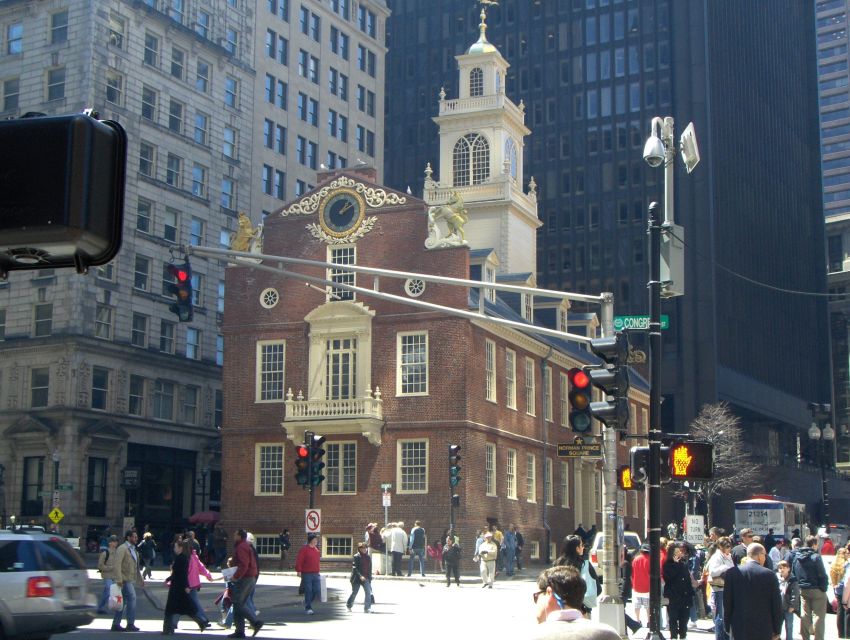
Meet at the NW corner of State and Congress Streets, outside 28 State Street (Citizens Bank) and across from the Old State House. It’s a very “downtown obvious” meeting point, which helps if you’re arriving by foot from your hotel, or if you’re hopping between sights in the early day rush.
Here’s a practical tip: give yourself a minute or two extra to orient yourself before start time. That’s one of the fastest ways to avoid the stress that can make a short tour feel longer than it is. Once you’re standing there, you’re in the middle of the action and close to the historical spine of the downtown.
Faneuil Hall to the State Houses: Power, Protest, and Building Styles
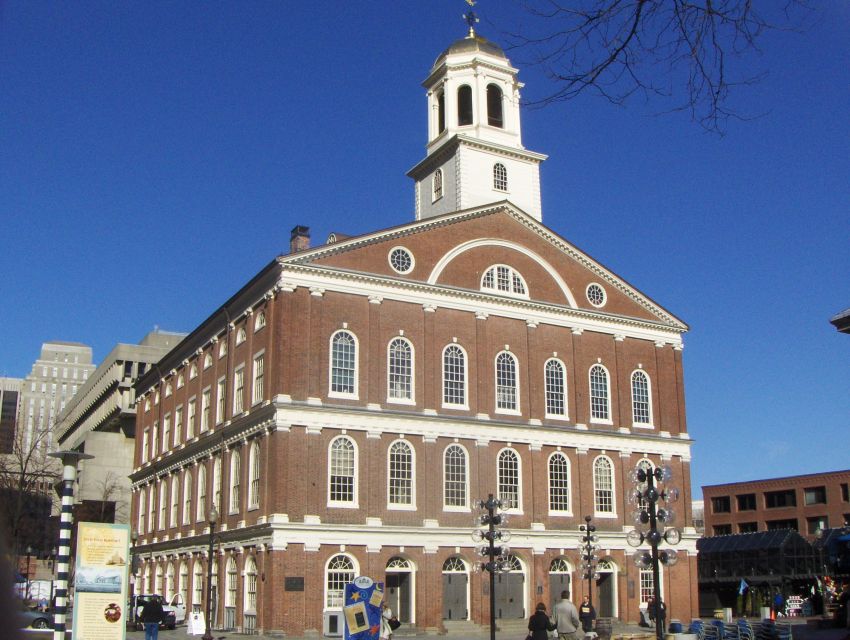
You’ll start with the kind of location that sets the tone immediately: Faneuil Hall. This is one of Boston’s best-known civic spaces, and the guide uses it to frame how the city talked, argued, and organized in public. Even if you’ve heard the headline versions of Boston history, you’ll get a clearer sense of what it meant to gather in those rooms and why downtown places like this became symbols.
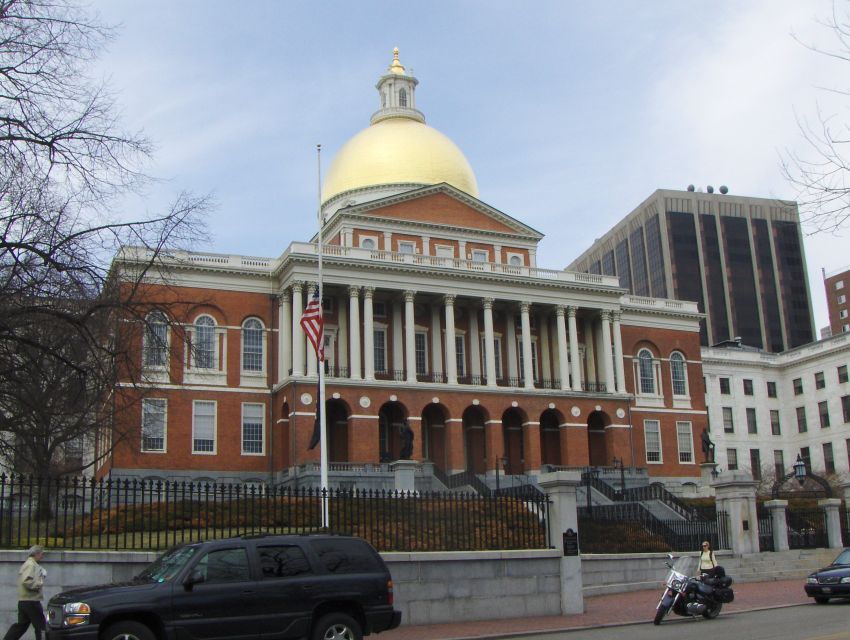
From there, you move through the area where the Old and New State House show up as your architecture story anchor. The Old State House helps you understand the early government footprint. The New State House adds the comparison—how civic needs and civic presentation shifted as Boston’s role grew. Watching these buildings side by side, you start seeing architecture as an opinion about the future, not just a style choice from the past.
This is where the “quirky streets” part becomes more than marketing. Downtown Boston isn’t uniform. It’s a mix of eras and functions, and that mix is visible as you walk. The guide helps you read the street scene like a timeline, so the buildings don’t blur into one long historical corridor.
Boston Massacre Site and Park Street Church: Stories You Can Stand Inside
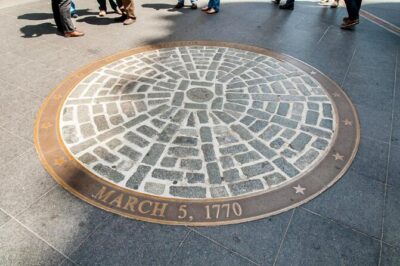
One of the stops you’ll hit is the Boston Massacre site. This is one of those locations that can feel heavy or abstract if you just look at it quickly. With a guide, you get a clearer sense of what happened, why it mattered, and why it stayed part of Boston’s identity.
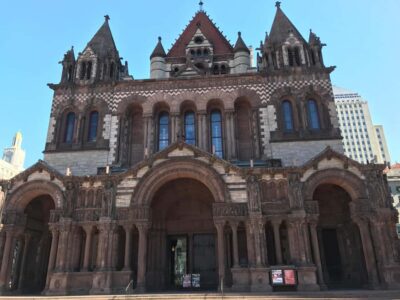
Then comes Park Street Church, which adds a different dimension. It’s not just another church stop; it’s a chance to see how religion and public life overlapped in the city’s evolution. When you’re on foot, you also get a better feel for how these buildings sit within the downtown flow—near enough to be part of daily life, important enough to shape the character of the area.
At this stage of the walk, I think you’ll feel the biggest difference between a self-guided route and a guided one. The Freedom Trail has meaning, but your brain needs a sequence. The guide gives you that sequence—what to look at, what to remember, and how the sites connect.
King’s Chapel and Old South Meeting House: Downtown Faith and Public Speech
The walk includes King’s Chapel and the Old South Meeting House, and the pairing works well because it shows two sides of how Bostonians built community and expressed ideas.
King’s Chapel brings you into the story through a religious landmark, helping you understand how spiritual spaces fit into the broader civic mindset. Even if you don’t go inside, the exterior and setting give you cues about prominence and purpose.
Then you’ll move to the Old South Meeting House, a major platform for public gathering. This is the Freedom Trail’s “speech and debate” energy. You’ll get explanations that connect the building to the culture of discussion and protest that Boston is known for. It’s one thing to learn names and dates; it’s another to understand why a meeting house mattered so much in a city where public action carried real weight.
If you’re traveling with teens, this section is often where a good guide earns their keep. A previous guest specifically called out that the guide handled questions patiently and that even teenagers stayed interested. That kind of Q&A can turn a set of stops into a conversation instead of a lecture.
You can also read our reviews of more historical tours in Boston






Old Granary Cemetery, Old Corner Bookstore, and First Schoolhouse
Downtown Boston can feel loud, but this tour includes places where the pace shifts—Old Granary Cemetery, the Old Corner Bookstore, and the Old City Hall and First Schoolhouse site area.
The cemetery stop matters because it brings a human scale to the history you’re hearing. It’s also a reminder that downtown history isn’t only political. People lived, died, built families, wrote, taught, and shaped the city long before it became a tourist route.
Next, the Old Corner Bookstore connects to Boston’s reputation for ideas. You’ll get the sense that books, publishing, and education helped form the culture that powered public life. It’s not just a charming historic stop. It’s a clue about how Boston’s intellectual environment supported the civic story you’re tracking along the trail.
Finally, the Old City Hall and First Schoolhouse site gives you an education-and-governance angle. It’s a useful reminder that society runs on institutions: training, administration, and schooling. For me, this mix is the sweet spot of the walk. You’re not only seeing landmarks associated with famous events—you’re seeing the systems that made those events possible.
Boston Common and the Irish Famine Memorial: Public Space With Memory
The walk ends at Boston Common, one of the city’s most important open spaces. After a concentrated run of civic and historical sites, arriving at the Common feels like a reset. You get a chance to look around with fresh eyes and feel the scale of the public space where communities gathered and regrouped.
You’ll also see the Irish Famine Memorial, which adds a solemn, modern layer to what you’re learning. This isn’t only about early American events; it’s about how later tragedies and immigration shaped Boston’s identity over time. That’s one of the most meaningful parts of this style of tour: it keeps history from freezing in the distant past.
If you like tours that connect “then” to “now,” this ending helps. You’re not just leaving with photos. You’re leaving with a more honest sense of who came, what they endured, and how memory is built into the city itself.
Price and Value for a Fast Morning Walk
At $30 per person for about 70 minutes, this tour is priced like a practical morning activity: enough time to learn a lot, not long enough to derail your schedule. For me, the value is less about “how many stops” and more about what the guide does with those stops—turning scattered landmarks into a single story you can remember.
Boston downtown attractions can add up quickly, especially if you’re doing several guided experiences back to back. A one-hour, guided Freedom Trail walk is a smart way to get an orientation boost before you branch out on your own. You’ll likely spend the rest of the day better because you understand the city’s logic: where power sat, where ideas traveled, and how the built environment evolved.
One more value note: the guide is a live professional local guide in English. When a tour includes a guide, the cost isn’t only for access—it’s for interpretation. That interpretation is exactly what makes a short tour feel longer in the best way.
Who This Tour Fits Best (and Who Might Want Another Option)
This tour fits best if you:
- Want a first morning in Boston plan that gives you immediate context.
- Like architecture and want to connect buildings to real civic and cultural shifts.
- Enjoy Q&A and explanations tailored to questions that pop up as you walk.
It can also work well with teens, based on a review that mentioned teenagers liked it and that the guide was patient. On the other hand, this is an English tour. If you know your English isn’t strong enough to follow fast conversation, pick a different format or plan to use additional language support while you’re there.
Should You Book This Freedom Trail Walk?
Book it if you want a compact, guided way to understand downtown Boston’s timeline, architecture, and culture without spending half a day in transit or museum lines. I’d especially recommend it for first-timers who want to stop guessing and start seeing patterns.
Skip it only if you know you won’t enjoy guided storytelling in English, or if you’d rather spend your morning slowly at fewer sites. This is a walk that rewards momentum and attention. If that sounds like your style, you’ll likely feel like Boston makes sense by the time you reach Boston Common.
FAQ
Where does the tour start?
Meet at the NW corner of State and Congress Streets, outside 28 State Street (Citizens Bank), and across the street from the Old State House.
What’s the price and duration?
The tour costs $30 per person and runs for about 70 minutes.
What sites will we see on the walk?
Stops include the Old and New State House, Faneuil Hall, the Boston Massacre Site, Park Street Church, King’s Chapel, the Old South Meeting House, the Old Granary Cemetery, the Old City Hall and First Schoolhouse site, the Old Corner Bookstore, Boston Common, and the Irish Famine Memorial, among others.
What area does the Freedom Trail cover on this tour?
The tour follows the Freedom Trail through Downtown, with stories from Faneuil Hall toward Boston Common.
Is the tour guided?
Yes. It includes a professional local guide and a live tour guide in English.
How long is the tour experience in total?
Duration is listed as 70 minutes.
Can I cancel for a refund?
Yes. Free cancellation is available up to 24 hours in advance for a full refund.
Can I reserve without paying right away?
Yes. You can reserve now and pay later.