REVIEW · FREEDOM TRAIL TOURS
Boston Walking Tour of The Freedom Trail, Small Group
Book on Viator →Operated by Guided Tours Guild · Bookable on Viator
Boston’s Freedom Trail is easiest when someone points out details. This small-group walk strings together the core Revolutionary-era stops, with a guide using a microphone so nothing gets lost in the noise of downtown.
I especially love two things about this tour: the storytelling from Captain Pickles, and the way it’s built for listening and photos at every major landmark. One possible drawback: because the content is packed and the pace can feel lively on some days, you may want to be ready to keep up if you prefer slower narration.
In This Review
- Key Highlights I’d Plan Around
- Freedom Trail in 75 Minutes: What You’re Paying For
- Start Smart: Lafayette Mall Monument to Boston Common
- Boston Common: The Oldest City Park Sets the Tone
- Massachusetts State House: Government Then, Government Now
- Park Street Church: A Meeting Place That Kept Going
- Granary Burying Ground: Revolutionary Names You Can See
- Benjamin Franklin Statue and the Boston Latin Connection
- Old South Meeting House: The Boston Tea Party’s Organizer Spot
- The 1718 Apothecary-to-Bookstore Story: Commerce as Culture
- Boston Massacre Site and Old State House: Tension in the Same Block
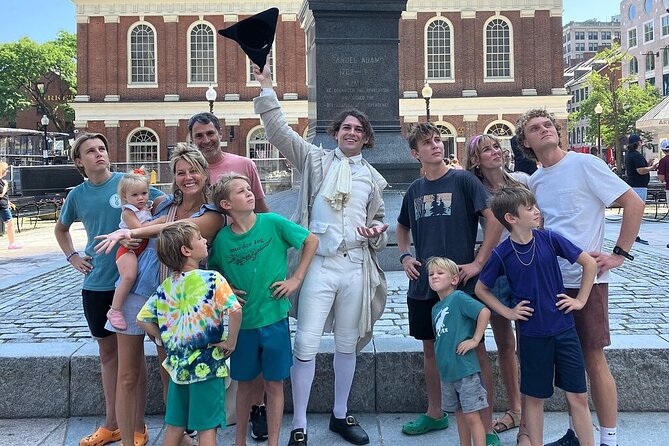
- Faneuil Hall Marketplace Finish: Wrap Up at Samuel Adams
- Who This Tour Fits Best (and Who Might Want Another Option)
- Price and Value: Is $32 Reasonable?
- Should You Book This Boston Freedom Trail Walking Tour?
- FAQ
- How long is the Boston Walking Tour of the Freedom Trail?
- How much does the tour cost?
- Where does the tour start?
- Where does the tour end?
- Is the tour in English?
- Are the stops ticket-free?
- Is there a microphone system so I can hear the guide?
Key Highlights I’d Plan Around
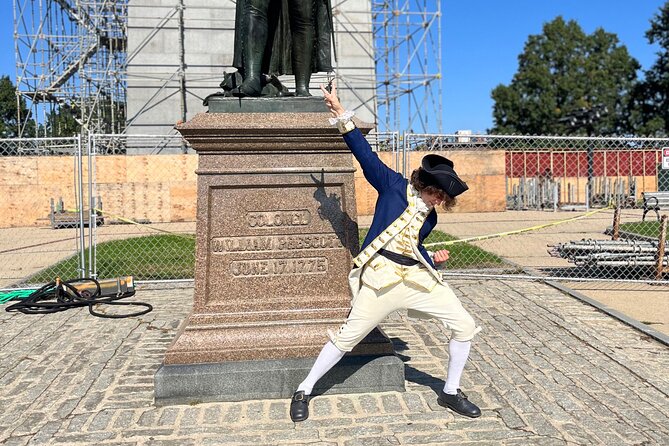
- Captain Pickles’ storytelling: lots of facts, humor, and personal style that makes the sites click
- Microphone system: you can actually hear the guide, even on busy sidewalks
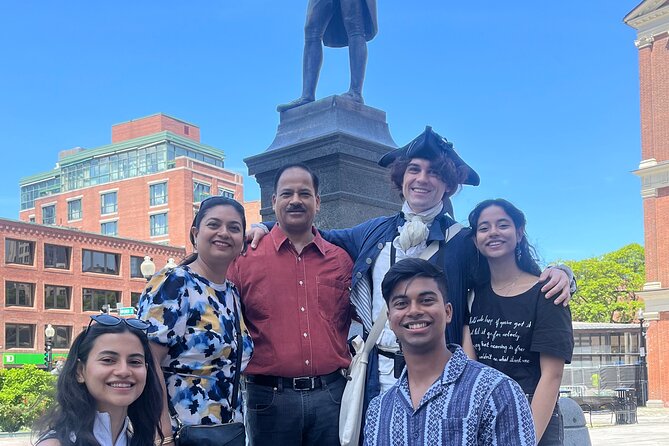
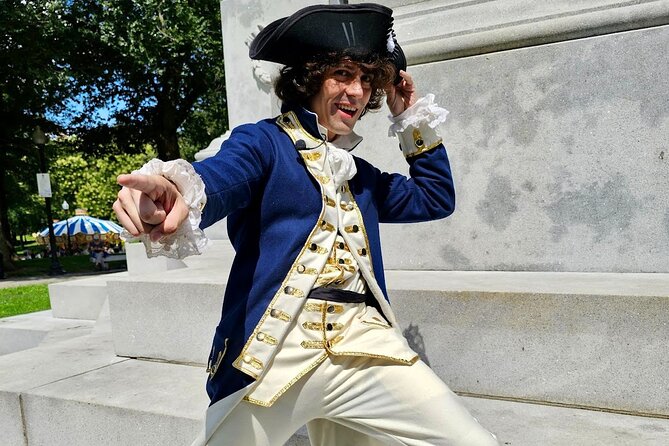
- Photo-friendly stops: the guide is happy to pose while you explore
- A social group vibe: you meet other history lovers while walking in a tight route
- A practical end point: you finish at Faneuil Hall with food and bathrooms close by
- Good for families: kids in the group tend to stay engaged for the full route
Freedom Trail in 75 Minutes: What You’re Paying For
This tour runs for about 1 hour 15 minutes (many groups experience closer to about 1.5 hours in practice), and it costs $32 per person. For that price, you’re not just getting “see the famous buildings.” You’re getting a guided walking route that slows you down just enough to notice what matters—plus a microphone system that keeps the experience easy to follow.
Here’s the value angle that makes me like this format: each stop is either free to visit or doesn’t require paid entry, so you’re not paying extra at every landmark. And because it’s a small group with a cap of 40 travelers, you’re less likely to feel lost in a crowd.
If you’re the kind of traveler who reads plaques but still wants someone to explain what to look for, this works well. If you hate walking or need very quiet, this is still a sidewalk tour—bring realistic expectations.
You can also read our reviews of more walking tours in Boston

Start Smart: Lafayette Mall Monument to Boston Common
The tour begins at the Lafayette Mall Monument near Boston Common (Tremont St). The start time is 11:30 am, so it’s a solid mid-morning option if you want to get your bearings before lunch and museum time.
Why I like this start: Boston Common is the right “mental warm-up.” Before you hit the heavier Revolution sites, you begin in a place that lets you reset—open space, clear sightlines, and easy orientation in the downtown core.
Also, the reviews and running style point to something practical: Captain Pickles is used to managing group timing and staying patient when people arrive a bit late. On a cold or windy day, that matters.
Boston Common: The Oldest City Park Sets the Tone
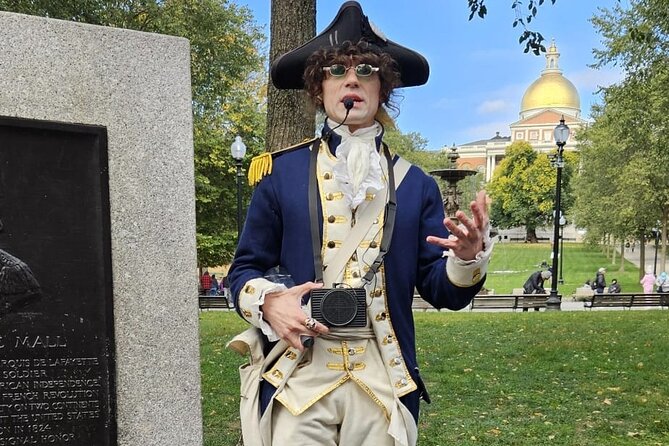
Your first stop is Boston Common, and you’ll hear that it’s the oldest city park in the United States. That single detail does a lot of work. It turns a common tourist stop into a symbol of how long Boston has organized public life around shared space.
Spend the short time here the right way: look at how the park relates to the surrounding streets and buildings. The Freedom Trail isn’t just about battle dates. It’s about how ordinary city life sat next to big political change.
Massachusetts State House: Government Then, Government Now
Next comes the Massachusetts State House area. This stop is tied to state government and the story of John Hancock, with the text emphasizing that Hancock once lived in this area and now the Statehouse sits where that earlier life happened.
What’s useful for you: the tour frames the State House not as a random impressive building, but as the physical anchor of Massachusetts political power. Even if you don’t go inside, you’ll get a clearer sense of why this neighborhood mattered during the lead-up to Revolution.
Park Street Church: A Meeting Place That Kept Going
You’ll stop at Park Street Church, described as a historic and active congregational church founded in 1809. This is a good moment to remember that the Revolution didn’t unfold in a vacuum. Public faith communities, civic gatherings, and local leaders all overlap in early American cities.
If you like details, this stop is great for listening to how the guide connects the church to daily life and the moral language people used in that era.






Granary Burying Ground: Revolutionary Names You Can See
Then the tour moves to Granary Burying Ground, including the final resting places of James Otis, Paul Revere, Samuel Adams, and others. The stop also highlights something extra important: it’s the oldest graveyard in the city, established in 1630, and it’s a Freedom Trail site.
This part of the walk often becomes a favorite because it turns history into real bodies and real dates. You’re not just hearing names—you’re standing in a place where the city chose to remember them.
Quick tip for getting more out of it: take the last few minutes of this stop to look slowly and connect names with the Revolution themes you’ve been hearing. If you let the guide’s story land first, the cemetery stops feeling like a checklist.
Benjamin Franklin Statue and the Boston Latin Connection

Next is the Statue of Benjamin Franklin. This stop includes another smart link: it ties to the Boston Latin School site, noting that the area is where the Old City Hall is at today.
Why this is a strong stop for you: Franklin is one of those figures who can become too abstract if you only hear textbook summaries. Seeing his name here, then hearing how the Boston Latin School tie-in fits into civic life, makes the story feel more local and grounded.
If you enjoy learning about education and ideas as drivers of change, this stop will scratch that itch.
Old South Meeting House: The Boston Tea Party’s Organizer Spot

Then you reach Old South Meeting House, built in 1729. This is one of the most clearly Revolution-linked stops on the route, because the tour connects it directly to the Boston Tea Party, describing it as the organizing point on December 16, 1773.
What makes this stop work on a walking tour: the guide can help you picture how meetings and speeches lead into actions. The building becomes more than architecture—it becomes stage direction.
When you’re here, listen for how the guide frames the meeting place as part of a bigger pattern of protest and public coordination. That’s what turns a historical building into a story you can retell to friends.
The 1718 Apothecary-to-Bookstore Story: Commerce as Culture
After Old South Meeting House, the tour takes you to another Freedom Trail stop described with a timeline: it was built in 1718 as a residence and apothecary shop, then first became a bookstore in 1828.
I like this kind of stop because it broadens the Revolution story beyond politics and war. People learned, traded, and shaped ideas in places like this. If you’re curious how information moved—who read what, where books were sold—this is a good moment to pay attention.
One note: the description you get here is more about the evolution of the site than a single event. So if you want only battle-season storytelling, you might find it a little calmer than the Tea Party stop—but it still adds a layer.
Boston Massacre Site and Old State House: Tension in the Same Block
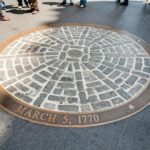
You then move to the Boston Massacre Site, located outside the Old State House, and the tour also stops at the Old State House itself, built in 1713.
This is where the tone typically shifts. Instead of organizing a protest, you hear about conflict and fear, the kind that tightens a city’s nerves. The guide’s microphone system helps here, too, because these are short stops and you need to catch the key thread fast.
To get more out of it: focus on how the tour connects events across nearby locations. When you’re walking in a tight loop, it’s easy to remember the sequence—Massacre site, then the Old State House setting that gave it context.
Faneuil Hall Marketplace Finish: Wrap Up at Samuel Adams
The tour ends at Faneuil Hall Marketplace, by the statue of Samuel Adams. The practical upside is huge: this finish point gives you easy bathrooms, plus local food and a free museum nearby.
I like ending here because it gives you choice. After a focused history walk, you can either keep exploring on your own (museum time, souvenir browsing, people-watching) or treat it like your lunch break.
And because the tour ends at a lively hub instead of a random street corner, it’s easier to transition to the rest of your day without stress.
Who This Tour Fits Best (and Who Might Want Another Option)
This Freedom Trail walk is a strong fit if you want:
- A story-first approach to Boston’s Revolutionary sites
- A guide who’s comfortable being photo-friendly at landmarks
- A group size that stays manageable, up to 40 travelers
- A route you can finish with food and bathrooms right away at Faneuil Hall
It’s also a good pick if you’re traveling with kids. The guiding style described with Captain Pickles comes off as upbeat and patient, and groups with children have been able to keep attention through the full run.
A note for your planning: one smaller criticism you might want to take seriously is that the tour can feel disjointed for a few people, and some visitors found the narration a bit fast when the guide gets excited. If you’re sensitive to pace, stand where you can hear clearly and don’t be shy about asking for clarification when there’s a natural pause.
Price and Value: Is $32 Reasonable?
For $32, you’re paying for:
- A guided walking route across many key Freedom Trail anchors
- A guide with a microphone system
- Short, efficient stops where you can absorb the story without extra paid admissions
- A finish at Faneuil Hall with amenities
If you’re comparing to typical paid tours in major cities, this price sits in the “fair and useful” zone—especially because you’re getting multiple big-name landmarks in one go. If you’re only looking for a quick photo sweep and you already know the history well, you might skip this. But if you want a guided narrative that helps the sites click into place, $32 for about an hour and a half is a practical deal.
Should You Book This Boston Freedom Trail Walking Tour?
I’d book it if you want a focused introduction to the Freedom Trail that’s built around listening, not sprinting. The big selling point is the combination of microphone clarity and Captain Pickles’ storytelling style, which many people describe as fun, detailed, and easy to follow—even when the weather is rough.
I’d think twice if you:
- dislike paced narration and prefer quieter, slower walks
- want long time inside buildings (this route is mostly stop-and-listen)
- need a highly structured, perfectly linear talk with zero detours (a small number of people found the flow hard to follow)
If you’re new to Boston or returning for a second time and want the “why does this matter” layer, this tour is an efficient way to get it—then you can carry that context into whatever you do next.
FAQ
How long is the Boston Walking Tour of the Freedom Trail?
It lasts about 1 hour 15 minutes (approx.).
How much does the tour cost?
The price is $32.00 per person.
Where does the tour start?
The meeting point is the Lafayette Mall Monument near Boston Common, at Tremont St, Boston, MA 02110.
Where does the tour end?
It ends at Faneuil Hall Marketplace near the statue of Samuel Adams, at Boston, MA 02109.
Is the tour in English?
Yes, the tour is offered in English.
Are the stops ticket-free?
The tour information lists admission as free for the stops.
Is there a microphone system so I can hear the guide?
Yes, the guide uses a microphone system to help you hear them clearly.