REVIEW · FREEDOM TRAIL TOURS
Freedom Trail Walking Tour in Boston in French
Book on Viator →Operated by Gilded Age Tour - visites de Boston et de ces environs en français · Bookable on Viator
Boston tells its story fast on foot. This French-guided Freedom Trail walk is a clean, well-paced way to see Boston’s core monuments in about 2.5 hours, with a specialist guide ready with smart stories and original anecdotes. I like that it mixes famous Revolutionary-era stops with everyday Boston details, so the past feels less like a textbook and more like a living street scene. And I especially like the promise of a French speaker who can explain what you’re looking at, not just recite dates.
The second thing I like is the mix of places: you’re not only checking boxes on colonial sites like Old State House and Faneuil Hall, you’ll also spot modern touches along the route, including public sculptures such as The Embrace and the Holocaust Memorial. One thing to consider: this is a walking tour with no museum visits, and the schedule moves across about 15 iconic stops, so if you want deep indoor time, you’ll need to plan that separately.
In This Review
- Key things that make this tour worth your time
- Why a French Freedom Trail walk is a smart first taste of Boston
- The guide style: what you can expect from a French specialist
- Boston Common: where the story starts and the city greens up
- Robert Gould Shaw Memorial: art you can’t ignore
- Beacon Hill landmarks: the Massachusetts State House dome and Old City Hall
- Old Corner Bookstore and the meeting houses: ideas travel through buildings
- Old State House and the Boston Massacre site: public drama in plain sight
- Faneuil Hall and Quincy Market: liberty symbols and the city’s hangout spaces
- Union Oyster House and old pedestrian streets: the Revolutionary era meets everyday life
- The North End in full: Paul Revere House, Old North Church, and Copp’s Hill views
- Modern sculptures and the Holocaust Memorial: history is not only colonial
- Price and logistics: what $45 buys you on this walking route
- Who this tour suits best
- Should you book this Freedom Trail tour in French?
- FAQ
- What is the duration of the Freedom Trail walking tour?
- How much does the tour cost?
- Is the tour in French?
- Where does the tour start and end?
- Is transportation included?
- Are museum visits included?
Key things that make this tour worth your time
- French-language storytelling with a guide who connects the dots between architecture, rebellion, and daily life.
- A tight route that starts at Boston Common and ends at Copp’s Hill Terrace in the North End area.
- Iconic landmarks plus modern Boston moments, including public sculptures like The Embrace.
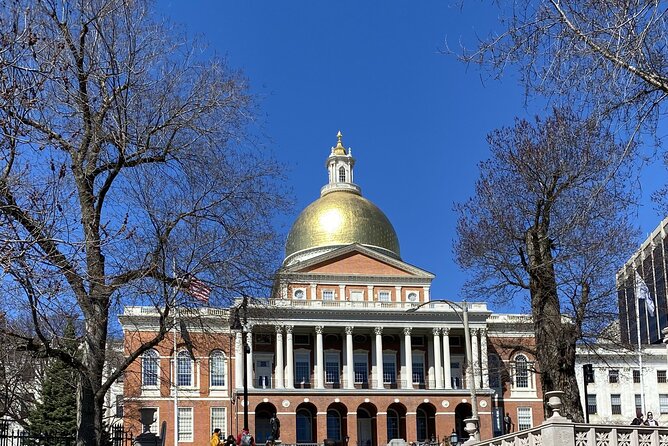
- Photo-friendly variety from the Massachusetts State House dome to cemetery views over the Charles River.
- Small group size (max 12), which makes questions and pacing easier than big bus tours.
Why a French Freedom Trail walk is a smart first taste of Boston
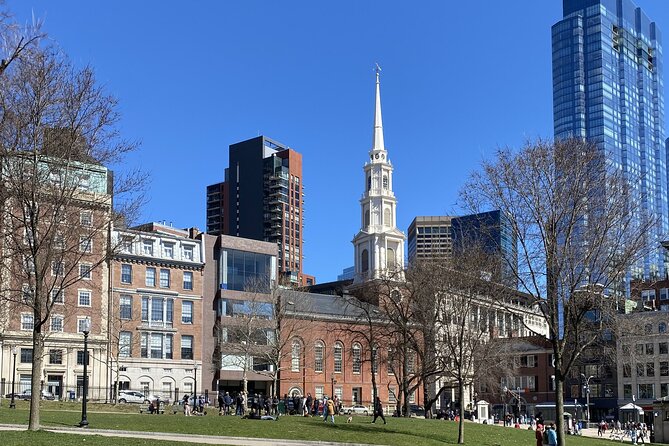
If Boston is your first stop (or your only day), you need a quick hit that gives you bearings. This tour does that by focusing on the downtown essentials tied to the Freedom Trail—and then finishing with the North End, where the city feels older in a different way. You get that classic Boston contrast: meeting houses and balconies on one hand, and compact neighborhood streets with food culture and viewpoints on the other.
The pacing is built for understanding. You’re not asked to sprint from one landmark to the next in silence. Instead, each stop gets context: what the place is, why it matters, and how it connects to the bigger story of founding, rebellion, and the people who shaped the city afterward.
And because the tour is in French, it’s especially valuable if you want real comprehension, not just “look at this sign.” The guide is designed to talk you through what you’re seeing in a language you can follow—so you leave with a mental map, not just photos.
You can also read our reviews of more walking tours in Boston

The guide style: what you can expect from a French specialist
The tour’s biggest strength is the guide. This isn’t a generic narration. You’re promised a French speaker and the tour is described as having fascinating, original anecdotes. In practice, that kind of approach matters a lot on the Freedom Trail, because many sites are famous but easy to misunderstand.
A good guide helps you notice details you’d otherwise miss—like the architectural cues on buildings you pass quickly, or the way symbolism works in public spaces. Here, that shows up in the mix of Federal-style and Second Empire-style architecture, plus the way Revolutionary events were read and performed publicly. It’s the difference between seeing Old State House and understanding why the balcony reading mattered.
You also get adaptability. The tour is described as being adjusted to your wishes and your pace. That doesn’t mean it becomes slow and random; it means you’re less likely to feel like a number in a group that has no room for questions.
Boston Common: where the story starts and the city greens up
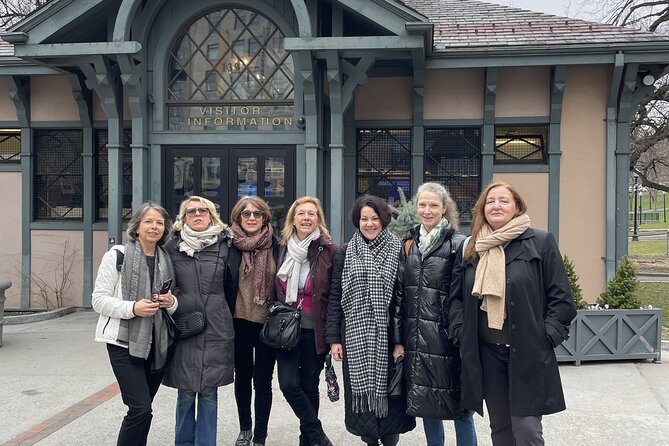
You begin at the Boston Common Visitors Center (139 Tremont St) and kick things off at Boston Common itself. This isn’t just a park stop—it’s the oldest public park in the United States, dating to 1634. That date matters because it anchors Boston’s early civic life: public spaces weren’t decoration; they were where the community gathered and where important moments could happen.
You’ll also hear about the Emerald Necklace, the green ribbon of parks connected in a chain. This gives you a useful mental picture for Boston: the city has built-in breathing room, and the early layout influenced how downtown still feels today.
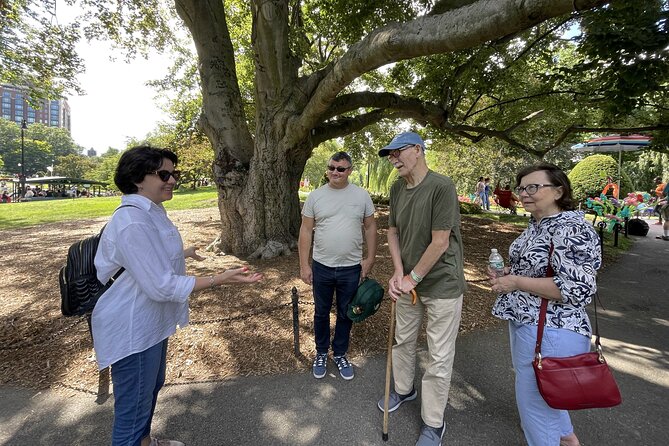
Expect a mix of monuments and landmarks here too, including the Boston Massacre Memorial, the Great Elm Tree, and the Soldiers and Sailors Monument. And since Boston Common is where the Freedom Trail begins, it sets the tone: you’ll start understanding the trail as a sequence of public memory, not just a list of old buildings.
Robert Gould Shaw Memorial: art you can’t ignore
Right after the Common, you stop at the Robert Gould Shaw and the 54th Regiment Memorial. This is a bronze bas-relief by sculptor Augustus Saint-Gaudens. If you’ve ever wondered why certain statues feel more “alive” than others, bas-relief does something interesting: it pulls you in visually while still leaving you enough distance to read the scene.
This stop is short, but it’s a strong one, because it broadens the Freedom Trail story beyond the American Revolution. You’re seeing how later history and later ideas about freedom and citizenship get honored in Boston’s public art.
For your photos, keep your camera ready even if the group moves quickly. You’re looking for the sculptural details, not just the overall silhouette.
Beacon Hill landmarks: the Massachusetts State House dome and Old City Hall
As you move into Beacon Hill, the tour turns more architectural. The Massachusetts State House is a big moment: built at the end of the 18th century by architect Charles Bulfinch, in Federal style, topped with a golden dome that dominates the skyline. When you understand that it’s Federal style, the building stops being only pretty—it becomes a statement of a young nation defining itself.
From there, you head to Old City Hall, built in 1865 in French Second Empire style. That detail matters. Second Empire style signals power and grandeur, and Boston chose it for civic leadership. This building hosted Boston’s city council from 1865 to 1969, so it spans a long period of government life—long enough that you can imagine how the city’s priorities shifted over time.
If you’re into architecture, you’ll likely enjoy this portion more than you expect. You’re not just told what happened; you’re shown what the city looked like when it wanted to project authority.






Old Corner Bookstore and the meeting houses: ideas travel through buildings
From Old City Hall, the tour heads toward some quieter but meaningful sites. Old Corner Bookstore (built in 1718) sits in the oldest commercial building in downtown Boston. The point here isn’t just age—it’s the role of publishing in shaping public thought. It’s described as a publishing house that produced multiple famous American classics, which makes it a useful stop when you’re thinking about education, reading, and how ideas spread.
Then you hit Old South Meeting House, built in 1729. It was a former Puritan church and served as a gathering place for nearly three centuries. Meeting houses like this are the backbone of how colonial communities formed arguments and organized action. They also help you understand why later Revolutionary events weren’t only fought with weapons—they were prepared with speeches, debates, and public pressure.
These stops are brief, so don’t plan to absorb everything by staring at the doors. Instead, listen for the “why this matters” explanation. That’s what transforms a historical facade into a story you can remember.
Old State House and the Boston Massacre site: public drama in plain sight
Old State House is one of the most important stops on the Freedom Trail because it’s tied to a specific date: July 18, 1776, when the text of the Declaration of Independence was read from the balcony. You’ll see how a public reading becomes an event—a moment when the city itself, not just the politicians, receives the news.
Nearby, the Boston Massacre site adds another layer. In 1770, British soldiers opened fire in front of a public building there, killing five Bostonians. That incident is called the Boston Massacre. The lesson here is that the Revolution didn’t start as a clean, heroic montage. It had fear, anger, and immediate consequences—played out in public places where people could see it.
If you care about how history actually unfolds, these two stops work well back-to-back. One is official declaration. The other is violent reaction.
Faneuil Hall and Quincy Market: liberty symbols and the city’s hangout spaces
Faneuil Hall Marketplace is labeled as the Cradle of Liberty. Built in 1741, it carries the weight of public meetings and political momentum. There’s also a specific symbol you’ll learn about: a golden weathervane shaped like a huge grasshopper. It became Boston’s first and most famous symbol.
Then you go to Quincy Market, built in 1824. Today, it functions as a food court with stalls and shops tucked into an alley-like space. This is a helpful transition. You’re moving from the language of politics into the lived rhythm of the city—people shopping, snacking, meeting, and moving through the same kind of corridors that travelers still use.
For planning, Quincy Market is also where you can reasonably picture a break in the tour day, even if the tour doesn’t frame it as a full meal stop. If you’re hungry, this is the part of the walk where you’ll feel it.
Union Oyster House and old pedestrian streets: the Revolutionary era meets everyday life
Union Oyster House is both a historic claim and a practical one: it’s described as the oldest restaurant in the United States (1826), in a historic building from 1704. The tour also notes a French connection—Louis-Philippe, future king of France, lived there in a modest apartment on the second floor.
This stop is quick, but it’s one of those details that makes Boston feel internationally tangled in an interesting way. You’re also getting a sense of continuity: old structures still host daily routines. That’s a big part of what this tour is selling—Boston as an open-air museum, but still a real city.
Behind the Bostonian hotel, you’ll also pass old pedestrian streets, including Blackstone block, which is listed on the National List of Historic Places. This is the sort of detail that might not be the headline, but it adds texture. It reminds you that the Freedom Trail isn’t only about grand monuments; it’s about the streets and corners that held regular life.
The North End in full: Paul Revere House, Old North Church, and Copp’s Hill views
Now you shift into the North End, literally the northern district—and one of the oldest Boston neighborhoods. You’ll feel the change as the tour moves from government and marketplaces into a compact neighborhood with strong historical identity.
The Paul Revere House (1676) is a major stop. It’s described as one of the last vestiges of the colonial era, and Revere lived there from the 1780s to 1800. This is the moment where the Revolution becomes personal. Instead of only political spaces, you’re seeing where a key figure lived.
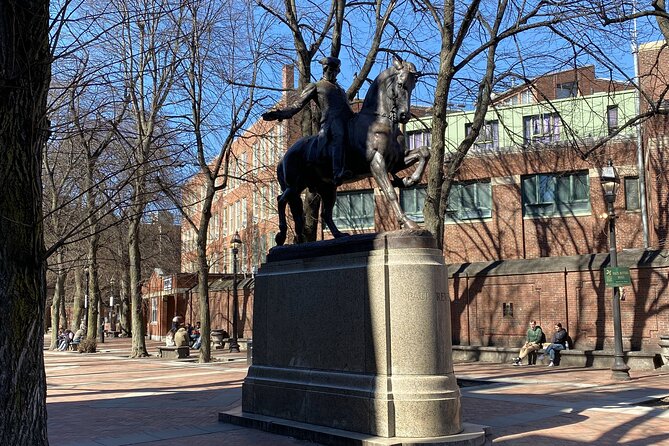
You then move to the Paul Revere Statue honoring the Midnight Ride (1775). Statues can be cliché if they’re presented without context, but when connected to the route of the ride, the monument becomes a quick shorthand for an entire episode of communication and urgency.
Old North Church and Historic Site comes next. The tour notes that the first church on this site was built in 1650, and throughout the colonial period it was the most influential church in the Northeast and a stronghold of the Puritan faith. That context helps you understand why religious institutions mattered so much in early community structure—not only as places of worship, but as centers of influence and social coordination.
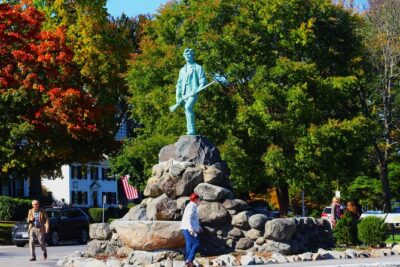
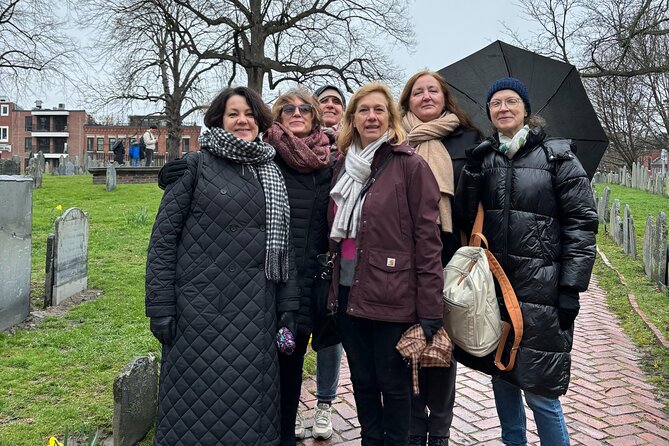
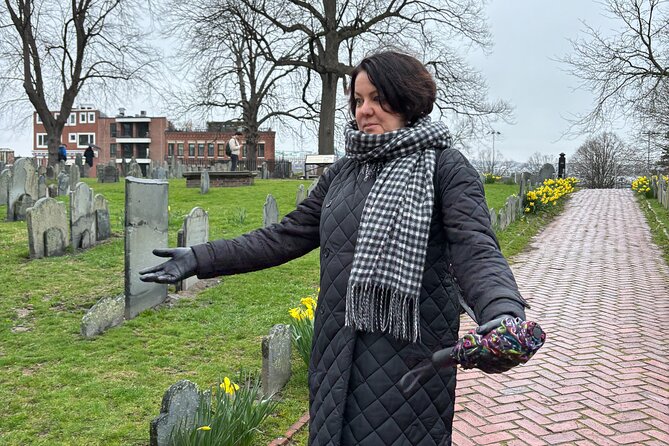
Finally, you end at Copp’s Hill Burying Ground. Copp’s Hill is the highest point in Boston’s North End, and there’s an old cemetery dating back to 1659 (the hill was erected in 1632). From Copp’s Hill Terrace, you get a panorama over the Charles River, with views that include the Bunker Hill Obelisk and the USS Constitution across the water.
This is a good ending because you finish with perspective. After walking the trail’s tight streets, the view gives your brain a wider frame.
Modern sculptures and the Holocaust Memorial: history is not only colonial
One of the most interesting parts of this tour is that it doesn’t freeze Boston in the 1700s. You’ll see modern Boston sculptures along the route, including The Embrace (described as recent) and the Holocaust Memorial.
Even without extra explanation, you can use these moments to do something useful: compare how different eras choose to remember. Revolutionary-era sites honor events through official civic structures and public readings. Modern memorial art often works more through emotion and human symbolism—still public, but aimed at empathy and reflection.
If you’re the type who likes your tours to speak to the present, this added layer can make the walk feel more honest. History isn’t only something behind glass.
Price and logistics: what $45 buys you on this walking route
At $45 per person for about 2 hours 30 minutes, the value comes from the structure: a specialist guide for the full time, a route with around 15 iconic stops, and a focus on seeing the key areas without paying for museums. The tour also notes taxes and fees are included, and it uses a mobile ticket.
You should also factor in that the group is capped at 12 travelers. That tends to create a more question-friendly experience than the big, fast tours that herd people along with minimal interaction.
The only real downside in “price-value math” is what you don’t get: no museum visits are planned. If your ideal Boston day is lots of interior exhibits, you’ll want to pair this tour with a museum or two afterward. But if your goal is to understand downtown fast, this price can feel like a bargain compared to how much time and confusion a self-guided Freedom Trail walk can create.
Who this tour suits best
This is a great match if you:
- want a French-language introduction to Boston’s Freedom Trail and North End
- care about context—why buildings and public spaces mattered
- prefer walking and photos over buses and indoor stops
- have limited time and want a logical downtown-to-North-End route
It may be less ideal if you:
- want lots of museum time or slow inside visits
- dislike walking for 2.5 hours with several short stops
- need frequent long bathroom breaks (the tour is structured as quick, view-focused segments)
Should you book this Freedom Trail tour in French?
I think it’s an easy yes if you want to get your bearings fast and learn how Boston’s Revolutionary story connects to the city you see today. The French guide angle is a real advantage, because the tour’s power is in the explanations, not just the scenery. Add the small group size and the fact that you end in the North End near Old North Church and Italian restaurants, and it becomes a smart “start here” day plan.
Book it if you can walk comfortably, dress for weather, and want a guided route that turns monuments into meaning. Skip it only if you’re mainly shopping for museum time, or if you prefer a self-guided stroll where you control every minute.
FAQ
What is the duration of the Freedom Trail walking tour?
It lasts about 2 hours 30 minutes.
How much does the tour cost?
The price is $45.00 per person.
Is the tour in French?
Yes, the guide is described as a French speaker.
Where does the tour start and end?
It starts at Boston Common Visitors Center, 139 Tremont St, Boston, MA 02111, and ends at Copp’s Hill Terrace, Boston, MA 02113, in the Italian Quarter near Old North Church.
Is transportation included?
No. It is a walking tour, so transportation is not included.
Are museum visits included?
No. Museum visits are not planned on this tour.