REVIEW · FREEDOM TRAIL TOURS
Heart of the Freedom Trail – 60 Minute Private Walking Tour
Book on Viator →Operated by Boston By Foot · Bookable on Viator
Boston’s Freedom Trail gets condensed fast. In about an hour, this private walking tour strings together the key Revolutionary stops between Faneuil Hall and Beacon Hill, with a guide who keeps the stories clear and human. I especially love the chance to stand at the Old State House balcony where the king’s decrees were proclaimed and the Declaration of Independence was read on July 18, 1776, and I also like the private group format where you can ask questions as you walk. The only catch: for $175 per group (up to 12), it’s best value if you’re traveling with a few people, and you only get a taste of each site in one 60-minute loop.
You start at 1 Faneuil Hall Market Pl and finish around One Beacon Street, so you can fold it into the rest of your day without fiddling with complicated logistics. You’ll use a mobile ticket, and the guide keeps the focus on how everyday colonists got pulled into big choices about power, trade, and who gets a voice.
In This Review
- Key things to know before you go
- One hour on the Freedom Trail: what “private” buys you
- Old State House: the balcony where power changed hands
- Faneuil Hall Marketplace: trade, wealth, and the messier side of gifts
- King’s Chapel: the church the colonists hated (and the patriot it honored)
- Old South Meeting House: the tea protest that sparked action
- Guides who keep it human (Kate and Marcie as examples)
- Price and value: when $175 per group makes sense
- Where the tour starts and ends (so you can plan the rest)
- Who this Freedom Trail walk is best for
- Should you book the Heart of the Freedom Trail tour?
- FAQ
- How long is the Heart of the Freedom Trail walking tour?
- Is this a private tour?
- What is the price?
- Where does the tour start and end?
- What sites are included?
- Do I need tickets or pay admission at the stops?
- Do I get a mobile ticket?
- Is transportation included?
- Can I cancel and get a full refund?
Key things to know before you go
- A true private tour (up to 12 people) for your group only, with time for questions.
- Four major Revolutionary-era sites covered in about 15 minutes each.
- Old State House context that goes beyond dates, including who benefited from liberty and who didn’t.
- Faneuil Hall’s marketplace story includes uncomfortable trade history, not just patriotic branding.
- Stops are practical and walkable, ending near One Beacon Street so you can keep exploring afterward.
- Guides are story-first, with pacing that works even with young kids (I’ve seen guides noted as patient).
One hour on the Freedom Trail: what “private” buys you
This isn’t a big group “follow the leader” situation. It’s a private walking tour, so you’re not competing with strangers for the guide’s attention at the corners and doorways. That matters on the Freedom Trail, because the best parts happen when a guide connects a detail to what you’re actually seeing in front of you.
I like that the tour is built around short, focused chunks: roughly four stops, each about 15 minutes. You get enough time to hear the story, notice key features, and keep walking without burning your day. If you’re short on time in Boston, this format is a smart way to get oriented fast.
You’ll also feel the value shift depending on who’s in your group. At $175 per group (up to 12), your cost per person drops quickly as your group size grows. If you’re two adults, it’s still reasonable for a private guide. If you’re solo, you might consider teaming up with friends or using it as a splurge.
You can also read our reviews of more walking tours in Boston



Old State House: the balcony where power changed hands
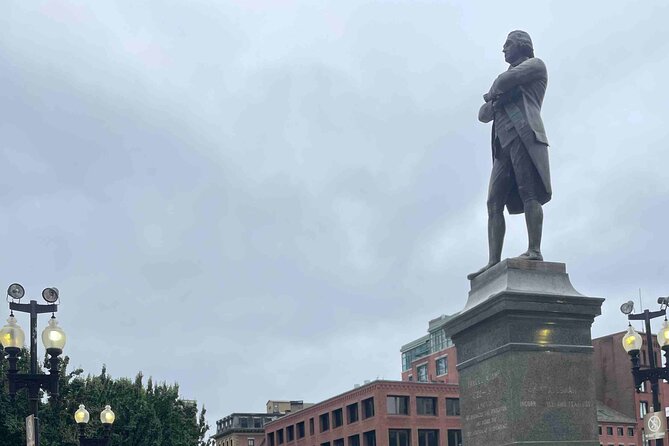
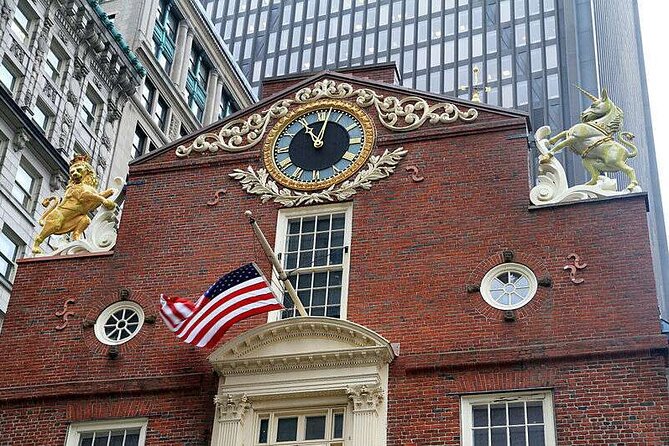
The Old State House is one of those places that makes you slow down without trying. Constructed in 1713, it’s the oldest public building in Boston, and it’s meant to look important—because it was. Government business happened here starting in 1658, and that long public-use timeline helps you understand why this building stayed central even as the political mood changed.
The most striking moment is the balcony connection. From this same kind of spot, royal governors would proclaim the king’s decrees—then, later, the Declaration of Independence was read here on July 18, 1776. Hearing that contrast in the same place is powerful. It turns “the Revolution” from a textbook line into a real shift in public authority.
The guide also frames liberty as a mixed deal. The quest for independence didn’t include everyone—African Americans and women remained without a voice. That’s not just a moral footnote; it’s part of the story of how revolutionary ideas spread unevenly, and it changes how you read the rest of the Trail.
What to watch for: you’ll likely get directed toward the building’s role in government and how public announcements worked in the 1700s. Even if you only catch a couple architectural details, the guide’s explanations make those details matter.
Potential drawback: in a one-hour tour, you’re here for about 15 minutes. You won’t get deep time for photos from multiple angles or extra time at the building beyond the guide’s main points—so treat this stop as orientation, not a full study session.
Faneuil Hall Marketplace: trade, wealth, and the messier side of gifts
Faneuil Hall Marketplace is where you feel the Trail’s energy. The setting today is lively, but the story starts with early Boston as a port town—about 14,000 people with a safe harbor and steady ship traffic tied to trade.
In 1742, Peter Faneuil—described as a wealthy merchant—offered the town a central marketplace like those found in Europe. Here’s the part that makes this stop memorable: the wealth behind that gift came from the transatlantic slave trade. Your guide helps connect that uncomfortable fact to how “civic improvement” and exploitation could sit side by side in colonial life.
The town didn’t instantly accept it. They were suspicious at first, worried a marketplace might harm their own businesses. Still, they accepted the offer by a slim margin, and at the last minute Faneuil decided to add a second floor. That detail makes the place feel more like a real decision-making process than a monument frozen in time.
What to watch for: listen for the “why” behind the marketplace. The guide’s job here isn’t just to say what happened; it’s to explain why a town with busy docks and merchants would want a central hub—and why that hub was funded by profits with human cost.
Potential drawback: if you want a detailed visit to every corner of Faneuil Hall, this tour won’t replace a longer walk or a standalone museum stop. You’re there to understand the political and economic hook, not to spend hours browsing the market scene.
King’s Chapel: the church the colonists hated (and the patriot it honored)
King’s Chapel brings a different flavor to the Trail: religion tied directly to power. Established in 1686, it was the first Church of England congregation in Boston, built for the royal governor to worship. When you stand nearby, the context helps you see why it became a symbol of what many colonists resented about England.
The guide connects this building to public feeling. Next to Boston’s oldest burying ground, King’s Chapel wasn’t just a place of worship; by the time revolution sentiment hardened, it also represented the presence of royal authority in daily life.
Then the story flips in an important way. By the revolution, King’s Chapel became the place where Boston’s charismatic patriot leader, Dr. Joseph Warren, was eulogized. The guide points out that Warren was not just a political name—he was an accomplished physician who cared for both Patriots and Loyalists. That balance adds complexity to the character: he’s not painted as one-note, and it helps you understand how leadership in wartime could still involve human care.
What to watch for: focus on the connection between institutions and loyalty. This stop works best if you listen for how a single building can shift meaning depending on who holds authority.
Potential drawback: again, the time is short. You get the headline story—enough to appreciate why it mattered—but you won’t have time to follow every thread about religious conflict, burial history, and Warren’s life.
Old South Meeting House: the tea protest that sparked action
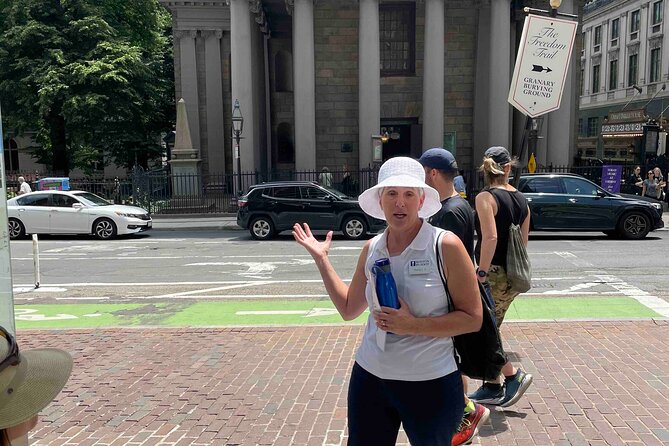
Old South Meeting House is where you feel the Revolution turning loud. Built in 1729, it was the largest meeting space in Boston. The guide explains how it fit the Puritan way of worship and daily life, and how that made it an ideal stage for public gatherings—especially protests.
You come here for one specific moment that ties the story together: the meeting on December 16, 1773. The East India Company was supplying tea to the colonies, and the guide connects the protest to the larger economic pressure. When the company was failing due to a poor economy in Europe, Britain stepped in with the Tea Act of 1773.
The key point you’ll hear: the Tea Act gave the East India Company exclusive access to tea. That exclusivity mattered because it squeezed out other trade and deepened colonial resentment. Standing near the meeting space after hearing this explanation is one of those “oh, so that’s why they acted” moments—action didn’t come out of nowhere.
What to watch for: listen for the cause-and-effect chain. The guide’s goal is to show how trade policy became political resistance, and how a meeting house became a launchpad for protest.
Potential drawback: this stop hits one major event clearly, but it doesn’t branch into every related uprising or legal detail. If you want a broader Tea Act deep dive, you’ll need another tour or your own reading afterward.
You can also read our reviews of more private tours in Boston




Guides who keep it human (Kate and Marcie as examples)
One big reason this tour works is the guide style. In past experiences with Boston By Foot, names like Kate and Marcie have been associated with memorable storytelling. What stands out in their descriptions is not just facts—it’s how they organize them so you don’t get lost.
Kate’s style is noted as captivating and very engaging, with story after story that keeps you listening instead of checking your watch. Marcie is described as fantastic and even helpful for longtime locals, including someone who said she taught them things they didn’t know despite living in Boston for decades. That’s a good sign if you’re not sure whether you’ll get value beyond what you already know.
There’s also a practical angle for families: one note credits the guide with being patient with young children. That’s not guaranteed on every tour, but it’s encouraging if you’re traveling with kids and want the pace to stay manageable.
What this means for you: if you like walking tours where you can ask a question and keep moving, you’re in the right place. If you hate interruptions or want total silence, you might prefer a self-guided audio walk.
Price and value: when $175 per group makes sense
At $175 per group (up to 12), this is priced like a true private guide, not like a per-person bus tour. For groups of four to six, the price is usually easier to justify because you’re spreading the guide cost. For two people, it can still be a good move if you care more about interaction and focused pacing than squeezing in the maximum sites.
Think of it as buying three things:
- Time efficiency: four key stops in about an hour.
- Interpretation: someone connects what you see to what it meant.
- Control: private group means less waiting around for everyone to “catch up.”
Also, the tour notes that admission is free at the listed stops. That doesn’t mean you’ll get unlimited access inside every area, but it does suggest you’re not paying a separate ticket cost for each location. In practical travel terms, this keeps the tour from turning into a budgeting surprise.
One thing to consider: the duration is approximate at one hour. If you’re the type who needs longer at iconic locations (for photos, quiet reading, or just slow walking), you may want to schedule extra time before or after.
Where the tour starts and ends (so you can plan the rest)
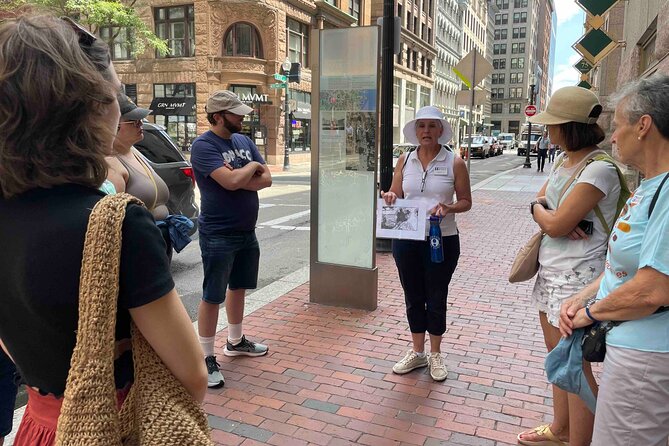
You’ll meet at 1 Faneuil Hall Market Pl and your tour ends around One Beacon Street (near the general area). That end point is useful because it puts you close to the next layers of Boston sight-seeing without forcing you to backtrack across town.
The tour is listed as near public transportation, which helps if your Boston plan includes buses or subway time. And service animals are allowed. For most people, the walking should be manageable—though the exact walking distance isn’t stated, so if you have mobility needs, you might want to ask the provider for a quick estimate before booking.
Who this Freedom Trail walk is best for
This tour is a great fit if:
- you want a first pass at Revolutionary-era Boston
- you like short, guided stops instead of long museum marathons
- you’re traveling with a group and want everyone hearing the same story at the same time
It’s especially good if you care about nuance—like the way liberty is described as incomplete, the way marketplace stories include the slave trade connection, and the way a church can represent both royal authority and patriot mourning.
It might be less ideal if:
- you already know the Freedom Trail basics and want a very deep, multi-hour approach
- you want lots of inside access or extended time at just one stop
- you’re traveling solo and can’t split the group price
Should you book the Heart of the Freedom Trail tour?
I’d book it if you want a smart, story-driven way to connect Boston’s Revolutionary landmarks without wasting half a day figuring out what matters. The one-hour length, the private group setup, and the way the guide ties each location to what changed politically and economically makes it a good value.
If you can share the cost with a few people, the math gets even friendlier. If you’re just one adult rolling solo, you may want to compare this against a self-guided Freedom Trail plan or a longer guided tour that costs less per person.
Bottom line: for a first-time or time-crunched Boston trip, this is one of the cleaner ways to understand the Freedom Trail’s big moments—and the uncomfortable parts that go with them—while still moving at a comfortable pace.
FAQ
How long is the Heart of the Freedom Trail walking tour?
The tour runs for about 1 hour.
Is this a private tour?
Yes. It’s a private tour/activity, and only your group participates.
What is the price?
The price is $175.00 per group, up to 12 people.
Where does the tour start and end?
It starts at 1 Faneuil Hall Market Pl, Boston, MA 02109, and ends in the general area of One Beacon Street, 1 Beacon St, Boston, MA 02108.
What sites are included?
The tour visits Old State House, Faneuil Hall Marketplace, King’s Chapel, and the Old South Meeting House.
Do I need tickets or pay admission at the stops?
The listed admission for each of the tour stops is free.
Do I get a mobile ticket?
Yes, the tour includes a mobile ticket.
Is transportation included?
No. Private transportation is not included.
Can I cancel and get a full refund?
Yes. Free cancellation is available up to 24 hours in advance for a full refund.