REVIEW · AUDIO TOURS
Boston Freedom Trail Self-Guided Tour with Audio Narration & Map
Book on Viator →Operated by Stories with Action · Bookable on Viator
Boston has a lot of history packed into a walk. This Freedom Trail audio tour is interesting because it gives you hands-free GPS narration and offline maps, so you can move at your pace without hunting for what to read next. The main drawback: it depends on your phone working well (battery, GPS accuracy, and downloaded audio).
What I like most is how you control the rhythm. You can start, pause, and keep going when the mood (or lunch break) hits, and the route guides you through 16 historic sites with 51+ audio stories. Expect a good chunk of walking, and plan for slower days if the area is busy.
In This Review
- What You’ll Love Most About This Freedom Trail Audio Walk
- How the GPS Audio Really Works on the Freedom Trail
- Price and What $9.99 Buys You (Plus Why Lifetime Access Matters)
- Timing and Walking Reality: Plan for 3–4 Hours, Not Just the 2.5 Miles
- Boston Common to the Massachusetts State House: Starting at the Revolutionary Heart
- Park Street Church and Granary Burying Ground: Why the War Started and Who’s Buried Close By
- Irish Famine Memorial and Old South Meeting House: Tea Party Tension, Plus an Immigration Side of Boston
- Old State House and the Boston Massacre Site: The Spark Question Answered on the Spot
- Faneuil Hall Marketplace to Haymarket: Revolution-Era Boston Meets Today’s Food and Viewpoints
- Paul Revere’s House and Old North Church: Midnight Ride Myth vs. Reality
- Copp’s Hill Burying Ground and USS Constitution: North End Roots to Charlestown’s War on the Water
- Bunker Hill Monument: The End Point That Makes the Whole Walk Feel Worth It
- Who Should Book This Freedom Trail Audio Tour
- Final Call: Should You Book This Freedom Trail Audio Walk?
- FAQ
- How long does the Boston Freedom Trail self-guided audio tour take?
- What does the tour cost?
- Is this tour GPS-based and does it play automatically?
- Do I need an internet connection during the walk?
- Are there admission tickets included?
- Can I pause and resume the tour whenever I want?
- Does the tour have lifetime access?
- Where does the tour end?
What You’ll Love Most About This Freedom Trail Audio Walk
- Location-triggered audio: the story plays as you reach each stop, so you’re not stuck staring at your screen.
- Offline-ready map + download requirement: no signal needed after you download on strong Wi‑Fi/cellular.
- Lifetime access: no expiry, so you can reuse it on future Boston trips.
- Go at your pace: pause for photos, shops, or a meal, then resume.
- Great value: at $9.99 per person, you’re buying flexibility plus a repeatable self-tour.
How the GPS Audio Really Works on the Freedom Trail

This is built around a simple idea: you follow the Freedom Trail on foot while your phone handles the storytelling. Once you’re at the first story’s point, audio starts on its own and keeps rolling as you move to the next highlight.
The app also supports offline use. You’ll be asked to download the tour while you’re on strong Wi‑Fi/cellular, then it works without cellular or Wi‑Fi afterward. That matters in Boston because cell service can be patchy in crowded pockets of downtown and the North End.
If you’re the type who dislikes group tours—standing still while everyone catches up—this format fits. You can stay focused on what you want to hear, then linger when a site feels worth extra time. One thing to remember: because the narration is tied to location, your results can be affected by phone settings, GPS behavior, and whether your audio is clearly audible.
You can also read our reviews of more guided tours in Boston



Price and What $9.99 Buys You (Plus Why Lifetime Access Matters)
At $9.99 per person, you’re not paying for museum tickets or guided entry. You’re paying for guided-style context: route guidance, a map, and a pile of audio stories that explain what you’re seeing as you walk.
The big value kicker is lifetime access with no expiry. That turns this from a one-time purchase into a “keep it for next time” item. If you’re doing Boston for the first time, that’s already useful. If you’re returning, it can also act like a second pass—especially if you didn’t have time to go inside buildings or you missed a story on a technical day.
Timing and Walking Reality: Plan for 3–4 Hours, Not Just the 2.5 Miles

The core Freedom Trail is about 2.5 miles long, but the full walking experience can feel longer. The tour notes it’s over 3 miles and typically takes about 3–4 hours to complete.
Here’s how to plan it realistically:
- If you stick to the route and keep moving, 3–4 hours is a fair target.
- If you go into buildings, stop often for photos, or take longer at places like the North End and the Charlestown waterfront, it can run longer. One account described it around 6 hours when adding extra time inside.
Also, Boston can be crowded—especially on Saturdays. The Freedom Trail runs through heavy foot traffic and busy streets, so give yourself a little extra slack if you’re traveling on a weekend.
Boston Common to the Massachusetts State House: Starting at the Revolutionary Heart

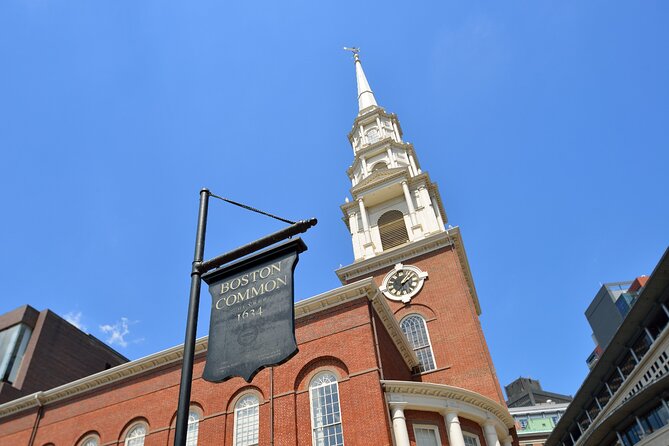
Most people start in the Boston Common area, and the tour begins with Boston Common’s Visitor Center and the red-brick path. This is a smart place to begin because the Common is where the story of early Boston feels anchored.
At Boston Common, you’ll get the setup: the green space is tied to early colonial beginnings, and the audio helps you understand why the Freedom Trail matters for American independence.
Then you hit the Massachusetts State House, famous for its golden dome. You’ll pause in front of it and hear about key Revolutionary War figures and why later American heroes mattered too. One highlight here is the connection to the Robert G Shaw and 54th Memorial opposite the State House—plus why the 54th Regiment is significant.
Practical note: if you’re driving, parking can be tough around the start. The tour’s own guidance is clear—arrive early—because spaces fill quickly.
Park Street Church and Granary Burying Ground: Why the War Started and Who’s Buried Close By
Next the path brings you to Park Street Church. The audio framing here is useful: it tackles the big question of what prompted the Revolutionary War. Instead of treating it like a sudden explosion, the story is presented like a chain of causes stretching across older conflicts and places beyond America.
Then you move into Granary Burying Ground, established in 1660. This stop is great if you like history you can see without buying a ticket. The audio points out details that make the place feel time-warped:
- It notes the grave of Mother Goose.
- You’ll hear about major American figures connected to the Revolution, including Paul Revere, Robert Paine, James Otis, John Hancock, and Sam Adams.
- It also includes the graves of those killed in the Boston Massacre, which becomes a later stop on the trail.
One reason this stop gets high marks is that cemeteries can feel like “just stones,” unless someone helps you connect the names to the story. The audio does that work for you.
You can also read our reviews of more tours and experiences in Boston






Irish Famine Memorial and Old South Meeting House: Tea Party Tension, Plus an Immigration Side of Boston

A few steps down from the Latin School area is the Boston Irish Famine Memorial. This is a different angle than most Freedom Trail stops. The tour uses it to talk about immigration waves after the Revolution, and it doesn’t ignore the hardships immigrants faced. You’ll also hear where these communities exist today, which helps you connect past and present Boston.
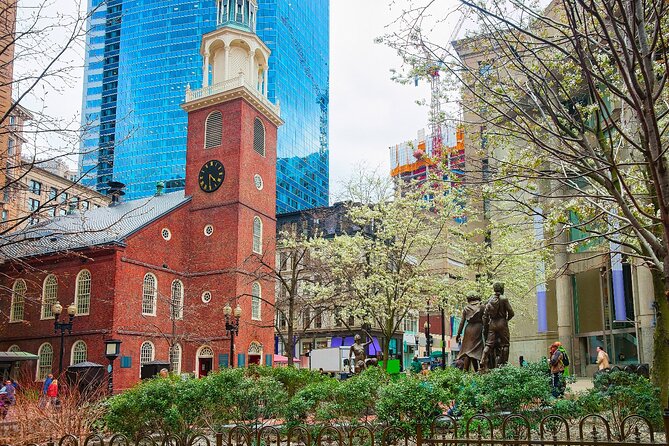
Right across the street you reach the Old South Meeting House. Even though it’s small and easy to miss from the sidewalk, it’s a big deal in the lead-up to the Revolutionary War. The audio walks you through the Boston Tea Party: who organized it, what motivated the action, and what happened afterward.
This pairing—Irish Famine Memorial followed by Tea Party history—works well because it reminds you the Freedom Trail isn’t only about battles. It’s also about social change and conflict over power.
Old State House and the Boston Massacre Site: The Spark Question Answered on the Spot

Continuing along the red-brick road, you reach the Old State House area. The tour pauses to help you spot architectural features and explains why the building matters. You’ll also be guided around to see it from another perspective, which is handy because this area can be confusing if you’ve only seen pictures.
Then the trail goes to the Boston Massacre site. This is the moment that turns “history reading” into “standing in the place where it happened.” The audio prompts you to think critically: was it truly a massacre, or was it what the British claimed—a rowdy riot?
You’ll also hear about Crispus Attucks, described as an honored American hero in the tour’s narration.
Faneuil Hall Marketplace to Haymarket: Revolution-Era Boston Meets Today’s Food and Viewpoints

From the Boston Massacre site you follow the trail to Faneuil Hall Marketplace and Quincy Market. This stop can feel like a break inside the learning—because you’re in a high-energy public space. The audio includes the site’s history, and then you’re free to use the moment for what you actually want: snacks, a meal, or a short wander.
Then you move toward Haymarket. Here, the audio connects a historic district story with a modern landmark: it mentions the Holocaust Memorial in front of the area, and it also points out views toward the Custom House Tower a bit beyond.
If you like your self-guided tours to include both context and practical walking direction, this portion does the job. You’re not just hearing dates—you’re also getting a sense of where to look and what to notice.
Paul Revere’s House and Old North Church: Midnight Ride Myth vs. Reality
As you continue along the Freedom Trail, you reach Paul Revere’s House. The audio focuses on his Midnight Ride and also covers how it became immortalized in a poem by Henry Wadsworth-Longfellow. It also addresses the myths versus the truths behind the story, which is exactly what you want here. Most people already know the legend, but the context helps you understand what happened and why it got remembered.
From there you go to Old North Church, one of the iconic lantern stops. The audio references the signaling story tied to the famous phrase about lanterns—one if by land, two if by sea. Again, this works because you’re hearing a narrative while standing at the spot, not reading a plaque and hoping you’ll connect the dots.
Copp’s Hill Burying Ground and USS Constitution: North End Roots to Charlestown’s War on the Water
After Old North Church, the trail climbs up to Copp’s Hill Burying Ground in the North End. This cemetery is highlighted as older than Granary by a year, which helps you keep the timeline straight when you’re moving quickly.
The final push carries you over the bridge and into the Charlestown Navy Yard area. This is where the walking payoff feels big. You’ll see the USS Constitution and hear about the epic battle against the Guerriere. The narration also expands into naval battles of the War for Independence, which rounds out the Revolution story beyond town squares and meeting houses.
If you’re a history nerd, this is often the emotional high point. You get scale: the ship feels real and physical, and the audio gives you a reason it mattered.
Bunker Hill Monument: The End Point That Makes the Whole Walk Feel Worth It
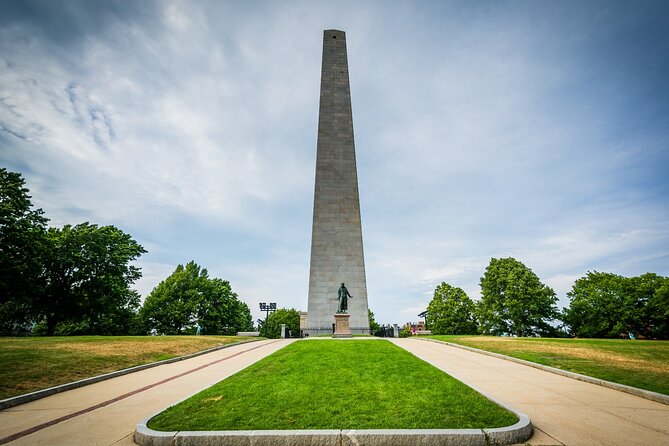
Your last major stop is the Bunker Hill Monument. The audio frames it as a commemoration of the Battle of Bunker Hill and guides you to walk around the hill and understand the brutality and intensity of the battle for freedom.
This stop is valuable because it gives closure. The earlier stops can feel like a chain of names and events. Bunker Hill pulls them together into a single high-stakes moment.
Just note: your experience ends in a different location, so plan how you’ll get back to where you started. One practical workaround that can help if you parked near the end area is taking the Orange Line from Community College Station to Park Street Station, which puts you right by Boston Common.
Who Should Book This Freedom Trail Audio Tour
I’d put this in the category of tours that work best if you like independence:
- You want Freedom Trail history without hearing someone else’s pace.
- You prefer flexible breaks for photos, shops, or food.
- You enjoy learning while walking, but you don’t want to micromanage a guidebook page by page.
It’s also a good choice for solo travelers and couples. The tour notes couples can share one tour by splitting headphones, which can cut the listening cost in half for groups comfortable sharing audio.
Final Call: Should You Book This Freedom Trail Audio Walk?
Yes, if you want a low-cost, repeatable way to experience the Freedom Trail with an audio map you can use offline. The best reasons to choose it are the control you get—start/stop/resume—and the sheer number of guided stories tied to real stops.
I’d think twice if your plan depends on flawless phone tech. Because narration is location-triggered, you’ll want a charged phone, clear audio, and downloaded content beforehand. Also, weekends can be crowded, so go in with realistic expectations about traffic and foot flow.
If you’re ready to walk and learn on your own schedule, this is a solid buy for $9.99 and a great way to connect Boston’s Revolutionary story—Common to Charlestown to Bunker Hill—without feeling rushed.
FAQ
How long does the Boston Freedom Trail self-guided audio tour take?
It’s listed as about 3 to 4 hours. The route covers more than 3 miles, so if you linger at stops or add extra time, plan for longer.
What does the tour cost?
The price is $9.99 per person.
Is this tour GPS-based and does it play automatically?
Yes. Audio stories play on their own based on your location, using GPS cues in the app.
Do I need an internet connection during the walk?
You should download the tour using strong Wi‑Fi or cellular first. After that, it works offline with offline maps.
Are there admission tickets included?
No. Attraction passes, entry tickets, and reservations aren’t included.
Can I pause and resume the tour whenever I want?
Yes. It’s self-guided, so you can start anytime and pause anywhere, then pick up where you left off.
Does the tour have lifetime access?
Yes. It’s described as new and lifetime access with no expiry, so you can use it on future trips.
Where does the tour end?
It ends in a different location than the start. The final stop on the route is the Bunker Hill Monument area.