REVIEW · AUDIO TOURS
Boston’s Freedom Trail: A Self-Guided Audio Tour
Book on Viator →Operated by VoiceMap Audio Tours · Bookable on Viator
Boston’s Freedom Trail gets a lot more personal. This self-guided VoiceMap audio tour turns the walk into a story you can pause, rewind, and hear again later. I like the flexible pace, because you can linger outside the Massachusetts State House or speed up through the less interesting blocks. I also love that it’s built for offline use, so you’re not stuck hunting for signal while you follow the trail.
One thing to keep in mind: the audio follows a set walking route with turn-by-turn prompts. If you wander too far off-track or try to do the walk in reverse, you can get confused, and the fix is using the app’s Resume tool to jump back in.
In This Review
- Key highlights worth planning for
- Freedom Trail, tuned for your own pace
- How VoiceMap keeps you on the trail (even when life interrupts)
- Price and value: $11.99 for a lifetime of walking stories
- Stop 1: Massachusetts State House for orientation and themes
- Granary Burial Ground: forefathers, not just statues
- Paul Revere Grave and the 13 career twist
- John Hancock’s Madeira wine trouble
- Omni Parker House: famous names and a wry connection
- King’s Chapel built over a cemetery
- Old City Hall and the statue moment
- Old South Meeting House and the museum connection
- Old State House and the politics you can feel
- Faneuil Hall: where the Puritans show up
- Old North Church and Paul Revere’s many rides
- Paul Revere Statue: learn the horse story
- Ending at the Paul Revere House: Boston’s oldest standing structure
- Headphones, smartphone, and simple route strategy
- Is this tour worth your time? Who it suits best
- Should you book this Boston Freedom Trail audio walk?
- FAQ
- How much does the Boston’s Freedom Trail self-guided audio tour cost?
- How long does the tour take?
- Is the tour available in English?
- Do I need cellular service to use the audio?
- Where does the tour start and end?
- Does the tour include entrance tickets to museums or attractions?
- What do I need to bring with me?
- Is this tour private?
- Can I cancel for a refund?
Key highlights worth planning for
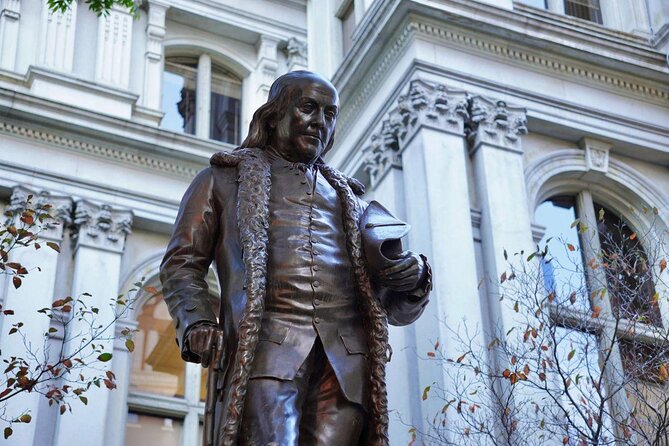
- Offline audio + maps so the Freedom Trail still works without cellular service
- Turn-by-turn guidance that keeps the story connected to where you are
- Revolutionary characters in walking form, from Paul Revere to John Hancock
- Granary Burial Ground stops that add meaning beyond the usual textbook names
- Lifetime access plus an included virtual option for rewatching later
- Simple start/end points near major downtown landmarks, from the State House to the Paul Revere House
Freedom Trail, tuned for your own pace

The Freedom Trail is the kind of Boston experience that’s both famous and easy to mess up. If you go in expecting a quick highlights reel, you’ll miss the small details that make the route feel real. This self-guided audio approach helps because you’re not locked into a group’s speed or listening order.
You also get the best kind of freedom for a walking trail: you can stop for photos, take a breath, or slow down at the spots that actually grab you. Want to linger at Granary Burial Ground or replay the parts about Paul Revere’s roles? You can. The tone is built around a guide with real enthusiasm for the history, and that matters, because the story isn’t just dates. It’s people making decisions, sometimes in ways that seem oddly familiar.
The route itself is straightforward: you start in front of the Massachusetts State House and finish at the Paul Revere House. Along the way, you’ll hit the most recognizable Freedom Trail sites without having to manage a guide in real time.
You can also read our reviews of more guided tours in Boston



How VoiceMap keeps you on the trail (even when life interrupts)
This tour runs through the VoiceMap app on Android or iOS, and you get offline access to audio, maps, and geodata. That’s a practical win in Boston, where phone coverage can vary block by block.
The audio isn’t just narration. It’s tied to directions. The app uses turn-by-turn prompts so you’re not stuck guessing where you should be when the story changes.
Two details that help you avoid frustration:
- If you pause to take a break or detour to an attraction mentioned along the way, look for the Resume button in the app. It lets you restart from the closest point to where you are.
- If you start at the wrong end and walk in reverse, the directions can feel backwards. Since the tour is designed for a set order, left turns can become right turns when you do it backwards.
So the best approach is simple: follow the intended direction, and use Resume if you step away.
Price and value: $11.99 for a lifetime of walking stories

At $11.99 per person, this isn’t priced like a full-day guided tour with a ticketed attraction and transportation. You’re paying for the audio experience, offline maps, and lifetime access.
That value equation gets better if you do any of these:
- You walk slowly and like to stop often.
- You want to revisit the story later without buying a second guided tour.
- You’d rather put your money into snacks and transit than into a tour fee that doesn’t leave you much time to linger.
This tour also includes a virtual tour option so you can revisit the sites at home. Even if you don’t rewatch it right away, lifetime access means the story stays in your pocket for future trips to Boston or for sharing with a travel buddy.
Stop 1: Massachusetts State House for orientation and themes
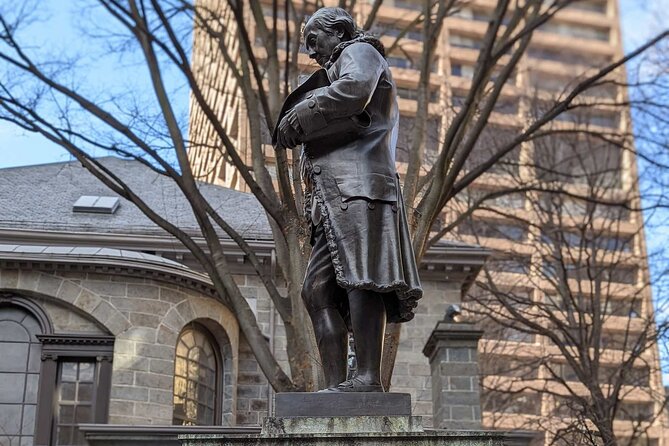
Your tour begins at Massachusetts State House, 24 Beacon St. This is the part of Boston where it’s easy to get your bearings fast, because you’re at the highest point in the city. The audio introduction also explains how VoiceMap works, while you get the major themes you’ll keep hearing about as you go.
Even if you’re not a flag-and-declaration person, the State House stop matters because it frames the walk. You’re not just touring sites; you’re learning how people in power, and the public pressure around them, shaped the era.
Practical tip: take a minute before you start walking to check your app and volume. You’re about to get stories tied to specific locations, and it’s easier to set up once than to troubleshoot every few blocks.
Granary Burial Ground: forefathers, not just statues
Next up is Granary Burial Ground. This is where the Freedom Trail turns from “historic buildings” into real people with real lives. The audio guides you through the graves of some of America’s forefathers, which gives you a different lens than monuments alone.
Here’s what I think makes this stop worthwhile: it slows the pace down without killing momentum. You can stand, listen, and connect names you’ve heard before to the physical ground where they’re remembered.
If you’re sensitive to the tone of cemeteries or prefer a lighter walk, this is still manageable, but plan for it to feel a touch more serious than the other stops. It’s also a good place to stand still long enough that you don’t feel rushed by the audio.
You can also read our reviews of more tours and experiences in Boston






Paul Revere Grave and the 13 career twist
After Granary, you pass the Paul Revere Grave. Instead of the usual “Paul Revere rode at night” summary, the audio focuses on his 13 successful careers—an angle that makes Revere feel more like a multi-tasking Boston entrepreneur than a single moment in a painting.
If you’ve only heard one famous story about him, this section is a good reality check. It nudges you to see how people in that era didn’t just do one heroic thing. They built lives, took risks, and moved between different roles.
As you walk past, keep an eye on where you are in the route. The audio here is location-specific, so don’t wander far before the story lands.
John Hancock’s Madeira wine trouble
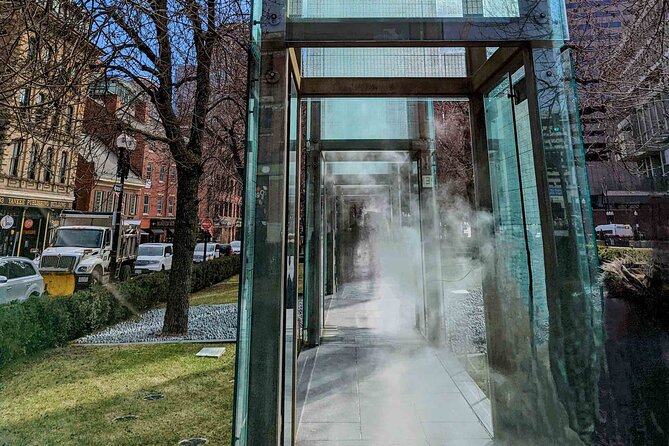
The next major character stop is John Hancock’s Grave. The audio brings up the trouble caused by his love of Madeira wine.
It’s a quick story beat, but it’s a smart one. Hancock becomes more human when you learn about habits and the messy side of reputation. You’re also reminded that public figures were still just people reacting to temptation, talk, and consequences.
This is also one of those stops where the audio helps you avoid the boredom trap. If you’re walking Boston quickly and only reading plaques, you might miss the personality. The audio gives you a reason to pay attention to the details you’d otherwise skim.
Omni Parker House: famous names and a wry connection

You’ll walk by the Omni Parker House. The audio points out famous figures who were connected to the property, including Charles Dickens and John Wilkes Booth.
This is one of those “wait, really?” moments that makes the Freedom Trail feel less like a timeline and more like a living city. It also adds a layer of contrast: Dickens represents literary fame and European attention, while Booth connects to the darker end of American history.
Keep your expectations flexible here. You’re not entering the building on this tour. You’re getting the story attached to the location as you pass, so the value is in the context, not in touring inside.
King’s Chapel built over a cemetery
Next comes King’s Chapel. The audio explains why the chapel was built on top of a cemetery.
If you like history in the form of practical choices—what got moved, what got built over, and what it meant for the community—this stop hits. It’s also a reminder that cities evolve. The Freedom Trail isn’t just old buildings preserved like museum pieces. It’s old history layered under newer life.
Stay aware of your surroundings here. You’re in a major downtown walking area, and the audio is guiding you as you go. Keep your eyes up, not only on your screen.
Old City Hall and the statue moment
You’ll pass by Old City Hall and hear about the statue in front of it. This section is shorter, but it’s a helpful way to make the stop feel intentional instead of like a quick glance.
For me, the value of these minor stops is that they keep the walk from turning into a string of big-ticket names only. You start to notice details you’d miss otherwise, like the way public art signals what a city wants to remember.
Old South Meeting House and the museum connection
Then you’ll move to the Old South Meeting House. The audio tells you about the museum, while you’re passing by.
Even without entering, the audio can help you understand why this site matters. It frames what you’d be looking for if you chose to add museum time later. Since the tour doesn’t include tickets or entrance fees, treat this as a “set up your next decision” stop.
If you want to add a museum, do it carefully. If you leave the route for too long, use Resume so the story doesn’t drift away from where you currently are.
Old State House and the politics you can feel
At the Old State House, the audio gives you the building’s history as you walk past. This is where the Freedom Trail starts to feel like more than “Revolution stuff.” It becomes politics: power, conflict, and public theater.
The audio approach helps here because building history is easy to forget when you’re just reading a plaque while walking. The voice guide ties what you’re seeing to what mattered at the time.
Tip: slow down a notch at the Old State House area. You’re learning context, not just absorbing facts.
Faneuil Hall: where the Puritans show up
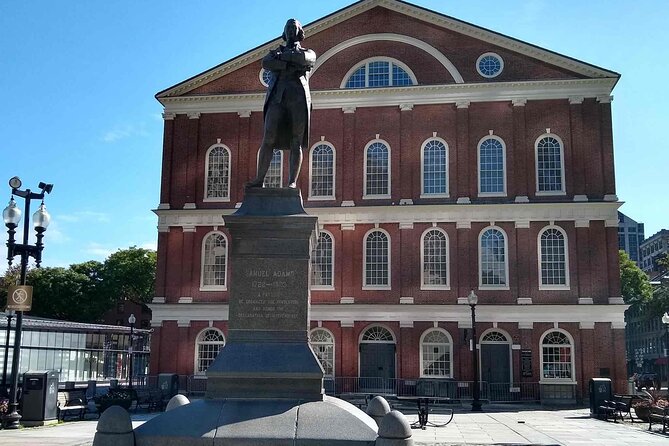
Next is Faneuil Hall, and the audio connects it to the Puritans while you walk.
This matters because it nudges you past the common idea of the Revolution as just battles. It reminds you there was a longer social world under it—beliefs, community networks, and ideas that shaped what people were willing to fight for.
This stop also works well for first-time Boston visitors because Faneuil Hall is one of those “you can’t miss it” locations. The audio turns your pass-by into an actual learning moment.
Old North Church and Paul Revere’s many rides
At Old North Church, the audio shares some of Paul Revere’s many rides.
This is a great middle-to-late tour moment because it gives you the famous legend, but with enough extra texture that you don’t feel like you’re hearing the exact same version you’ve heard in school. You also get a sense of how Revere’s work was connected to communication and urgency.
If you’re the type who likes to connect landmarks to the story in your head, this is one of the spots that clicks. Stop for a photo if you want, but don’t lose your place—your audio cues depend on your route position.
Paul Revere Statue: learn the horse story
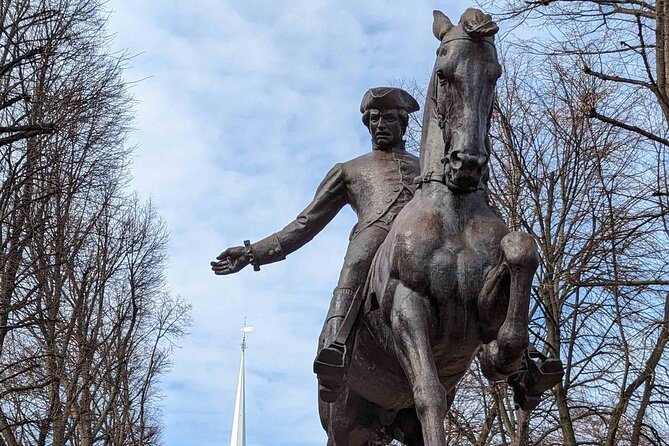
You’ll pass the Paul Revere Statue, and the audio explains what you can learn about the horse Paul rode.
It’s a small detail, but that’s exactly the point. The tour doesn’t only do big biographies. It does the everyday specifics that make the scene feel more real.
It’s also a nice transition toward the final stop, because by the time you hear this, the walk has turned into a connected narrative rather than separate points.
Ending at the Paul Revere House: Boston’s oldest standing structure
The tour ends in front of the Paul Revere House at 19 N Square. This is listed as Boston’s oldest standing structure, and it’s a strong ending because you’re finishing with the physical place tied to the person at the center of several earlier stops.
If you want a clean wrap-up, stand for a minute and let the final audio play without rushing. Then, if you feel like it, use the included virtual tour option later at home to keep the story fresh.
Headphones, smartphone, and simple route strategy
A few practical notes so your walk goes smoothly:
- Bring your own smartphone and headphones. Those aren’t included.
- Check that you’re ready for offline audio before you set off.
- Stay on the marked path. The tour is designed for a set route with turn-by-turn directions.
- If you stop for a while or stray, use the Resume button so the app can match you back to the closest point.
And if your app has technical trouble and won’t start, you can reach VoiceMap support at [email protected]. That’s worth knowing in advance because it changes what you do next—from waiting and hoping, to getting help fast.
Is this tour worth your time? Who it suits best
This is a good fit if you want:
- A guided-style experience without booking a timed group tour
- The ability to pause and control your own pace
- Offline convenience while walking Boston streets
- Lifetime access so you can revisit the story later (and use the virtual option)
It’s also a smart choice if you’re traveling with people who want the same route but not necessarily the same pace. Since it’s self-guided, you’re not forced to keep marching when someone spots a side street.
Less ideal if you:
- Prefer a hands-on guide in person who can improvise with questions
- Want museum entry tickets bundled in (this tour doesn’t include them)
- Don’t like app-based experiences, since you’ll need the VoiceMap app running properly
Should you book this Boston Freedom Trail audio walk?
Yes, if you’re the kind of traveler who likes walking as a way of seeing, and you want the Freedom Trail to feel connected instead of pieced together from plaques. For $11.99, the mix of offline support, lifetime access, and story-led stops makes it an easy value bet.
I’d skip it only if you hate depending on your phone, or if you absolutely want the Freedom Trail done with museum tickets included. For everyone else, this is one of those practical tours that turns a famous route into something you can actually remember.
FAQ
How much does the Boston’s Freedom Trail self-guided audio tour cost?
It costs $11.99 per person.
How long does the tour take?
It takes about 1 hour 15 minutes to 1 hour 30 minutes.
Is the tour available in English?
Yes, the tour is offered in English.
Do I need cellular service to use the audio?
No. The audio, maps, and geodata are available offline.
Where does the tour start and end?
It starts in front of the Massachusetts State House at 24 Beacon St and ends in front of the Paul Revere House at 19 N Square.
Does the tour include entrance tickets to museums or attractions?
No. Tickets or entrance fees to museums or other attractions are not included.
What do I need to bring with me?
You’ll need your smartphone and headphones. Food and drink are also not included.
Is this tour private?
Yes. Only your group will participate.
Can I cancel for a refund?
No. This experience is non-refundable and cannot be changed for any reason.