REVIEW · AUDIO TOURS
Self-Guided Boston’s Beacon Hill Underground Railroad Audio Tour Walking Tour
Book on Viator →Operated by WalknTours · Bookable on Viator
Beacon Hill hides its freedom stories in plain sight, and this self-guided audio tour helps you hear them in order. I like that you control the pace with pause/go back tools and clear narration at each location. You’ll also hit major sites tied to escape routes and key figures like Harriet Tubman, Lewis Hayden, and Charles Sumner. One watch-out: the walking directions and the shift between the main story and Dig Deeper moments can feel a little jumbled, especially if you’re moving quickly.
You’ll start at Charles Street Meeting House on Charles St and finish at the African American Meeting House on Joy St, and you can begin and end whenever you want. It’s a private activity for just your group, offered in English, with a simple phone setup and a route that’s tight enough to fit a half-hour coffee stop afterward.
In This Review
- Key Highlights Worth Your Time
- Why Beacon Hill’s Underground Railroad Stories Work So Well on Audio
- A practical expectation
- Starting at Charles Street Meeting House, Ending at the African American Meeting House
- How the route feels on foot
- John J. Smith House and the Early Mechanics of Underground Railroad Help
- The kind of detail to listen for
- Harriet Tubman’s Life and 83 Phillips Street: John Sweat Rock’s Firsts
- A tip that helps here
- Lewis Hayden’s Home: Safe Work, Real Risk
- Why this stop matters to your understanding
- Leonard Grime and the Role of a Conductor
- What to listen for
- The Old Temperance Boarding House: Shelter and Strategy
- Best way to enjoy this stop
- Old Phillips School: First Integrated School in Boston
- How this stop changes the whole tone
- Vilna Shul and the Jewish Community’s Role in Help
- What you’ll appreciate while walking past it
- John Coburn and a Gaming House That Served as a Station
- Why this detail is worth hearing
- Charles Sumner’s Birthplace: Abolitionist Power in Boston
- Listening strategy
- Price, Time, and Value for $9.75
- The one reason it might not be worth it
- Navigation Tips (So You Don’t Get Stuck on a Street Corner)
- Best time to walk
- Who This Audio Tour Fits Best
- Should You Book This Beacon Hill Underground Railroad Audio Tour?
- FAQ
- How long is the self-guided walking tour?
- Where do I start and end the tour?
- What does the tour include?
- Can I pause or adjust the tour while I’m walking?
- Is this a group tour or private?
- Do I need to cancel at least a day in advance for a full refund?
Key Highlights Worth Your Time
- Phone-guided narration at Underground Railroad landmarks so you don’t have to guess what you’re looking at
- Go at your pace with pause and go back features for stops you want to linger over
- Beacon Hill’s key names in one walk, including Lewis Hayden, John Sweat Rock, and Leonard Grime
- Stops you can actually see plus public passageways and alley-like routes that many standard walks miss
- Small time commitment (about 45–55 minutes) for a low ticket price
Why Beacon Hill’s Underground Railroad Stories Work So Well on Audio
Beacon Hill is one of those neighborhoods where everything looks “normal” until you connect it to the people who risked their lives to help others. That’s where this tour’s self-guided format shines. Instead of a single fixed group rhythm, you get location-aware storytelling on your phone as you walk—so the history lands right where the building sits.
I also like the narration style here. The audio uses multiple voices, and it keeps the tone educational and human, not like a textbook stuck on repeat. And because you’re stopping at specific landmarks rather than sweeping the area in one big blur, you get a clearer sense of how Boston’s Underground Railroad support system worked as a network.
You can also read our reviews of more walking tours in Boston


A practical expectation
This is built for a walking loop, not a museum. You’ll be outside, looking at real sites, and listening to the story as you go. If you prefer lots of sitting and reading, this won’t be your favorite format—but if you like history with movement, it’s a great match.
Starting at Charles Street Meeting House, Ending at the African American Meeting House

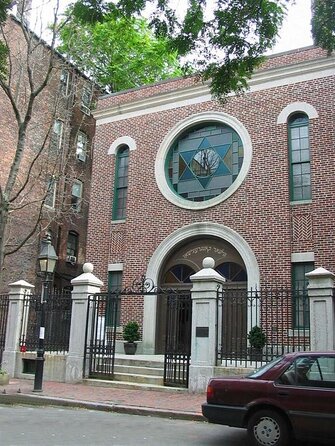
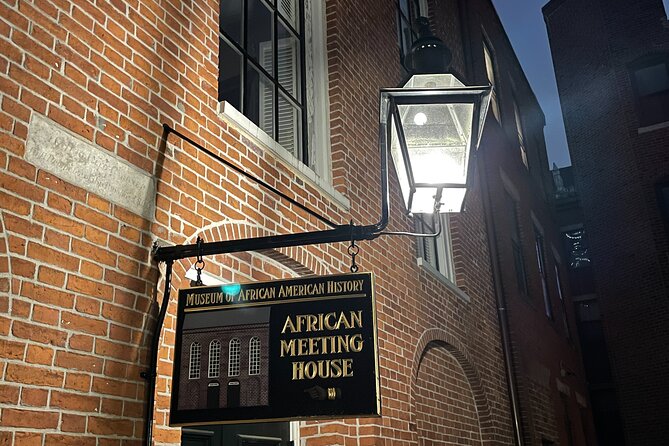
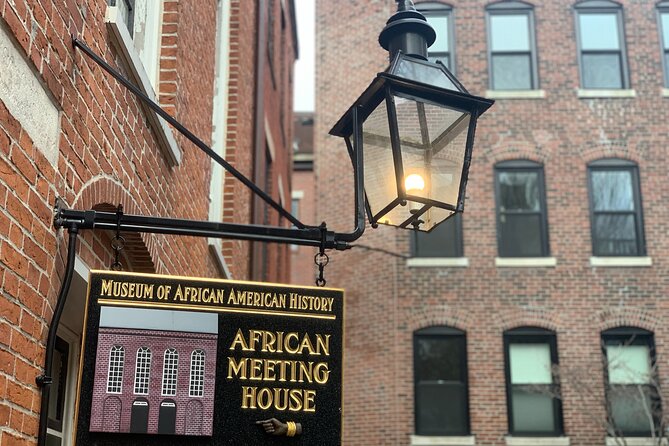
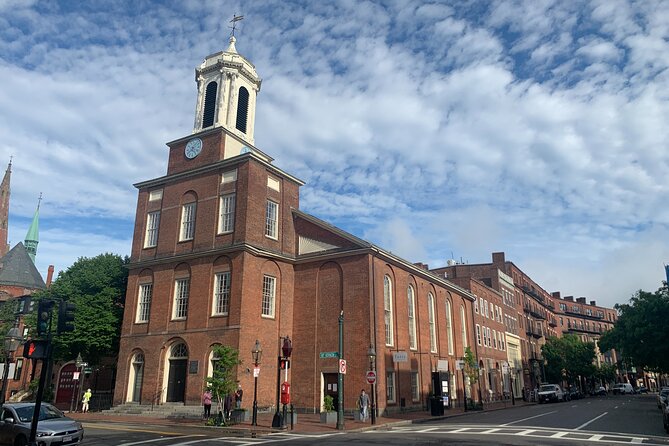
The route starts at Charles Street Meeting House, 70 Charles St and ends at 46 Joy St, at the African American Meeting House. That ending matters. It’s described as the oldest extant black church building in America, and landing there gives the whole walk a strong finish: you end with community, not just escape routes.
You can start when you want and stop when you want, which is useful in Boston. One minute you’re on schedule, the next you’re detouring for a bakery smell or a quick photo. This tour is flexible enough that you don’t feel totally derailed.
How the route feels on foot
Beacon Hill involves hills. Wear comfortable shoes and plan for some uphill segments. The time estimate of 45 to 55 minutes is realistic, but only if you keep a steady pace at each stop. If you pause often for photos, you’ll stretch the walk.
John J. Smith House and the Early Mechanics of Underground Railroad Help
At the beginning, the story sets the frame: how the Underground Railroad operated and why certain homes became crucial stops. Your first major landmark is the John J. Smith House, where you learn about his role and the station tied to helping people find safety.
What I like about starting here is that it avoids the “famous names only” trap. You get the operational side early: people weren’t just brave in general; they had roles, responsibilities, and locations that mattered.
You can also read our reviews of more guided tours in Boston






The kind of detail to listen for
Keep an ear out for how the narration connects:
- who was involved,
- what their home or property meant in the network,
- and how the steps fit together.
If you catch those links, the rest of the walk clicks faster.
Harriet Tubman’s Life and 83 Phillips Street: John Sweat Rock’s Firsts
After hearing more about Harriet Tubman’s life, the tour leads you to 83 Phillips Street, the former home of John Sweat Rock. The audio highlights his many firsts in history, and it’s one of the places where you start feeling the scope of Boston’s involvement.
This stop also works well because it changes the angle slightly. The story isn’t only about the escape itself—it’s also about the people who broke barriers and built new possibilities. Listening while standing in a residential pocket of Beacon Hill makes that contrast feel real.
A tip that helps here
If your phone signal or GPS is spotty, this is the moment to slow down. Let the audio cue you before walking too far ahead. Several reviews point out that following the app’s navigation direction is key.
Lewis Hayden’s Home: Safe Work, Real Risk
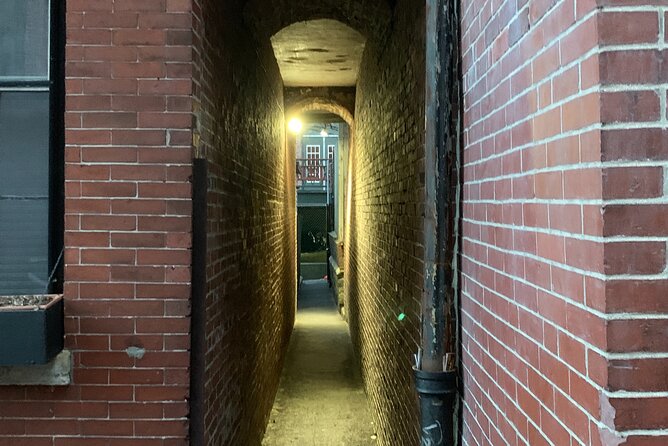
Next comes Lewis Hayden’s home. The narration focuses on how he bravely saved countless runaways right here in Beacon Hill.
This stop is powerful because it gives you a clear “what did they actually do?” answer. It isn’t abstract. Hayden is positioned as a hands-on helper, and that makes the later stops feel like steps in a system—not isolated stories.
Why this stop matters to your understanding
By now, you should be able to see Underground Railroad help as a chain of commitments: shelter, coordination, and local knowledge. Hayden’s story helps you connect that chain to the physical places around you.
Leonard Grime and the Role of a Conductor
The tour then moves to the site connected with Leonard Grime, described as a conductor on the Underground Railroad.
“Conductor” can sound like a romance novel term if you don’t define it. Here, the audio framing helps you understand it as a job title in a real operation. You start to grasp that people provided different kinds of support at different points.
What to listen for
Pay attention to the way the narration explains movement and timing—how support shifted as people traveled. That’s where you’ll get the most meaning from the stop-to-stop structure.
The Old Temperance Boarding House: Shelter and Strategy
Your route continues to the Old Temperance Boarding House, another stop on the Underground Railroad.
Boarding houses and similar spaces were more than buildings. They could function as temporary stability points where someone might hide, rest, or connect with the next step. The name itself hints at the kind of community spaces that could exist in a city while still being part of escape networks.
Best way to enjoy this stop
Don’t rush past it. This one benefits from slowing down and listening all the way through, because it often ties the story back to the logistics of staying safe in a busy city.
Old Phillips School: First Integrated School in Boston
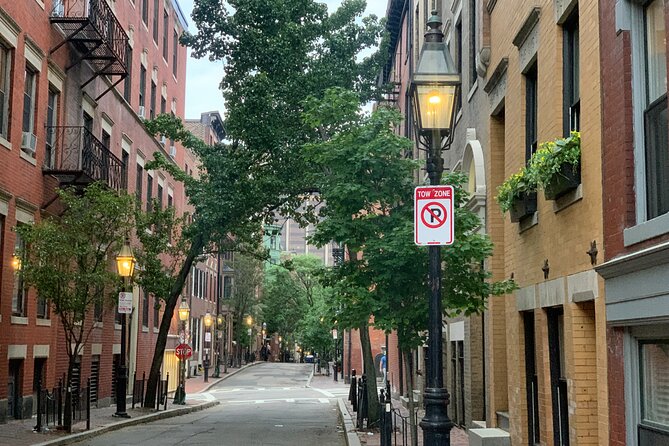
One of the most educational stops on the route is the Old Phillips School. The narration describes it as the first integrated school in Boston, and it also notes the first African American teacher to teach at an integrated school.
This is a big contrast from the Underground Railroad mechanics. It shows another side of freedom work: education and equality inside Boston’s institutions. When you hear it in sequence—escape routes, then schools—it broadens the story beyond a single theme.
How this stop changes the whole tone
By this point, you’re not only tracking assistance for escape. You’re seeing how community support extended into longer-term change. That’s one reason the tour feels more than a walk past historic plaques.
Vilna Shul and the Jewish Community’s Role in Help
The tour passes by Vilna Shul, described as the oldest immigrant synagogue in Boston. The narration connects the Jewish Community there to underground railroad support.
This stop is valuable because it shows how help wasn’t limited to one group. Many communities had reasons to care deeply about justice, and in Boston, those values translated into real support roles.
What you’ll appreciate while walking past it
If you tend to think of abolition in a narrow way, this part widens your lens. You start noticing how different neighborhoods and immigrant communities built safety nets for people in danger.
John Coburn and a Gaming House That Served as a Station
Next, the route brings you to the former house of John Coburn, including mention of his gaming house. The story explains that Coburn acted as a station master.
That combination—an everyday urban business site tied to a secretive network—adds an unsettling kind of realism. It’s a reminder that escape routes depended on ordinary settings, not dramatic tunnels.
Why this detail is worth hearing
The audio’s framing helps you understand that hiding sometimes meant blending in. You’re not looking for a movie set. You’re standing in a city block where people used normal life as cover.
Charles Sumner’s Birthplace: Abolitionist Power in Boston
The tour stops by the birthplace of abolitionist Charles Sumner. This is where the story shifts toward political force and public advocacy.
If earlier stops emphasized direct action, this one helps you see the full range of abolition work: some people helped in person, others pushed ideas into public life.
Listening strategy
Don’t treat this as a quick photo stop. Sit with what the narration implies about Boston itself—how activism and local networks reinforced each other.
Price, Time, and Value for $9.75
At $9.75 per person, this is one of those tours that feels “small on paper” but earns its worth by packing in a lot of guided narration for a low commitment. You’re paying for a guided walking experience without the overhead of a live group guide.
You also get practical benefits that matter in the real world:
- 45 to 55 minutes is enough time to feel you did something meaningful, without blowing your day
- a mobile ticket means you’re not hunting for paper maps
- the ability to start and end whenever you want makes it easy to slot into a busy itinerary
The one reason it might not be worth it
If you hate any kind of phone-based navigation, you may find it more frustrating than rewarding. The stories are strong, but you’re still responsible for following the route cues.
Navigation Tips (So You Don’t Get Stuck on a Street Corner)
Here’s where I think you’ll win the experience: treat the audio app like your co-pilot.
A few issues showed up in feedback for people who struggled with directions or transitions. You can reduce that risk by doing three simple things:
- keep your phone charged so you’re not stuck mid-walk
- follow the on-screen arrow toward the next stop if you think you’re off route
- when using Dig Deeper, be ready for the audio to return to the main track, and don’t rush ahead while it resets
Also, if you run into activation trouble, don’t panic. The tour uses app access through a code shown in the ticket. If something doesn’t start, a quick check of the “View Ticket” instructions can save you time.
Best time to walk
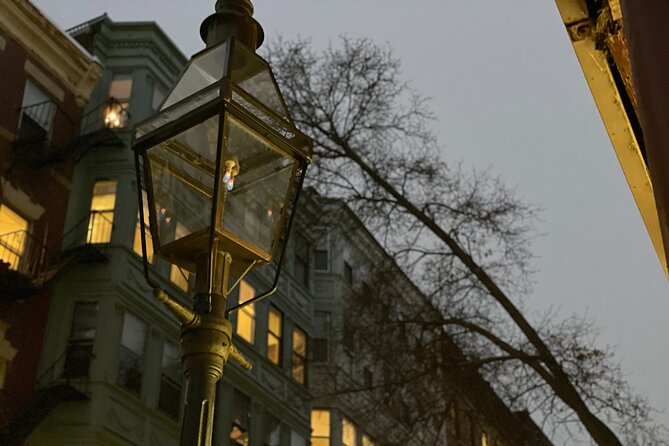
Taking it at night can add atmosphere, especially in a neighborhood like Beacon Hill where the streets feel moodier after dark. Just use common sense: good shoes, a steady pace, and a phone mount or secure grip so you’re not juggling everything at once.
Who This Audio Tour Fits Best
This tour works especially well for:
- history lovers who want a clear route and guided narration without booking a whole morning
- people traveling with others who want independence (it’s private for your group, not a big crowd)
- families and friends who can pause, rewind, and adjust pacing whenever a stop catches their attention
It’s offered in English, and it’s designed so most visitors can participate. If you need a multi-language option, note that French isn’t listed here.
Should You Book This Beacon Hill Underground Railroad Audio Tour?
If you want an affordable way to walk Beacon Hill with guided Underground Railroad storytelling tied to specific names and places, this is a strong yes. The route connects major figures—John J. Smith, John Sweat Rock, Lewis Hayden, Leonard Grime, Vilna Shul, John Coburn, and Charles Sumner—and it finishes at a landmark that grounds the whole story.
The only real reason to hesitate is if you strongly dislike phone-based navigation or you know you’ll walk while half-distracted. If that’s you, you might spend more energy fighting directions than listening to the history.
FAQ
How long is the self-guided walking tour?
It’s listed at about 45 to 55 minutes.
Where do I start and end the tour?
You start at Charles Street Meeting House, 70 Charles St, Boston and end at 46 Joy St, at the African American Meeting House.
What does the tour include?
You use a mobile ticket and your phone to access English narration that guides you from stop to stop.
Can I pause or adjust the tour while I’m walking?
Yes. The experience includes tools to pause and you can go back to revisit parts of the narration.
Is this a group tour or private?
It’s a private tour/activity, meaning only your group participates.
Do I need to cancel at least a day in advance for a full refund?
Yes. You can cancel for a full refund up to 24 hours before the experience starts. After that window, refunds aren’t listed as available.