REVIEW · FREEDOM TRAIL TOURS
Entire Freedom Trail Walking Tour: Includes Bunker Hill and USS Constitution
Book on Viator →Operated by Walk & Talk Boston Walking Tours · Bookable on Viator
Boston history comes alive on one guided walk. You’ll follow the Freedom Trail all the way to USS Constitution in Charlestown, with Bunker Hill Monument plus the big downtown landmarks along the way.
I love the 4-hour format for fitting a lot of history without feeling stuck in a museum. I also love that this tour ends at Old Ironsides, so the Revolution story doesn’t stop at battles and speeches. One drawback to plan for: it’s still a walking tour, mostly outdoors, and interior admissions aren’t included, so you’ll rely on the guide’s explanations unless you buy extra tickets.
In This Review
- Quick hits before you go
- Why This Freedom Trail Walk Feels Like a Real Story
- Price and Value: What You Get for $79
- Getting Oriented: Where You Start and How the Route Ends
- Massachusetts State House: Seeing Government as a Physical Place
- Park Street Church and the Abolition-Era Edge of Boston
- Granary Burying Ground: The Revolution’s Names in Stone
- King’s Chapel: Religion, Land, and the Roots of Anger
- Old City Hall: Benjamin Franklin’s Presence and Early Education
- Old South Meeting House: Where Public Opinion Turned Into Action
- Old State House: Court Battles and the Boston Massacre Question
- Faneuil Hall Marketplace: The “No Taxation” Stage and Beyond
- Ebenezer Hancock House and the Blackstone Block Details
- Paul Revere House: One Home, Sixteen Children, Two Wives
- Old North Church and Copp’s Hill: Signals, Geography, and “How” the War Worked
- Bunker Hill Monument: The Battle Lesson That Reframes the Slogans
- USS Constitution and Old Ironsides: The Revolution’s Final Chapter in Wood and Steel
- Who Should Take This Tour (and Who Might Want Another Plan)
- Should You Book This Entire Freedom Trail Walk?
- FAQ
- How long is the walking tour?
- What does it cost?
- How much of the Freedom Trail do you cover?
- Are museum interiors included?
- Where do you meet, and when does it start?
- Where does the tour end?
- Is the tour appropriate for people with a moderate fitness level?
- What if the weather is bad or I need to cancel?
Quick hits before you go
- Full Freedom Trail in one shot: you cover about 2.8 miles (4 km) in one guided run
- Charlestown finale: Bunker Hill and then USS Constitution (Old Ironsides)
- Short, varied stops: you’re in and out of key sites every few minutes, so the pacing stays lively
- Small group size: up to 16 people means fewer bottlenecks and more time for questions
- Story-first guiding style: expect clear cause-and-effect storytelling and practical tips, not a lecture
Why This Freedom Trail Walk Feels Like a Real Story
The Freedom Trail can feel like a list if you go solo: brick, plaque, repeat. This tour works better because you connect the dots—government, religion, protests, and public anger—until you understand why the Revolution accelerated the way it did.
I also like that you get the whole arc, not just the downtown highlights. The walk pushes out to Charlestown, where Bunker Hill and the USS Constitution make the ending feel tangible. That matters because American independence wasn’t only political. It was also fought, funded, and sailed.
The guide’s approach is built around keeping the group engaged and moving smoothly through a busy city. In real terms, that usually means you get quick orientation at each stop and plenty of chances to ask questions without the tour turning into a rush-hour stampede.
You can also read our reviews of more walking tours in Boston


Price and Value: What You Get for $79

At $79 per person for about 4 hours, the value is strongest if your goal is coverage. You’re paying for a guide to stitch together the entire 2.8-mile route, including the two big “bonus” stops people often don’t fit on a standard downtown loop: Bunker Hill and USS Constitution.
A lot of Freedom Trail tours are shorter or skip the Charlestown end. Here, you’re paying for the full experience and a finish at the USS Constitution Museum area, so you leave with a clean sense of geography: where events happened and how they link.
What you should know upfront: you won’t have included admission to interiors. That means you can still enjoy the sites and context, but if you’re the type who needs museum-grade time inside buildings, you may want to plan extra paid entry on another day.
Getting Oriented: Where You Start and How the Route Ends
You begin at Beacon St @ Park St (Boston, MA 02108) at 10:00 am. From there, you work your way through downtown landmarks tied directly to colonial power and revolutionary conflict, then keep going toward Charlestown.
Your walk concludes at USS Constitution Museum, Building 22 in the Charlestown Navy Yard, right by Old Ironsides. That’s a smart ending: it’s a “period piece” you can see and picture in motion, not just a distant monument.
Also helpful: it’s a mobile ticket tour, service animals are allowed, and it’s near public transportation. If you like arriving early and getting your bearings fast, this start point makes that easy.
Finally, the group max is 16 travelers. That size is a sweet spot for a walking tour: small enough to feel personal, large enough that you’re not stuck with one stressed-out pace-setter.
Massachusetts State House: Seeing Government as a Physical Place
Your first stop is the Massachusetts State House, and the value here is perspective. This is the current State House designed by Charles Bulfinch, but the real point is how the building signals authority and continuity—because the Revolution wasn’t just about protests. It was about who would run society next.
You’ll spend about 10 minutes here, with no interior admission included. That’s perfect if you want a fast, guided “what you’re looking at and why it matters” stop before you move on.
A practical tip: if you’re the type who likes photos, take a couple at the start. You’re about to transition into many short stops, and the tour moves on quickly.
Park Street Church and the Abolition-Era Edge of Boston
Next up is Park Street Church. At one point it was the tallest building in the country, which already tells you something: Boston wasn’t shy about putting messages into the skyline.
The tour connects the church to the abolition movement, including the nickname Brimstone Corner for its fiery sermons—and even a surprise about what was once stored in the cellar. It’s one of those details that makes a historic site feel less like a statue and more like a lived-in stage for real conflict.
Again, interior access isn’t included, so you’ll get the story mostly from outside viewpoints and the guide’s explanations. That works well because the real hook is the clash of public ideas and moral pressure.






Granary Burying Ground: The Revolution’s Names in Stone
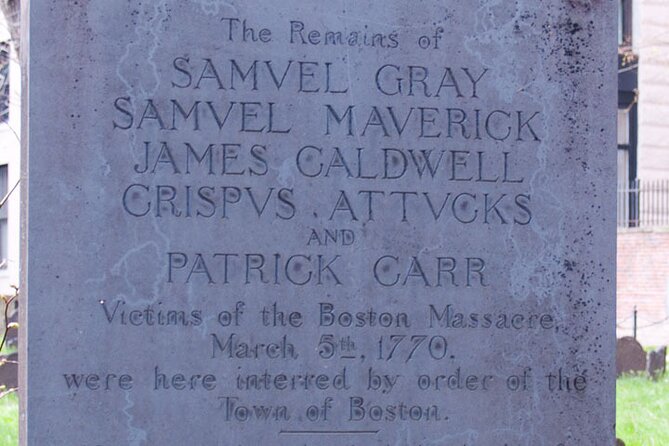
At Granary Burying Ground, the tour shifts from buildings to people. This cemetery is the resting place of major figures like Samuel Adams, Paul Revere, and John Hancock, plus victims connected to the Boston Massacre.
What makes this stop useful is the quick human scale. The guide gives a brief introduction to each person and the roles they played, which helps the rest of the trail stop being abstract.
One small consideration: cemeteries can feel quiet and longer than their scheduled time. But because the tour keeps the group moving, it usually stays focused, not creepy. Plan for a respectful pause and then keep walking.
King’s Chapel: Religion, Land, and the Roots of Anger
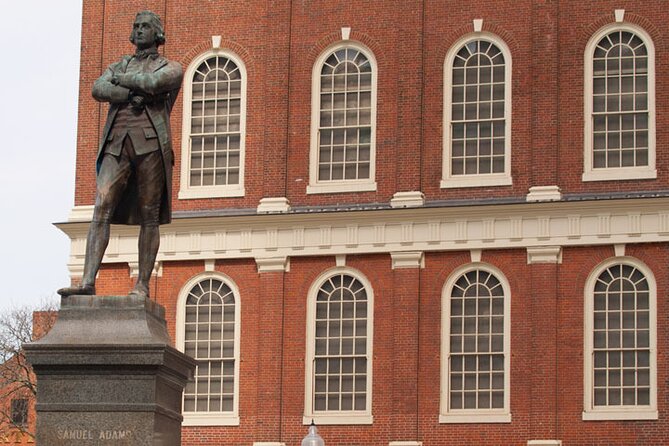
King’s Chapel (1749) is where the story leans into religion and power. It’s an Anglican church, and the tour points out how early conflict erupted between Puritans and the King when land was taken to place an unwanted church in Boston.
This stop is only about 10 minutes, but it’s an important reminder: in 1760s Boston, disagreement wasn’t just political language. It was tied to identity, worship, and control of space.
No interior admission included here either. Still, the guide’s framing helps you read what you see as a conflict map, not just old architecture.
Old City Hall: Benjamin Franklin’s Presence and Early Education

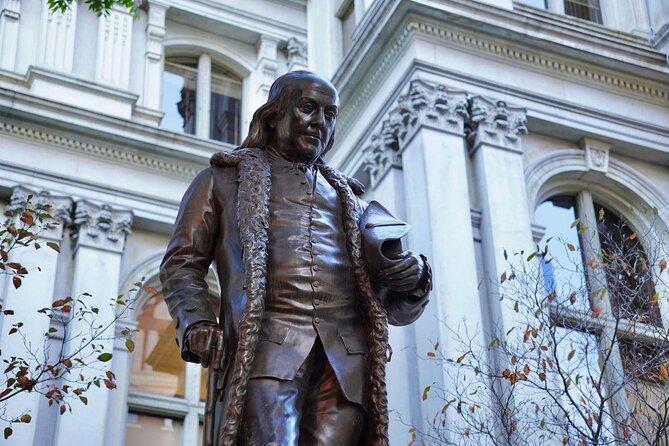
At Old City Hall, you’ll see a statue of Benjamin Franklin and a marker tied to the oldest and still-operating school in the Colony. That detail matters because it links revolution-era change to long-term institutions like education.
You’re in the area for about 10 minutes, and the main goal is to anchor Franklin in the civic story. It’s also a good moment to ask questions, because the pace is still manageable and the group is close together.
Old South Meeting House: Where Public Opinion Turned Into Action
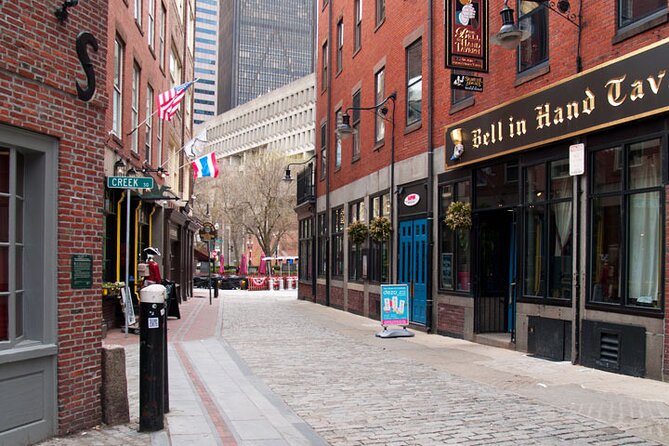
Then comes Old South Meeting House, one of the most dramatic-sounding stops on the route even before you hit the details. Meeting halls mattered because people came here for talks, sermons, and political pressure.
The guide connects this site to Samuel Adams and the Boston Tea Party, framing it as the kind of spark that effectively guaranteed conflict would follow. It’s not just a story about tea. It’s a story about how crowds got organized and how arguments turned into confrontation.
You’ll spend about 10 minutes here with no interior admission. That can actually be a benefit. The tour keeps focus on the bigger cause-and-effect chain instead of turning it into a museum-only stop.
Old State House: Court Battles and the Boston Massacre Question
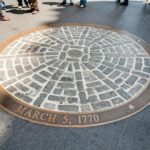
At Old State House, the guide points out two key themes: a fiery court battle that demonstrated disregard for colonial rights in 1761, and the site of the 1770 Boston Massacre.
The tour also notes that the popular version of events may need nuance. Even if you’re already familiar with the massacre, having the guide walk you through how people interpreted what happened helps you understand why stories were weaponized in the first place.
This stop is around 10 minutes, no interior admission included. If you like your history straight and factual, ask the guide how they present competing interpretations at this point. The best part of a guided walk is getting clarity in context, not just hearing a single answer.
Faneuil Hall Marketplace: The “No Taxation” Stage and Beyond
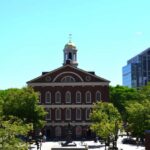
Faneuil Hall Marketplace is a place where speeches shaped what people believed was possible. The tour points to speakers including Samuel Adams pushing the famous line about no taxation without representation, and also Frederick Douglass, showing the hall’s influence extended past the Revolution era.
You’ll spend about 10 minutes, and the stop is free to access for the tour context. It’s one of the easiest places to remember because it feels like a public commons, not a closed-off artifact.
Ebenezer Hancock House and the Blackstone Block Details
At Ebenezer Hancock House, the story gets more specific and slightly less famous—which is exactly why it’s valuable. You’ll learn about the Blackstone Block, including the offices of the newspaper Massachusetts Spy and the area described as Headquarters of the Revolution (currently a bar).
The tour also connects this space to money sent from the French to support the Revolution through Ebenezer Hancock’s home. That’s a reminder that political change ran on logistics and funding, not just speeches.
This stop is about 10 minutes and doesn’t require interior admissions. If you’re a practical traveler, you’ll appreciate how the guide makes the Revolution feel like a coordinated project.
Paul Revere House: One Home, Sixteen Children, Two Wives
Next is the Paul Revere House, one of the oldest remaining homes in Boston. The tour notes that Revere purchased it in 1770 and that it was the home where he fathered sixteen children with two wives.
This kind of detail is what makes history feel human. You’re no longer looking at symbols. You’re looking at a family life beside the public story.
Time here is about 5 minutes, and interior admission isn’t included. So you’ll get the core context without a long museum detour. If you do want the interior, you can plan that separately.
Old North Church and Copp’s Hill: Signals, Geography, and “How” the War Worked
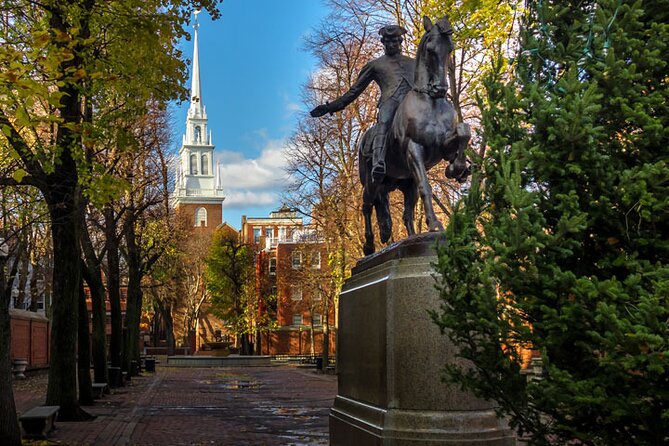
Old North Church is a key point in the story because it’s tied to the signal system across the narrow waters toward Charlestown. The guide explains that the British would pass through Cambridge on their march to collect guns and powder for Lexington and Concord, and how Patriots used church signaling to communicate.
Then you move to Copp’s Hill Burying Ground, where the tour uses geography to explain the Battle of Bunker Hill area and includes a grave marker with an interesting story. This is where the walk becomes less about famous names and more about terrain and timing.
These two stops work well together because one teaches communication and the other teaches movement. War is often presented as heroics; here you see it as coordination.
Both stops are scheduled for about 10 minutes each, and there’s no interior admission included.
Bunker Hill Monument: The Battle Lesson That Reframes the Slogans
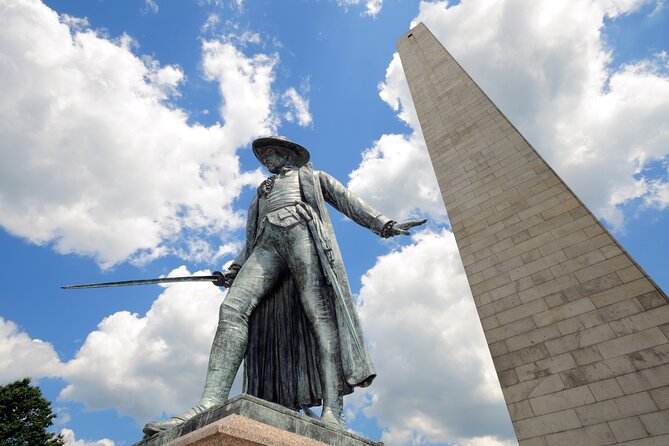
At Bunker Hill Monument, the tour focuses on the battle fought on Breed’s Hill. Even if you’ve heard the phrase Bunker Hill before, the tour adds the key comparison: while the Patriots lost, British losses were described as triple those of the Patriots.
That’s an important nuance. It shifts the emotional story from simple victory/loss into a message about cost and momentum—why resistance kept going after setbacks.
Time is about 10 minutes, free to access for tour context. The guide’s job here is to help you visualize what you’re seeing and why the location mattered.
USS Constitution and Old Ironsides: The Revolution’s Final Chapter in Wood and Steel
The finish is USS Constitution at the USS Constitution Museum area. The tour describes Old Ironsides as the oldest commissioned warship in the world and emphasizes its long service with the U.S. Navy both in U.S. waters and abroad.
This stop works because it’s not just “war happened.” It’s “this is what a navy looked like in real time.” You end your walk with an object you can circle and picture, which makes the Revolution story feel complete rather than truncated.
Your tour ends at the USS Constitution Museum building area, right by the ship. That’s also a convenient place to continue your day with other Charlestown Navy Yard options.
Who Should Take This Tour (and Who Might Want Another Plan)
This is a great fit if you want a guided, story-driven walk that covers the whole Freedom Trail and adds Bunker Hill plus USS Constitution. It’s also useful for teens who like explanations and want context before they hit the next museum.
If you’re traveling with seniors or you prefer a pace that stays comfortable, the tour’s structure—frequent short stops—helps keep strain manageable. You’ll still want comfortable shoes, since it’s a walking tour and you’re covering 2.8 miles (4 km).
I’d think twice if you mainly want interior museum time. Since interior admission isn’t included, you might spend more effort looking at the outside than you hoped. Still, you’ll learn a lot from the guide’s narration, but it’s not a “walk, then sit in 4 museums” format.
Should You Book This Entire Freedom Trail Walk?
Yes, if your goal is to leave Boston with a clear sense of the Revolution from politics to protest to battlefield geography to naval history. The $79 price makes sense when you treat it as an organized route that saves you hours of figuring out what to see and how the story connects.
Book it especially if you’re short on time. Starting at Park Street and ending at USS Constitution gives you a tight arc across the city, not scattered sightseeing days. Also, with a small group size and short, frequent stops, it’s easier to stay engaged for the full walk than with larger group tours.
One last practical check: this tour requires good weather. If rain is in the forecast, bring layers and be ready to use your judgment—because the experience is still a street-and-sidewalk walk.
If that fits your style, this is one of the cleaner ways to do the Freedom Trail, without missing the parts that make Boston feel like more than a set of monuments.
FAQ
How long is the walking tour?
The tour runs for about 4 hours.
What does it cost?
The price is $79.00 per person.
How much of the Freedom Trail do you cover?
The tour covers the entire Freedom Trail route, about 2.8 miles (4 km), plus stops including Bunker Hill and USS Constitution.
Are museum interiors included?
No. Admission to interiors is not included, so you’ll rely on the guide’s explanations for sites you can view from the outside.
Where do you meet, and when does it start?
You meet at Beacon St @ Park St in Boston and the start time is 10:00 am.
Where does the tour end?
The tour ends at the USS Constitution Museum area in Charlestown Navy Yard, at Old Ironsides.
Is the tour appropriate for people with a moderate fitness level?
It’s designed for travelers with a moderate physical fitness level, with a walking format and a steady pace.
What if the weather is bad or I need to cancel?
This experience requires good weather. If it’s canceled due to poor weather, you’ll be offered a different date or a full refund. There is free cancellation, and you can cancel up to 24 hours in advance for a full refund.