REVIEW · 3-HOUR EXPERIENCES
The Freedom Trail and a whole lot more 3 hour Boston walking tour
Book on Viator →Operated by Boston Sightseeing Tours · Bookable on Viator
Boston’s Revolutionary story is right under your feet.
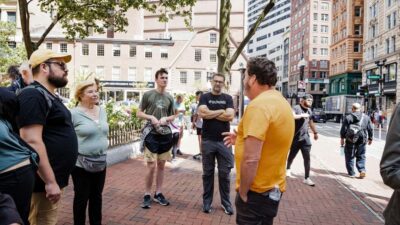
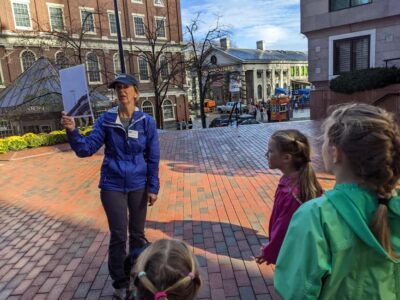
This 3-hour walking tour strings together 16 Freedom Trail sites from Boston Common all the way to Copp’s Hill, plus extra stops that most short tours skip. I like that it’s led by real guides (no costumes) who keep the pace lively and explain what you’re seeing without dumping facts on you. I also like the practical rhythm: a planned restroom/snack break keeps you moving and actually enjoying the walk. One thing to think about: the tour depends on good weather, so if Boston is acting up, you may need to reschedule.
You’ll start downtown and work your way into the North End, ending near Copp’s Hill Terrace with easy access to food and more waterfront views. The tour doesn’t just point at landmarks—it helps you connect the political fights, religious tensions, and immigration stories that shaped the city’s streets. The big consideration for your day: it’s a walking tour, and the finish in the North End is a great place to wander, but it does mean you should plan for comfortable shoes and time afterward if you want to keep exploring.
In This Review
- The Best Part: Seeing More Than Half the Freedom Trail
- Where the Walk Begins: From the Martin Luther King Memorial to Boston Common
- Beacon Hill’s Power Center: Massachusetts State House to the Old Government Buildings
- The Freedom Trail Turns Dark and Personal: Granary, Boston Massacre, and the Old State House
- From Schools to Tea Politics: Boston Latin School and the Tea Party Hall
- Downtown Stories You Can Walk Past: Old Corner Bookstore and Irish Famine Sculpture
- The Civil War Memory Stop: Robert Gould Shaw and the 54th Regiment Memorial
- Faneuil Hall to Haymarket: Meeting Places, Market Life, and the North End Setup
- Into Little Italy: North End Streets, Paul Revere House, and Old North Church
- Copp’s Hill Terrace Finish: A Cemetery With Views and a Quick Water Look
- Price, Timing, and Group Size: Is $39.95 Actually Worth It?
- What the Experience Feels Like on the Ground
- Who Should Book This Tour (and Who Might Prefer Something Else)
- Should You Book It?
- FAQ
- How long is the Freedom Trail and a whole lot more walking tour?
- Where does the tour start and end?
- What’s the price per person?
- Are there admission fees at the stops?
- Is there a restroom or snack break?
- What if the weather is bad?
- Is the tour suitable for families?
- Is there a limit on group size?
- Can I cancel for a full refund?
The Best Part: Seeing More Than Half the Freedom Trail
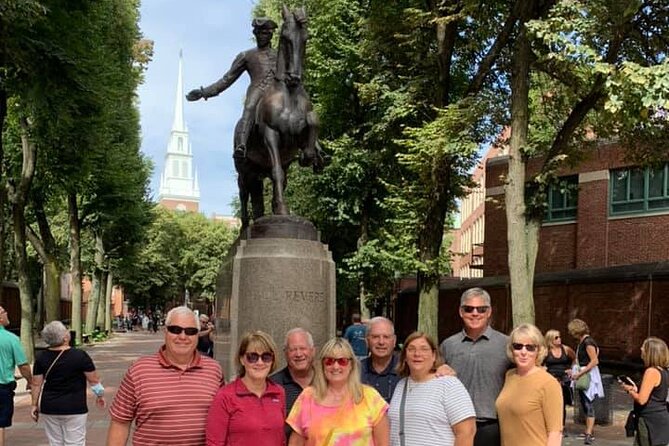
Most Freedom Trail tours cut out early. This one keeps going. Starting at 139 Tremont St at 10:15am, you’ll follow the brick path style route beyond the usual stops—moving from early colonial sites into Civil War and later memorials, and finishing with views across the water toward the Bunker Hill area and USS Constitution.
At $39.95 per person for about 3 hours, this feels like strong value if you’re a first-timer who wants orientation fast. Many stops are free to view, and the tour includes guidance plus a small comfort stop (restroom and snack break) so you don’t feel rushed or stuck. With a group capped at 35, it’s large enough to be lively but not so big that you’ll disappear.
Where the Walk Begins: From the Martin Luther King Memorial to Boston Common
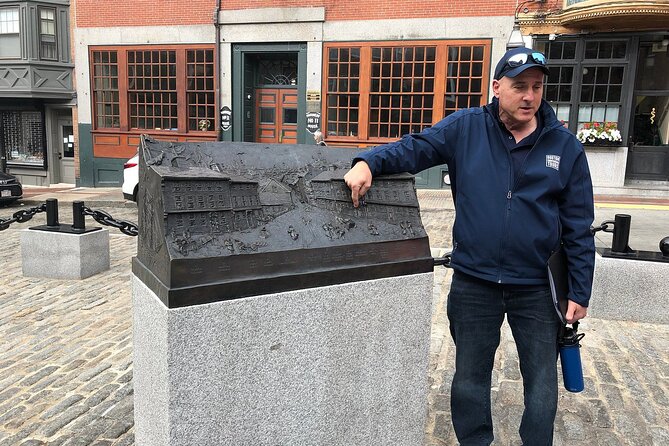
The tour starts at the Embrace memorial, honoring Rev. Dr. Martin Luther King, Jr. and Coretta Scott King. Even if you’re not in “museum mode,” this opening works because it frames Boston as more than just colonial nostalgia—it’s a city that continues to reckon with justice and civic change.
From there, you move into Boston Common, the oldest public park in the United States (dating to 1634). You also learn that it’s connected to a piece of transportation history—home to the oldest subway station in the Western Hemisphere. That detail matters because it helps you look at Boston as layered: the city didn’t freeze in the 1700s; it kept building.
You can also read our reviews of more walking tours in Boston



Beacon Hill’s Power Center: Massachusetts State House to the Old Government Buildings
Next comes the Massachusetts State House, designed by Charles Bulfinch. You’ll get the sense of why this building still anchors the political look of the area—opened in 1798 and known for Federal architecture. You’re not just seeing a façade; you’re watching Boston’s government identity evolve, from colonial authority toward the modern state.
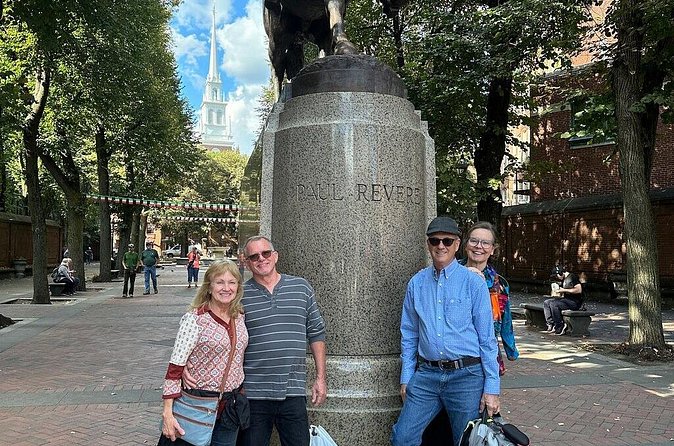
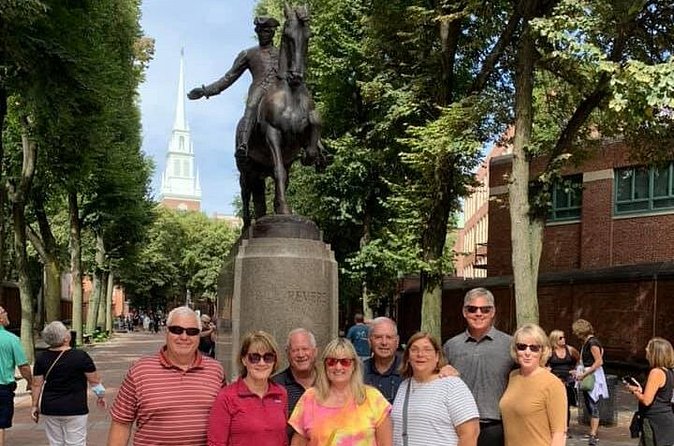
Then the route drops you toward Granary Burying Ground. This cemetery was founded in 1660 and is described as the city’s third-oldest cemetery. It’s also a Revolutionary-era “who’s who” stop, including Paul Revere. Cemeteries can be a drag on walking tours, but here it works because it connects the political story to real people who lived through it—rebels, planners, and the kind of figures whose names you’ll keep hearing later.
The Freedom Trail Turns Dark and Personal: Granary, Boston Massacre, and the Old State House
If you want the Revolution to feel real, you need the spots where the tension becomes human. That’s the energy around the Old State House and the Boston Massacre site.
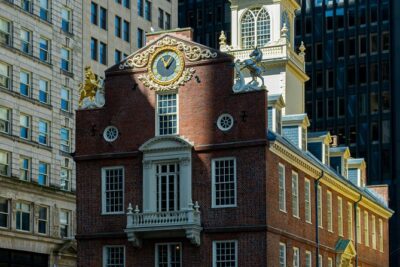
You’ll see the Old State House, built in 1713, which served as the seat of the Massachusetts General Court until 1798. It’s also identified as the place connected to the Boston Massacre. This matters because it links the building’s civic role with the conflict that erupted in the street.
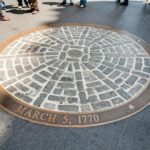
At the Boston Massacre site, you get the core moment: March 5, 1770, after months of tensions tied to occupation and taxation. The result was five civilians killed by gunfire, including Crispus Attucks, plus others. This part of the tour is a reminder that the Revolution wasn’t just ideas—it was fear, anger, and raw confrontation in public spaces.
From Schools to Tea Politics: Boston Latin School and the Tea Party Hall
One of my favorite ways to understand a city is through what it taught people. Here, that’s Boston Latin School, founded April 23, 1635 and described as the oldest public school in America. The tour notes that it offered free education to boys, rich or poor—while girls attended private schools. It’s a quick stop, but it gives you a clear snapshot of who got access to formal education back then.
Then you move to the building where the Boston Tea Party began. This is one of those stops that can sound vague until you’re standing in the right place. The tour frames the setting with the reality of the time—sermons, public meetings, and tea tax debates. That context helps you understand how protest grew from everyday political conversation, not just dramatic scenes.
Downtown Stories You Can Walk Past: Old Corner Bookstore and Irish Famine Sculpture
The Old Corner Bookstore is next, built in 1718 and described as downtown Boston’s oldest commercial building. The tour connects it to Ticknor and Fields, a 19th-century publishing house linked to famous American titles. Even if your goal is the Revolution, this stop adds a useful layer: Boston also built its cultural power through publishing and ideas.
The tour also includes a sculpture focused on Irish families—contrasting starvation and emaciation during famine with another Irish family’s later prosperity after coming to the United States. This is the kind of “oddly moving” detour that makes a walking tour worth it. The Freedom Trail is often read as one narrow story; this reminds you immigration and survival shaped the city too.
You can also read our reviews of more tours and experiences in Boston

The Civil War Memory Stop: Robert Gould Shaw and the 54th Regiment Memorial
A standout stop on the route is the Robert Gould Shaw and Massachusetts 54th Regiment Memorial. It commemorates one of the first Black regiments of the American Civil War, and it’s described as a bronze relief sculpture by Augustus (the listing cuts off the last name, but the key point is the sculpture and the purpose).
This stop is valuable because it stretches the Freedom Trail timeline. Yes, the brick path is Revolutionary-era focused—but Boston’s public memory doesn’t end there. Seeing this memorial on the same walk helps you understand Boston’s long arc: fight, representation, and how later generations preserved those stories.
Faneuil Hall to Haymarket: Meeting Places, Market Life, and the North End Setup
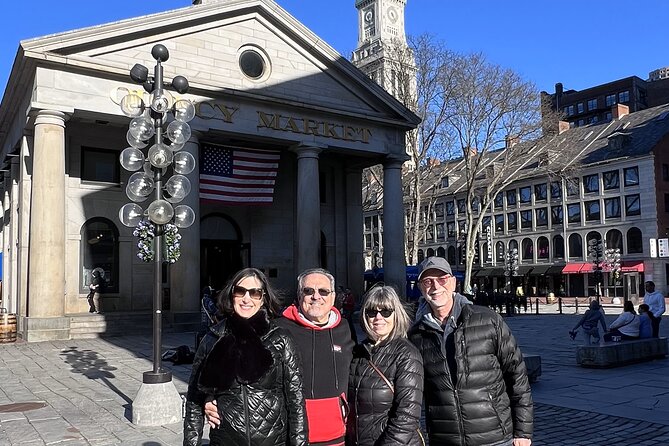
Next you’ll reach Faneuil Hall Marketplace. It’s described as hosting meetings, protests, celebrations, ceremonies, and debates for about 275 years. This is exactly why it’s on the trail—because it was a social engine for political action. Standing here, it’s easier to picture why arguments about tea taxes and rights could turn into direct action.
After that, the tour heads through the Haymarket area, described as one of America’s oldest open-air markets and a cultural cornerstone. The framing here is practical: it’s a way to connect history with present-day city life by experiencing the sights and sounds around you.
Into Little Italy: North End Streets, Paul Revere House, and Old North Church
This is where the walk shifts from “monuments and debates” into “streets and everyday texture.” The North End is described as Boston’s Little Italy, with narrow streets and some of the city’s oldest buildings. The tour passes major Freedom Trail landmarks like the Paul Revere House and the Old North Church.
The Paul Revere House is listed as built around 1680. Even without stepping inside, you get the value of a physical anchor—your mind stops treating the Revolution as a chapter in a book and starts treating it as a neighborhood with surviving structures.
Then you get the Old North Church & Historic Site, founded in 1723 and described as the oldest standing church in the City of Boston. This fits the tour’s theme: civic life wasn’t separate from religion and community spaces. You’re seeing how faith institutions and political conversations lived side by side.
Copp’s Hill Terrace Finish: A Cemetery With Views and a Quick Water Look
The tour finishes at Copp’s Hill Burying Ground, dating back to 1659 and described as the second oldest in Boston. It’s final resting place for merchants, artisans, and craftspeople from the North End. That’s an important shift from the big-name Revolutionary leaders—you see the city built by working people too.
You also get views across the water, including the Bunker Hill Monument area and USS Constitution. The monument is tied to the Battle of Bunker Hill as an early major clash between British and Patriot forces. USS Constitution is identified as the world’s oldest commissioned naval vessel still afloat. That’s a satisfying end point because you’re literally looking out at the maritime side of American history right after you’ve been learning about rebellion on land.
The tour ends around 1:15pm in the North End area, near Copp’s Hill Terrace, with a short walk across the bridge so you can still catch those waterfront sights. Plus, you’ll be dropped right near plenty of places to eat and Italian pastry shops, which is a smart payoff after three hours of walking and reading the city.
Price, Timing, and Group Size: Is $39.95 Actually Worth It?
For $39.95, you’re paying for three things: a guided route, time efficiency, and interpretation. Without guidance, it’s easy to speed through the Freedom Trail and miss why each location matters. With a guide-led flow, you move through 16 major sites and additional stops in about three hours, which is ideal if you’re not planning to spend half a day in one historic corridor.
Timing is also user-friendly. Starting at 10:15am means you can still fit lunch and then decide whether you want to head to museums, other neighborhoods, or just keep wandering. The tour is capped at 35 travelers, which helps keep the experience more personal than the huge bus-group feel. It’s not a private tour, but it should stay organized.
And since the stops listed are marked as free to access (where applicable), you’re not getting nickeled-and-dimed on admissions during the walk. The included restroom and snack break is the quiet value here—it protects your energy for the last third, when you’re moving into the North End.
What the Experience Feels Like on the Ground
This tour has a clear rhythm: it alternates “big public places” (parks, halls, government buildings) with “specific memory stops” (cemeteries, massacre site, memorials). It also mixes in schools, publishing, and immigrant-family sculpture, so you don’t feel stuck in one narrow Revolutionary loop.
The guides are described as strong storytellers and lifelong residents with a habit of checking in to make sure everyone is okay. That kind of attention matters on a walking tour, especially on hot or rainy days. One review noted that even with rain and heat, the tour still worked well—partly because the guide kept everyone coordinated and made sure you knew where you were heading next.
No costumes on the guides is a practical win. You get the historical context and city explanation without the “performance” distractions.
Who Should Book This Tour (and Who Might Prefer Something Else)
You’ll like this most if:
- you’re visiting Boston for the first time and want a fast, guided way to understand the city’s Revolutionary thread and what grew from it
- you enjoy walking but don’t want to plan a complicated route yourself
- you want some food-neighborhood payoff afterward, since the finish is in the North End
You might consider another style of tour if:
- you dislike walking for about three hours total
- you’re expecting a strictly museum-and-interiors experience (this is a street-and-site tour)
- you’re only available when weather looks uncertain, since the tour requires good weather
Should You Book It?
Yes, I’d book it if your goal is to learn the city fast and see more than the common half-day Freedom Trail highlights. The route is long enough to feel complete—Boston Common through Copp’s Hill—and the extra stops give you more than dates and names. Add in the restroom/snack break, the free-access feel of the stops, and the convenient North End finish for lunch and pastries, and this comes across as smart value for three hours.
If Boston’s weather is questionable, plan a backup day or be ready to reschedule. Otherwise, this is the kind of tour that makes your next stroll through the streets feel like you’re reading along with the brick path.
FAQ
How long is the Freedom Trail and a whole lot more walking tour?
It runs for approximately 3 hours.
Where does the tour start and end?
The tour starts at 139 Tremont St, Boston, MA 02111, and it ends around 1:15pm at Copp’s Hill Terrace, 520 Commercial St, Boston, MA 02109, with the route concluding in the historic North End.
What’s the price per person?
The price is $39.95 per person.
Are there admission fees at the stops?
The listed stops are marked as free admission in the itinerary.
Is there a restroom or snack break?
Yes, a restroom and snack break is included.
What if the weather is bad?
This tour requires good weather. If it’s canceled due to poor weather, you’ll be offered a different date or a full refund.
Is the tour suitable for families?
It’s described as great for people of all ages, and most travelers can participate.
Is there a limit on group size?
Yes, the tour has a maximum of 35 travelers.
Can I cancel for a full refund?
You can cancel up to 24 hours in advance of the experience start time for a full refund. If you cancel less than 24 hours before, the amount paid will not be refunded.