REVIEW · AUDIO TOURS
Boston: City History and Highlights Audio App Walking Tour
Book on GetYourGuide →Operated by Knockabout Travel · Bookable on GetYourGuide
Boston history has a way of making you walk. This GPS-enabled audio route strings together real places, from Copp’s Hill to the George Washington Statue in the Public Garden, and keeps the story moving scene by scene. I especially like how the narration pinpoints famous people and also quieter details like Cotton Mather and the Salem Witch Trials era, and I love that you can pause and resume without losing your place.
One thing to keep in mind: this is very phone-dependent. If your app has trouble starting or your GPS gets cranky, you could end up walking without the audio for a bit—exactly the sort of hiccup you’d rather avoid. Also, the Old North Church is closed on Mondays, so you’ll only get the exterior that day.
That said, for $7 and about 2 hours, it’s a fun way to see Boston’s “how it all happened” spine at your own pace. Bring headphones, keep your phone charged, and plan to enjoy the walk as much as the information.
In This Review
- Key highlights to look for
- Copp’s Hill to the North End: start where Boston feels old
- Cotton Mather (1692) and the Salem Witch Trials thread in Boston
- Old North Church and the midnight riders: Revere’s signal story
- Little Italy to the Paul Revere House: history between food smells
- Rose Kennedy Greenway and the Big Dig: modern Boston in the background
- Quincy Market, Faneuil Hall, and Samuel Adams: liberty talk in the open air
- Old State House and the Boston Irish Famine Memorial: two kinds of survival
- Granary Burying Ground and the signal that traveled: the names behind the myth
- Boston factoids you’ll actually remember: molasses, beer, and Boston Common
- Finishing at the George Washington Statue in the Public Garden
- How the GPS audio app works (and when it doesn’t)
- Price, time, and value for your Boston day
- Should you book this Boston history audio walk?
- FAQ
- Where does the tour start?
- How long is the tour?
- Do I need a live guide?
- Does the tour work with GPS and directions?
- What do I need to bring?
- Is it suitable for people with mobility impairments?
Key highlights to look for
- Turn-by-turn GPS audio that lines up the story with where you are (less phone-checking)
- Revolution-night storytelling tied to the Old North Church and Paul Revere
- Immigration and neighborhood change told through places like Faneuil Hall, the Irish Famine Memorial area, and Little Italy blocks
- Big Boston moments including the Boston Massacre defense and the Big Dig’s impact
- Fun Boston factoids like Samuel Adams and beer, plus the 1919 molasses spill
- A lively narration style (the tour voice is called Big Al)
Copp’s Hill to the North End: start where Boston feels old
You begin at the entrance of Copp’s Hill Burying Ground, in one of Boston’s oldest neighborhoods. Open the Voice Map app, and once you reach the starting spot, the audio should start on its own. From the first minutes, the tour makes a promise you’ll feel as you walk: this isn’t a “big monuments only” route. It’s street-level history with names you’ll recognize and dates you can actually place.
The North End is a great launching point because it still feels like a place where daily life and history share the same sidewalks. You’ll be walking through areas connected to multiple waves of immigration, and the audio keeps pointing out how those communities shaped what the streets became.
If you want the best experience, don’t treat this like a race to check off stops. Give yourself permission to slow down at corners and listen through the whole “setup” before you move on—those transitions are often where the story clicks.
You can also read our reviews of more walking tours in Boston

Cotton Mather (1692) and the Salem Witch Trials thread in Boston
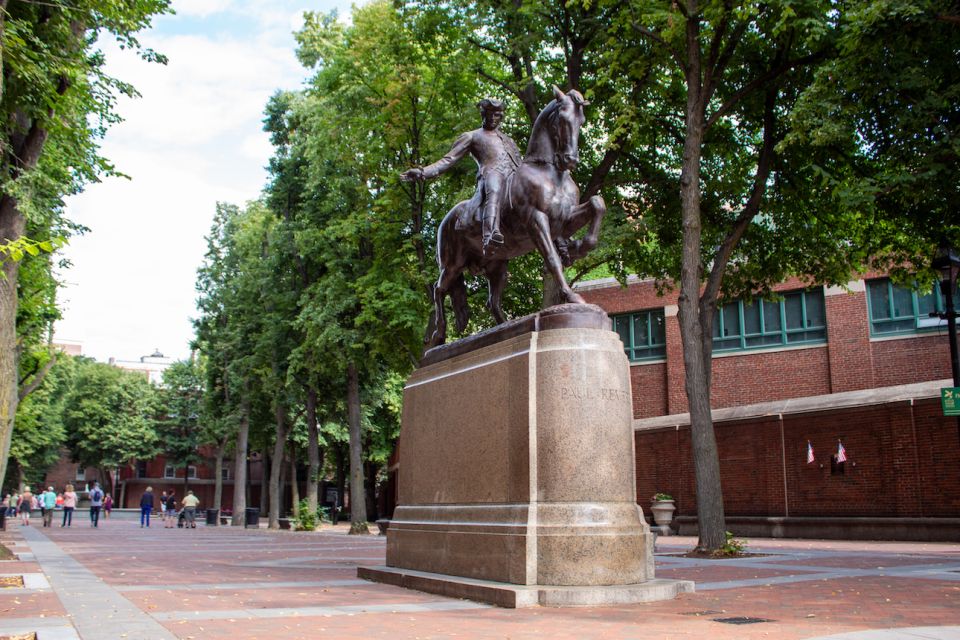
One of the strongest stretches of the route reaches back as far as 1692, when you’ll hear about Cotton Mather and the minister tied to the hysterical heart of the Salem Witch Trials. The tour approaches it as Boston’s history, not just a Salem sidebar.
This is valuable because it reminds you that the early New England world wasn’t separated into neat little boxes. People lived close to institutions, rumors had consequences, and religious leaders carried major weight. Even if you already know the headline version of Salem, the audio’s grounding in a specific Boston-era figure makes the whole episode feel more local and human.
Practical tip: if you’re the type who likes to read everything on-site, pause your momentum here. This kind of story works best when you let the place do the talking.
Old North Church and the midnight riders: Revere’s signal story
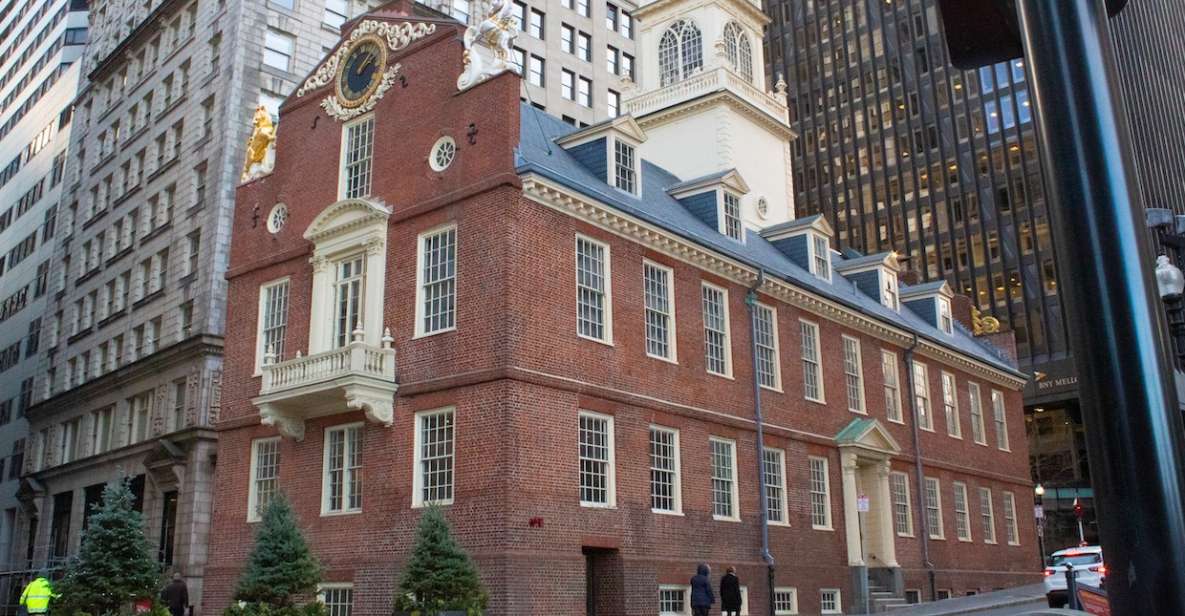
Next comes Old North Church, where the tour pushes straight into the late-pre-Revolution years. You’ll hear how Paul Revere organized the midnight riders so they could alert the Minutemen about the British arrival.
The reason this section is worth your attention is simple: the audio ties the dramatic moment to the physical geography. You’re not just hearing a famous tale. You’re walking toward it, then hearing what the people did and why it mattered.
Also, plan your expectations around day-of-week. The Old North Church is closed on Mondays, so you’ll only have access to the exterior that day. If your schedule puts you there on a Monday, don’t worry—you’ll still get the story, but it will be more “look and listen” than “step inside and explore.”
Little Italy to the Paul Revere House: history between food smells
After the church, the route steers toward the Paul Revere House, and the audio leans into the texture of the neighborhood. You’ll pass by the kind of streets where you can pick up the aromas from Little Italy’s restaurants and bakeries, and you’ll feel how Boston history is layered, not sealed off in museums.
What makes this stop sequence feel real is that it ties the pre-Revolution story to what came later: the neighborhood kept evolving. Even without naming every restaurant or landmark by “brand,” the audio helps you notice the street life around you, which is exactly what makes a self-guided tour work.
If you want a smoother pace, keep your snack decisions simple. You’re on a 2-hour plan, and this area can tempt you to linger. If you do plan a quick bite, do it briefly, then get back to the route so the audio doesn’t leave you behind.
Rose Kennedy Greenway and the Big Dig: modern Boston in the background
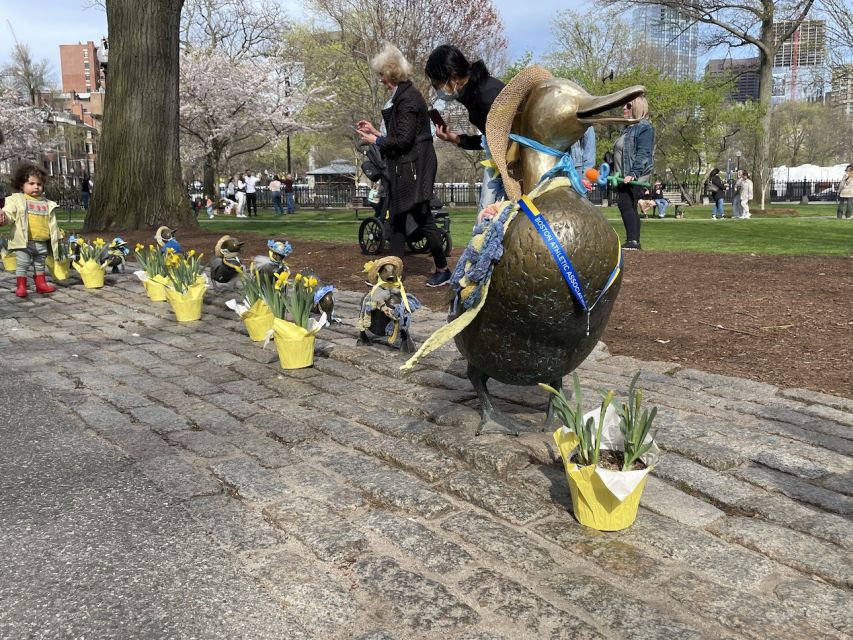
At Rose Kennedy Greenway, the tour shifts from early America into the kind of city-changing story you usually only hear in passing. You’ll get the background on Boston’s Big Dig and how it reshaped what people experience in the city today.
This part works because it prevents the walking tour from feeling like a one-time-only time machine. Boston history didn’t stop in the 1700s. Cities rebuild, reroute, and remake themselves, and those changes affect how you move through the place.
When you listen here, try doing it as you walk along the greenway rather than stopping to read every plaque. The Big Dig context is meant to sit in the background while you enjoy the walk, not swallow the walk entirely.
You can also read our reviews of more city tours in Boston






Quincy Market, Faneuil Hall, and Samuel Adams: liberty talk in the open air
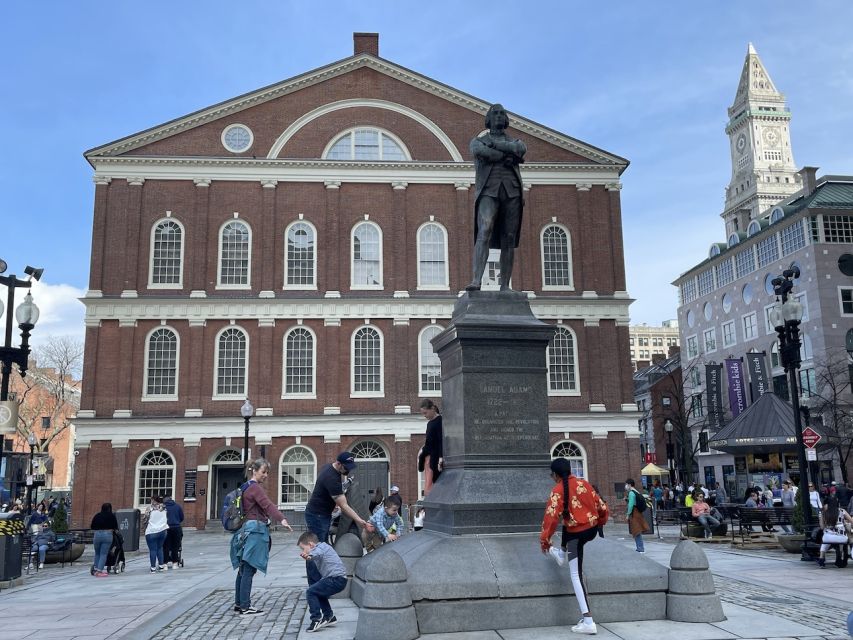
From there, the audio lands around Quincy Market and the Faneuil Hall area, where the story brings in Samuel Adams. The narration frames him as one of America’s fiercest proponents of liberty, and that fits the location: this is public space where people gather and argue and organize.
This section is a good reminder of why civic history is more than dates and names. Faneuil Hall is the kind of place that makes the idea of public debate feel physical. Even if you’re not studying history formally, the audio helps you connect the speeches and slogans to the streets where communities met.
If you’re tempted to detour into the market shops, set a time limit in your head. Quincy Market can eat up your schedule fast. Keep your detours short so you still have time for the heavier “founding era” stops later.
Old State House and the Boston Irish Famine Memorial: two kinds of survival
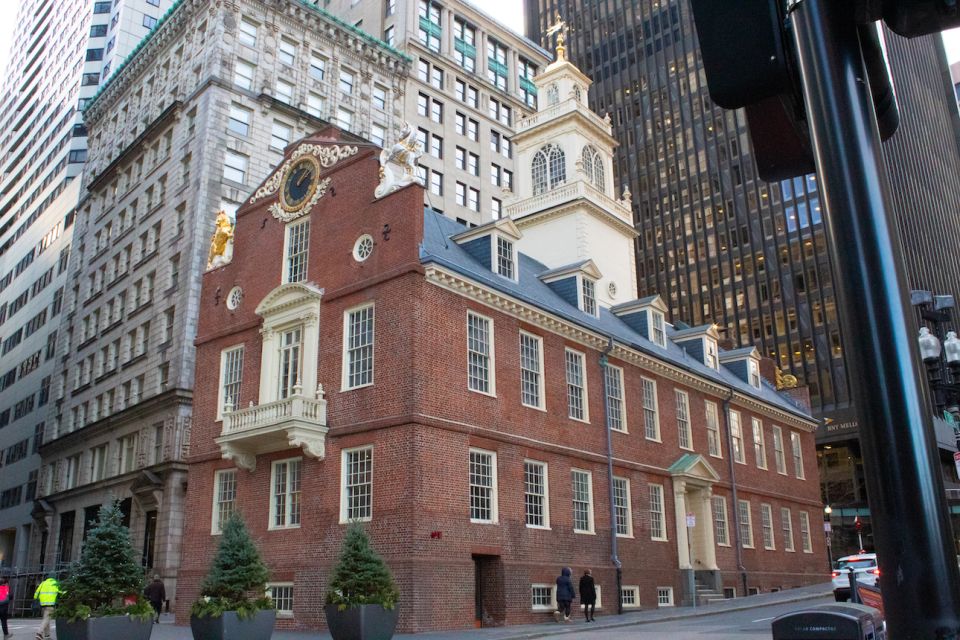
The route then points you to the Old State House, where you’ll hear about John Adams defending perpetrators of the Boston Massacre. That detail is often overlooked in casual history, and the audio uses it to show a different side of Adams: even when the events were violent and emotionally loaded, he still believed in legal defense and due process.
From there, you pass by the Boston Irish Famine Memorial, and the tour discusses the choices Irish families faced in the 1800s. The story doesn’t leave you with vague sympathy—it gives you something more concrete to think about: survival required decisions, and those decisions shaped communities in Boston.
This is the emotional weight of the tour, so it’s worth taking it seriously. If you’re walking with kids, you might want to pause afterward and turn the story into one simple question: What would you do if the options were limited and the stakes were survival?
Granary Burying Ground and the signal that traveled: the names behind the myth
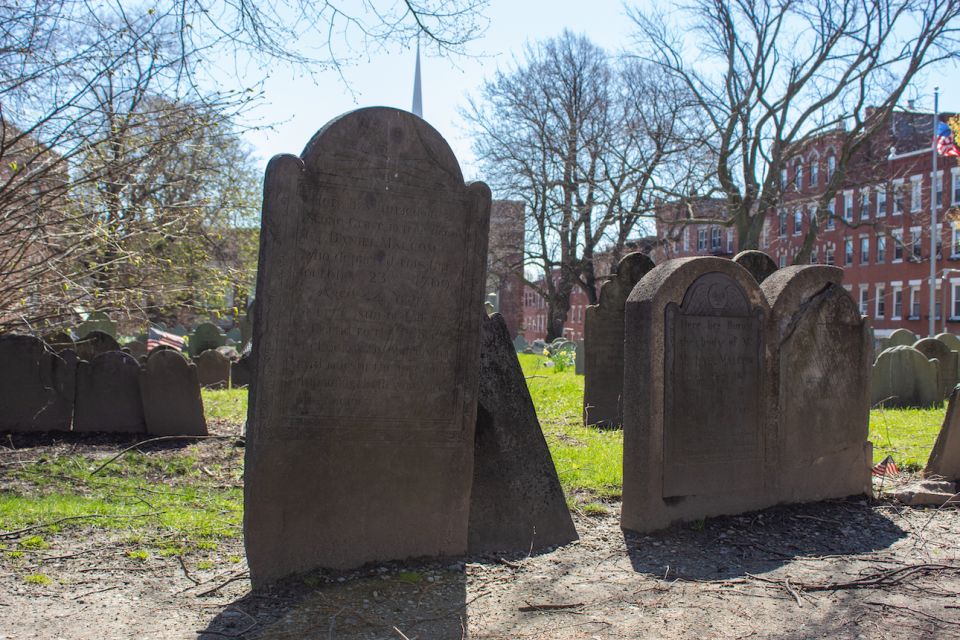
As you reach Granary Burying Ground, the tour becomes a roll call of founders you’ll recognize: John Adams, John Hancock, and Paul Revere. This is a strong segment because the audio doesn’t just list names. It ties them back to the narrative you’ve been hearing since the start.
You’ll also hear about who sent the signal from the Old North Church steeple to Paul Revere—and what Revere did after the revolution. That “before-and-after” framing matters. A lot of stories stop at the dramatic moment. Here, you’re guided through the aftermath, so the legend doesn’t float away from reality.
If you’re the type who likes closure, this is your stop. The audio helps you connect earlier events to the people who shaped what came next.
Boston factoids you’ll actually remember: molasses, beer, and Boston Common
One of the most memorable things the tour includes is a set of factoids that feel odd enough to stick. You’ll hear about 2 million gallons of molasses congealing in the North End in 1919. Yes, it’s a strange detail—but it makes the city’s past feel more tangible, because disasters like that become part of local memory.
The audio also tackles questions like whether Samuel Adams really brewed beer, and what led to the creation of America’s first public park, the Boston Common. These are exactly the kinds of “wait, really?” points that make a self-guided tour worth the money, because they turn passive listening into active recall.
If you want to end strong, listen closely through these segments. Don’t speed past them. The humor and curiosity are doing real work here: they make the founding era feel connected to everyday life.
Finishing at the George Washington Statue in the Public Garden
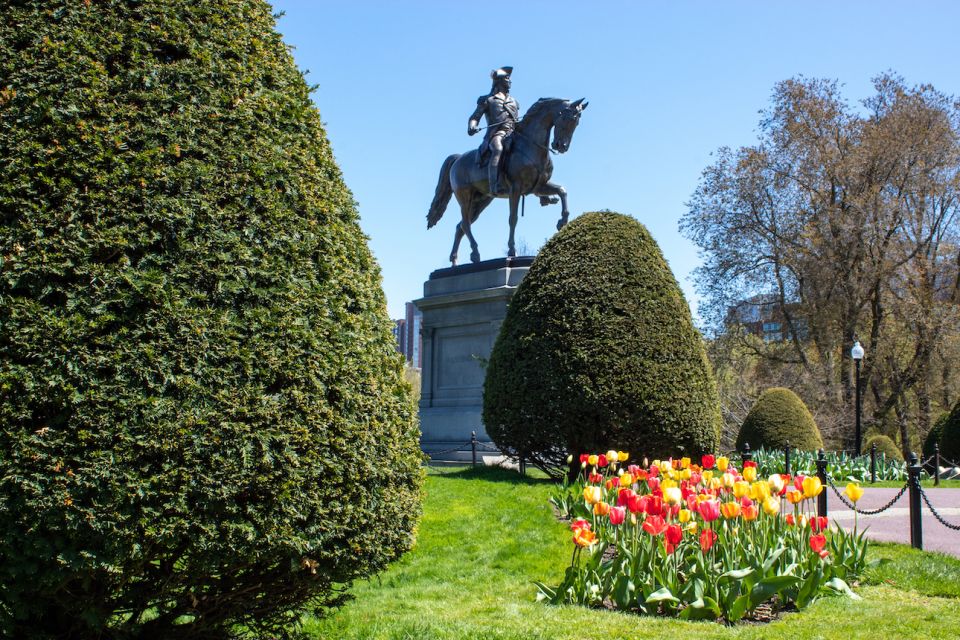
The route concludes at the George Washington Statue in the Boston Public Garden. This ending point feels like a soft landing: you’ve walked from burial grounds and churches through civic squares and memorial sites, and then you arrive at one of Boston’s calmer, more scenic spaces.
This matters because it helps you metabolize what you just learned. Instead of spilling straight into the next attraction, you get a place where you can decompress and look back at the walk you did—from North End origins to the Revolution’s turning points.
If you still have energy, consider doing a short wander in the Public Garden after the audio finishes. Use it as breathing time, not as another “must-see.” The point is to let the information settle.
How the GPS audio app works (and when it doesn’t)
This tour’s main engine is GPS enabled turn-by-turn directions. The tour is designed so audio tracks start at the right time and place without you constantly checking your screen. For anyone who’s ever struggled with “tap here, swipe there” directions while walking, that design choice is a big deal.
I also like that the tour is built for a real walking rhythm: it’s self-guided and you can pause and resume at any time. That’s perfect if you want to stop for photos, duck into a quick store, or let your group regroup.
Two practical cautions:
- Headphones are part of the plan. Without them, the audio loses its value fast.
- Keep your smartphone charged. You’ll want GPS and playback going for the full walk.
One more note: the tour audio is in English. If English isn’t your comfort zone, be prepared for the possibility that translation could interrupt the flow.
Price, time, and value for your Boston day
At $7 per person for about 2 hours, this is one of those purchases that feels small enough to justify even if you’re picky. You’re paying for a structured route, mapped stops, and a narrative that connects locations to stories. The price also makes it easier to take risks, like doing it early on a trip so you can come back later with sharper questions.
But it’s also not a substitute for a live guide. There’s no person to answer your follow-ups, no flexibility for spontaneous detours, and no way to calibrate the story to your interests in real time. That’s the trade.
This fits best if you:
- like walking at your own pace
- want a clear route that doesn’t require constant phone fiddling
- enjoy learning through storytelling while you move
It’s less ideal if you:
- need hands-free, low-tech navigation support
- rely on accessibility features not covered by a phone GPS walking format
- want multilingual narration beyond English
Also, expect the timing to be approximate. A self-guided walk can easily take longer, especially if you pause for photos, stop for snacks, or linger at the more emotional or detailed segments.
Should you book this Boston history audio walk?
If you’re spending a day in Boston and want an efficient way to connect the city to the Revolution—while also learning how immigration shaped neighborhoods—this is a strong pick. The GPS audio structure is the big reason: it makes the walk feel guided without the cost and scheduling hassle of a live guide.
Book it if you can handle a phone-based experience and you’re comfortable listening in English. I’d skip it or reconsider if you know your tech often struggles with GPS, if you’ll be checking your screen constantly, or if you strongly prefer an in-person explanation.
If you want a practical starter plan for Boston history that doesn’t lock you into a rigid group schedule, this is the kind of tour you’ll feel good about after the walk ends—especially when you’re standing in the Public Garden with the story still fresh in your head.
FAQ
Where does the tour start?
It starts at the entrance of Copp’s Hill Burying Ground. You open the Voice Map app on your smartphone, and the audio begins automatically once you’ve reached the starting location.
How long is the tour?
Plan for about 2 hours. Starting times are listed as options, depending on availability.
Do I need a live guide?
No. It’s fully self-guided with an audio app and GPS-enabled turn-by-turn directions, so there’s no live guide to meet you.
Does the tour work with GPS and directions?
Yes. The audio is GPS-enabled with turn-by-turn directions, and the audio tracks are meant to start at the right time and place without you needing to constantly look at your phone.
What do I need to bring?
Bring headphones and a charged smartphone.
Is it suitable for people with mobility impairments?
No. It’s not suitable for people with mobility impairments.