REVIEW · BOSTON
Boston: Full Revolution Story Epic Small Group Walking Tour
Book on GetYourGuide →Operated by The Revolutionary Story Tour · Bookable on GetYourGuide
Boston history actually feels like a plot.
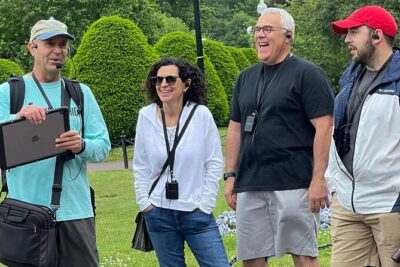
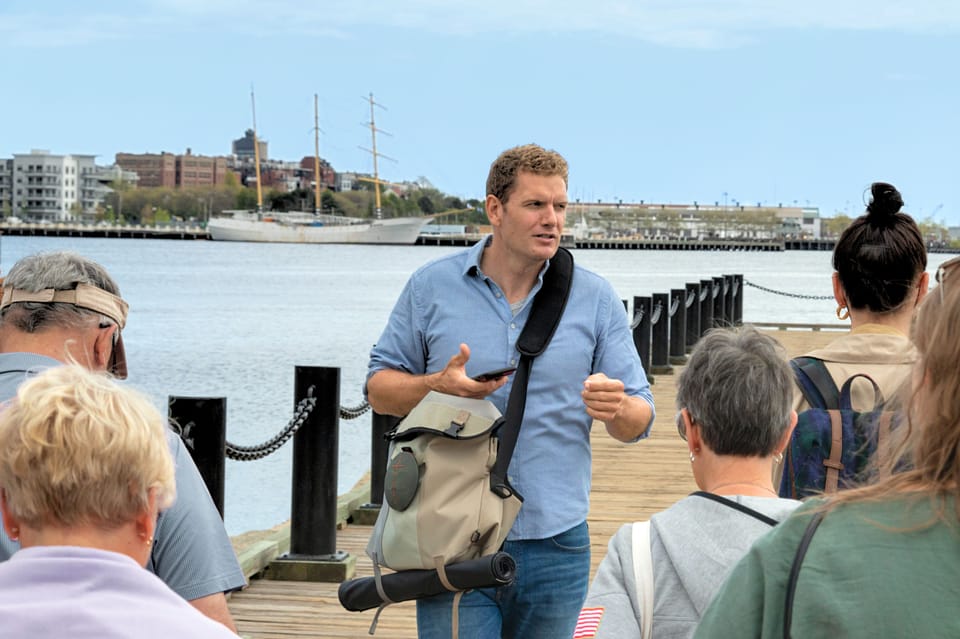
This small-group, no-costume walk threads the American Revolution through Boston in chronological story order, not the usual Freedom Trail shuffle, and it’s led by guides like Mike or Tyler who mix maps, photographs, and quick humor. I love the story-first structure that makes dates and people stick, and I like the extra context outside the standard stops. The main catch is simple: you’ll do a fair amount of walking in 3.5 hours, including one hill and some stairs near the end.
Key to the experience is how the guide connects the sites into one continuous narrative, from Boston’s early days toward the Declaration of Independence. You’re not just collecting photos at landmarks—you’re following causes and consequences, with the city’s neighborhoods doing real work in the story.
In This Review
- Key things I’d prioritize before you book
- Finding City Hall Plaza and your guide by Five Iron Golf
- The Revolutionary story in chronological order (not the usual Freedom Trail walk)
- Beyond the Freedom Trail: from King’s Chapel Burying Ground to Old City Hall
- Granary Burying Ground and Park Street Church: learning the cast in real place
- Old State House to the Boston Massacre site: street-level tension
- Old South Meeting House, Faneuil Hall, and the Quincy Market reset
- North End to Old North Church: Paul Revere’s world, explained simply
- Copps Hill, USS Constitution, and Bunker Hill Monument views
- Harborwalk to Lewis Wharf: finishing with Boston’s maritime identity
- Price and group size: why $57 for 3.5 hours can feel like value
- Who this walk is best for (and who should skip it)
- Final call: should you book Boston’s full Revolution walking story?
- FAQ
- How long is the Boston: Full Revolution Story Epic Small Group Walking Tour?
- How big is the group?
- Where do I meet the guide?
- Where does the tour end?
- What languages is the tour offered in?
- Is this mainly the Freedom Trail?
- What’s the physical requirement like?
- What’s included during the tour?
Key things I’d prioritize before you book
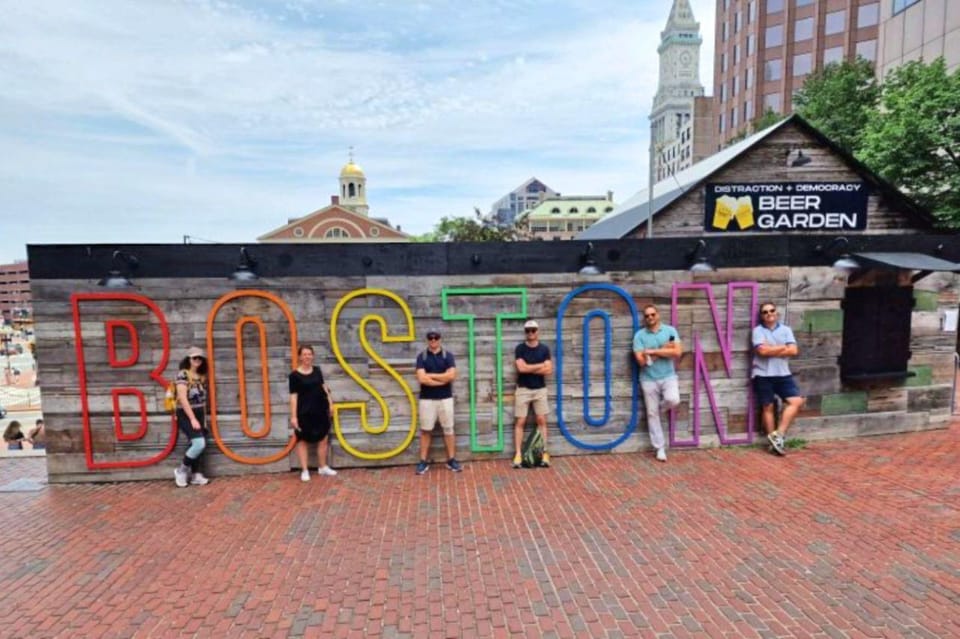
- Small group size (~16) keeps it conversational instead of lecture-style
- Story order, not Freedom Trail order, so events line up the way they actually unfolded
- No costumes, no re-enacting, just scholar-level explanation with light humor
- Visual teaching tools like maps, photos, and even name tags to track key figures
- Citywide route that includes major landmarks and off-the-path street corners
- A built-in break + food time with a restroom stop at Quincy Market and North End recommendations
Finding City Hall Plaza and your guide by Five Iron Golf
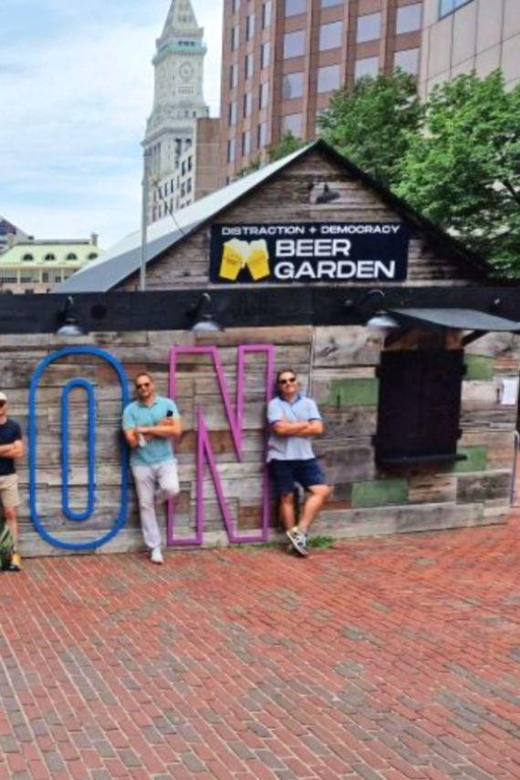
You start at City Hall Plaza, a large pedestrian space directly across from Faneuil Hall (and yes, you’ll deal with stairs getting up into the area). The meeting point is in front of the Five Iron Golf between Staples Connect and City Hall, with your guide standing by a Bill Russell statue in that general plaza zone. That detail matters because you’ll likely be joining other tours nearby, so pick a landmark and head there early.
The route is on foot, so I’d treat this like a normal city walk with a history class attached. Wear comfortable shoes. Boston sidewalks can be great until you hit cobbles, and the tour runs close enough to the city center that you’ll be crossing different street rhythms throughout.
If you’re the type who likes to plan your day down to the minute, this one is worth arriving 10–15 minutes early so you don’t start stressed and wind up rushed.
You can also read our reviews of more walking tours in Boston

The Revolutionary story in chronological order (not the usual Freedom Trail walk)

Here’s what makes this tour different: it’s designed around the timeline of the Revolution, not the standard tourist route. That sounds minor, but it changes everything. The Freedom Trail is famous, but it doesn’t follow the same order the events happened, and the tour you want should help you connect the “why” behind each flashpoint.
Instead of doing isolated stop-and-start anecdotes, the guide builds a continuous thread—Boston’s founding and early identity, rising conflict, and the steps that lead toward the Declaration of Independence. You’ll hear the big scenes you expect (like the Boston Massacre, the Boston Tea Party, Lexington & Concord, and Bunker Hill), but the value is in how they connect to each other as the tension grows.
You’ll also get named people in context—Ben Franklin, Paul Revere, Sam Adams, John Hancock, and John Adams are part of the cast—and that makes the whole thing easier to follow, especially if you didn’t grow up with American history baked into every class.
Beyond the Freedom Trail: from King’s Chapel Burying Ground to Old City Hall

You’re not just circling the usual highlights. After the quick orientation with the Freedom Trail portion, the tour heads into Boston’s early religious and civic world.
King’s Chapel Burying Ground is one of those stops that quietly sets the mood. It’s not a museum; it’s a place tied to the early city, and your guide uses it to explain what Boston’s community looked like before revolution was even a realistic idea. Then you move on to Granary Burying Ground, which is where names you’ve heard in textbooks start to feel like real people embedded in real streets.
The route also brings you to Park Street Church and Old City Hall, which are good reminders that power wasn’t only in speeches and pamphlets. Governance and public space mattered. By the time you reach Boston Latin School and the Benjamin Franklin statue, you’re getting a stronger sense of how education, ideas, and leadership fed the era’s political momentum.
The benefit: by the time the conflict gets louder, you’re not hearing it in a vacuum. You understand the kind of city these leaders were trying to defend or change.
Granary Burying Ground and Park Street Church: learning the cast in real place
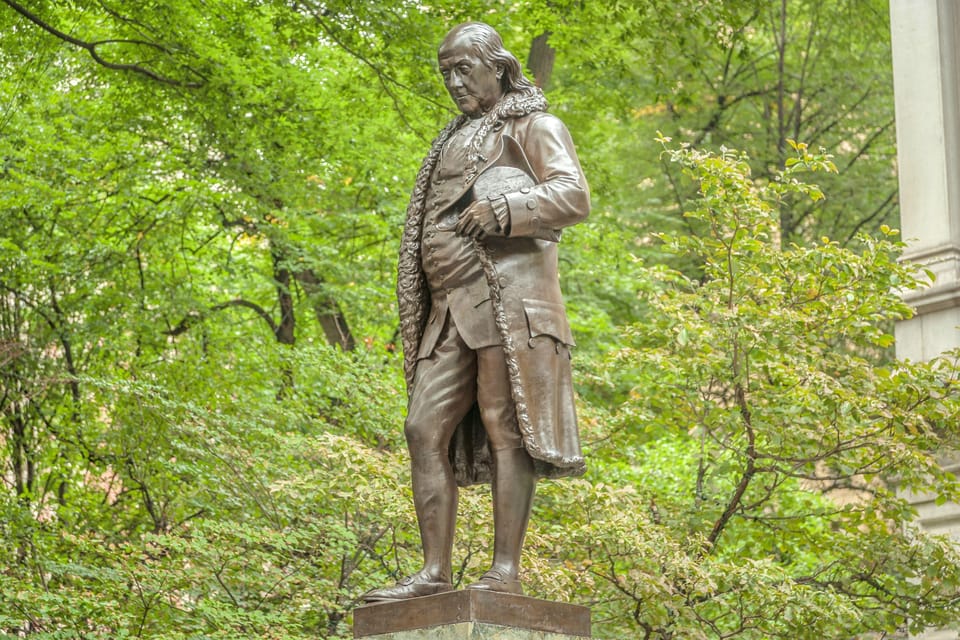
If you want a Revolution tour that teaches more than facts, these two stops are key.
At Granary Burying Ground, you’re dealing with the names, but your guide’s job is to make those names matter. The setting helps: you can almost see how someone could move from a place of mourning into a place of political action. The tour uses visuals (maps, photos, and other aids) to help you connect who mattered, why they mattered, and how networks formed.
Then Park Street Church gives you a different angle—how public life and belief intersected. It’s a short stop, but that’s common here: the guide points you toward what to look for, then moves you on so the timeline keeps moving.
Practical note: you’ll likely be standing and listening in outdoor areas for stretches. Bring sun protection in summer and a light layer in shoulder seasons. The city can be windy along open stretches.
Old State House to the Boston Massacre site: street-level tension
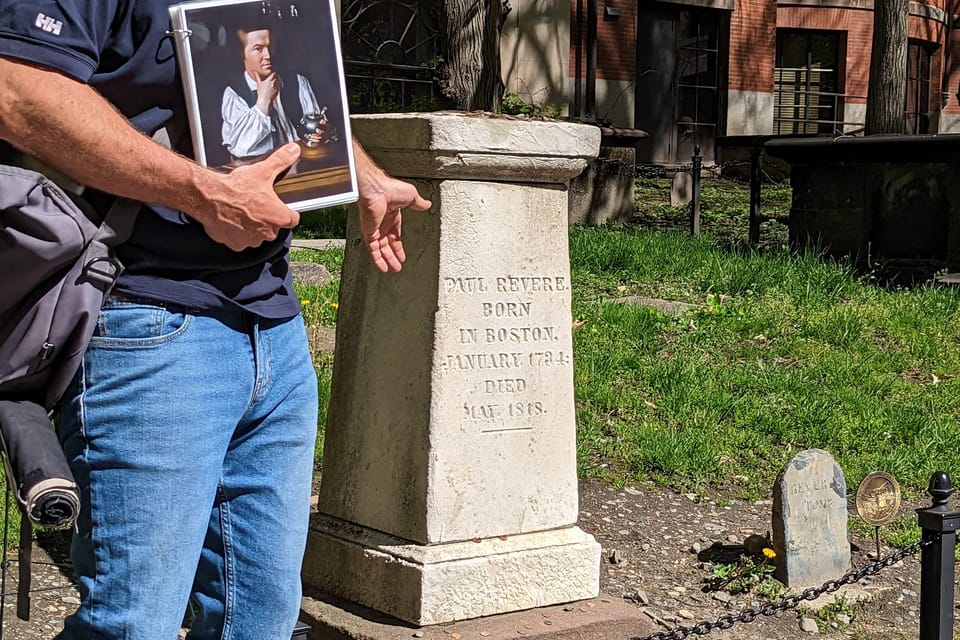
When the tour turns toward the political friction, it stops sounding like history homework and starts sounding like a real chain reaction.
Old State House is where you’re reminded that the colonial government wasn’t just an abstract concept. It had physical locations, legal decisions, and public visibility. From there you head to the Boston Massacre site, which is where the guide’s teaching style really helps. Instead of treating it like a single violent moment, you get the build-up: the atmosphere, the relationships, and how everyday conflict tipped into public catastrophe.
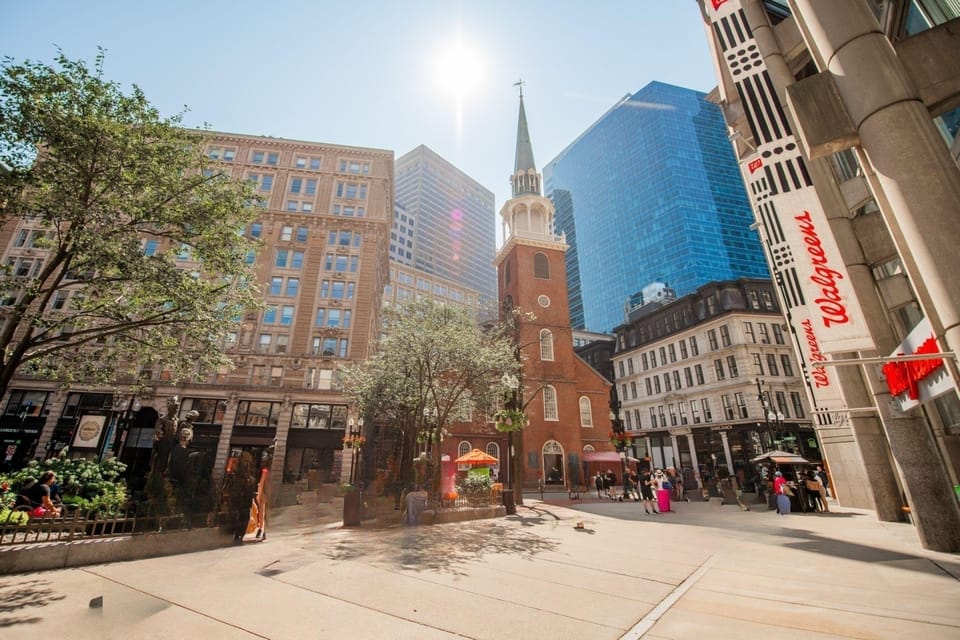
Then you pass Old Corner Book Store—quick but useful—because your guide uses it to connect print culture and public argument to political pressure. When you can see how ideas circulated, the Revolution starts feeling less like a sudden lightning strike and more like a pressure system.
If you’re someone who likes to understand causes (not just events), this section is a major reason to pick this tour.






Old South Meeting House, Faneuil Hall, and the Quincy Market reset
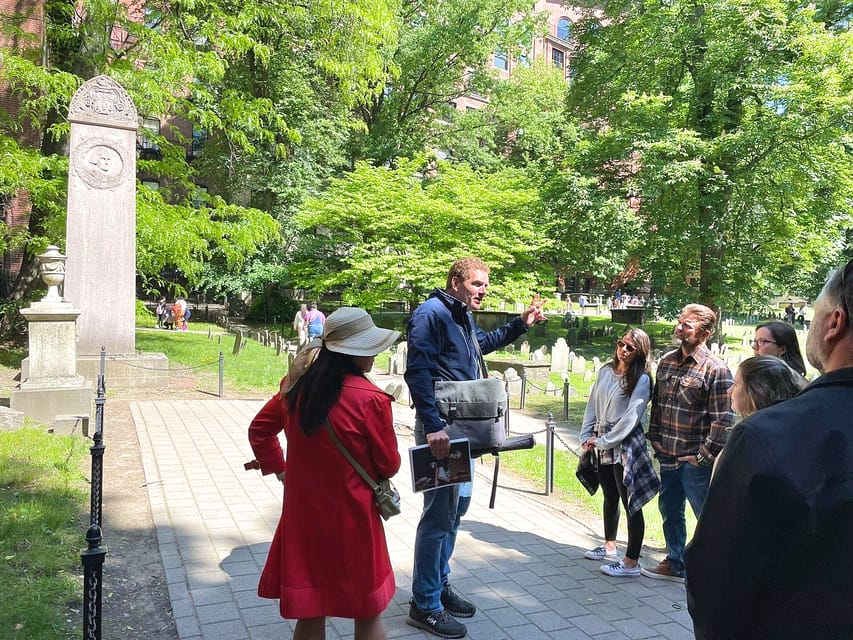
You’ll hit Old South Meeting House and Faneuil Hall as more than famous buildings. This is where the tour’s “story order” really pays off: you learn how assemblies, rhetoric, and organized gathering points turned anger into action.
Old South Meeting House is part of the political machinery people often skip when they focus only on the most dramatic battles. Your guide uses it to explain how collective decisions happened and why certain public spaces became repeat stages for confrontation.
Then comes Faneuil Hall and the nearby Quincy Market area. There’s a built-in 15-minute break at Quincy Market for shopping and, importantly, a restroom stop. When Faneuil Hall is open, you also get entrance there. That’s a nice touch because it turns one of the loudest civic symbols in Boston from an exterior photo into something you can actually stand inside.
At this point in the walk, you’re not just tired—you’re ready for context. That brief reset is what makes the second half feel doable instead of exhausting.
North End to Old North Church: Paul Revere’s world, explained simply
After the civic stops, the tour moves toward the story of communication and action that became legend.
You visit the Paul Revere House, then you cross through the North End, often described as Little Italy for its food energy. The guide shares local insight and food recommendations here, which is a practical bonus because you’ll likely want dinner plans after the tour.
Then you hit a series of stops that support one connected idea: messages, timing, and secrecy.
- Paul Revere Mall is a photo moment and a story checkpoint.
- Old North Church is the kind of place where the details matter, because it sits at the center of the famous signaling story.
This is also where the tour’s teaching tools shine. Name tags, maps, and photos are used to connect people to places, so you don’t just hear a dramatic anecdote—you understand the setup that made it possible.
Copps Hill, USS Constitution, and Bunker Hill Monument views
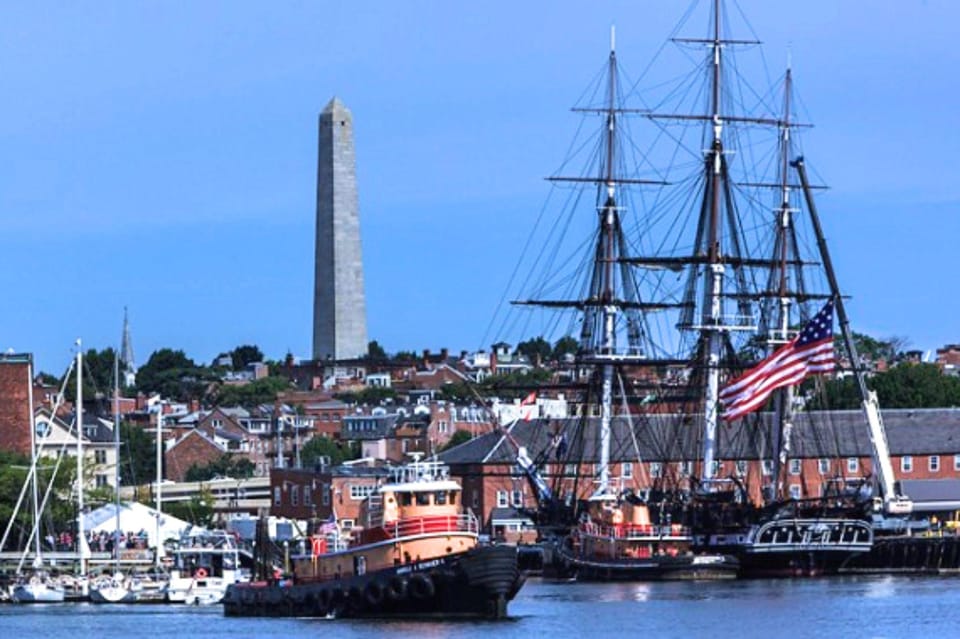
The walk starts building physical meaning here. You’re moving toward vantage points and maritime context, so the Revolution isn’t just talked about—it’s located.
Copps Hill is a great example. Even if you’re not a hardcore history buff, you’ll appreciate why a viewpoint like this would matter in conflict. Then you pass USS Constitution, a short stop but an important one: it places Boston’s naval identity in the same geographic frame as the fighting that defined the era.
Next you reach Bunker Hill Monument. This is where you feel the scale. Your guide leads you through what happened and why this moment was so consequential, and you get the views that make the terrain make sense.
This whole segment is also where the tour can feel like the toughest part physically. The city is mostly flat, but you’ll deal with at least one hill and stairs near the end. Bring your best walking mindset.
Harborwalk to Lewis Wharf: finishing with Boston’s maritime identity
You don’t end in a parking lot. You end around the harbor area, which is fitting given how often Boston’s waterfront shows up in the Revolution story.
You’ll move along the Harborwalk, and you pass or visit Pilot House Park and nearby areas as you approach the finishing point at Lewis Wharf. Your guide’s narration slows down just enough here that the last pieces land: the Revolution wasn’t only about paperwork and meetings; it was also about movement, supply, and control of coastline.
If you have time after the tour, this is a good place to keep walking on your own. It’s a different Boston than the one that felt political earlier. Instead of arguing in meeting houses, you’re seeing a city that learned to live with the sea.
Price and group size: why $57 for 3.5 hours can feel like value
At $57 per person for about 3.5 hours, the price makes sense if you care about more than a checklist of landmarks. Here’s what you’re paying for:
- A small group (~16), which changes the vibe. Questions and conversation are easier.
- A guide who ties stops together with maps, photos, and teaching aids, so your brain doesn’t have to hold all the connections alone.
- A route that goes beyond just the Freedom Trail, including Granary Burying Ground, Old Corner Book Store, USS Constitution, Copps Hill, and multiple harbor-side stops.
- A scheduled restroom break at Quincy Market and time where the tour can include Faneuil Hall entrance when open.
It’s also longer than many “quick hit” tours, so you’re effectively buying a full learning session with time to absorb and recover. If you’re the type who gets bored by repetitive patterns, this one’s advantage is that you’re constantly changing neighborhoods and contexts.
Who this walk is best for (and who should skip it)
This is primarily aimed at an adult audience, though it’s designed to stay understandable for different interests. The guide uses maps, visuals, and teaching tools (even Lego) to make the information approachable, which helps even if you don’t remember U.S. history from school.
This tour is a strong match if:
- You like your history in story form, not random facts
- You want the Revolution explained with context, not just dates
- You plan to attend other Revolutionary-themed events afterward (the tour sets you up to understand what you’re seeing)
It may be less ideal if:
- You have mobility limitations. The tour is not suitable for people with mobility impairments, and there are stairs and a hill.
- Your English level is only casual or your interest is light. The narrative is deliberately designed for deep understanding, and the guide’s structure may be harder if you want only a simple overview.
Final call: should you book Boston’s full Revolution walking story?
I’d book this if you want Boston history that feels like it has momentum. The small-group size, the chronological story order, and the guide’s use of visuals and interactive techniques are exactly what make the difference between seeing sites and actually understanding them.
I’d think twice if you’re short on walking stamina or you prefer a shorter, simpler tour. The walking is part of the point here, and near the end you’ll feel it.
If you can handle a moderate walk and you want a clearer picture of how Boston became central to America’s founding, this is one of the better bets in the city.
FAQ
How long is the Boston: Full Revolution Story Epic Small Group Walking Tour?
The tour runs about 3.5 hours, with starting times depending on availability.
How big is the group?
The group is small, around 16 participants.
Where do I meet the guide?
Meet at City Hall Plaza, in front of the Five Iron Golf between Staples Connect and City Hall, near the Bill Russell statue.
Where does the tour end?
The tour ends at Lewis Wharf.
What languages is the tour offered in?
The tour is offered in English.
Is this mainly the Freedom Trail?
No. The tour includes some Freedom Trail walking, but it also uses a citywide route and follows a story-first approach rather than the standard Freedom Trail order.
What’s the physical requirement like?
Expect moderate walking. The city is mostly flat, but there is one hill (up) and stairs near the end, and it is not suitable for people with mobility impairments.
What’s included during the tour?
Your tour guide is included, plus a 15-minute restroom break at Quincy Market and entrance into Faneuil Hall when it is open. The tour also includes local food recommendations in the North End area.