REVIEW · BOSTON
PRIVATE Authentic Revolutionary Boston Walking Tour
Book on Viator →Operated by Authentic Revolutionary Boston Tours · Bookable on Viator
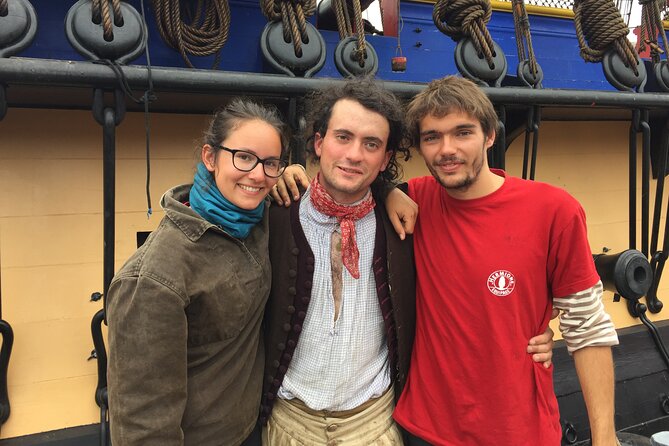
A Revolution lesson you can walk through. I like that this is a private tour where Adam can tailor the story to what you care about, not a one-size script, and I also love the guide’s style—Adam often shows up in period costume and brings humor without turning history into a joke. The route stays grounded in newer research and a more inclusive view of the era, so the talk feels relevant in the 21st century, not locked in the past.
You should know one possible catch up front: several of the most famous interiors along the way are outside-only on the tour unless you add separate entry tickets. If you want to go inside every stop, plan for extra tickets in advance, not just the $75 private tour price.
In This Review
- Key highlights to look for
- Why this Revolutionary Boston walk fits real interests
- Boston Common: the political center you can still feel
- Granary Burying Ground: what graves quietly teach
- From King’s Chapel to Old State House: religion, governance, and empire
- Old South Meeting House and Faneuil Hall: the talk that turned into action
- Old North Church: lanterns, freedom, and the uncomfortable question
- Pacing, bathrooms, and how to get the most from 2 hours
- Price and logistics: what you’re paying for at $75
- Should you book this private Revolutionary Boston tour?
- FAQ
- How long is the private tour?
- What does the tour cost?
- Is this tour private or shared with others?
- Where does the tour start?
- Is admission included for all the stops?
- Where does the tour end?
- What happens if the weather is poor?
- Are service animals allowed?
Key highlights to look for

- Private-group tailoring that matches your interests and pace
- Adam’s period-style guiding paired with practical, clear storytelling
- Inclusive Revolutionary themes that connect to citizenship and critical thinking
- External stopouts built for walking with smart use of time
- Local logistics included, like where to find the cleanest bathrooms
Why this Revolutionary Boston walk fits real interests
Boston’s Revolution is everywhere: signs, museums, street names, reenactors. The problem is that most tours give you the same highlights in the same order, whether you care about politics, religion, or the moral arguments around freedom. This is different because it is built around you and your group, and the guide can shift emphasis so you’re not just collecting dates.
I’m also a fan of how the story is framed for modern life. Instead of treating the Revolution as a neat before-and-after, the tour points to themes like civic responsibility and critical thinking. You’ll hear how the era’s big promises came with contradictions, and you’ll have time to ask follow-up questions without the pressure of matching a large group’s pace.
The result is a private, conversational walk where you’re not left to wonder what you just saw. You’ll leave with a set of connections—between places, people, and ideas—rather than a pile of names you can’t place.
You can also read our reviews of more walking tours in Boston



Boston Common: the political center you can still feel

Your walk begins at the Boston Common Visitors Center on Tremont Street. From there, you step into a site that has been public space for generations, long before the Revolution made Boston famous. It’s the kind of location that helps you understand why these events mattered: people gathered here to talk, watch, argue, and plan.
Boston Common is also a good warm-up because it’s open, easy to orient yourself, and full of visual cues. Even if you’ve read about the era, the park gives you a real sense of the civic stage—this wasn’t just something that happened in lecture halls or faraway capitals. It was public, visible, and loud.
If you’re short on time, this first stop is a win. The tour keeps it efficient, but you still get the symbolic meaning: this was where political and cultural life got noticed, not hidden away.
Granary Burying Ground: what graves quietly teach

Next comes Granary Burying Ground, one of Boston’s oldest cemeteries. This stop is built around the idea that history lives in stone, names, and burial patterns—not only in speeches and pamphlets. You’ll be guided toward lesser-known details that connect the cemetery to the Revolution’s wider social reality.
The best part here is the angle: instead of treating the cemetery like a list of famous dead, the tour helps you notice the radical demographics revealed by who is buried there and what their presence can suggest about the community. It’s the kind of lesson that makes the Revolution feel less like a straight line of heroes and more like a human mix of neighborhoods, beliefs, and power.
Practical note: this is a walking stop with a short time window. If you love cemeteries, you’ll probably want to linger after the tour too—so bring a little extra patience if you’re the type who reads every marker.
From King’s Chapel to Old State House: religion, governance, and empire

A key theme in the Revolution is that it wasn’t only about taxes or military force. It was also about institutions—who had authority, what traditions mattered, and how belief systems shaped public life. This tour leans into that with two very different, very telling stops.
At King’s Chapel, you get the sense that the Revolution had an international reach right in Boston’s religious architecture. The guide speaks outside, so you’re not trapped waiting for a museum clock. You still get the big meaning of the site. If you want to go inside the Chapel itself, you’ll need a separate ticket that isn’t included with the tour.
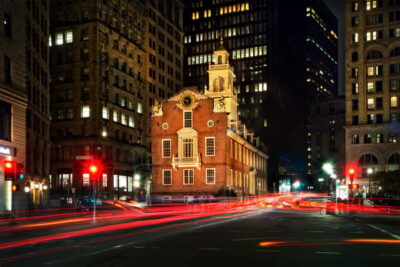
Then you move toward the Old State House area, where Boston’s political drama came into sharper focus around the Boston Massacre legacy. Again, the tour pauses outside. You’re pointed to what the nearby intersection and museum space represent, even if you’re not stepping into the building right then. If you do want interior access, you’ll need that extra ticket.
This pairing works because it gives you both sides of the power question: religious space and civic governance. Together, they make the Revolution feel more like a contest over how society is run, not just a fight over who wins a battle.
Old South Meeting House and Faneuil Hall: the talk that turned into action
If you care about how revolutions start, these two stops do the job. Old South Meeting House is the kind of place where you can almost picture the crowd: debate, urgency, and the sense that words were being used as tools. The tour focuses on why this building mattered and how it set the stage for the Boston Tea Party, while also broadening the meaning beyond the headline event.
You’ll pause outside, with the option to add separate entry if you want to go inside the meeting house. That extra ticket isn’t included, so decide based on your style. If you like quick context and walking momentum, the outside stop is enough. If you want the full room-by-room experience, plan for the additional entry.
Then comes Faneuil Hall Marketplace, which is more than a pretty historic spot. It’s a Revolutionary-era meeting space with a marketplace identity, plus links to British military presence. In other words, it’s the Revolution with commerce and strategy tangled together, not cleaned up for modern visitors.
This part of the walk is also useful for pacing. You’ll get enough story to make the sites meaningful, but you’re not stuck in long indoor stretches. It’s ideal when you have limited time and want the day to keep moving.
You can also read our reviews of more private tours in Boston





Old North Church: lanterns, freedom, and the uncomfortable question

The final major historic stop is Old North Church & Historic Site. This is where the tour leans into one of the trickiest parts of the Revolution: the paradox of freedom and bondage in the same era. You’ll pause and talk outside about the famous lantern signal, and you’ll get guidance on how to hold both ideas in your mind at once.
That’s important. Many tours gloss over contradictions because it’s easier. Here, the approach pushes you toward thinking, not just remembering. The goal isn’t to make you feel guilty or impressed. It’s to help you see the era clearly, including what people were arguing for and what they were ignoring.
If you want to enter the church itself, that requires a separate ticket not included in the tour. The outside conversation is still designed to stand on its own, but having that option means you can choose how deep you want to go.
Pacing, bathrooms, and how to get the most from 2 hours

This tour runs about 1 hour 30 minutes to 2 hours, which is a smart length for a private walking experience. It’s enough time for real storytelling, but not so long that you’ll spend most of the visit tired or checking your watch. You’ll also be near public transportation for an easy start.
One included detail that I think actually matters: the guides know where the cleanest bathrooms are in the city. That sounds small until you’re out walking for 90 minutes in the middle of a busy day. It’s the kind of local service that improves the tour without turning it into a scavenger hunt.
Weather matters too. The experience requires good weather, so on a rainy day you’ll likely be offered a different date or a full refund. If you’re planning around Boston weather, bring layers and be ready to adapt. Because the stops are spread along a walking route, comfortable shoes beat fashion every time.
Cost-wise, $75 per person also plays into how you pack your day. For a private tour, you’re buying time with a guide who can respond to your questions, not just access to a few landmarks. If you’re the type who likes to ask why things happened, you’ll likely feel your money working.
Price and logistics: what you’re paying for at $75

At $75 per person, the biggest value isn’t a bargain price. It’s the private format and the guide’s flexibility. Your group gets the space for conversation and the ability to steer the tour toward your own interests, whether that’s political structure, religious influence, or the human side of the Revolution.
It also helps that most stops are external visits with no included admission required for those outside segments. The only add-on costs you might face are for the interiors at a few key sites, like King’s Chapel, Old South Meeting House, Old State House, and Old North Church. If you’re okay with outside viewing plus strong explanation, you can keep costs predictable. If you want to go inside everything, budget a bit more.
You should also know it’s mobile ticket-based, so you’ll be dealing with less paperwork on the day. And it tends to book ahead—on average about 32 days in advance—so if your travel dates are fixed, don’t wait until the last week.
If you’re traveling with kids, or with adults who like history but need it made relevant, the format is a good fit. The tour is built to support active citizenship and critical thinking for “young or old,” which means it’s designed for more than just museum-browsing.
Should you book this private Revolutionary Boston tour?
Book it if you want a private guide who can tailor the Revolutionary story to what your group actually cares about, and if you like history explained in a way that connects to modern life. The pace makes it a strong use of limited time, and the guide style—Adam’s period costume and humor—can make the walk feel both vivid and easy to follow.
Skip it or rethink your plan if you’re expecting all sites to be fully inside-access without extra tickets. This tour keeps the walking story tight and outside-focused, and you’ll pay separately if you want the full interior experience at certain museums and churches.
FAQ
How long is the private tour?
The tour lasts about 1 hour 30 minutes to 2 hours.
What does the tour cost?
It costs $75.00 per person.
Is this tour private or shared with others?
This is a private tour/activity. Only your group participates.
Where does the tour start?
The tour starts at the Boston Common Visitors Center, 139 Tremont St, Boston, MA 02111.
Is admission included for all the stops?
Admission tickets are not included for several sites. The tour includes free outside visits for some locations, but interior entry at specific stops requires separate tickets.
Where does the tour end?
The tour ends at Haymarket, 100 Hanover St, Boston, MA 02108, and the end point is customizable depending on your private booking logistics and interests.
What happens if the weather is poor?
The experience requires good weather. If it’s canceled due to poor weather, you’ll be offered a different date or a full refund.
Are service animals allowed?
Yes, service animals are allowed. The tour is also near public transportation, and most travelers can participate.