REVIEW · BOSTON
Public Authentic Revolutionary Boston Walking Tour
Book on Viator →Operated by Authentic Revolutionary Boston Tours · Bookable on Viator
Boston’s Revolution isn’t stuck in the past. This walking tour ties famous sites to questions you can still ask today, with smart stops, solid pacing, and guides who can handle your curiosity.
I especially love the clear, 21st-century relevance of the story, and I really like the way the guide (in my case, Adam) mixes facts with a friendly, patient sense of humor.
One thing to consider: several major stops require separate entry tickets if you want to go inside, so you’ll decide on the fly whether to add extra admissions.
In This Review
- Key points worth your time
- Boston’s Revolutionary Story, Told Like You Can Use It
- Meeting Point to Haymarket: A Route You Can Follow Without Stress
- Stop 1: Boston Common and the Start of a Public Story
- Stop 2: Granary Burying Ground and the “Other” Revolutionary Details
- Stop 3: King’s Chapel Outside Pause, With Optional Paid Entry
- Stop 4: Old South Meeting House and the Tea Party’s Bigger Frame
- Stop 5: The Old State House and the Boston Massacre Legacy
- Crossing the Boston Massacre Area Without Getting Stuck in Traffic
- A Revolutionary Meeting Space, Marketplace, and British Armory Moment
- The Lantern Church Stop and the Freedom vs. Bondage Paradox
- What Makes the Guides Matter: Adam’s Humor and Patient Answers
- Price and Value: $45 for a Story You Can Keep Thinking About
- Who This Tour Is Best For (and Who Might Want to Skip It)
- Quick Tips to Get More Out of It
- Should You Book This Public Authentic Revolutionary Boston Walking Tour?
- FAQ
- How long is the tour?
- What is the price per person?
- What is included in the tour price?
- Do I need separate tickets to enter King’s Chapel, Old South Meeting House, and the Old State House?
- Where does the tour start?
- Where does the tour end?
- Is this tour ticket mobile?
- How large is the group?
- What is the cancellation policy?
- Are service animals allowed?
Key points worth your time
- Small group feel (max 16), so you’re not shouting your questions across a crowd
- Guides who can adapt, with time for your questions instead of rushing you through
- Outside-first itinerary that still targets key revolutionary moments
- Separate museum tickets for certain stops like King’s Chapel, Old South, and the Old State House
- A “big story” route from Boston Common past the Boston Massacre area and onward to the Haymarket end point
Boston’s Revolutionary Story, Told Like You Can Use It

If you like history that stays connected to the present, this tour is built for you. The pitch isn’t just that Boston mattered during the Revolution. It’s that the way people argued about rights, power, and freedom is still a live topic now—so the walk becomes more than dates on a plaque.
I also like the balance here. You get a Revolution story that’s designed to feel diverse and inclusive, with attention to how different people and ideas show up in the places you visit. And it isn’t delivered like a lecture. The best part is the tone: affable guides who can slow down for questions and speed up when your group is ready.
The practical side matters too. This is about 1 hour 30 minutes to 2 hours, and the route is walk-focused, with lots of short pauses at key corners. Since it runs up to 16 people, you’re more likely to get a real back-and-forth than a one-way tour.
One caution: because some sites are museums or private spaces, your ticket doesn’t include entrance to everything on the route. You’ll stand outside for multiple stops, which is great for context—but if you want interior time, plan for added admissions.
You can also read our reviews of more walking tours in Boston



Meeting Point to Haymarket: A Route You Can Follow Without Stress
You start at the Boston Common Visitors Center, 139 Tremont St. The tour ends near the Haymarket area, at 100 Hanover St. On paper, it’s a straightforward walk. In practice, the benefit is that you can end your tour near a busy transit zone and dining area afterward, instead of backtracking across town.
The tour also runs as a mobile-ticket experience, which cuts down on printed paperwork and helps you keep things simple while you’re moving through the city. It’s also near public transportation, so if you’re combining it with other plans, you’re not locked into a single neighborhood for the whole day.
In terms of pace, the itinerary is built from short stops—think minutes per location—so you should be comfortable walking for the full 1.5–2 hours. If you’re sensitive to cobblestones, uneven sidewalks, or frequent stops, still do it, but wear shoes you can trust.
Stop 1: Boston Common and the Start of a Public Story

You kick off at Boston Common, Boston’s oldest public park in the US and a symbolic location for many of America’s foundational stories. Starting here works because it’s a real public space. Even before the guide gets specific, you’re already standing in a place tied to civic life.
What I like about this stop is how it frames the rest of the walk. Instead of treating the Revolution as only military action, you get the civic stage: public gathering, public debate, and the idea that ordinary people show up in big moments.
Quick practical note: there’s no admission ticket required for this stop, so you can treat it as an easy warm-up before you start paying attention to names, factions, and competing visions.
Stop 2: Granary Burying Ground and the “Other” Revolutionary Details

Next is Granary Burying Ground, one of Boston’s oldest cemeteries. The tour doesn’t just treat it like a pretty stop. You’re guided to notice the lesser-known details that help you understand who’s connected to the Revolutionary era—and how memory gets shaped afterward.
Cemeteries can be hit-or-miss on tours, but here it’s used as a lens. The Revolution wasn’t only events in streets; it also lived on through how communities remembered people and ideas. This stop helps the story feel human and local.
Another plus: admission is free for this portion of the route. That means you’re not juggling extra tickets while your attention is still getting tuned.
Stop 3: King’s Chapel Outside Pause, With Optional Paid Entry
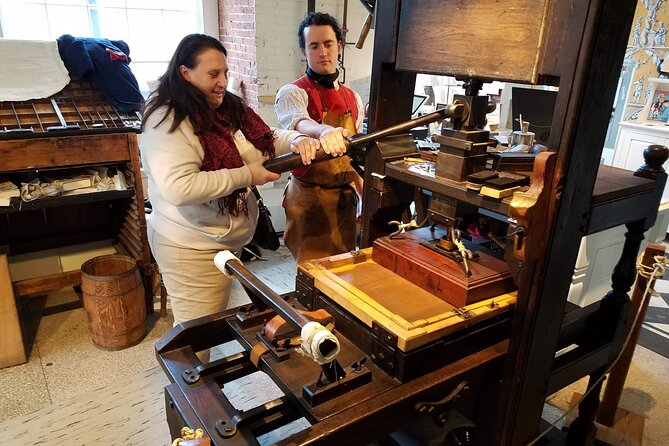
Then you reach King’s Chapel. The tour focus is not just on the building’s look—it’s on the international scope of the Revolution in Boston. This matters because Boston wasn’t operating in a vacuum. Ideas, institutions, and conflict traveled.
You’ll pause and speak outside, and if you want to go in, entrance into the Chapel requires a separate private ticket. That’s a genuine fork in the road.
Here’s how to decide:
- If you want a quick, context-first experience, enjoy the outside narration and keep moving.
- If you enjoy architecture and want more time on-site, look into the separate ticket ahead so you don’t feel pressured in the moment.
Either choice still works with the flow of the tour, but you should know that the paid interior experience is optional, not included.






Stop 4: Old South Meeting House and the Tea Party’s Bigger Frame

At Old South Meeting House, the tour connects the building to the Boston Tea Party—but keeps the context broader than that one famous night. That’s a smart approach, because the Tea Party is the headline. The meeting house is part of the machinery: speeches, organizing, and decisions made in rooms where people negotiated risk.
As with King’s Chapel, you’ll pause and speak outside. Entrance into the Meeting House requires a separate private ticket.
This is one of the stops where I think your personal travel style matters most. If you love interactive museum learning, spending extra money for entry may be worth it. If you prefer the guide’s narrative and enjoy getting your bearings by walking, outside time can be enough.
Either way, the bigger value is the way the guide helps you see how civic action grew out of meetings and public persuasion—not just dramatic acts.
Stop 5: The Old State House and the Boston Massacre Legacy
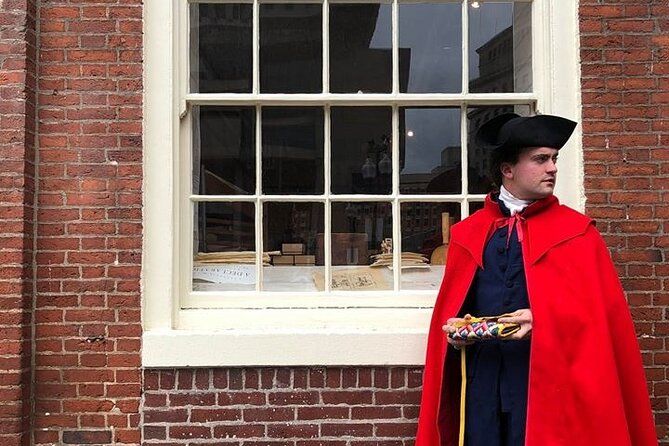
Next up is Old State House, the city’s leading site connected to the Boston Massacre. The tour again uses an outside pause model. You’ll get the core story and how the legacy gets interpreted over time, but interior entry is separate.
Admission to the State House requires a separate private ticket.
This stop is emotionally charged in American history, but it doesn’t have to feel heavy or vague. When it’s guided well, you leave with more than a memorized event. You understand why it mattered, who benefited from the narrative, and how the story was used to justify the next steps toward revolution.
Practical advice: if you choose not to buy the interior ticket, still spend time on the outside explanation. The value is in what the guide points out in the surrounding area and how it ties the scene to the larger arc of conflict.
Crossing the Boston Massacre Area Without Getting Stuck in Traffic
From the Old State House area, you walk over the spot connected to the Boston Massacre—and the tour specifically emphasizes doing it without lingering in traffic.
This is an underrated strength of a walking tour: you want the historical path, not a parking-lot detour. Even when you know the broad story, it helps to move your feet through the city to see the spatial logic—where movement would have been possible, where people might have gathered, and why certain sites feel connected in hindsight.
If you’re the kind of traveler who likes to connect the map to the narrative, this segment will click. It’s not about slow wandering. It’s about following the story’s geography.
A Revolutionary Meeting Space, Marketplace, and British Armory Moment
After that, the route continues through a more connective stretch described as including a revolutionary meeting space, a marketplace, and a British armory, plus more.
Because those precise interior details aren’t framed like one named museum stop, the focus becomes interpretation. The guide uses these spaces to show how power and resistance interacted in everyday urban life. That’s where the tour’s promise of being relevant in the 21st century starts to feel real: the Revolution isn’t portrayed as a single dramatic climax. It’s shown as a pattern—organizing, meeting, trading news, and contesting authority.
If you’re hoping for only one or two marquee stops, you might find this part less “photo-worthy.” But if you like how context makes the named landmarks make more sense, you’ll appreciate this section.
The Lantern Church Stop and the Freedom vs. Bondage Paradox
The later portion of the tour includes a church famous for lantern signals—connected to the Revolution—and also for confronting the paradox of freedom and bondage.
This is one of those stops where a walking tour can do more than a textbook. Standing near a site associated with lantern signaling helps you picture the timing and coordination behind turning points. And bringing up the freedom-versus-bondage contradiction ensures the story doesn’t become too neat or only heroic.
I like this because it’s honest without being vague. It forces you to hold more than one truth at once, which is exactly the kind of critical thinking the tour says it aims to build.
If you’re the type of visitor who wants history cleaned up for comfort, this section may feel challenging. But if you want the real shape of the era, it’s part of what makes the route memorable.
What Makes the Guides Matter: Adam’s Humor and Patient Answers
A major reason this tour earns top marks is the guide style. The group I heard about was led by Adam, and the pattern in the feedback is consistent: he’s articulate, easy to get along with, and funny in a way that doesn’t derail the lesson. People also praised his patience and his willingness to answer questions.
I’d take that as practical advice for you. Look for guides who can handle follow-ups. This tour has enough depth that your questions will likely matter. If your guide can keep things clear while staying light, the whole experience feels better.
Also, one small detail that shows effort: Adam was noted as dressing for the part. Even if you don’t care about costumes, it helps you get into the right mindset and keeps the story from feeling like a generic stroll.
Finally, the fact that the tour is limited to 16 people helps. In a smaller group, it’s easier for a guide to keep track of who’s engaged and who’s ready to ask something.
Price and Value: $45 for a Story You Can Keep Thinking About
At $45 per person, you’re paying for narration, interpretation, and routing. This isn’t a museum ticket; it’s an on-the-ground guide-led experience that aims to connect iconic sites to larger themes.
Here’s why I think it’s a solid value for the right traveler:
- You cover multiple key Revolutionary-era locations in a single window of time.
- The focus is interpretation, not just facts. You leave with a way to connect places and events.
- The group size stays small, which usually means better Q&A.
Where value can shift is the optional admissions. Since tickets for King’s Chapel, Old South Meeting House, and Old State House aren’t included, your total spend may rise if you decide to enter those spaces.
To keep it simple, decide your plan in advance:
- If you want a mostly outside walking narrative, $45 may be the only cost you need.
- If you want interior visits at multiple stops, budget extra for those separate private tickets.
Who This Tour Is Best For (and Who Might Want to Skip It)
This tour fits best if you enjoy:
- walking and learning in the same trip
- history framed through civic questions, not only battle details
- a guide-led story where you can ask questions and get explanations in plain language
It may be less satisfying if you:
- want everything inside paid sites included
- dislike walking in city traffic-adjacent areas, even with careful route planning
- prefer very long museum time over short, focused stops
If you’re a first-time Boston visitor who wants to understand the Revolution beyond the obvious posters, this tour gives you a fast but thoughtful route.
Quick Tips to Get More Out of It
- Wear comfortable shoes. The stops are short, but the day is still walking time.
- Bring questions. The tour is built for discussion and customization.
- Decide at the start whether you’re buying extra museum tickets for indoor stops. It’ll shape your momentum.
- If you’re combining this with other plans, plan for the walk ending around Haymarket so you can pivot quickly.
Should You Book This Public Authentic Revolutionary Boston Walking Tour?
I’d recommend booking if you want a walkable, guide-led way to understand Boston’s Revolution as a living set of arguments about rights, power, and community. The standout strength is the way the guide and route connect sites like Boston Common, Granary Burying Ground, King’s Chapel, Old South Meeting House, and Old State House into a single narrative that keeps you thinking.
I’d think twice only if you hate optional ticket costs. Since interior entry for several major stops needs separate admissions, your experience depends partly on what you choose to add.
If that’s fine with you, this is a smart way to spend a couple hours in Boston: it’s practical, story-driven, and designed to make the city feel like it still has something to say.
FAQ
How long is the tour?
It lasts about 1 hour 30 minutes to 2 hours.
What is the price per person?
The price is $45.00 per person.
What is included in the tour price?
You get professional guides. Admission to private museums and sites along the route is not included.
Do I need separate tickets to enter King’s Chapel, Old South Meeting House, and the Old State House?
Yes. The tour includes outside pauses at these locations, but entrance requires separate private tickets.
Where does the tour start?
The tour starts at the Boston Common Visitors Center, 139 Tremont St, Boston, MA 02111.
Where does the tour end?
The tour ends at Haymarket, 100 Hanover St, Boston, MA 02108.
Is this tour ticket mobile?
Yes, it uses a mobile ticket.
How large is the group?
The tour has a maximum of 16 travelers.
What is the cancellation policy?
You can cancel for a full refund up to 24 hours in advance of the experience start time.
Are service animals allowed?
Yes, service animals are allowed.