REVIEW · FREEDOM TRAIL TOURS
Guided Walking Tour of Copley Square to Downtown Boston Freedom Trail
Book on Viator →Operated by Boston CityWalks · Bookable on Viator
Copley Square to the Freedom Trail in just 2 hours. You’ll start at the Boston Public Library, then move through Back Bay and Beacon Hill landmarks—marathon finish-area sights, Trinity Church, Acorn Street—before following the red line to key Revolutionary stops like the Park Street Church and Granary Burial Ground. This is the kind of tour that helps you read the city fast, even if Boston history is new to you. I especially like the mix of architecture plus politics, and I also like the small-group feel (max 20). One consideration: since it’s a point-to-point walk that ends at Faneuil Hall, you’ll want a plan for getting back after.
If your goal is to get oriented and leave with the main story of Revolutionary Boston in your head, this tour fits well. It also works nicely for families since the pace is guided and the route is compact enough to keep most people interested without turning into a grind. Just wear proper walking shoes, because it’s still a real walking tour, not a bus ride.
In This Review
- Key things I’d plan around
- Starting at Boston Public Library, then cutting across Back Bay
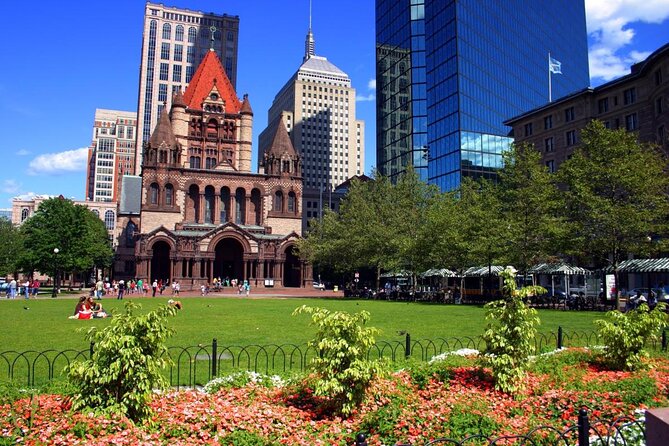
- Copley Square: marathon energy, Trinity Church details, and Hancock reflections
- Boston Public Garden edge: swan boats and the world’s tiniest suspension bridge
- Beacon Hill’s Acorn Street: a photo moment with real context
- The Freedom Trail red line: where the Revolutionary story clicks
- Park Street Church and the Granary Burial Ground: the story gets personal
- King’s Chapel, City Halls, and the Old State House: architecture meets power
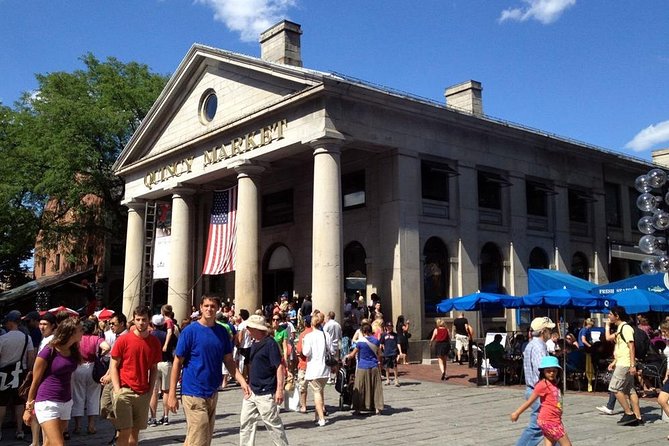
- Ending at Faneuil Hall and Quincy Market: history, then lunch
- Price and value: why $65 can make sense for a guided Freedom Trail walk
- The 2-hour timing: what to expect from the pace
- What kind of traveler this fits best
- Should you book this Guided Walking Tour of Copley Square to the Freedom Trail?
- FAQ
- Where does the tour start and where does it end?
- What time does the tour begin and how long does it last?
- How much is the guided walking tour?
- What’s included in the tour price?
- Is this tour family-friendly?
- What language is the tour offered in?
- Does the tour run in bad weather?
- If I cancel, do I get a refund?
Key things I’d plan around
- Start at Boston Public Library (easy to reach): the meeting spot is in Back Bay and close to public transport and parking.
- Back Bay + Beacon Hill highlights early: Copley Square, Trinity Church, swan-boat views, and Acorn Street are part of the flow.
- You follow the Freedom Trail on the ground: the red line route ties the Revolutionary sites together so they make sense.
- Family-friendly pace: most people can participate, and kids must be with an adult.
- Finish at Faneuil Hall for a smooth after-taste: you end right where you can grab a meal or keep sightseeing.
Starting at Boston Public Library, then cutting across Back Bay
Meet your guide at 230 Dartmouth St near the Boston Public Library at 1:00 pm. That location matters. Back Bay is one of Boston’s easiest neighborhoods to navigate, and the library area gives you a “starter kit” for the city: big-city architecture, classic Boston grandeur, and a central jumping-off point.
From here, you’re set up for an efficient tour. In about two hours, you’ll cover a stack of major sights without feeling like you’re sprinting across the city. This is especially handy if you have only one afternoon and you want more than a few photos.
You can also read our reviews of more walking tours in Boston

Copley Square: marathon energy, Trinity Church details, and Hancock reflections
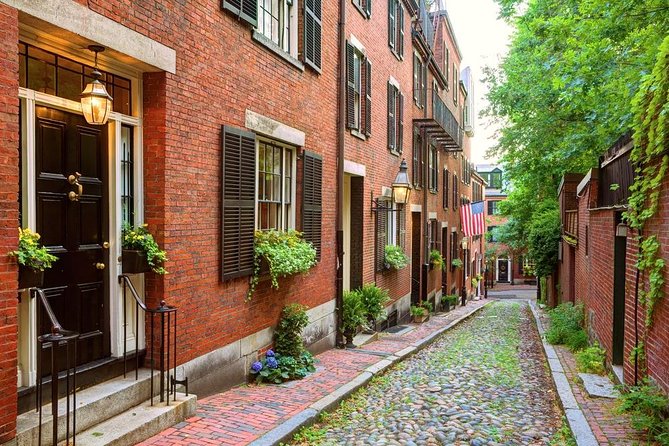
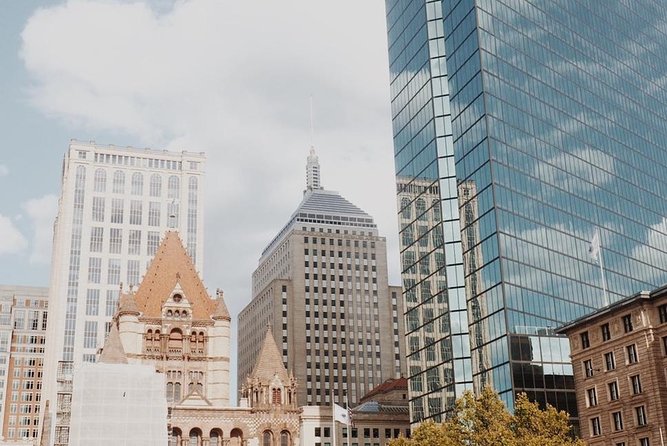
Your first major stop is Copley Square, where Boston performs a neat trick: it blends historic stonework with modern skyline shine. You’ll cross the finish line area of the Boston Marathon, which is a fun moment because it’s not just a sports reference. It also shows how Boston marks history in public space—through events, not just museums.
Then comes Trinity Church. Expect to notice the Romanesque lines of the building as your guide connects what you’re seeing to the city’s older identity. It’s one of those places where your eyes follow the architecture once someone points out what to look for—like the shape, the materials, and the way the church sits in relation to the square.
And yes, you’ll get the classic “reflection” moment with the John Hancock Tower. That’s more than a photo stop. It’s a good reminder that Boston history today isn’t trapped in the past—the city keeps building around it.
Why this part is worth it: Copley Square is a high-visibility anchor. It gives you contrast fast: old-world church architecture, event landmarks, and modern towers all in one small area.
Boston Public Garden edge: swan boats and the world’s tiniest suspension bridge
Next you head toward the edge of Boston Public Garden, where the vibe shifts. Even if you’ve seen swan boats online, seeing them near the walking path is different—it’s airy and scenic in a way that helps break up the more intense Revolutionary stops to come.
Your guide also points out the world’s smallest suspension bridge. It’s a quick side detail, but it’s exactly the kind of thing that makes a guided walk feel smarter than a self-guided loop. You end up spotting little features you’d probably walk past on your own.
Practical tip: This area can be busy depending on the day. If you want a clean photo, be ready for a short wait or step aside while your guide explains the next stop.
Beacon Hill’s Acorn Street: a photo moment with real context
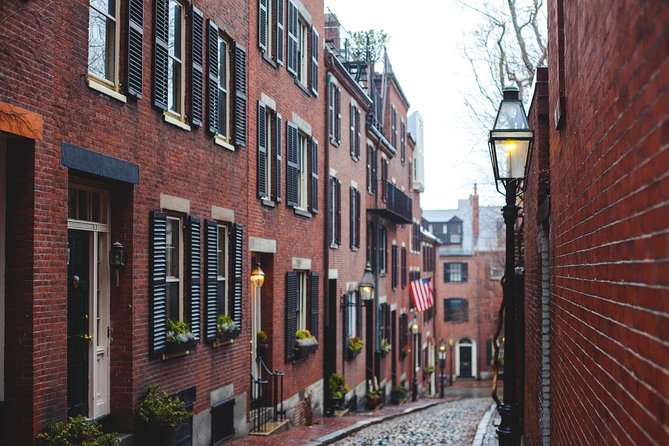
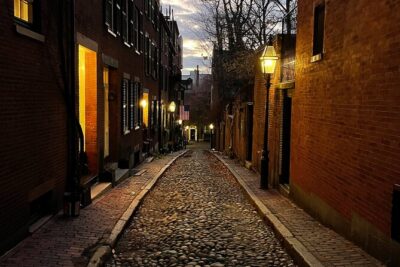
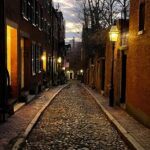
Then it’s on to Acorn Street in Beacon Hill—one of Boston’s most photographed stretches. You’ll likely snap a can’t-miss photo right along with everyone else, but the value here is what your guide adds around it: how Beacon Hill’s look grew into what people recognize today and how the neighborhood layout shaped movement through the city over time.
Beacon Hill also makes the Revolutionary story feel more grounded. You’re walking through places where the physical city itself—streets, blocks, and sightlines—helps you understand how people back then would have experienced Boston.
Possible drawback: If you’re the type who wants long photo breaks, plan for brief stops. A few people have said the tour time can feel tight for pictures. If photos are your top priority, I’d treat this like a guided highlight reel rather than a slow stroll.
The Freedom Trail red line: where the Revolutionary story clicks
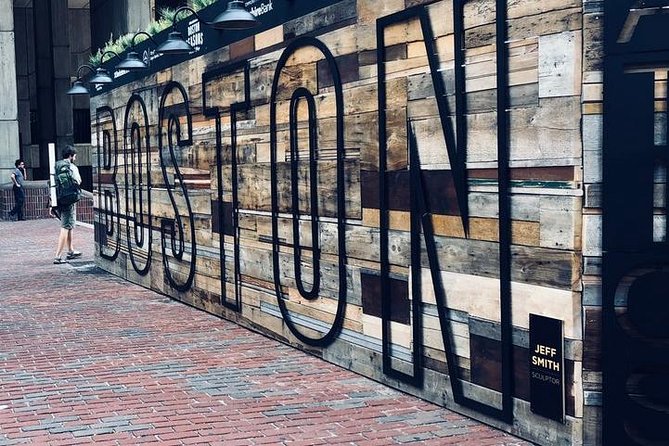
Now you join the thin, red line of the Freedom Trail at the Massachusetts State House. This is the point where Boston starts talking to you like a timeline. Instead of hopping randomly between landmarks, you’re following a route designed to keep the story connected.
At the State House edge, your guide ties the place to early American governance and conflict. Then the trail continues through churches, burial grounds, and government-era buildings—exactly the ingredients you need to understand why Boston was such a pressure cooker.
What makes this section work: The red line acts like a mental map. You stop to see something, then you walk a little and hear how it relates to the bigger chain of events.
You can also read our reviews of more guided tours in Boston




Park Street Church and the Granary Burial Ground: the story gets personal

One standout stop is Park Street Church, famous for the nickname Brimstone Corner. Your guide explains why that name mattered, and it sets the tone for the next part: Boston’s Revolutionary era wasn’t just political. It was public, moral, and deeply tied to belief and community life.
Then comes the Granary Burial Ground, where you’ll see the graves of Paul Revere and John Hancock. Seeing names you know from textbooks in a real cemetery context hits harder than reading about them. It turns famous figures into people anchored to a place.
This section is also great for families because it gives memorable anchors. Kids and teens tend to latch onto the names, and adults usually appreciate the guide framing why those people mattered beyond the obvious facts.
King’s Chapel, City Halls, and the Old State House: architecture meets power
The tour continues to King’s Chapel, described as an 18th-century stop. Expect your guide to use the building’s age and setting to help you picture what those early decades felt like.
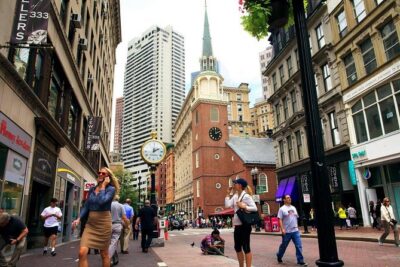
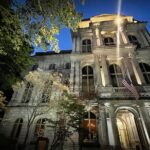
After that, you move through the Old and New City Halls and then to the Old State House. This is where the walking tour becomes more than sightseeing. You start to see how Boston’s civic identity changed over time—how power and administration evolved as the city grew.
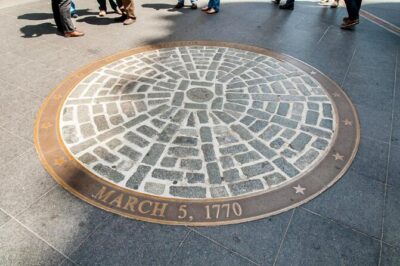
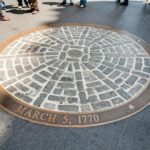
Next is the Boston Massacre Site. Even if you’ve never studied the event closely, this stop helps you place it in context: why it happened, why it became such a big deal, and why Boston remembers it so clearly.
How to get the most out of these stops: If you’re thinking, I’ll just look at the building, you’ll miss some of the point. Try to focus on the guide’s connections—how each place supports the story about authority, protest, and public tension.
Ending at Faneuil Hall and Quincy Market: history, then lunch
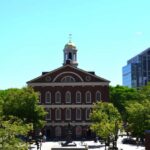
Your tour finishes at Faneuil Hall Marketplace near Quincy Market. That’s a smart ending. It means you’re not stranded far from food options or the next layer of sightseeing.
This is where you can keep the momentum going: sit down for a meal, grab something quick, or transition into other downtown landmarks at your own pace. Since you end in a high-energy area, you also won’t feel like you just left the most interesting sites behind.
Who benefits most from this finish: If you’re traveling with kids, you usually appreciate ending with easy options—snacks, bathrooms, and space to reset.
Price and value: why $65 can make sense for a guided Freedom Trail walk
At $65 per person for about 2 hours, you’re paying for guide labor and for the practical advantage of having someone connect dots for you. A self-guided Freedom Trail loop is doable, but it’s easy to get lost in landmark spotting without understanding how the pieces fit together.
This tour also includes a clear structure: Back Bay landmarks up front, Beacon Hill highlights, and then the Freedom Trail spine through major Revolutionary-era stops. Add in the small-group cap of 20, and you get a better chance to hear explanations clearly and to keep the pace comfortable.
Is it the cheapest way to see Boston’s highlights? No. But it can be one of the best time-to-understanding choices, especially if it’s your first trip and you want the big story without spending hours piecing it together.
The 2-hour timing: what to expect from the pace
This is a compact walking experience, so expect a steady rhythm rather than lingering at every corner. Most people can participate, and the walk is designed to hit major sites without turning into an all-day ordeal.
Weather is another real factor. The tour operates in all weather conditions, so dress for what Boston gives you—layers, a rain-ready layer if needed, and shoes with grip.
A small pacing note: if your priority is photos, I’d be ready to work with guide timing. Some people have said they wished there was more time for photography, while others felt the length and pacing were just right.
What kind of traveler this fits best
This tour is a strong match if you want:
- a first-timer orientation to Back Bay + Beacon Hill + Freedom Trail
- a guided story that makes Revolutionary sites feel connected
- a family-friendly route with enough structure to hold attention
It’s also a good pick if you like architecture and public space as much as you like dates and speeches. You’ll get both.
If you already know Boston history deeply and you’re looking for long, detailed stops inside every site, you might find the format a bit fast. But for most visitors, it hits the sweet spot: highlights plus meaning.
Should you book this Guided Walking Tour of Copley Square to the Freedom Trail?
I think you should book it if you want a well-paced way to cover major Boston highlights and leave with a clearer sense of why the city became the Revolutionary hub it did. The start at the Boston Public Library, the mix of neighborhoods, and the Freedom Trail red line structure help you avoid the common problem of seeing landmarks without the connecting story.
Skip it (or pair it with extra time) if you’re mainly photo-driven and need long pauses at each stop. Also, plan your logistics for the point-to-point finish at Faneuil Hall.
If you’re aiming for one afternoon that pays off later—when you’re back out exploring neighborhoods on your own—this is the kind of tour that gives you momentum.
FAQ
Where does the tour start and where does it end?
The tour starts at 230 Dartmouth St, Boston, MA 02116, and it ends at Faneuil Hall Marketplace, Boston, MA 02109.
What time does the tour begin and how long does it last?
It starts at 1:00 pm and runs for about 2 hours.
How much is the guided walking tour?
The price is $65.00 per person.
What’s included in the tour price?
You get a professional guide and a 2-hour walking tour covering Back Bay, the Downtown Freedom Trail route, and the walk to Faneuil Hall. You’ll also see Victorian brownstone homes in Back Bay and historic Beacon Hill sights along the way.
Is this tour family-friendly?
Yes. Most travelers can participate, and children must be accompanied by an adult.
What language is the tour offered in?
The tour is offered in English.
Does the tour run in bad weather?
Yes, it operates in all weather conditions. Dress appropriately.
If I cancel, do I get a refund?
You can cancel for a full refund if you cancel at least 24 hours before the experience’s start time. If you cancel less than 24 hours before, the amount paid will not be refunded.