REVIEW · FREEDOM TRAIL TOURS
Private Walking tour of Boston’s Freedom Trail and more!
Book on Viator →Operated by Boston Sightseeing Tours · Bookable on Viator
Boston’s story moves best on foot. This private Freedom Trail walk is built for getting off the crowded bus circuit and onto the sidewalks, with a central meeting point and a customizable itinerary guided by your interests. You’ll use a mobile ticket, and you’ll cover classic landmarks plus some helpful downtown context you might miss if you only follow a crowd.
I love the way this format keeps the pace human: a private guide means questions get answered in real time, and the route can flex when your group wants to linger. One thing to consider is that it’s still a solid 3-hour walking morning, so comfy shoes matter, and the biggest indoor stops (Old North Church and Paul Revere House) are optional extras not included.
In This Review
- Key reasons this Freedom Trail walk works
- Private Freedom Trail: what you’re really buying with a guide
- Meeting point to first landmarks: Boston Common and the State House area
- Boston Common (America’s oldest public park)
- Massachusetts State House (what “new” meant in 1798)
- Park Street Church and Granary Burial Ground: steeples, grain storage, and famous names
- Park Street Church: a steeple that once anchored the approach
- Granary Burying Ground: the city’s founding-era memory
- Book history meets education: Benjamin Franklin’s school site and the Old Corner Bookstore
- Boston Latin School site marker: education for boys, and a statue for Franklin
- Old Corner Bookstore: 1718 bricks and 19th-century publishing
- Old South Meeting House area and Faneuil Hall: from debate to action
- Old South Meeting House: where the Tea Party moment began
- Faneuil Hall Marketplace: Town Meeting and the language of liberty
- Boston Stone and the North End lead-in: the small clues you’ll want a guide for
- The Boston Stone: why one round rock matters
- Passing downtown sites: Scollay Square/Government Center, Old City Hall, Old State House
- Paul Revere House and Old North Church: two optional tickets that change the feel
- Paul Revere House (19 North Square)
- Old North Church & Historic Site (Christ Church in the City of Boston)
- Copp’s Hill Burial Ground and the North End wind-down
- Copp’s Hill Burying Ground
- Haymarket and the Boston Stone to lunch area finish
- How the guide really shapes your morning (Tracy, Manny, Ernie, Cindy, Ellen, Neil)
- Practical tips for a smoother Freedom Trail walk
- Who this tour fits best
- Should you book this Boston Freedom Trail private walking tour?
- FAQ
- How long is the Boston Freedom Trail private walking tour?
- Is this tour private?
- What language is the tour offered in?
- Where does the tour start and what time does it begin?
- Where does the tour end?
- What’s included in the price?
- Are tickets for Old North Church and the Paul Revere House included?
- Do you have free admission options along the way?
- Does the tour run in bad weather?
Key reasons this Freedom Trail walk works
- Private guide + only your group means you’re not trying to hear over everyone else.
- Flexible pacing helps if your group moves at different speeds (kids, grandparents, first-timers).
- Classic landmarks with smart context across Boston Common, Faneuil Hall, the North End, and more.
- A good mix of free stops (Boston Common, Granary Burial Ground, Park Street Church area viewpoints, Faneuil Hall area, and several others are free).
- Detours can happen when the guide points out nearby stops that add texture to the route.
Private Freedom Trail: what you’re really buying with a guide
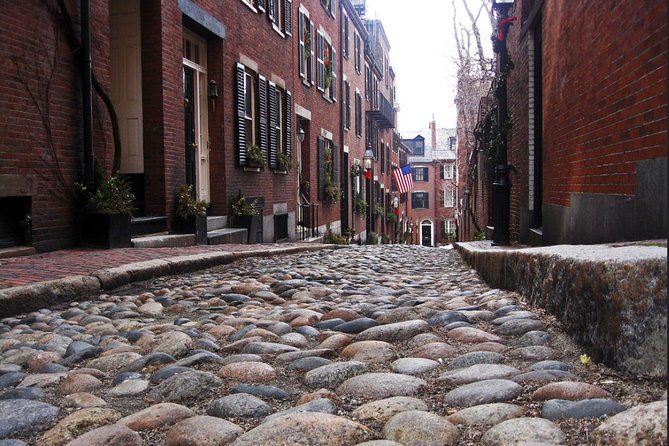
A Freedom Trail tour can be two different experiences. One is a checklist marched past in a group swirl. The other is a guided walk where you start to connect places, names, and why each street corner matters.
That’s what you’re getting here: a private walking tour that stays on foot and lets your guide tune the morning. You’re not stuck on a rigid script. If your group leans political, you’ll hear more on speeches and public meetings. If you’re into daily life, you’ll get more about schools, bookstores, and neighborhoods that shaped how people lived.
The meeting point helps a lot too. Starting at 139 Tremont St keeps the morning simple for getting there, and ending in the North End near 282 Hanover St sets you up for lunch without a second commute.
You can also read our reviews of more walking tours in Boston

Meeting point to first landmarks: Boston Common and the State House area
You start downtown at 10:00 am at 139 Tremont St. Expect a quick handoff from your guide, then you’ll move straight into Boston’s civic center.
Boston Common (America’s oldest public park)
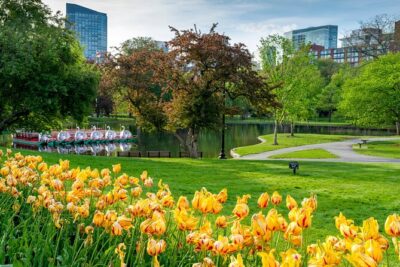
Boston Common, established in 1634, is where the walk gains gravity fast. This 44-acre park began as land colonists purchased from the early settler William Blackstone, and it still feels like a historical “front yard” for the city.
Time on-site is about 20 minutes, and admission is free. I like this start because it gives you a calm reference point before the schedule gets denser. Also, even if you’ve seen photos, standing here helps you understand the scale of downtown Boston’s early footprint.
Massachusetts State House (what “new” meant in 1798)
Right nearby is the Massachusetts State House, designed by Charles Bulfinch. It opened in 1798 and has been the seat of Massachusetts government since then, with both legislative and executive branches housed there.
The stop is around 10 minutes and admission isn’t included. The practical win is that your guide can connect the building to earlier political locations without making you jump around later. The “adjacent to the former Hancock mansion site” detail also gives you a sense of how power shifted around the same general area.
Park Street Church and Granary Burial Ground: steeples, grain storage, and famous names
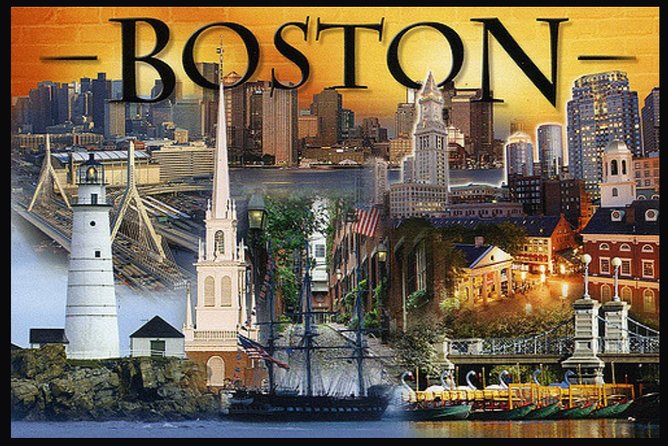
After Boston Common and the State House area, the route leans into what you can learn just from buildings and burial ground clues.
You can also read our reviews of more private tours in Boston

Park Street Church: a steeple that once anchored the approach
Park Street Church is founded in 1809 on the corner of Park and Tremont Streets, placed atop the former town grain storage building (the granary). It was designed by Peter Banner, and the steeple rises 217 feet—once a first landmark for travelers coming into Boston.
Plan around the time your guide gives you here, with extra emphasis on what you can notice from the outside. Admission isn’t listed as included here, so you’ll get the most from visual cues: location, architecture, and why this church mattered as an orientation point.
Granary Burying Ground: the city’s founding-era memory
Granary Burial Ground dates to 1660 and holds the resting places of many notable citizens and founding figures. It’s named for the 12,000-bushel grain storage building that once stood next door, and it has roughly 2,300 markers.
You’ll likely spend about 25 minutes, and admission is free. This is one of those stops where a guide earns their keep. Reading a few markers with context turns it from a “look at the stones” experience into a story about Boston’s early social web—who mattered, what kind of lives they led, and how the city recorded itself.
Book history meets education: Benjamin Franklin’s school site and the Old Corner Bookstore
These are two fast stops that pay off if you like the behind-the-scenes side of Boston.
Boston Latin School site marker: education for boys, and a statue for Franklin
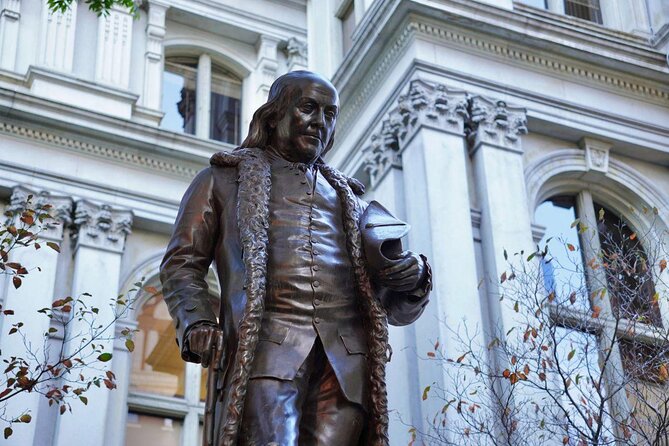
A short pause near a Benjamin Franklin marker helps you connect the city to early education. Boston Latin School was founded April 23, 1635, and it was the oldest public school in America. It offered free education to boys regardless of wealth, while girls were typically educated privately at home.
You’ll also hear that until a dedicated schoolhouse finished in 1645, classes were held in the home of the first headmaster, Philemon Pormont. A mosaic and a statue of Franklin mark the location of the original schoolhouse area. Admission is free, and this is the kind of stop that works well even if you’re moving quickly—you’re learning facts while still keeping the morning flowing.
Old Corner Bookstore: 1718 bricks and 19th-century publishing
A few minutes later, you reach the Old Corner Bookstore, constructed in 1718. It’s described as downtown Boston’s oldest commercial building and connects to Ticknor and Fields, a 19th-century publishing giant behind major American titles like Thoreau’s Walden, Hawthorne’s The Scarlet Letter, Longfellow’s Midnight Ride of Paul Revere, and the Atlantic Monthly (including Ward Howe’s Battle Hymn of the Republic).
Saved from demolition in 1960, the building’s leases help subsidize historic preservation projects in Boston’s neighborhoods. Time here is brief (about 5 minutes) and admission is free. Even so, I love it because it gives you a literary angle on the Freedom Trail—history isn’t just speeches and battles. Sometimes it’s publishing, too.
Old South Meeting House area and Faneuil Hall: from debate to action
At this point, the walk sharpens. The story becomes public argument—then public action.
Old South Meeting House: where the Tea Party moment began
You’ll encounter the area tied to where the Boston Tea Party began. The hall is tied to sermons, public meetings, and debates about the tea tax. Even with limited time, your guide can make it feel less like a museum label and more like people arguing in real time.
This stop is part of the overall Freedom Trail corridor, so you’ll benefit from hearing how it links to nearby places where revolutionary energy accumulated.
Faneuil Hall Marketplace: Town Meeting and the language of liberty
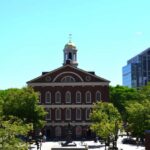
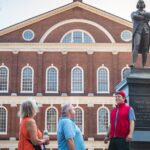
Faneuil Hall is often described as the home of free speech and the cradle of liberty. The key point is that it hosted America’s first Town Meeting, and its revolutionary political role grew in ways not originally planned.
You’ll spend around 25 minutes around Faneuil Hall and the adjacent marketplace. Admission here is free. The marketplace portion matters because it gives you a natural break in the morning. It’s also a practical zone to grab a quick snack before you continue toward the waterfront-facing parts of the North End route.
Boston Stone and the North End lead-in: the small clues you’ll want a guide for
This section shifts from big landmark gravitas to street-level details.
The Boston Stone: why one round rock matters
The Boston Stone is a round rock embedded in a wall of an 18th-century building. The tour focuses on the tale of why it’s there, and it’s one of those oddball Boston facts that turns your brain on.
It’s a quick stop (about 5 minutes) and free. Short and sweet—perfect when you want the story without losing too much walking time.
Passing downtown sites: Scollay Square/Government Center, Old City Hall, Old State House
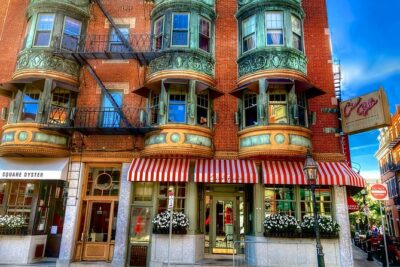
Between the central civic points and the North End, the route also passes through downtown areas such as Scollay Square/Government Center and sites tied to older city and state government buildings. The value here isn’t that every single location is a must-see on its own—it’s that your guide helps you understand the evolution of the city’s layout and institutions over time.
Paul Revere House and Old North Church: two optional tickets that change the feel
These are the stops where your guide can tailor what you do next, because entry is optional.
Paul Revere House (19 North Square)
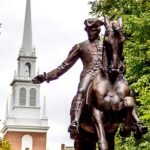
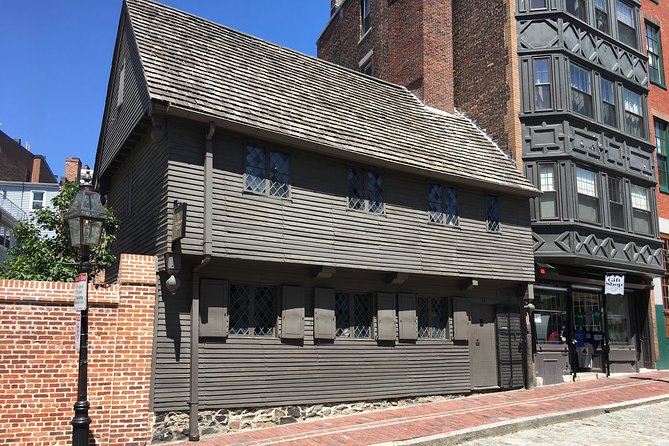
The Paul Revere House is downtown Boston’s oldest building and one of the few remaining 17th-century dwellings in a major urban area. The story centers on April 18, 1775, when silversmith Paul Revere left his small wooden home in Boston’s North End and set out on a journey that made him a legend.
You’ll spend about 25 minutes here, and admission isn’t included. The ticket is optional, and the provider notes they offer a very special low rate. If you love hands-on history (period structure, setting, and the chance to see the house beyond the exterior), this is the best time to add that ticket.
Old North Church & Historic Site (Christ Church in the City of Boston)
Old North Church is built in 1723. It’s known as Boston’s oldest surviving church building and is also one of the most visited historical sites in the city. The key moment is April 18, 1775, when sexton Robert Newman climbed the steeple and held high two lanterns as a signal.
The route ties the signal to the warning about the British marching to Lexington and Concord by sea across the Charles River rather than by land. You’ll spend about 25 minutes, with admission optional and not included.
If you’re trying to decide whether to pay, I suggest matching it to your curiosity level. If the lantern signal story already thrills you, these are the places where you’ll get more from the setting. If you’re more into walking and exterior landmarks, you can treat these as story points and move on.
Copp’s Hill Burial Ground and the North End wind-down
By the time you reach Copp’s Hill, the morning has matured from big political story beats to personal, human details.
Copp’s Hill Burying Ground
Copp’s Hill is named after shoemaker William Copp. It’s the final resting place of merchants, artisans, and craftspeople who lived in the North End. You’ll spend about 20 minutes, and admission is free.
This is a strong ending stop for anyone who wants the Freedom Trail to feel more like a living place. You get the human texture after the political and military drama. And you can connect it to the North End neighborhood you’ll be walking through next.
Haymarket and the Boston Stone to lunch area finish
The route includes passing by Haymarket and moving toward the North End, where the tour ends near an Italian District restaurant at 282 Hanover St. The end point is practical: you’ll have plenty of options for lunch or a quick snack right after.
How the guide really shapes your morning (Tracy, Manny, Ernie, Cindy, Ellen, Neil)
This tour lives or dies by your guide. The standout theme across the guide names you’ll hear praised is engagement plus flexibility.
Guides such as Tracy and Manny are highlighted for keeping the morning engaging across different ages, including kids. Ernie and Ellen are praised for matching pace to the group and for being energetic with the story. Cindy is noted for answering questions well and for teaching details that even non-historians sometimes miss. Neil gets credit for making the walk feel more than by-the-numbers, including stepping off the Trail for extra nearby sites such as Pi Alley, the Spite House, and the Holocaust Memorial.
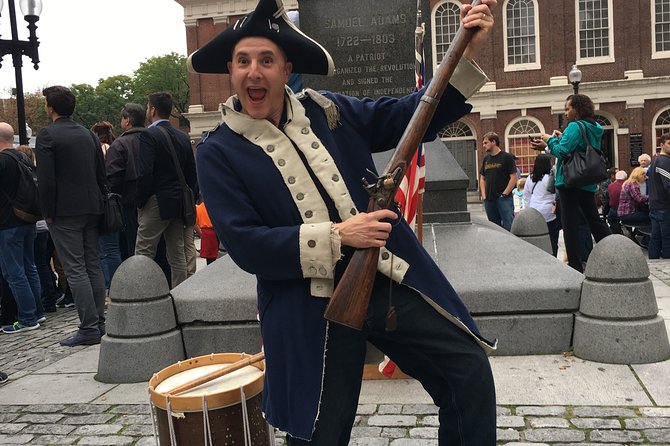
One more detail that matters: kids tend to do better when the guide isn’t playing a costume role. If your group includes teens, that plain-spoken approach can make the experience land faster.
Practical tips for a smoother Freedom Trail walk
Here’s what I’d do to make your 3 hours feel easy instead of rushed.
- Wear shoes you trust. The tour is described as a walking route with a moderate fitness level requirement, so plan for steady movement.
- Keep your schedule buffer. You start at 10:00 am and finish in the North End area, which is ideal for lunch, but give yourself enough time afterward to roam without stress.
- Decide on the optional tickets early. If you want to enter Paul Revere House and Old North Church, do it as soon as the guide suggests it so you’re not debating late in the walk.
- Ask for interests-based tailoring. The route supports customization—so tell your guide what you care about. If your group loves ideas and debate, lean into the meeting-house stops. If you want neighborhood feel, ask about the North End lead-in and small side streets.
Who this tour fits best
This private Freedom Trail walk is ideal if you:
- Want Boston landmarks on foot without the crush of bus groups
- Care about hearing stories clearly (not just seeing places from a distance)
- Have a mixed group with different energy levels
- Prefer a tour that adapts rather than marches forward no matter what
It’s also a good pick if you’ve been to Boston before but want a smarter route through the core sites, or if you’re new and want the classic Freedom Trail anchors plus a few extras that give you context fast.
Should you book this Boston Freedom Trail private walking tour?
If your goal is to understand Boston’s revolutionary-era story without fighting crowds, I’d book it. The value isn’t just the route—it’s the private guide who can set the pace, handle questions, and steer your attention where it matters most.
I’d think twice only if your group has very limited walking stamina or if optional ticket sites are must-sees for you and you hate the idea of paying extra on the day. Otherwise, this is a strong way to get your bearings quickly and still feel like you saw more than the highlights.
FAQ
How long is the Boston Freedom Trail private walking tour?
The tour lasts about 3 hours.
Is this tour private?
Yes. It’s a private tour, and only your group participates.
What language is the tour offered in?
The tour is offered in English.
Where does the tour start and what time does it begin?
It starts at 139 Tremont St, Boston, MA 02111 at 10:00 am.
Where does the tour end?
It ends in the North End Italian District area near 282 Hanover St, Boston, MA 02113.
What’s included in the price?
A private tour guide is included, and you’ll use a mobile ticket.
Are tickets for Old North Church and the Paul Revere House included?
No. Admission to Old North Church & Paul Revere House is optional and not included, though a special low rate is mentioned.
Do you have free admission options along the way?
Many stops are listed as free, including Boston Common and Granary Burial Ground, plus several other short stops like the Boston Stone and Copp’s Hill Burial Ground.
Does the tour run in bad weather?
It requires good weather. If canceled due to poor weather, you’ll be offered a different date or a full refund.